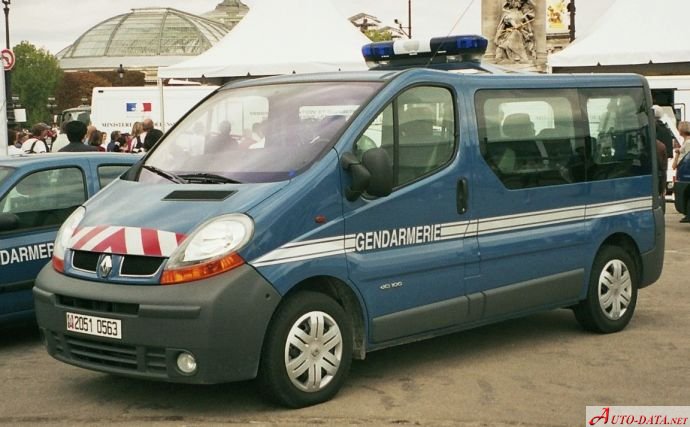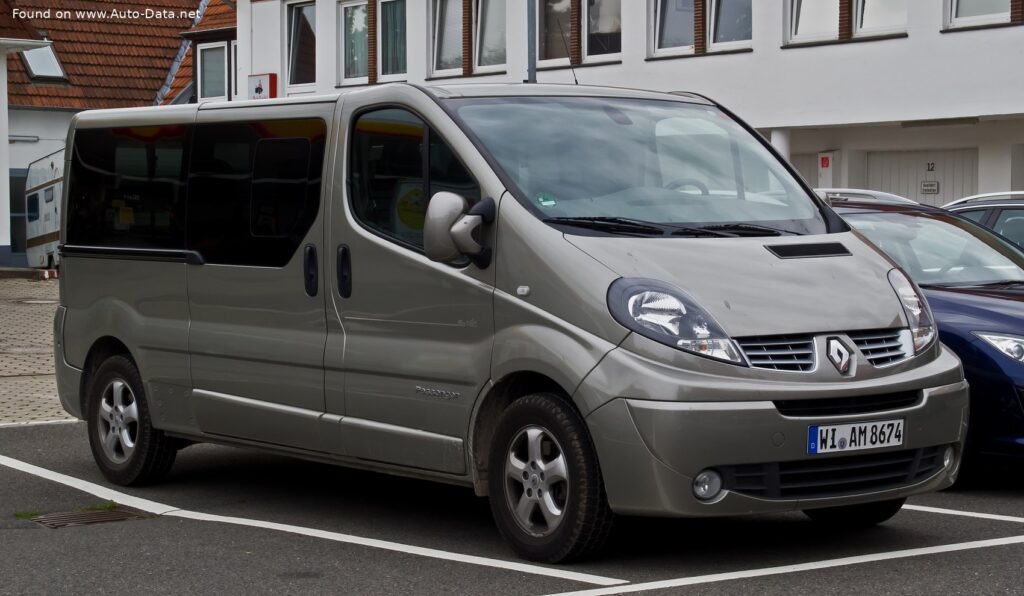
The Renault Trafic II (Phase II) 2.0 dCi (90 Hp) L1H1 is a commercial vehicle produced by the French manufacturer Renault from 2011 to 2014. Part of the second generation of the Trafic line, the Phase II update brought refinements to the engine and styling. Primarily sold in Europe, the Trafic occupies the mid-size van segment, competing with vehicles like the Volkswagen Transporter, Ford Transit, and Mercedes-Benz Vito. It’s designed to cater to businesses and individuals needing a versatile vehicle for both cargo and passenger transport, offering a balance between practicality, efficiency, and affordability.
Renault Trafic II (Phase II): Overview
The Trafic II, launched in 2001, represented a significant step forward for Renault’s light commercial vehicle range. The Phase II revision, introduced in 2011, focused on improving the vehicle’s fuel efficiency and reducing emissions, aligning with increasingly stringent European regulations. The “L1H1” designation refers to the vehicle’s body length and roof height – a shorter wheelbase and lower roof configuration, making it more maneuverable in urban environments. This particular variant, equipped with the 2.0 dCi engine producing 90 horsepower, was a popular choice for businesses prioritizing fuel economy over outright performance.
Engine & Performance
The Renault Trafic II (Phase II) 2.0 dCi (90 Hp) L1H1 is powered by a 2.0-liter, four-cylinder diesel engine, identified by the code M9R. This engine utilizes a turbocharger and intercooler to enhance power output and efficiency. Producing 90 horsepower at 3500 rpm and 260 Nm (191.77 lb-ft) of torque at 1500 rpm, the engine provides adequate power for typical commercial applications. The engine features a diesel commonrail fuel injection system, contributing to smoother operation and reduced noise. The engine’s power-to-weight ratio is 19.8 kg/Hp, and the torque-to-weight ratio is 6.9 kg/Nm.
Performance figures reflect the van’s utilitarian focus. Acceleration from 0 to 100 km/h (0-62 mph) takes approximately 19 seconds, and 0 to 60 mph is achieved in around 18.1 seconds. The top speed is limited to 150 km/h (93.21 mph). Fuel economy is a strong point, with combined cycle consumption rated at 7.5 l/100 km (31.4 US mpg or 37.7 UK mpg), translating to CO2 emissions of 200 g/km. These figures were competitive within the segment during its production run.
Design & Features
The Renault Trafic II (Phase II) L1H1 is a four-door minivan designed for practicality. Its body style is a traditional van shape, optimized for maximizing cargo space. The L1H1 configuration offers a trunk volume of 1240 liters (43.79 cu. ft.). The vehicle has a total length of 4782 mm (188.27 in), a width of 1904 mm (74.96 in), and a height of 1940 mm (76.38 in). The wheelbase measures 3098 mm (121.97 in).
Inside, the Trafic II offers seating for up to nine passengers, making it suitable for shuttle services or larger families. The interior is functional and durable, prioritizing ease of cleaning and longevity over luxury. Safety features included ABS (Anti-lock Braking System) as standard. The drivetrain is front-wheel drive, utilizing a six-speed manual transmission. Suspension consists of an independent McPherson strut setup at the front with a coil spring and anti-roll bar, and a disc brake system on all wheels. The vehicle rides on 205/65 R16 tires with 16-inch wheel rims.
Technical Specifications
| Brand | Renault |
| Model | Trafic |
| Generation | Trafic II (Phase II) |
| Type (Engine) | 2.0 dCi (90 Hp) L1H1 |
| Start of production | 2011 |
| End of production | 2014 |
| Powertrain Architecture | Internal Combustion engine |
| Body type | Minivan |
| Seats | 9 |
| Doors | 4 |
| Fuel consumption (urban) | 9.1 l/100 km (25.8 US mpg, 31 UK mpg, 11 km/l) |
| Fuel consumption (extra urban) | 6.6 l/100 km (35.6 US mpg, 42.8 UK mpg, 15.2 km/l) |
| Fuel consumption (combined) | 7.5 l/100 km (31.4 US mpg, 37.7 UK mpg, 13.3 km/l) |
| CO2 emissions | 200 g/km |
| Fuel Type | Diesel |
| Acceleration 0 – 100 km/h | 19 sec |
| Acceleration 0 – 62 mph | 19 sec |
| Acceleration 0 – 60 mph | 18.1 sec |
| Maximum speed | 150 km/h (93.21 mph) |
| Weight-to-power ratio | 19.8 kg/Hp |
| Weight-to-torque ratio | 6.9 kg/Nm |
| Power | 90 Hp @ 3500 rpm |
| Torque | 260 Nm @ 1500 rpm (191.77 lb.-ft. @ 1500 rpm) |
| Engine layout | Front, Transverse |
| Engine Model/Code | M9R |
| Engine displacement | 1995 cm3 (121.74 cu. in.) |
| Number of cylinders | 4 |
| Engine configuration | Inline |
| Cylinder Bore | 84 mm (3.31 in.) |
| Piston Stroke | 90 mm (3.54 in.) |
| Compression ratio | 11.8:1 |
| Number of valves per cylinder | 4 |
| Fuel injection system | Diesel Commonrail |
| Engine aspiration | Turbocharger, Intercooler |
| Engine oil capacity | 7.7 l (8.14 US qt | 6.78 UK qt) |
| Kerb Weight | 1785 kg (3935.25 lbs.) |
| Max. weight | 2790 kg (6150.9 lbs.) |
| Max load | 1005 kg (2215.65 lbs.) |
| Trunk (boot) space – minimum | 1240 l (43.79 cu. ft.) |
| Fuel tank capacity | 90 l (23.78 US gal | 19.8 UK gal) |
| Length | 4782 mm (188.27 in.) |
| Width | 1904 mm (74.96 in.) |
| Height | 1940 mm (76.38 in.) |
| Wheelbase | 3098 mm (121.97 in.) |
| Front track | 1615 mm (63.58 in.) |
| Rear (Back) track | 1630 mm (64.17 in.) |
| Drivetrain Architecture | Front wheel drive |
| Number of gears and type of gearbox | 6 gears, manual transmission |
| Front suspension | Independent, type McPherson with coil spring and anti-roll bar |
| Front brakes | Ventilated discs |
| Rear brakes | Disc |
| Assisting systems | ABS (Anti-lock braking system) |
| Steering type | Steering rack and pinion |
| Tires size | 205/65 R16 |
| Wheel rims size | 16 |