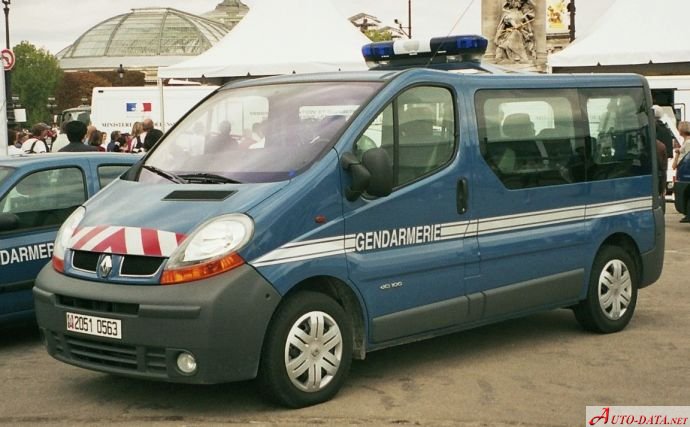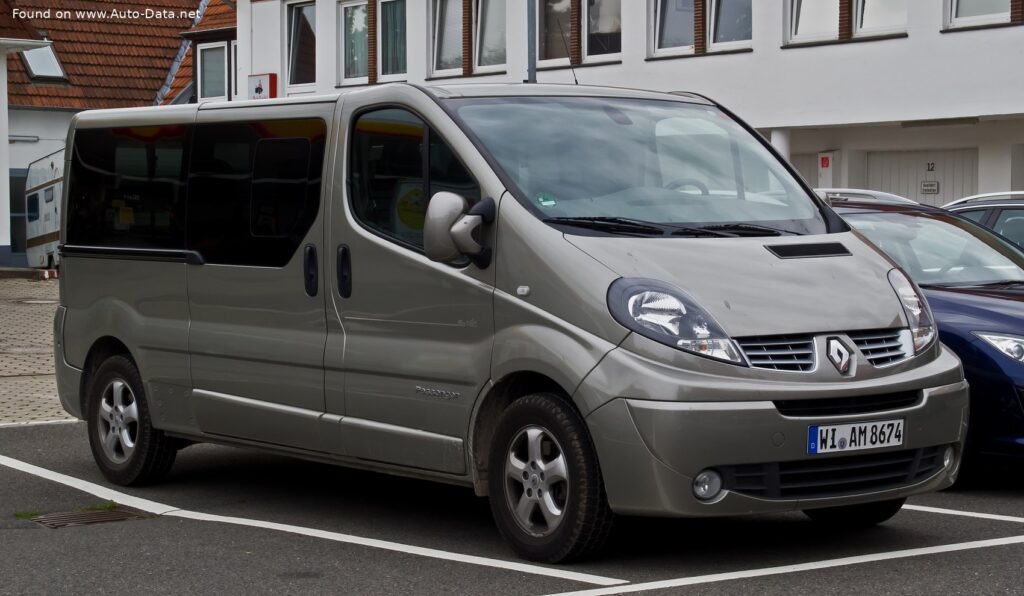
The Renault Trafic II (Phase II) 2.0 dCi (90 Hp) L2H1 is a commercial vehicle produced by the French manufacturer Renault from 2011 to 2014. Part of the second generation of the Trafic line, this model represents a mid-cycle refresh, designated as Phase II, bringing updates to styling, equipment, and engine options. Primarily marketed in Europe as a versatile van for both commercial and passenger transport, the Trafic II competed with vehicles like the Volkswagen Transporter, Ford Transit, and Citroën Dispatch. The “L2H1” designation refers to the vehicle’s body length (L2 – long wheelbase) and roof height (H1 – standard roof), offering a balance between cargo capacity and maneuverability. While not officially sold in the United States, understanding its specifications provides insight into the European light commercial vehicle market.
Renault Trafic II (Phase II): Overview and Market Position
The Renault Trafic has been a mainstay in the European light commercial vehicle (LCV) segment since its introduction in 1983. The second-generation Trafic, launched in 2001, aimed to improve upon the original with enhanced comfort, safety, and practicality. The Phase II update, introduced in 2011, further refined the model, addressing customer feedback and incorporating updated technologies. The Trafic II served a diverse range of users, from small businesses needing a reliable work van to larger companies requiring fleet vehicles, and even private individuals seeking a spacious and adaptable passenger carrier. Its popularity stemmed from its robust construction, relatively low operating costs, and customizable configurations.
Engine & Performance
The 2.0 dCi engine powering the Trafic II (Phase II) 90 Hp is a four-cylinder, turbocharged diesel engine. Displacing 1,995 cubic centimeters (121.74 cubic inches), this engine produces 90 horsepower at 3500 rpm and 260 Newton-meters (191.77 lb.-ft.) of torque at 1500 rpm. This configuration prioritizes fuel efficiency and low-end torque, making it well-suited for hauling loads and navigating urban environments. The engine utilizes a diesel commonrail fuel injection system and an intercooler to optimize combustion and boost performance. Power is delivered to the front wheels via a six-speed manual transmission. Performance figures reflect the van’s utilitarian focus; acceleration from 0 to 100 km/h (0-62 mph) takes approximately 19 seconds, with a top speed of 150 km/h (93.21 mph). The weight-to-power ratio is 19.8 kg/Hp, and the weight-to-torque ratio is 6.9 kg/Nm.
Design & Features
The Renault Trafic II (Phase II) L2H1 is a four-door minivan designed for practicality and versatility. Its body style is characterized by a boxy shape, maximizing interior space. The L2H1 configuration provides a generous cargo area of 2150 liters (75.93 cubic feet) with the rear seats folded, making it suitable for transporting goods or equipment. The vehicle can accommodate up to nine passengers, depending on the seating configuration. Safety features for this era included ABS (Anti-lock Braking System) as standard equipment. The interior is functional and durable, designed to withstand the demands of commercial use. While not luxurious, the cabin offers a reasonable level of comfort for both driver and passengers. The Phase II update brought minor cosmetic changes to the exterior, including revised front grille and headlight designs. The vehicle’s dimensions are: length 5182 mm (204.02 in), width 1904 mm (74.96 in), and height 1944 mm (76.54 in). The wheelbase measures 3498 mm (137.72 in).
Technical Specifications
| Brand | Renault |
| Model | Trafic |
| Generation | Trafic II (Phase II) |
| Type (Engine) | 2.0 dCi (90 Hp) L2H1 |
| Start of production | 2011 |
| End of production | 2014 |
| Powertrain Architecture | Internal Combustion engine |
| Body type | Minivan |
| Seats | 9 |
| Doors | 4 |
| Fuel consumption (urban) | 9.1 l/100 km (25.8 US mpg, 31 UK mpg, 11 km/l) |
| Fuel consumption (extra urban) | 6.6 l/100 km (35.6 US mpg, 42.8 UK mpg, 15.2 km/l) |
| Fuel consumption (combined) | 7.5 l/100 km (31.4 US mpg, 37.7 UK mpg, 13.3 km/l) |
| CO2 emissions | 200 g/km |
| Fuel Type | Diesel |
| Acceleration 0 – 100 km/h | 19 sec |
| Acceleration 0 – 62 mph | 19 sec |
| Acceleration 0 – 60 mph | 18.1 sec |
| Maximum speed | 150 km/h (93.21 mph) |
| Weight-to-power ratio | 19.8 kg/Hp |
| Weight-to-torque ratio | 6.9 kg/Nm |
| Power | 90 Hp @ 3500 rpm |
| Torque | 260 Nm @ 1500 rpm (191.77 lb.-ft. @ 1500 rpm) |
| Engine layout | Front, Transverse |
| Engine Model/Code | M9R |
| Engine displacement | 1995 cm3 (121.74 cu. in.) |
| Number of cylinders | 4 |
| Engine configuration | Inline |
| Cylinder Bore | 84 mm (3.31 in.) |
| Piston Stroke | 90 mm (3.54 in.) |
| Compression ratio | 13.1:1 |
| Number of valves per cylinder | 4 |
| Fuel injection system | Diesel Commonrail |
| Engine aspiration | Turbocharger, Intercooler |
| Engine oil capacity | 7.7 l (8.14 US qt | 6.78 UK qt) |
| Kerb Weight | 1785 kg (3935.25 lbs.) |
| Trunk (boot) space – minimum | 2150 l (75.93 cu. ft.) |
| Fuel tank capacity | 90 l (23.78 US gal | 19.8 UK gal) |
| Length | 5182 mm (204.02 in.) |
| Width | 1904 mm (74.96 in.) |
| Height | 1944 mm (76.54 in.) |
| Wheelbase | 3498 mm (137.72 in.) |
| Front track | 1615 mm (63.58 in.) |
| Rear (Back) track | 1630 mm (64.17 in.) |
| Drivetrain Architecture | Front wheel drive |
| Number of gears and type of gearbox | 6 gears, manual transmission |
| Front suspension | Independent, type McPherson with coil spring and anti-roll bar |
| Front brakes | Ventilated discs |
| Rear brakes | Disc |
| Assisting systems | ABS (Anti-lock braking system) |
| Steering type | Steering rack and pinion |
| Tires size | 205/65 R16 |
| Wheel rims size | 16 |
The Renault Trafic II (Phase II) 2.0 dCi (90 Hp) L2H1 represents a practical and efficient solution for light commercial and passenger transport needs in the European market. Its robust engine, spacious interior, and functional design contributed to its enduring popularity within its segment.