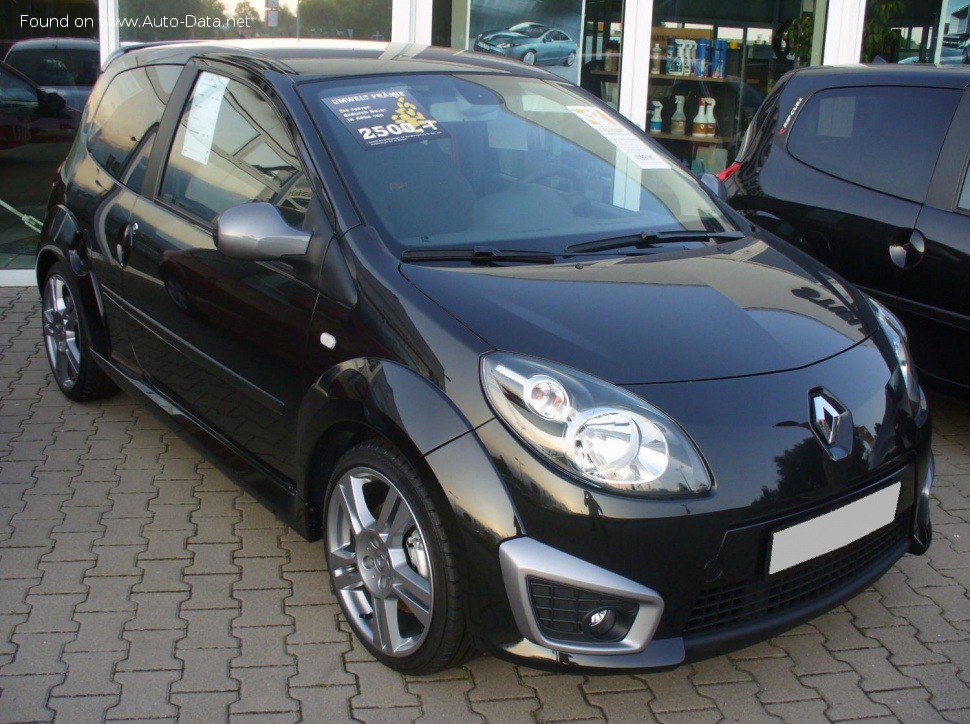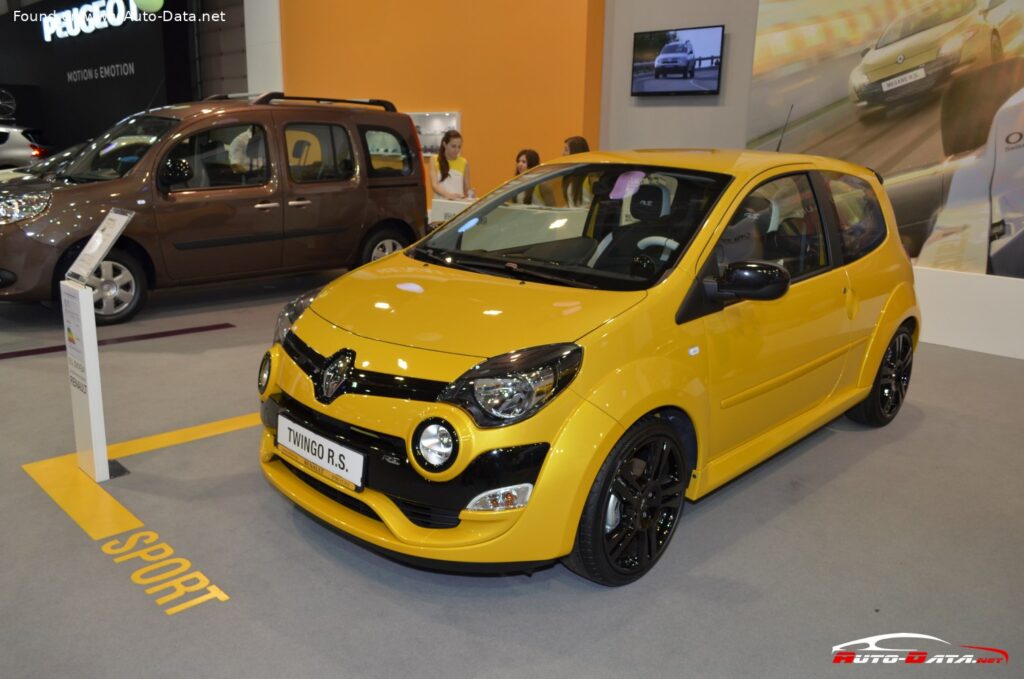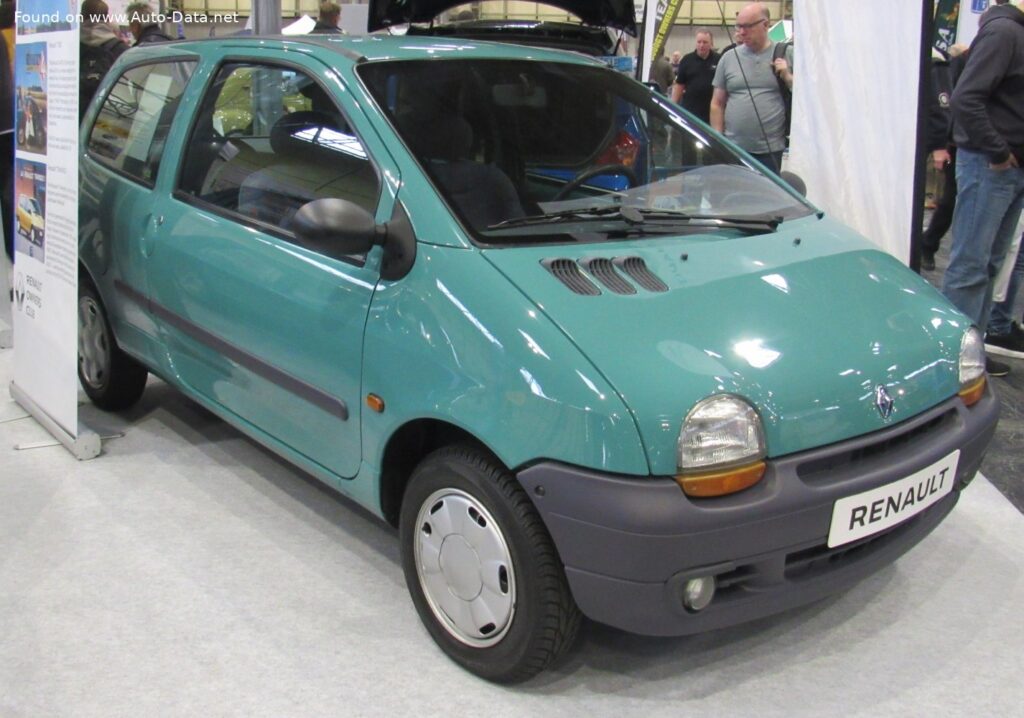
The Renault Twingo I 1.2i 16V (75 Hp) is a supermini car produced by the French manufacturer Renault between 2001 and 2008. Representing the first generation of the Twingo, this model was a significant offering in the European city car market, known for its compact size, nimble handling, and relatively affordable price point. While not officially sold in the United States, the Twingo I was a popular choice for urban drivers across Europe, offering a practical and economical transportation solution. It competed with vehicles like the Fiat Panda, Peugeot 106, and Volkswagen Polo in the small hatchback segment.
Renault Twingo I: A Detailed Overview
The Twingo I was designed as a modern and appealing alternative to existing small cars. Its distinctive styling, penned by Patrick Le Quément, aimed to move away from the boxy designs common in the segment. The 1.2i 16V variant, producing 75 horsepower, was a common engine choice, balancing fuel efficiency with adequate performance for city driving. The Twingo’s emphasis on practicality and ease of use made it a favorite among younger drivers and those seeking a convenient urban vehicle.
Engine & Performance
The Renault Twingo I 1.2i 16V is powered by a 1.2-liter inline four-cylinder gasoline engine, designated the D4F. This engine produces a maximum power output of 75 horsepower at 5500 rpm and 105 Nm (77.44 lb.-ft.) of torque at 4250 rpm. The engine features multi-port fuel injection and a double overhead camshaft (DOHC) valvetrain, contributing to its relatively efficient operation. The power-to-weight ratio of 11.3 kg/Hp (88.2 Hp/tonne) provides adequate acceleration for urban environments.
Performance figures include a 0 to 62 mph (0 to 100 km/h) acceleration time of 11.7 seconds, and a top speed of 104.39 mph (168 km/h). While not a performance-oriented vehicle, the Twingo I 1.2i 16V offers sufficient power for everyday driving. Fuel economy is a strong point, with combined fuel consumption rated at 5.9 l/100 km (39.9 US mpg or 47.9 UK mpg). The engine’s naturally aspirated design and relatively small displacement contribute to its fuel efficiency.
Design & Features
The Renault Twingo I is a three-door hatchback with seating for four passengers. Its compact dimensions – measuring 3430 mm (135.04 in) in length, 1630 mm (64.17 in) in width, and 1420 mm (55.91 in) in height – make it exceptionally easy to maneuver and park in congested urban areas. The Twingo’s design prioritized interior space efficiency, maximizing passenger and cargo capacity within its small footprint.
The interior of the Twingo I is functional and straightforward, with a focus on practicality. Features included a basic instrument cluster, manual air conditioning (often optional), and a relatively spacious cabin for its size. Safety features for the era included an Anti-lock Braking System (ABS) as standard or optional equipment, depending on the trim level. The rear seats can be folded down to increase cargo space, expanding from a minimum of 170 liters (6 cu. ft.) to a maximum of 1095 liters (38.67 cu. ft.). The Twingo’s design was considered modern for its time, with a rounded shape and relatively large windows for good visibility.
Technical Specifications
| Brand | Renault |
| Model | Twingo |
| Generation | Twingo I |
| Type (Engine) | 1.2i 16V (75 Hp) |
| Start of production | 2001 |
| End of production | 2008 |
| Powertrain Architecture | Internal Combustion engine |
| Body type | Hatchback |
| Seats | 4 |
| Doors | 3 |
| Fuel consumption (urban) | 7.9 l/100 km (29.8 US mpg, 35.8 UK mpg, 12.7 km/l) |
| Fuel consumption (extra urban) | 4.9 l/100 km (48 US mpg, 57.6 UK mpg, 20.4 km/l) |
| Fuel consumption (combined) | 5.9 l/100 km (39.9 US mpg, 47.9 UK mpg, 16.9 km/l) |
| Fuel Type | Petrol (Gasoline) |
| Acceleration 0 – 100 km/h | 11.7 sec |
| Acceleration 0 – 62 mph | 11.7 sec |
| Acceleration 0 – 60 mph | 11.1 sec |
| Maximum speed | 168 km/h (104.39 mph) |
| Weight-to-power ratio | 11.3 kg/Hp, 88.2 Hp/tonne |
| Weight-to-torque ratio | 8.1 kg/Nm, 123.5 Nm/tonne |
| Power | 75 Hp @ 5500 rpm |
| Power per litre | 65.3 Hp/l |
| Torque | 105 Nm @ 4250 rpm (77.44 lb.-ft. @ 4250 rpm) |
| Engine layout | Front, Transverse |
| Engine Model/Code | D4F |
| Engine displacement | 1149 cm3 (70.12 cu. in.) |
| Number of cylinders | 4 |
| Engine configuration | Inline |
| Cylinder Bore | 69 mm (2.72 in.) |
| Piston Stroke | 76.8 mm (3.02 in.) |
| Compression ratio | 9.8:1 |
| Number of valves per cylinder | 4 |
| Fuel injection system | Multi-port manifold injection |
| Engine aspiration | Naturally aspirated engine |
| Valvetrain | DOHC |
| Engine oil capacity | 4 l (4.23 US qt | 3.52 UK qt) |
| Coolant | 5 l (5.28 US qt | 4.4 UK qt) |
| Kerb Weight | 850 kg (1873.93 lbs.) |
| Max. weight | 1260 kg (2777.82 lbs.) |
| Max load | 410 kg (903.9 lbs.) |
| Trunk (boot) space – minimum | 170 l (6 cu. ft.) |
| Trunk (boot) space – maximum | 1095 l (38.67 cu. ft.) |
| Fuel tank capacity | 40 l (10.57 US gal | 8.8 UK gal) |
| Length | 3430 mm (135.04 in.) |
| Width | 1630 mm (64.17 in.) |
| Height | 1420 mm (55.91 in.) |
| Wheelbase | 2350 mm (92.52 in.) |
| Front track | 1415 mm (55.71 in.) |
| Rear (Back) track | 1375 mm (54.13 in.) |
| Drivetrain Architecture | Front wheel drive |
| Number of gears and type of gearbox | 5 gears, manual transmission |
| Front suspension | Wishbone |
| Rear suspension | Coil spring |
| Front brakes | Disc |
| Rear brakes | Drum |
| Assisting systems | ABS (Anti-lock braking system) |
| Steering type | Steering rack and pinion |
| Power steering | Hydraulic Steering |
| Tires size | 155/65 R14 |
| Wheel rims size | 14 |