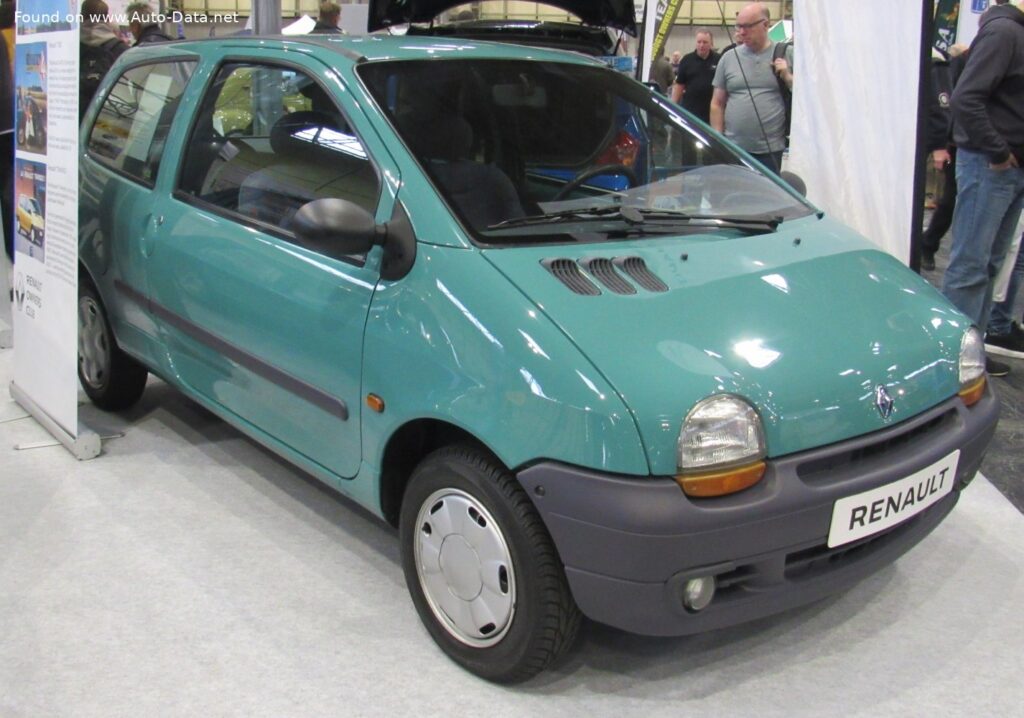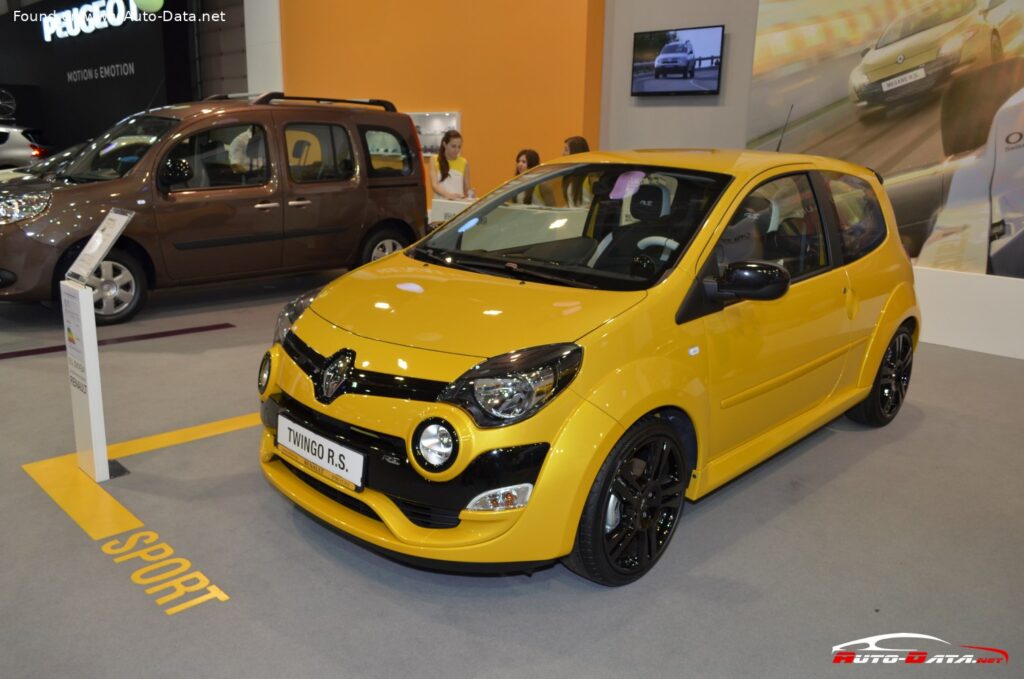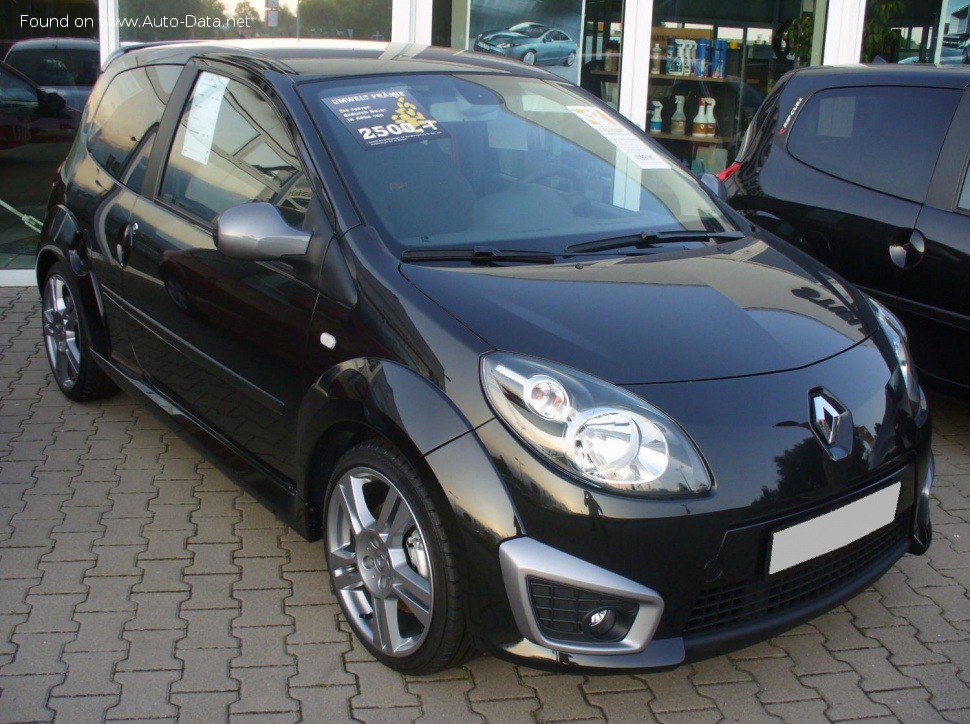
The Renault Twingo II 1.2 16V (76 Hp), produced between 2007 and 2011, represents the second generation of Renault’s popular city car. Positioned as a supermini, the Twingo II aimed to provide an affordable, practical, and stylish option for urban drivers, particularly in Europe where it found its largest market. While not officially sold in the United States, the Twingo II exemplifies the European approach to compact car design, prioritizing fuel efficiency and maneuverability. This generation marked a significant departure from the original Twingo, offering a more refined interior, improved safety features, and a wider range of engine options, including the 1.2-liter 16-valve petrol engine detailed here.
Renault Twingo II: An Overview
The Twingo II was a key model in Renault’s lineup, designed to compete with vehicles like the Fiat Panda, Peugeot 107, and Citroën C1. It offered a practical solution for navigating congested city streets, thanks to its small footprint and responsive handling. The 1.2 16V engine variant, producing 76 horsepower, was a popular choice, balancing acceptable performance with good fuel economy. The Twingo II’s design focused on maximizing interior space within a compact exterior, making it a versatile vehicle for both drivers and passengers.
Engine & Performance
The Renault Twingo II 1.2 16V is powered by a 1.2-liter inline four-cylinder petrol engine, designated the D4F. This naturally aspirated engine produces 76 horsepower at 5500 rpm and 107 Nm (78.92 lb.-ft.) of torque at 4250 rpm. While not a performance-oriented engine, it provides adequate power for city driving and short highway trips. The engine features multi-port fuel injection and an overhead camshaft (OHC) valvetrain. The engine’s power-to-weight ratio is 13.6 kg/Hp, and its torque-to-weight ratio is 9.6 kg/Nm, contributing to its relatively nimble feel. Acceleration from 0 to 100 km/h (0-62 mph) takes 13.6 seconds, while 0-60 mph is achieved in approximately 12.9 seconds. The Twingo II 1.2 16V has a maximum speed of 173 km/h (107.5 mph). Fuel economy is a strong point, with combined cycle consumption rated at 5.6 l/100 km (42 US mpg, 50.4 UK mpg).
Design & Features
The Twingo II is a three-door hatchback with seating for four passengers. Its design is characterized by a rounded, contemporary aesthetic, a departure from the more angular styling of the original Twingo. The interior is designed to be practical and user-friendly, with a focus on maximizing space. Key features of the Twingo II include a relatively spacious cabin for its size, a flexible seating arrangement, and a decent-sized trunk offering 230 liters (8.12 cu. ft.) of space with the rear seats up, expanding to 959 liters (33.87 cu. ft.) when folded down. Safety features, for the time, included ABS (Anti-lock Braking System) as standard equipment. The Twingo II’s compact dimensions (3602 mm/141.81 in. long, 1665 mm/65.55 in. wide, and 1470 mm/57.87 in. high) make it easy to maneuver and park in urban environments. The vehicle utilizes a hydraulic power steering system and a five-speed manual transmission.
Technical Specifications
| Brand | Renault |
| Model | Twingo |
| Generation | Twingo II |
| Type (Engine) | 1.2 16V (76 Hp) |
| Start of production | 2007 |
| End of production | 2011 |
| Powertrain Architecture | Internal Combustion engine |
| Body type | Hatchback |
| Seats | 4 |
| Doors | 3 |
| Fuel consumption (urban) | 7 l/100 km (33.6 US mpg, 40.4 UK mpg, 14.3 km/l) |
| Fuel consumption (extra urban) | 4.8 l/100 km (49 US mpg, 58.9 UK mpg, 20.8 km/l) |
| Fuel consumption (combined) | 5.6 l/100 km (42 US mpg, 50.4 UK mpg, 17.9 km/l) |
| Fuel Type | Petrol (Gasoline) |
| Acceleration 0 – 100 km/h | 13.6 sec |
| Acceleration 0 – 62 mph | 13.6 sec |
| Acceleration 0 – 60 mph | 12.9 sec |
| Maximum speed | 173 km/h (107.5 mph) |
| Emission standard | Euro 4 |
| Weight-to-power ratio | 13.6 kg/Hp |
| Weight-to-torque ratio | 9.6 kg/Nm |
| Power | 76 Hp @ 5500 rpm |
| Torque | 107 Nm @ 4250 rpm (78.92 lb.-ft. @ 4250 rpm) |
| Engine layout | Front, Transverse |
| Engine Model/Code | D4F |
| Engine displacement | 1149 cm3 (70.12 cu. in.) |
| Number of cylinders | 4 |
| Engine configuration | Inline |
| Cylinder Bore | 69 mm (2.72 in.) |
| Piston Stroke | 76.8 mm (3.02 in.) |
| Compression ratio | 10.6:1 |
| Number of valves per cylinder | 4 |
| Fuel injection system | Multi-port manifold injection |
| Engine aspiration | Naturally aspirated engine |
| Valvetrain | OHC |
| Engine oil capacity | 4 l (4.23 US qt | 3.52 UK qt) |
| Coolant capacity | 5.5 l (5.81 US qt | 4.84 UK qt) |
| Kerb Weight | 1030 kg (2270.76 lbs.) |
| Max. weight | 1375 kg (3031.36 lbs.) |
| Max load | 345 kg (760.59 lbs.) |
| Trunk (boot) space – minimum | 230 l (8.12 cu. ft.) |
| Trunk (boot) space – maximum | 959 l (33.87 cu. ft.) |
| Fuel tank capacity | 40 l (10.57 US gal | 8.8 UK gal) |
| Length | 3602 mm (141.81 in.) |
| Width | 1665 mm (65.55 in.) |
| Height | 1470 mm (57.87 in.) |
| Wheelbase | 2367 mm (93.19 in.) |
| Minimum turning circle | 10.55 m (34.61 ft.) |
| Drivetrain | Front wheel drive |
| Number of gears | 5 gears, manual transmission |
| Front suspension | Wishbone |
| Rear suspension | Coil spring |
| Front brakes | Disc |
| Rear brakes | Drum |
| Steering type | Steering rack and pinion |
| Power steering | Hydraulic Steering |
| Tires size | 165/65 R14; 175/65 R14; 185/55 R15 |
| Wheel rims size | 14; 15 |