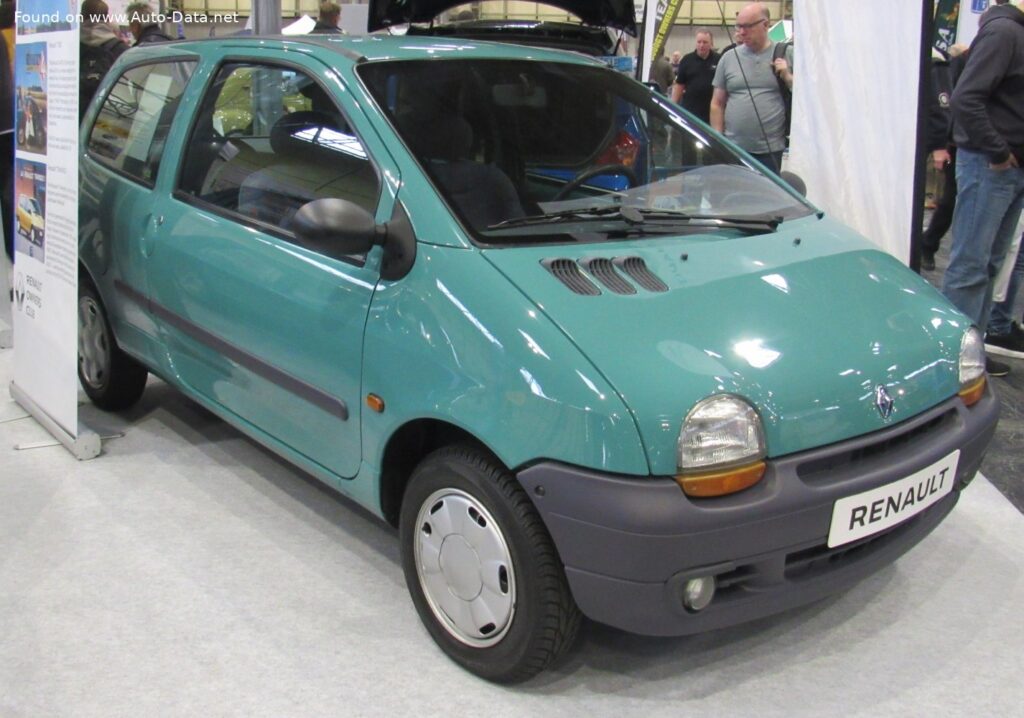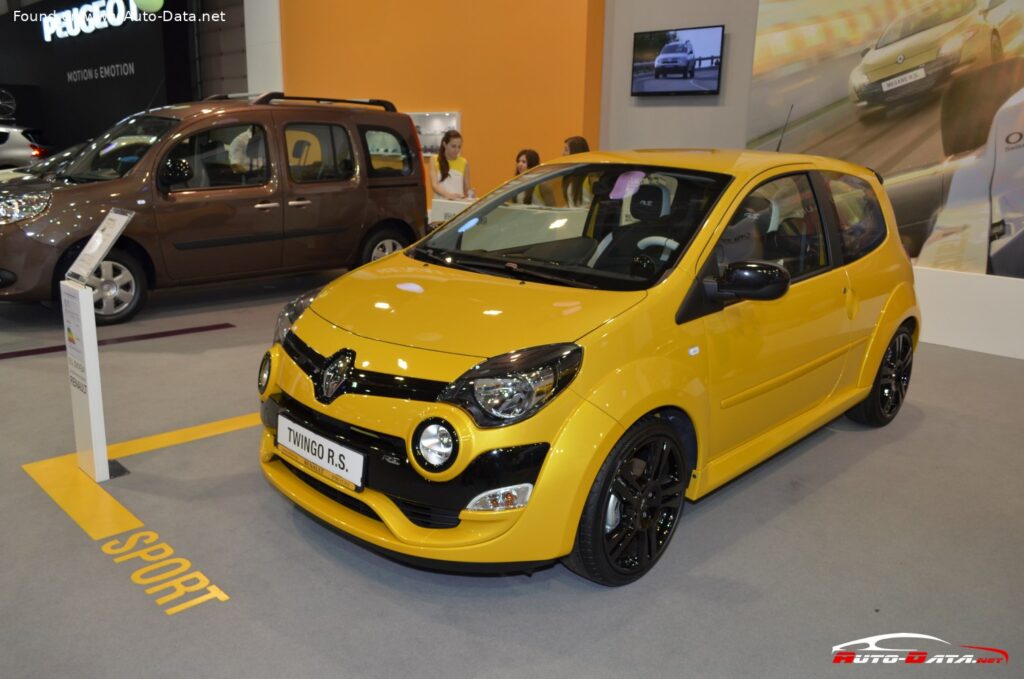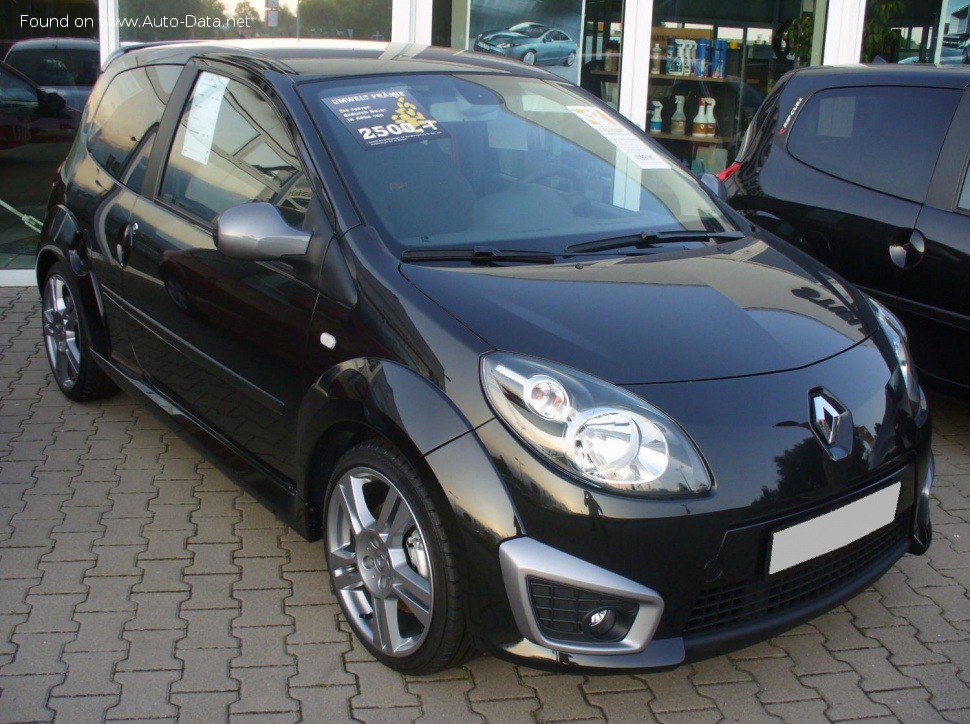
The Renault Twingo II 1.5 dCi (64 Hp) is a supermini car produced by the French manufacturer Renault from 2007 to 2011. Representing the second generation of the Twingo, this model was primarily aimed at the European market, offering an affordable and economical city car option. While not officially sold in the United States, the Twingo II exemplifies Renault’s commitment to compact, fuel-efficient vehicles popular throughout Europe. This particular variant, powered by a 1.5-liter diesel engine, focused on maximizing fuel economy and minimizing emissions, aligning with increasingly stringent European regulations.
Renault Twingo II 1.5 dCi: An Overview
The Twingo II represented a significant departure from its predecessor, growing in size and offering a more refined interior and improved safety features. It competed directly with other superminis like the Fiat Panda, Peugeot 107, and Citroën C1. The 1.5 dCi engine option was particularly popular in countries where diesel fuel was more affordable and where long commutes were common. The Twingo II aimed to provide a practical and economical solution for urban driving, prioritizing fuel efficiency and ease of maneuverability.
Engine & Performance
The heart of the Twingo II 1.5 dCi is a 1.5-liter inline four-cylinder diesel engine, designated the K9K. This engine produces 64 horsepower at 3750 rpm and 160 Nm (118.01 lb.-ft.) of torque at 1900 rpm. While not a performance-oriented vehicle, the engine provides adequate power for city driving and occasional highway use. The engine’s relatively high compression ratio of 18.8:1 contributes to its fuel efficiency. Acceleration from 0 to 100 km/h (0 to 62 mph) takes 14.9 seconds, and 0 to 60 mph is achieved in approximately 14.2 seconds. The top speed is rated at 164 km/h (101.9 mph). The engine is naturally aspirated and utilizes a diesel commonrail fuel injection system for optimized combustion and reduced emissions. The power-to-weight ratio is 16.5 kg/Hp, and the torque-to-weight ratio is 6.6 kg/Nm.
Design & Features
The Twingo II is a three-door hatchback with seating for four passengers. Its design is characterized by rounded edges and a relatively tall, narrow profile, maximizing interior space within a compact footprint. The interior is functional and designed for practicality, with durable materials and a focus on ease of use. Key features included power steering (hydraulic), ABS (Anti-lock Braking System), and front disc brakes paired with rear drum brakes. The trunk space is reasonably versatile, offering 230 liters (8.12 cu. ft.) with the rear seats up and expanding to 959 liters (33.87 cu. ft.) with the rear seats folded down. Safety features, while basic by modern standards, were improved over the original Twingo, reflecting evolving European safety regulations. The Twingo II’s compact size made it exceptionally easy to park and maneuver in congested urban environments.
Technical Specifications
| Brand | Renault |
| Model | Twingo |
| Generation | Twingo II |
| Type (Engine) | 1.5 dCi (64 Hp) |
| Start of production | 2007 |
| End of production | 2011 |
| Powertrain Architecture | Internal Combustion engine |
| Body type | Hatchback |
| Seats | 4 |
| Doors | 3 |
| Fuel consumption (urban) | 5.2 l/100 km (45.2 US mpg, 54.3 UK mpg, 19.2 km/l) |
| Fuel consumption (extra urban) | 3.8 l/100 km (61.9 US mpg, 74.3 UK mpg, 26.3 km/l) |
| Fuel consumption (combined) | 4.3 l/100 km (54.7 US mpg, 65.7 UK mpg, 23.3 km/l) |
| Fuel Type | Diesel |
| Acceleration 0 – 100 km/h | 14.9 sec |
| Acceleration 0 – 62 mph | 14.9 sec |
| Acceleration 0 – 60 mph | 14.2 sec |
| Maximum speed | 164 km/h (101.9 mph) |
| Emission standard | Euro 4 |
| Weight-to-power ratio | 16.5 kg/Hp |
| Weight-to-torque ratio | 6.6 kg/Nm |
| Power | 64 Hp @ 3750 rpm |
| Torque | 160 Nm @ 1900 rpm (118.01 lb.-ft. @ 1900 rpm) |
| Engine layout | Front, Transverse |
| Engine Model/Code | K9K |
| Engine displacement | 1461 cm3 (89.16 cu. in.) |
| Number of cylinders | 4 |
| Engine configuration | Inline |
| Cylinder Bore | 76 mm (2.99 in.) |
| Piston Stroke | 80.5 mm (3.17 in.) |
| Compression ratio | 18.8:1 |
| Number of valves per cylinder | 2 |
| Fuel injection system | Diesel Commonrail |
| Engine aspiration | Naturally aspirated |
| Valvetrain | OHC |
| Engine oil capacity | 4.4 l (4.65 US qt | 3.87 UK qt) |
| Coolant | 5.7 l (6.02 US qt | 5.02 UK qt) |
| Kerb Weight | 1055 kg (2325.88 lbs.) |
| Max. weight | 1420 kg (3130.56 lbs.) |
| Max load | 365 kg (804.69 lbs.) |
| Trunk (boot) space – minimum | 230 l (8.12 cu. ft.) |
| Trunk (boot) space – maximum | 959 l (33.87 cu. ft.) |
| Fuel tank capacity | 40 l (10.57 US gal | 8.8 UK gal) |
| Length | 3602 mm (141.81 in.) |
| Width | 1665 mm (65.55 in.) |
| Height | 1470 mm (57.87 in.) |
| Wheelbase | 2367 mm (93.19 in.) |
| Drivetrain Architecture | Front wheel drive |
| Number of gears and type of gearbox | 5 gears, manual transmission |
| Front suspension | Wishbone |
| Rear suspension | Coil spring |
| Front brakes | Disc |
| Rear brakes | Drum |
| Assisting systems | ABS (Anti-lock braking system) |
| Steering type | Steering rack and pinion |
| Power steering | Hydraulic Steering |
| Tires size | 165/65 R14; 175/65 R14 |
| Wheel rims size | 14 |
The Renault Twingo II 1.5 dCi, while not a vehicle commonly found in the United States, represents a significant example of European small car design and engineering. Its focus on fuel efficiency, practicality, and affordability made it a popular choice for urban drivers, and its compact dimensions and nimble handling contributed to its appeal in crowded city environments.