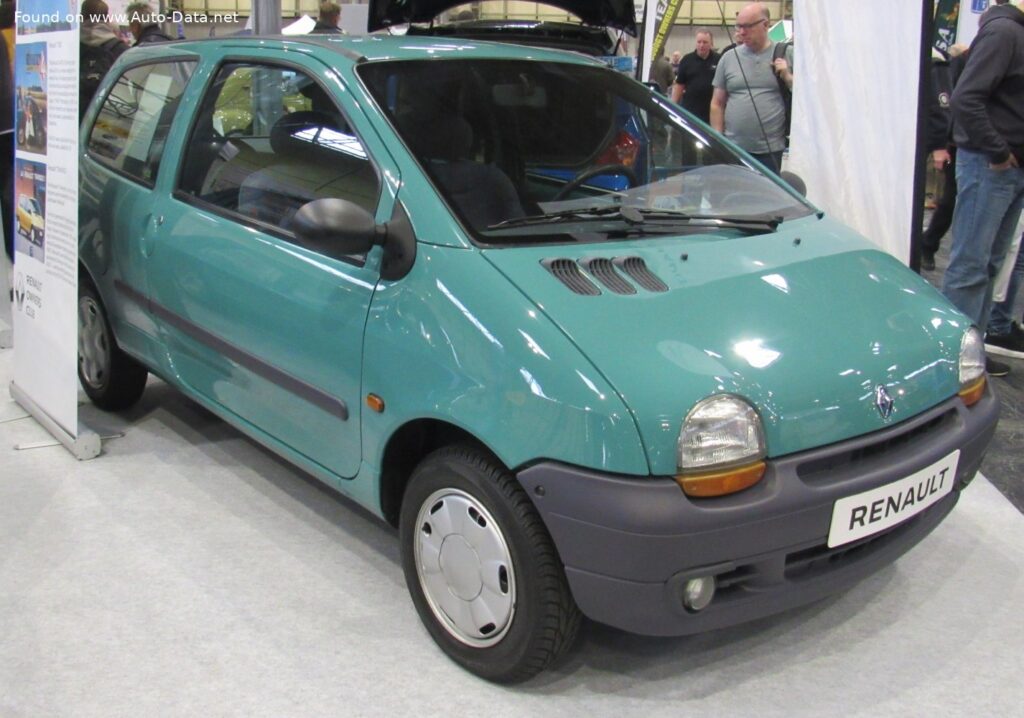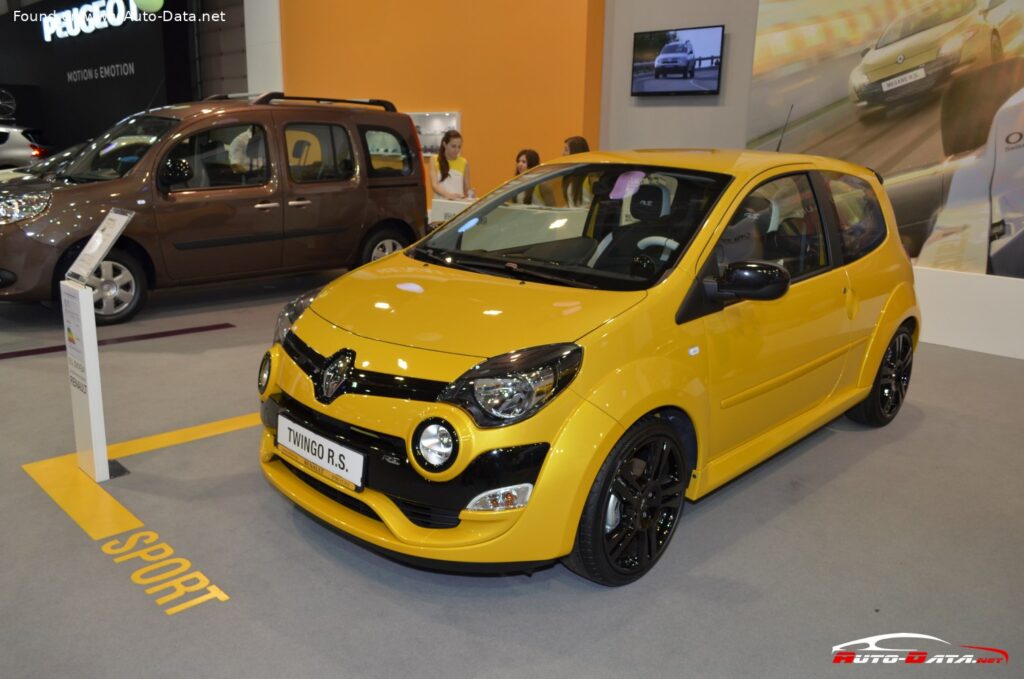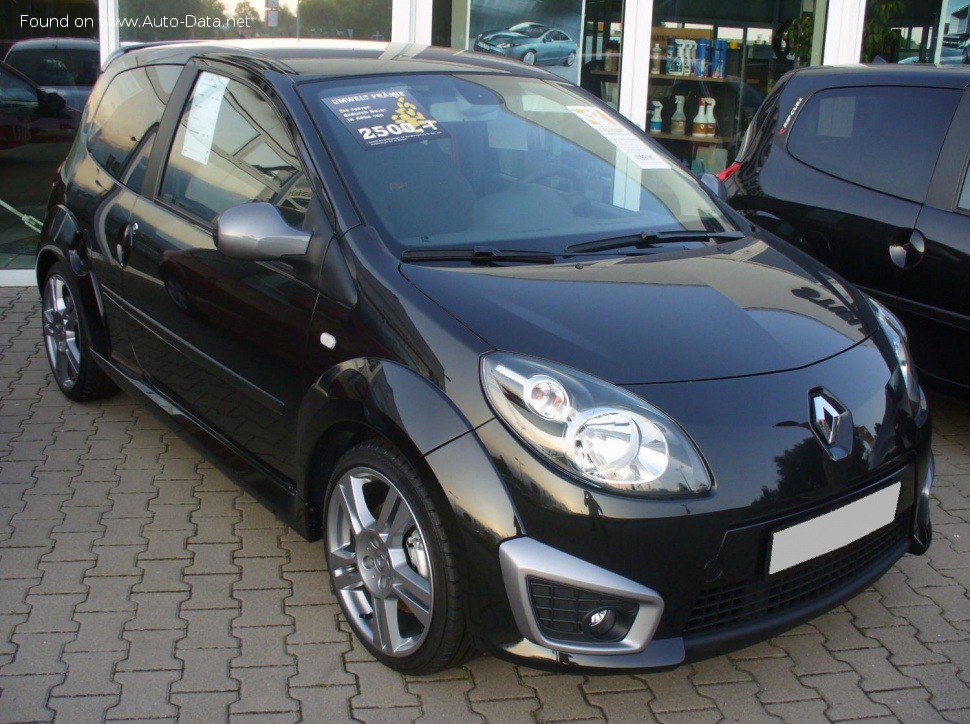
The Renault Twingo II RS 1.6 16V (133 Hp) is a high-performance variant of the second-generation Renault Twingo, a supermini produced by the French manufacturer Renault. Introduced in 2008 and discontinued in 2010, the RS model was designed to offer a more engaging driving experience than the standard Twingo. While the Twingo itself wasn’t officially sold in the United States, it was a popular choice in Europe as an affordable and practical city car. The RS version aimed to capture a niche market seeking a sporty and nimble hatchback, competing with models like the Peugeot 207 GTI and the Citroën DS3 Racing. This article details the technical specifications and characteristics of this short-lived but fondly remembered hot hatch.
Renault Twingo II RS: Overview and Market Position
The Twingo II, launched in 2007, represented a significant departure from its predecessor, growing in size and adopting a more modern design. Renault Sport, the performance division of Renault, saw an opportunity to create a sporty version, capitalizing on the Twingo’s inherently light weight and nimble chassis. The Twingo II RS was primarily marketed in Europe, where the demand for small, efficient, and fun-to-drive cars is substantial. It filled a gap between the standard Twingo and larger, more expensive hot hatches, offering a relatively affordable entry point into the world of performance motoring. The car was praised for its handling and responsiveness, making it a favorite among driving enthusiasts.
Engine & Performance
The heart of the Twingo II RS is its 1.6-liter inline-four cylinder engine, designated K4M. This naturally aspirated engine produces 133 horsepower at 6,750 rpm and 160 Nm (118.01 lb.-ft.) of torque at 4,400 rpm. While not exceptionally powerful by modern standards, the engine’s output is sufficient to propel the lightweight Twingo with considerable enthusiasm. The power-to-weight ratio of 7.9 kg/Hp and torque-to-weight ratio of 6.6 kg/Nm contribute to its lively performance. The engine features a double overhead camshaft (DOHC) valvetrain and multi-port fuel injection. Acceleration from 0 to 100 km/h (0-62 mph) takes 8.7 seconds, while 0-60 mph is achieved in a calculated 8.3 seconds. The Twingo II RS boasts a top speed of 201 km/h (124.9 mph). Fuel economy is rated at 6.7 l/100 km (35.1 US mpg) combined, with 9 l/100 km (26.1 US mpg) in urban conditions and 5.6 l/100 km (42 US mpg) on the open road. The engine meets Euro 5 emission standards.
Design & Features
The Twingo II RS is a three-door hatchback with seating for four passengers. Its design incorporates sporty elements to distinguish it from the standard Twingo, including a more aggressive front bumper, side skirts, and a rear spoiler. The RS model also features unique alloy wheels, typically 16- or 17-inch in diameter, fitted with 195/45 R16 or 195/40 R17 tires respectively. Inside, the RS boasts sport seats, aluminum pedals, and a leather-wrapped steering wheel. Safety features include an Anti-lock Braking System (ABS). The interior prioritizes functionality and a driver-focused layout. The rear seats fold down, increasing the trunk space from a minimum of 165 liters (5.83 cu. ft.) to a maximum of 959 liters (33.87 cu. ft.). The car’s compact dimensions – a length of 3607 mm (142.01 in.), a width of 1688 mm (66.46 in.), and a height of 1460 mm (57.48 in.) – make it well-suited for navigating crowded city streets.
Technical Specifications
| Brand | Renault |
| Model | Twingo |
| Generation | Twingo II |
| Type (Engine) | RS 1.6 16V (133 Hp) |
| Start of production | 2008 |
| End of production | 2010 |
| Powertrain Architecture | Internal Combustion engine |
| Body type | Hatchback |
| Seats | 4 |
| Doors | 3 |
| Fuel consumption (urban) | 9 l/100 km (26.1 US mpg) |
| Fuel consumption (extra urban) | 5.6 l/100 km (42 US mpg) |
| Fuel consumption (combined) | 6.7 l/100 km (35.1 US mpg) |
| CO2 emissions | 155 g/km |
| Fuel Type | Petrol (Gasoline) |
| Acceleration 0 – 100 km/h | 8.7 sec |
| Acceleration 0 – 62 mph | 8.7 sec |
| Acceleration 0 – 60 mph | 8.3 sec |
| Maximum speed | 201 km/h (124.9 mph) |
| Emission standard | Euro 5 |
| Weight-to-power ratio | 7.9 kg/Hp |
| Weight-to-torque ratio | 6.6 kg/Nm |
| Power | 133 Hp @ 6750 rpm |
| Torque | 160 Nm @ 4400 rpm (118.01 lb.-ft. @ 4400 rpm) |
| Engine layout | Front, Transverse |
| Engine Model/Code | K4M |
| Engine displacement | 1598 cm3 (97.52 cu. in.) |
| Number of cylinders | 4 |
| Engine configuration | Inline |
| Cylinder Bore | 79.5 mm (3.13 in.) |
| Piston Stroke | 80.5 mm (3.17 in.) |
| Compression ratio | 11:1 |
| Number of valves per cylinder | 4 |
| Fuel injection system | Multi-port manifold injection |
| Engine aspiration | Naturally aspirated engine |
| Valvetrain | DOHC |
| Engine oil capacity | 5 l (5.28 US qt | 4.4 UK qt) |
| Coolant | 5.7 l (6.02 US qt | 5.02 UK qt) |
| Kerb Weight | 1049 kg (2312.65 lbs.) |
| Max. weight | 1470 kg (3240.8 lbs.) |
| Max load | 421 kg (928.15 lbs.) |
| Trunk (boot) space – minimum | 165 l (5.83 cu. ft.) |
| Trunk (boot) space – maximum | 959 l (33.87 cu. ft.) |
| Fuel tank capacity | 40 l (10.57 US gal | 8.8 UK gal) |
| Length | 3607 mm (142.01 in.) |
| Width | 1688 mm (66.46 in.) |
| Width including mirrors | 1927 mm (75.87 in.) |
| Height | 1460 mm (57.48 in.) |
| Wheelbase | 2368 mm (93.23 in.) |
| Front track | 1460 mm (57.48 in.) |
| Rear (Back) track | 1445 mm (56.89 in.) |
| Front overhang | 714 mm (28.11 in.) |
| Rear overhang | 525 mm (20.67 in.) |
| Ride height (ground clearance) | 120 mm (4.72 in.) |
| Minimum turning circle (turning diameter) | 10.7 m (35.1 ft.) |
| Drivetrain Architecture | Front wheel drive |
| Number of gears and type of gearbox | 5 gears, manual transmission |
| Front brakes | Ventilated discs |
| Rear brakes | Disc |
| Assisting systems | ABS (Anti-lock braking system) |
| Steering type | Steering rack and pinion |
| Power steering | Electric Steering |
| Tires size | 195/45 R16; 195/40 R17 |
| Wheel rims size | 7J x 16; 7J x 17 |
The Renault Twingo II RS, despite its short production run, remains a popular choice among enthusiasts seeking a fun, affordable, and engaging driving experience in a compact package. Its blend of nimble handling, responsive engine, and practical hatchback design has cemented its place as a memorable offering in the hot hatch segment.