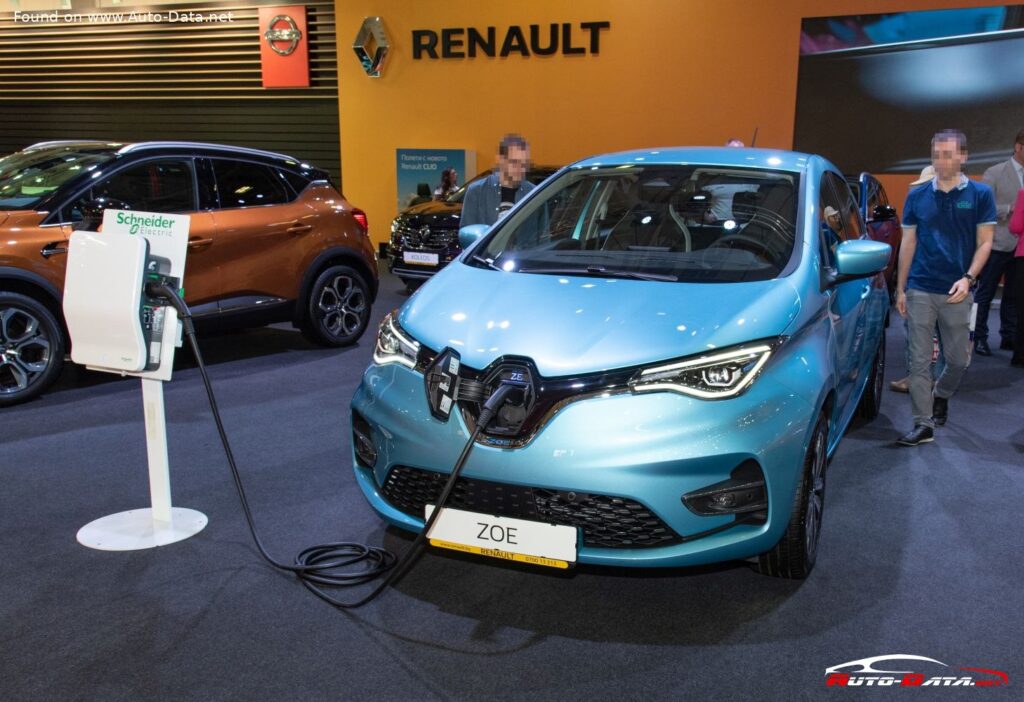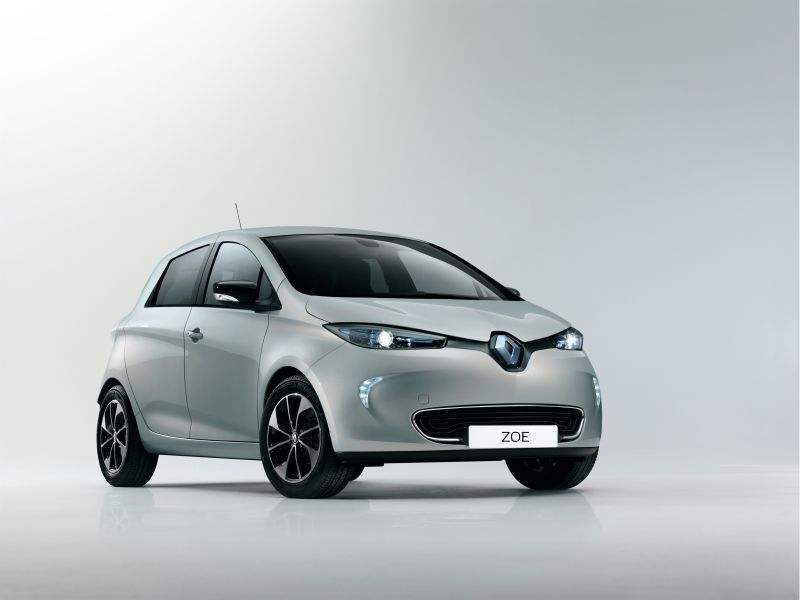
The Renault Zoe I R240 25.9 kWh is a subcompact, all-electric hatchback produced by the French manufacturer Renault from 2015 to 2016. Positioned as Renault’s entry into the burgeoning electric vehicle (EV) market, the Zoe was primarily aimed at European urban commuters seeking a zero-emission alternative to traditional gasoline-powered cars. While not officially sold in the United States, the Zoe represents a significant step in the development and popularization of affordable electric mobility in Europe, paving the way for subsequent EV models from Renault and other manufacturers. The R240 designation refers to its New European Driving Cycle (NEDC) range of 240 kilometers (approximately 149 miles) on a full charge.
Renault Zoe I R240: An Overview
The Zoe I represents the first generation of the Zoe model, and the R240 variant was one of the initial configurations offered. It was designed to address the growing demand for environmentally friendly transportation in densely populated European cities. The vehicle’s compact size, combined with its zero tailpipe emissions, made it particularly well-suited for navigating congested urban environments and benefiting from government incentives promoting EV adoption. The Zoe’s development focused on providing a practical and affordable electric vehicle option, prioritizing range and usability over outright performance.
Engine & Performance
The Renault Zoe I R240 is powered by a single electric motor, designated the 5Agen3, producing 88 horsepower (Hp) at 3000-11300 rpm and 220 Newton-meters (162.26 lb.-ft.) of torque between 250-2500 rpm. This electric motor drives the front wheels through a single-speed automatic transmission. Acceleration from 0 to 100 km/h (0-62 mph) takes 13.5 seconds, while 0 to 60 mph is achieved in approximately 12.8 seconds. The top speed is limited to 135 km/h (83.89 mph). The powertrain architecture is a Battery Electric Vehicle (BEV), meaning it relies solely on electricity for propulsion. The weight-to-power ratio is 16.7 kg/Hp, and the weight-to-torque ratio is 6.7 kg/Nm.
Design & Features
The Zoe I is a five-door hatchback with a practical and functional design. Its body measures 4084 mm (160.79 in.) in length, 1730 mm (68.11 in.) in width, and 1562 mm (61.5 in.) in height. The wheelbase is 2588 mm (101.89 in.). The interior offers seating for five passengers and provides a usable cargo space of 338 liters (11.94 cu. ft.) with the rear seats up, expanding to 1225 liters (43.26 cu. ft.) when the rear seats are folded down. Safety features included ABS (Anti-lock Braking System) as standard. The Zoe’s design prioritized aerodynamic efficiency to maximize range, and the battery pack is located under the floor to optimize interior space and lower the center of gravity. The vehicle’s styling was relatively conservative, focusing on practicality and affordability rather than bold aesthetics.
Battery Technology and Range
A key component of the Zoe I R240 is its lithium-ion battery pack, with a gross capacity of 25.9 kWh and a net (usable) capacity of 22 kWh. The battery operates at 400 volts and weighs 290 kg (639.34 lbs.). According to the NEDC testing cycle, the Zoe I R240 offers an all-electric range of 240 km (149.13 mi). Real-world range, however, is often lower and depends on driving conditions, speed, and climate control usage. Energy consumption is rated at 13.3 kWh/100 km (21.4 kWh/100 mi), equating to 157 MPGe, 7.5 km/kWh, or 4.7 mi/kWh. The battery location, beneath the floor, contributes to a lower center of gravity, improving handling and stability.
Technical Specifications
| Brand | Renault |
| Model | Zoe |
| Generation | Zoe I |
| Type (Engine) | R240 25.9 kWh (88 Hp) |
| Start of production | February, 2015 |
| End of production | December, 2016 |
| Powertrain Architecture | BEV (Electric Vehicle) |
| Body type | Hatchback |
| Seats | 5 |
| Doors | 5 |
| Fuel Type | Electricity |
| Acceleration 0 – 100 km/h | 13.5 sec |
| Acceleration 0 – 62 mph | 13.5 sec |
| Acceleration 0 – 60 mph | 12.8 sec |
| Maximum speed | 135 km/h (83.89 mph) |
| Weight-to-power ratio | 16.7 kg/Hp |
| Weight-to-torque ratio | 6.7 kg/Nm |
| Gross battery capacity | 25.9 kWh |
| Net (usable) battery capacity | 22 kWh |
| Battery voltage | 400 V |
| Battery technology | Lithium-ion (Li-Ion) |
| Battery weight | 290 kg (639.34 lbs.) |
| Battery location | Below the floor |
| All-electric range (NEDC) | 240 km (149.13 mi) |
| Average Energy consumption (NEDC) | 13.3 kWh/100 km (21.4 kWh/100 mi) |
| Electric motor power | 88 Hp @ 3000-11300 rpm |
| Electric motor Torque | 220 Nm (162.26 lb.-ft.) @ 250-2500 rpm |
| Electric motor model/code | 5Agen3 |
| Electric motor location | Front axle, Transverse |
| Kerb Weight | 1468 kg (3236.39 lbs.) |
| Max. weight | 1943 kg (4283.58 lbs.) |
| Max load | 475 kg (1047.2 lbs.) |
| Trunk (boot) space – minimum | 338 l (11.94 cu. ft.) |
| Trunk (boot) space – maximum | 1225 l (43.26 cu. ft.) |
| Length | 4084 mm (160.79 in.) |
| Width | 1730 mm (68.11 in.) |
| Width including mirrors | 1945 mm (76.57 in.) |
| Height | 1562 mm (61.5 in.) |
| Wheelbase | 2588 mm (101.89 in.) |
| Drive wheel | Front wheel drive |
| Number of gears | 1, automatic transmission |
The Renault Zoe I R240, while not a high-performance vehicle, played a crucial role in demonstrating the viability of electric vehicles for everyday use. Its affordability, practicality, and zero-emission operation made it a popular choice for environmentally conscious drivers in Europe, and it helped to accelerate the transition towards a more sustainable transportation future.