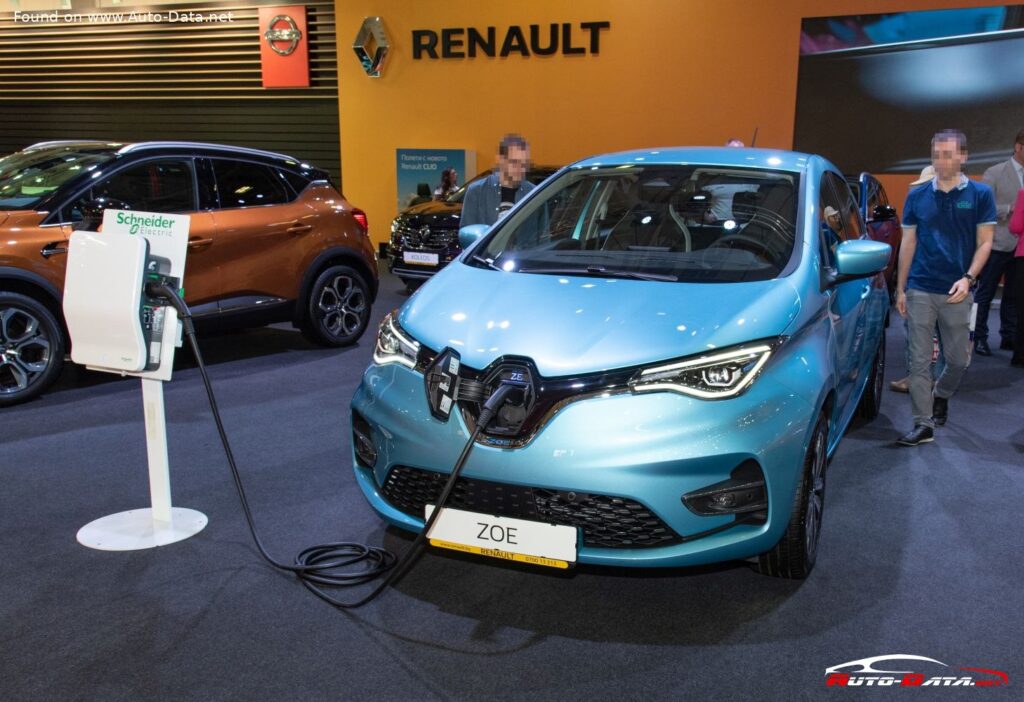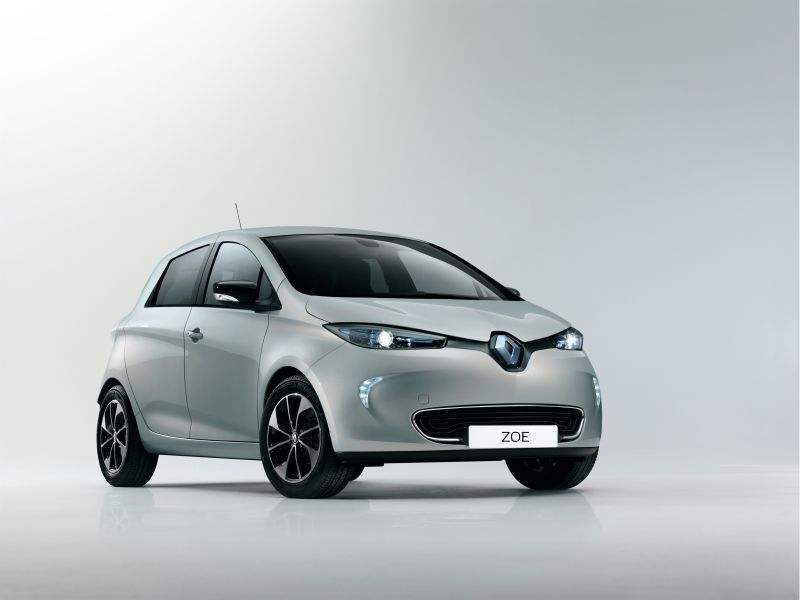
The Renault Zoe I R90 25.9 kWh is a supermini-class electric vehicle (EV) produced by the French manufacturer Renault. Introduced in 2017 and continuing through 2019, the Zoe represented Renault’s early commitment to a fully electric future. While not initially sold in the United States, the Zoe became a significant player in the European EV market, offering a practical and affordable electric option for urban commuters and small families. The R90 designation refers to the motor’s power output, signifying 92 horsepower. This first generation Zoe laid the groundwork for subsequent iterations and helped establish Renault as a key innovator in the electric vehicle sector.
Renault Zoe I R90 25.9 kWh: An Overview
The Zoe I R90 25.9 kWh occupies the supermini or subcompact hatchback segment. It was designed as a dedicated electric vehicle from the outset, unlike some early EVs that were conversions of existing internal combustion engine (ICE) cars. This allowed Renault to optimize the vehicle’s design for battery placement, weight distribution, and aerodynamic efficiency. The Zoe’s primary market was Europe, where it competed with other early EVs like the Nissan Leaf and BMW i3. Its appeal stemmed from its relatively affordable price point, practical range for daily commuting, and compact size, making it well-suited for navigating crowded city streets.
Engine & Performance
The Renault Zoe I R90 is powered by a single electric motor, designated 5AGEN3, producing 92 horsepower at 3000-11300 rpm and 220 Nm (162.26 lb.-ft.) of torque available from 250-2500 rpm. This power is delivered to the front wheels via a single-speed automatic transmission. The vehicle’s performance is geared towards efficiency rather than outright speed. Acceleration from 0 to 60 mph takes approximately 12.5 seconds, while 0-62 mph (0-100 km/h) is achieved in 13.2 seconds. The top speed is limited to 83.89 mph (135 km/h). The powertrain architecture is a Battery Electric Vehicle (BEV), meaning it relies solely on electricity for propulsion. The weight-to-power ratio is 16 kg/Hp, and the weight-to-torque ratio is 6.7 kg/Nm.
Design & Features
The Zoe I features a typical hatchback body style with five doors and seating for five passengers. Its design is functional and modern, prioritizing aerodynamic efficiency to maximize range. The battery pack, utilizing Lithium-ion technology, is located under the floor of the vehicle, contributing to a lower center of gravity and improved handling. The gross battery capacity is 25.9 kWh, with a usable (net) capacity of 22 kWh. This provides a New European Driving Cycle (NEDC) range of 225-240 km (139.81 – 149.13 mi).
Safety features included ABS (Anti-lock Braking System) as standard. Interior features focused on practicality and user-friendliness, with a focus on displaying information related to battery charge, range, and energy consumption. The trunk (boot) space offers 338 liters (11.94 cu. ft.) with the rear seats up and expands to 1225 liters (43.26 cu. ft.) when the rear seats are folded down. The Zoe’s compact dimensions – a length of 4084 mm (160.79 in.), a width of 1730 mm (68.11 in.), and a height of 1562 mm (61.5 in.) – make it easy to maneuver in urban environments.
Technical Specifications
| Brand | Renault |
| Model | Zoe |
| Generation | Zoe I |
| Type (Engine) | R90 25.9 kWh (92 Hp) |
| Start of production | 2017 |
| End of production | 2019 |
| Powertrain Architecture | BEV (Electric Vehicle) |
| Body type | Hatchback |
| Seats | 5 |
| Doors | 5 |
| Fuel Type | Electricity |
| Acceleration 0 – 100 km/h | 13.2 sec |
| Acceleration 0 – 62 mph | 13.2 sec |
| Acceleration 0 – 60 mph | 12.5 sec |
| Maximum speed | 135 km/h (83.89 mph) |
| Weight-to-power ratio | 16 kg/Hp |
| Weight-to-torque ratio | 6.7 kg/Nm |
| Gross battery capacity | 25.9 kWh |
| Net (usable) battery capacity | 22 kWh |
| Battery voltage | 400 V |
| Battery technology | Lithium-ion (Li-Ion) |
| Battery weight | 290 kg (639.34 lbs.) |
| Battery location | Below the floor |
| All-electric range (NEDC) | 225-240 km (139.81 – 149.13 mi) |
| Average Energy consumption (NEDC) | 13.3 kWh/100 km (21.4 kWh/100 mi) |
| Electric motor power | 92 Hp @ 3000-11300 rpm |
| Electric motor Torque | 220 Nm @ 250-2500 rpm (162.26 lb.-ft. @ 250-2500 rpm) |
| Electric motor model/code | 5AGEN3 |
| Electric motor location | Front axle, Transverse |
| System power | 92 Hp @ 3000-11300 rpm |
| System torque | 220 Nm @ 250-2500 rpm (162.26 lb.-ft. @ 250-2500 rpm) |
| Kerb Weight | 1470 kg (3240.8 lbs.) |
| Max. weight | 1965 kg (4332.08 lbs.) |
| Max load | 495 kg (1091.29 lbs.) |
| Trunk (boot) space – minimum | 338 l (11.94 cu. ft.) |
| Trunk (boot) space – maximum | 1225 l (43.26 cu. ft.) |
| Length | 4084 mm (160.79 in.) |
| Width | 1730 mm (68.11 in.) |
| Width including mirrors | 1945 mm (76.57 in.) |
| Height | 1562 mm (61.5 in.) |
| Wheelbase | 2588 mm (101.89 in.) |
| Front track | 1511 mm (59.49 in.) |
| Rear (Back) track | 1587 mm (62.48 in.) |
| Front overhang | 839 mm (33.03 in.) |
| Rear overhang | 657 mm (25.87 in.) |
| Ride height (ground clearance) | 120 mm (4.72 in.) |
| Minimum turning circle (turning diameter) | 10.56 m (34.65 ft.) |
| Drivetrain Architecture | One electric motor drives the front wheels. |
| Drive wheel | Front wheel drive |
| Number of gears and type of gearbox | 1 gears, automatic transmission |
| Front suspension | Independent type McPherson, Transverse stabilizer |
| Rear suspension | Transverse stabilizer, Torsion |
| Front brakes | Ventilated discs, 258 mm |
| Rear brakes | Drum, 228.6 mm |
| Assisting systems | ABS (Anti-lock braking system) |
| Steering type | Steering rack and pinion |
| Power steering | Electric Steering |
| Tires size | 185/65 R15; 195/55 R16; 205/45 R17 |
| Wheel rims size | 6J x 15; 6.5J x 16; 7J x 17 |
The Renault Zoe I R90 25.9 kWh played a crucial role in popularizing electric vehicles in Europe. It demonstrated that EVs could be practical, affordable, and suitable for everyday use. While the initial range was limited by today’s standards, it was sufficient for many urban commuters. The Zoe’s success paved the way for Renault to develop subsequent generations of the Zoe with improved range, performance, and features, solidifying its position as a leader in the electric vehicle market.