
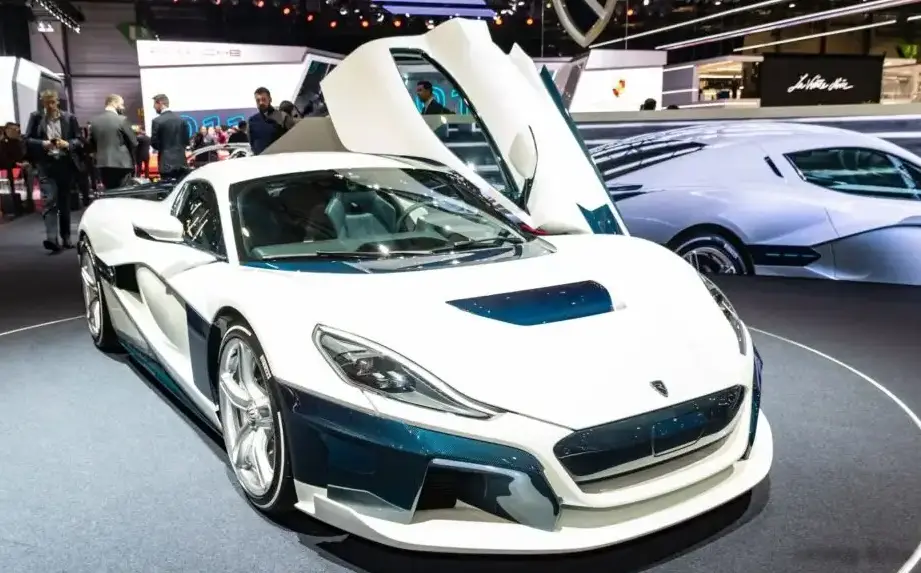
The Rimac C_Two, later renamed the Nevera, is an all-electric hypercar designed and manufactured by the Croatian automaker Rimac Automobili. Unveiled as a concept in 2018, production commenced in 2019, with initial deliveries beginning in 2021. Representing a significant leap forward in electric vehicle technology, the C_Two aimed to challenge established hypercar manufacturers with its unprecedented performance and advanced engineering. This article focuses on the original C_Two concept and its core specifications, particularly the 120 kWh battery pack and associated powertrain.
Technical Specifications
| Brand | Rimac |
| Model | CTwo |
| Generation | C_Two (Concept) |
| Type (Engine) | 120 kWh (1914 Hp) AWD CVT |
| Start of production | 2019 |
| Powertrain Architecture | BEV (Electric Vehicle) |
| Body type | Coupe |
| Seats | 2 |
| Doors | 2 |
| Fuel Type | Electricity |
| Acceleration 0 – 100 km/h | 1.97 sec |
| Acceleration 0 – 62 mph | 1.97 sec |
| Acceleration 0 – 60 mph | 1.9 sec |
| Acceleration 0 – 300 km/h | 11.8 sec |
| Maximum speed | 412 km/h (256 mph) |
| Weight-to-power ratio | 1 kg/Hp, 981.5 Hp/tonne |
| Gross battery capacity | 120 kWh |
| All-electric range | 650 km (403.89 mi) |
| Electric motor power | 1914 Hp |
| Electric motor Torque | 2300 Nm (1696.39 lb.-ft.) |
| System power | 1914 Hp |
| Kerb Weight | 1950 kg (4299.01 lbs.) |
| Length | 4750 mm (187.01 in.) |
| Width | 1986 mm (78.19 in.) |
| Height | 1208 mm (47.56 in.) |
| Wheelbase | 2745 mm (108.07 in.) |
| Drag coefficient (Cd) | 0.28 |
| Drive wheel | All wheel drive (4×4) |
| Number of gears and type of gearbox | automatic transmission CVT |
| Front suspension | Double wishbone |
| Rear suspension | Double wishbone |
| Front brakes | Ventilated discs |
| Rear brakes | Ventilated discs |
| Assisting systems | ABS (Anti-lock braking system) |
| Steering type | Steering rack and pinion |
| Power steering | Electric Steering |
Introduction
The Rimac C_Two, later rebranded as the Nevera, emerged as a groundbreaking electric hypercar, challenging the established norms of the automotive industry. Introduced as a concept vehicle, it quickly transitioned into a limited-production model, showcasing Rimac’s capabilities in electric powertrain development, battery technology, and high-performance vehicle engineering. The C_Two was designed to be more than just a fast electric car; it aimed to deliver a comprehensive hypercar experience, rivaling and surpassing traditional internal combustion engine counterparts. The vehicle is built around a monocoque construction made from carbon fiber, contributing to its relatively low weight despite the substantial battery pack.
Powertrain & Engine Architecture
At the heart of the C_Two lies its all-electric powertrain. The vehicle utilizes a 120 kWh lithium-ion battery pack, strategically positioned within the car’s floor to optimize weight distribution and lower the center of gravity. This battery pack powers four independent electric motors – one for each wheel – enabling all-wheel drive and sophisticated torque vectoring capabilities. Each motor contributes to the combined system output of 1914 horsepower and 2300 Nm (1696.39 lb.-ft.) of torque. The C_Two employs a single-speed CVT (Continuously Variable Transmission) for each axle, allowing for seamless power delivery and optimized efficiency. The battery management system is a crucial component, ensuring optimal performance, longevity, and safety of the battery pack. Rimac developed a sophisticated thermal management system to maintain the battery within its ideal operating temperature range, even during extreme driving conditions.
Driving Characteristics
The C_Two’s performance is nothing short of astonishing. Its all-wheel-drive system and individual motor control allow for incredibly precise handling and acceleration. The 0-60 mph sprint is achieved in a claimed 1.9 seconds, and 0-100 km/h in 1.97 seconds, making it one of the quickest accelerating production cars ever made. The torque vectoring system dynamically distributes power to each wheel, maximizing grip and stability during cornering. The low center of gravity, thanks to the battery pack’s placement, further enhances handling. While the CVT transmission might seem unconventional for a hypercar, it provides smooth and continuous power delivery, eliminating the need for gear changes and contributing to the car’s blistering acceleration. The driving experience is characterized by instant torque, precise control, and a near-silent operation, setting it apart from traditional combustion engine hypercars.
Equipment & Trim Levels
Given its limited production run and hypercar status, the C_Two was highly customizable. The interior featured a minimalist design with a focus on high-quality materials and advanced technology. Standard features included a fully digital instrument cluster, a large central touchscreen display controlling various vehicle functions, and premium leather upholstery. Customers could personalize the interior with a wide range of colors, materials, and finishes. Optional extras included a premium audio system, advanced driver-assistance systems, and bespoke interior detailing. The C_Two prioritized driver engagement and technological innovation over traditional luxury appointments, focusing on creating a focused and immersive driving experience.
Chassis & Braking
The C_Two’s chassis is a carbon fiber monocoque, providing exceptional rigidity and minimizing weight. The suspension system utilizes double wishbones at both the front and rear, optimized for both on-track performance and road comfort. Adaptive dampers are standard, allowing drivers to adjust the suspension stiffness to suit their preferences. The braking system features ventilated discs at all four corners, providing ample stopping power. The regenerative braking system captures energy during deceleration, contributing to the car’s overall efficiency and extending its range. The ABS (Anti-lock braking system) is a standard safety feature, ensuring optimal braking performance in various conditions. The steering system is a rack and pinion setup with electric power assistance, providing precise and responsive steering feel.
Market Reception & Comparison
The Rimac C_Two received widespread acclaim from automotive journalists and enthusiasts alike. Critics praised its groundbreaking performance, advanced technology, and innovative engineering. The car’s acceleration, handling, and overall driving experience were consistently lauded. While the price tag (estimated at over $2 million) limited its accessibility, the C_Two established Rimac as a serious contender in the hypercar segment. Compared to other electric hypercars, such as the Lotus Evija and the Pininfarina Battista (which shares its powertrain), the C_Two distinguished itself with its sophisticated torque vectoring system and focus on driver engagement. Its range of 650 km (403.89 mi) also positioned it competitively within the electric hypercar landscape.
Legacy
The Rimac C_Two, now known as the Nevera, has cemented Rimac Automobili’s position as a leader in electric vehicle technology. The powertrain and engineering innovations developed for the C_Two have paved the way for future electric hypercars and performance vehicles. The Nevera continues to set new benchmarks for electric vehicle performance, and Rimac’s expertise has attracted partnerships with major automotive manufacturers. The C_Two’s legacy extends beyond its performance figures; it represents a paradigm shift in the automotive industry, demonstrating the potential of electric powertrains to deliver exhilarating performance and sustainable mobility. The vehicle remains a highly sought-after collectible, with values expected to appreciate over time, solidifying its place in automotive history.
