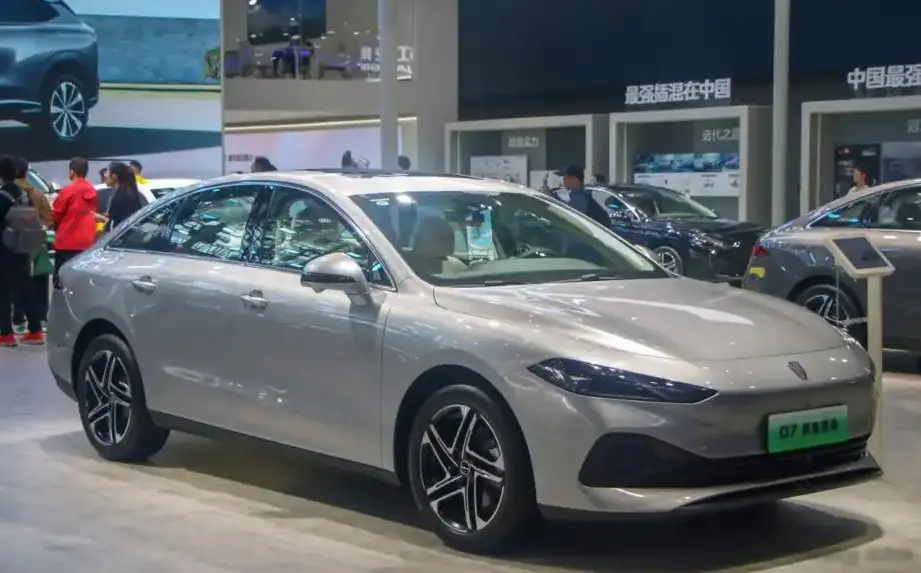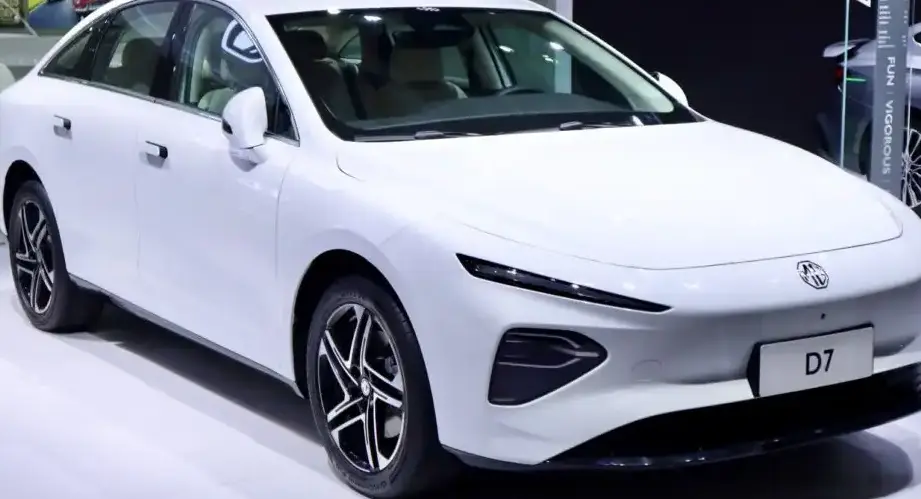
The Roewe D7 EV 68.5 kWh (211 Hp) is an all-electric sedan launched by the Chinese automotive manufacturer Roewe in November 2023. Positioned as a modern and technologically advanced vehicle, the D7 represents Roewe’s commitment to the burgeoning electric vehicle market. It’s built upon a dedicated EV platform and aims to provide a compelling blend of range, performance, and features within the mid-size sedan segment. The D7 is primarily targeted at the Chinese domestic market, where demand for EVs is exceptionally high, but represents Roewe’s ambitions for broader international expansion. This specific variant, with its 68.5 kWh battery and 211 horsepower electric motor, occupies a central position within the D7 lineup, offering a balance between range and performance.
Technical Specifications
| Brand | Roewe |
| Model | D7 |
| Generation | D7 |
| Type (Engine) | EV 68.5 kWh (211 Hp) |
| Start of production | November, 2023 |
| Powertrain Architecture | BEV (Electric Vehicle) |
| Body type | Sedan |
| Seats | 5 |
| Doors | 4 |
| Fuel Type | Electricity |
| Acceleration 0 – 100 km/h | 6.5 sec |
| Acceleration 0 – 62 mph | 6.5 sec |
| Acceleration 0 – 60 mph | 6.2 sec |
| Maximum speed | 170 km/h (105.63 mph) |
| Weight-to-power ratio | 8.1 kg/Hp, 122.9 Hp/tonne |
| Weight-to-torque ratio | 5.5 kg/Nm, 180.5 Nm/tonne |
| Gross battery capacity | 68.5 kWh |
| Battery technology | Lithium nickel manganese cobalt oxides (Li-NMC) |
| Battery location | Below the floor |
| All-electric range (CLTC) | 610 km (379.04 mi) |
| Average Energy consumption (CLTC) | 12.9 kWh/100 km (20.76 kWh/100 mi) |
| MPGe | 162 |
| km/kWh | 7.8 |
| mi/kWh | 4.8 |
| Electric motor power | 211 Hp |
| Electric motor Torque | 310 Nm (228.64 lb.-ft.) |
| Electric motor model/code | TZ180XS1181 |
| Electric motor location | Rear axle, Transverse |
| Electric motor type | Synchronous |
| System power | 211 Hp |
| System torque | 310 Nm (228.64 lb.-ft.) |
| Kerb Weight | 1717 kg (3785.34 lbs.) |
| Max. weight | 2157 kg (4755.37 lbs.) |
| Max load | 440 kg (970.03 lbs.) |
| Trunk (boot) space – minimum | 376 l (13.28 cu. ft.) |
| Length | 4890 mm (192.52 in.) |
| Width | 1872 mm (73.7 in.) |
| Height | 1510 mm (59.45 in.) |
| Wheelbase | 2810 mm (110.63 in.) |
| Front track | 1600 mm (62.99 in.) |
| Rear (Back) track | 1600 mm (62.99 in.) |
| Drag coefficient (Cd) | 0.23 |
| Minimum turning circle | 11.62 m (38.12 ft.) |
| Approach angle | 15° |
| Departure angle | 19° |
| Drivetrain Architecture | One electric motor drives the rear wheels. |
| Drive wheel | Rear wheel drive |
| Number of gears | 1 |
| Gearbox type | Automatic transmission |
| Front suspension | Independent, type McPherson with coil spring and anti-roll bar |
| Rear suspension | Independent multi-link spring suspension with stabilizer |
| Front brakes | Ventilated discs |
| Rear brakes | Ventilated discs |
| Assisting systems | ABS (Anti-lock braking system) |
| Steering type | Steering rack and pinion |
| Power steering | Electric Steering |
| Tires size | 225/50 R18 |
| Wheel rims size | 18 |
Powertrain & Engine Architecture
The Roewe D7 EV utilizes a single, rear-mounted synchronous electric motor, designated TZ180XS1181, producing 211 horsepower and 310 Nm (228.64 lb.-ft.) of torque. This motor is powered by a 68.5 kWh lithium nickel manganese cobalt oxide (Li-NMC) battery pack located under the vehicle floor, contributing to a low center of gravity and improved handling. The battery supports fast charging capabilities, though specific charging times vary depending on the charging infrastructure. The single-speed automatic transmission is inherent to electric vehicle drivetrains, providing seamless acceleration without the need for gear changes. The rear-wheel drive configuration is a deliberate choice, aiming to enhance driving dynamics and provide a more engaging experience compared to front-wheel drive layouts common in some other EV segments.
Driving Characteristics
The D7 EV 68.5 kWh delivers brisk acceleration, achieving 0-60 mph in approximately 6.2 seconds. The rear-wheel drive setup contributes to a balanced feel, particularly during cornering. The single-speed transmission provides linear power delivery, making it easy to modulate acceleration in various driving conditions. Compared to potential higher-performance variants of the D7 (if offered), this version prioritizes efficiency and a comfortable driving experience over outright speed. The instant torque characteristic of electric motors provides responsive acceleration, making it well-suited for urban driving and highway merging. The regenerative braking system allows for one-pedal driving in certain situations, further enhancing efficiency and convenience.
Equipment & Trim Levels
The Roewe D7 EV 68.5 kWh typically comes standard with a comprehensive suite of features, including a large touchscreen infotainment system, digital instrument cluster, automatic climate control, and a range of advanced driver-assistance systems (ADAS). These ADAS features often include adaptive cruise control, lane keeping assist, and automatic emergency braking. Interior upholstery is typically a combination of leatherette and fabric, with higher trim levels offering full leather options. Optional extras may include a panoramic sunroof, premium audio system, and ventilated front seats. The overall interior design emphasizes a modern and minimalist aesthetic, with a focus on user-friendly technology.
Chassis & Braking
The D7 EV features an independent suspension system at both the front (McPherson strut) and rear (multi-link), designed to provide a comfortable ride and responsive handling. Ventilated disc brakes are employed on all four wheels, ensuring adequate stopping power. The electric steering system offers precise and responsive control. The vehicle’s relatively low curb weight of 1717 kg (3785.34 lbs.) contributes to its agility. Stabilizer bars are included on both axles to minimize body roll during cornering.
Market Reception & Comparison
The Roewe D7 EV has been generally well-received in the Chinese market, praised for its stylish design, spacious interior, and competitive range. Critics have noted its strong value proposition, offering a compelling combination of features and performance for its price point. Compared to other EVs in its class, such as the BYD Han EV or the NIO ET5, the D7 EV positions itself as a more accessible option, while still delivering a modern and technologically advanced driving experience. Its CLTC range of 610 km (379.04 mi) is competitive, though real-world range may vary depending on driving conditions and usage.
Legacy
As a relatively new model, the long-term reliability of the Roewe D7 EV remains to be fully established. However, Roewe has been steadily improving its quality control and reliability in recent years. The Li-NMC battery technology is widely used in EVs and has a proven track record, though battery degradation over time is a factor to consider. In the used car market, the D7 EV is expected to hold its value reasonably well, particularly as demand for EVs continues to grow. Its modern features and competitive range should make it an attractive option for buyers seeking an affordable and practical electric sedan.