
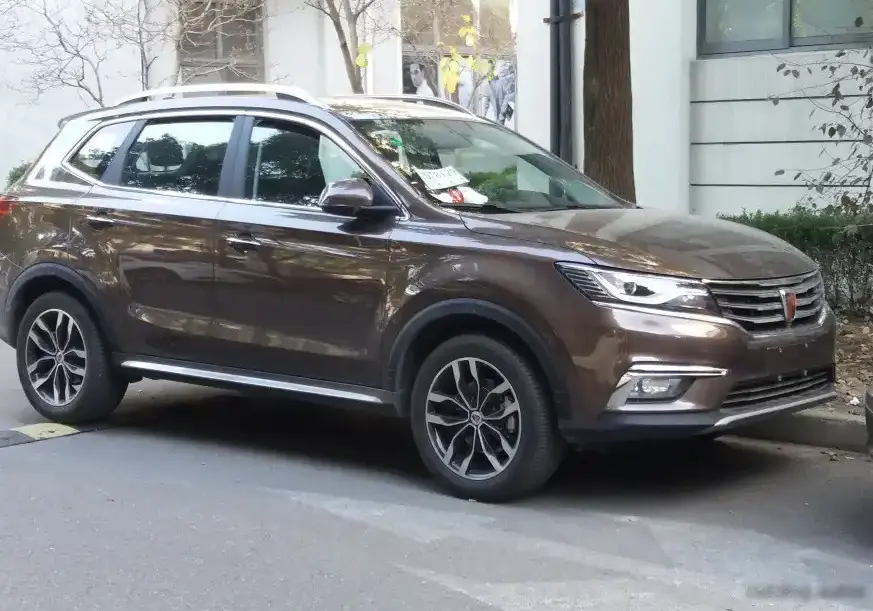
The Roewe RX5 EV400 48.3 kWh represents an early foray by the SAIC-owned Roewe brand into the burgeoning electric vehicle market. Introduced in 2017, this variant of the RX5 SUV was specifically designed for the Chinese domestic market, capitalizing on government incentives for electric vehicle adoption and growing consumer interest in alternative fuel vehicles. The EV400, equipped with a 48.3 kWh battery pack and a single electric motor producing 116 horsepower, served as a relatively affordable and practical entry point into the Roewe electric lineup, positioned below higher-range and more powerful EV models. It aimed to provide a balance between range, performance, and cost, appealing to urban commuters and families seeking a zero-emission vehicle.
Technical Specifications
| Brand | Roewe |
| Model | RX5 |
| Generation | RX5 |
| Type (Engine) | EV400 48.3 kWh (116 Hp) |
| Start of production | 2017 |
| Powertrain Architecture | BEV (Electric Vehicle) |
| Body type | SUV |
| Seats | 5 |
| Doors | 5 |
| Fuel Type | Electricity |
| Maximum speed | 135 km/h (83.89 mph) |
| Weight-to-power ratio | 14.7 kg/Hp, 67.8 Hp/tonne |
| Gross battery capacity | 48.3 kWh |
| All-electric range | 320 km (198.84 mi) |
| Electric motor power | 116 Hp |
| Electric motor Torque | 255 Nm (188.08 lb.-ft.) |
| System power | 116 Hp |
| Kerb Weight | 1710 kg (3769.9 lbs.) |
| Trunk (boot) space – minimum | 595 l (21.01 cu. ft.) |
| Trunk (boot) space – maximum | 1639 l (57.88 cu. ft.) |
| Length | 4554 mm (179.29 in.) |
| Width | 1855 mm (73.03 in.) |
| Height | 1716 mm (67.56 in.) |
| Wheelbase | 2700 mm (106.3 in.) |
| Drive wheel | Front wheel drive |
| Number of gears and type of gearbox | 1 gears, automatic transmission |
| Front suspension | Independent, type McPherson with coil spring and anti-roll bar |
| Rear suspension | Independent multi-link suspension |
| Front brakes | Ventilated discs |
| Rear brakes | Disc |
| Assisting systems | ABS (Anti-lock braking system) |
| Tires size | 235/50 R18 |
| Wheel rims size | 18 |
Powertrain & Engine Architecture
The Roewe RX5 EV400 utilizes a fully electric powertrain, foregoing a traditional internal combustion engine. The core of the system is a permanent magnet synchronous motor, delivering 116 horsepower and 255 Nm (188.08 lb.-ft.) of torque. This motor is directly coupled to the front wheels via a single-speed automatic transmission – essentially a reduction gear – common in most electric vehicles. The 48.3 kWh lithium-ion battery pack is positioned under the vehicle floor, contributing to a lower center of gravity and improved handling. The battery management system (BMS) is crucial for optimizing battery life, ensuring safe operation, and maximizing range. While specific details regarding the battery cell chemistry are often proprietary, it’s likely to be a variation of Lithium Nickel Manganese Cobalt Oxide (NMC) chemistry, offering a good balance of energy density and thermal stability. The EV400 does not feature regenerative braking settings adjustable by the driver, relying on a standard level of regeneration during deceleration.
Driving Characteristics
The driving experience of the RX5 EV400 is characterized by the instant torque delivery typical of electric vehicles. While 116 horsepower isn’t a particularly high output, it provides adequate acceleration for urban and suburban driving. The single-speed transmission means there are no gear changes, resulting in a smooth and linear power delivery. Top speed is limited to 135 km/h (83.89 mph). Compared to the gasoline-powered RX5 variants, the EV400 offers a quieter and more refined driving experience, with minimal engine noise. However, the added weight of the battery pack (approximately 300 kg more than the gasoline versions) does impact handling somewhat, making it feel less agile. The front-wheel-drive configuration can also lead to some torque steer under hard acceleration. The range of 320 km (198.84 mi) is sufficient for daily commutes and shorter trips, but requires careful planning for longer journeys.
Equipment & Trim Levels
The Roewe RX5 EV400 was generally well-equipped for its price point, targeting a value-conscious buyer. Standard features typically included air conditioning, power windows and locks, a touchscreen infotainment system with Bluetooth connectivity, and basic safety features like ABS and airbags. Higher trim levels added features such as a larger touchscreen display, a panoramic sunroof, leather upholstery, and advanced driver-assistance systems (ADAS) like lane departure warning and automatic emergency braking. Interior materials were generally of acceptable quality, though not as premium as some European or Japanese competitors. The dashboard layout was relatively straightforward and user-friendly, prioritizing functionality over aesthetic flair.
Chassis & Braking
The RX5 EV400 utilizes a McPherson strut suspension setup at the front and an independent multi-link suspension at the rear, providing a comfortable ride quality. The suspension is tuned to prioritize comfort over sporty handling, absorbing bumps and imperfections in the road surface effectively. Ventilated disc brakes are fitted to the front wheels, while solid discs are used at the rear. The ABS (Anti-lock Braking System) is standard, enhancing braking performance and stability. The steering is electrically assisted, providing light and easy steering feel. The 235/50 R18 tires offer a good balance of grip and rolling resistance, contributing to both handling and efficiency.
Market Reception & Comparison
The Roewe RX5 EV400 was generally well-received in the Chinese market, benefiting from government subsidies and growing consumer demand for electric vehicles. Critics praised its affordability, practicality, and decent range. However, some reviewers noted its relatively modest performance and the somewhat basic interior materials. Compared to other electric SUVs available in China at the time, such as the BYD Tang EV, the RX5 EV400 offered a more competitive price point, making it an attractive option for budget-conscious buyers. Fuel economy, expressed as electricity consumption, was around 16-18 kWh per 100 km, depending on driving conditions.
Legacy
The Roewe RX5 EV400 played a significant role in establishing Roewe as a player in the electric vehicle market. While superseded by newer and more advanced EV models, the EV400 remains a relatively common sight on Chinese roads. The powertrain, while not groundbreaking, proved to be reasonably reliable, with few widespread issues reported. In the used car market, the RX5 EV400 represents an affordable entry point into electric vehicle ownership, offering a practical and economical transportation solution. Battery degradation is a key consideration for potential buyers, as the battery pack’s capacity will diminish over time. However, with proper care and maintenance, the RX5 EV400 can provide years of reliable service.
