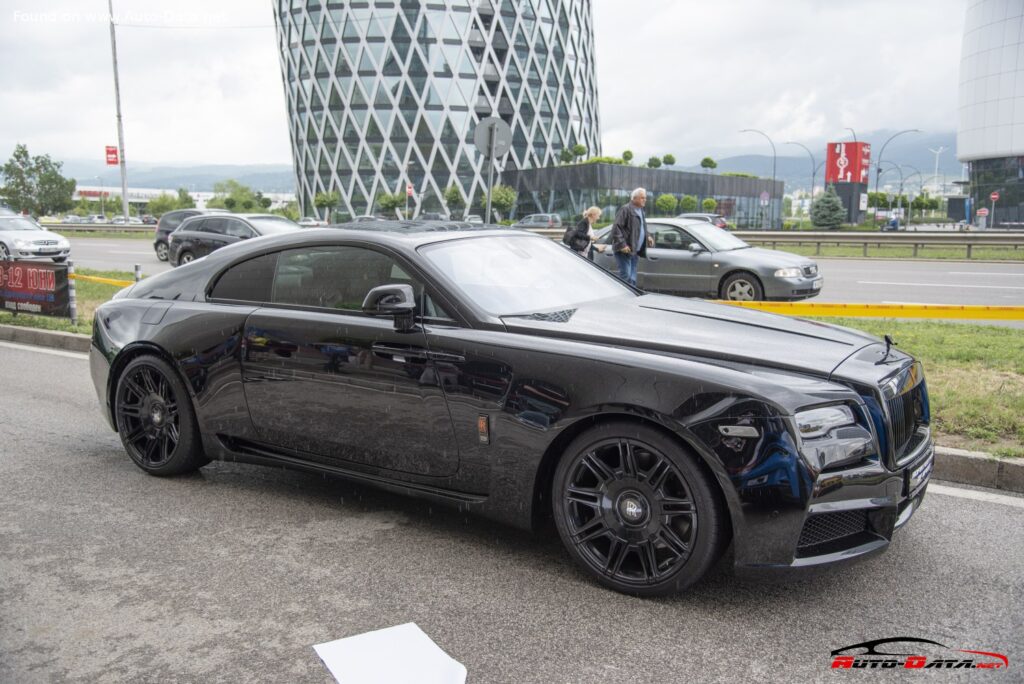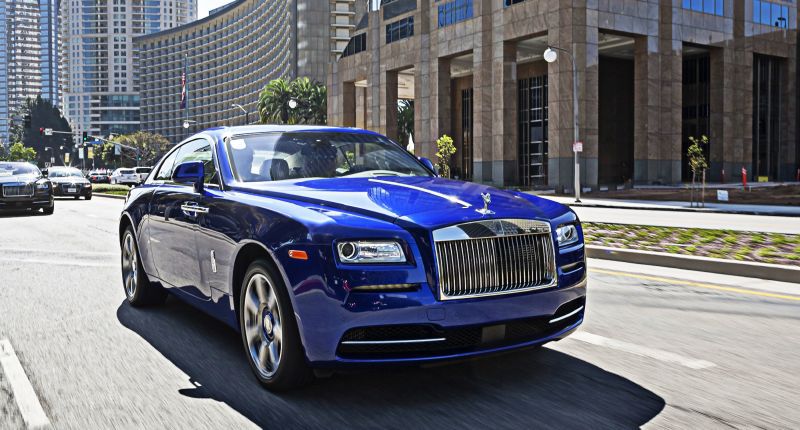
The Rolls-Royce Wraith, launched in 2013, represented a significant departure for the British marque, being marketed as the most powerful and fastest Rolls-Royce to date. The 6.6 V12 (632 Hp) Automatic variant, the primary focus of this article, was the sole powertrain offered throughout the Wraith’s production run, which continued until 2019. Positioned as a luxury grand tourer, the Wraith aimed to attract a clientele seeking both unparalleled opulence and spirited performance. It was built on a modified version of the BMW 7 Series (F01/F02) platform, known internally as the RR4 platform, and shared many components with the Ghost, but with a more aggressively styled coupe body and a focus on a more dynamic driving experience.
Wraith 6.6 V12 Automatic: Powertrain & Engine Architecture
At the heart of the Rolls-Royce Wraith lies the N74B66A 6.6-liter twin-turbocharged V12 engine. This engine, derived from BMW’s V12 family but extensively modified by Rolls-Royce engineers, produces 632 horsepower at 5,600 rpm and a substantial 800 Nm (590.05 lb-ft) of torque available from a remarkably low 1,500 rpm and sustained through 5,500 rpm. The engine features direct fuel injection, a double overhead camshaft (DOHC) valvetrain with four valves per cylinder, and an intercooled twin-turbocharger setup. The turbos are specifically tuned to minimize turbo lag and deliver a broad, flat torque curve, characteristic of Rolls-Royce’s emphasis on effortless power delivery.
The Wraith exclusively utilized an 8-speed automatic transmission, also sourced from BMW, but recalibrated for the Wraith’s unique character. This transmission is designed for smooth, almost imperceptible gear changes, contributing to the Wraith’s refined driving experience. The transmission features adaptive shift programming, adjusting to the driver’s style and road conditions. Unlike some modern transmissions, the Wraith’s automatic lacks a dedicated manual shift mode with paddle shifters; instead, it relies on electronic controls and predictive algorithms to select the optimal gear. The engine is mounted longitudinally in the front of the vehicle, driving the rear wheels.
Engine Specifications in Detail
The N74B66A engine boasts a bore of 89 mm (3.5 in) and a stroke of 88.3 mm (3.48 in), resulting in a displacement of 6,592 cm³ (402.27 cu. in). It operates with a compression ratio of 10:1. The engine requires 11 liters (11.62 US qt / 9.68 UK qt) of engine oil, and Rolls-Royce specifies a particular oil formulation to ensure optimal performance and longevity.
Driving Characteristics
The Wraith’s driving experience is defined by its immense power and exceptionally smooth ride. The 632 hp and 590 lb-ft of torque translate to impressive acceleration figures: 0-60 mph in approximately 4.4 seconds and 0-100 km/h in 4.6 seconds. The Wraith’s top speed is electronically limited to 155.34 mph (250 km/h). However, the Wraith isn’t about outright speed; it’s about the sensation of effortless acceleration and the ability to cover long distances in supreme comfort. The 8-speed automatic transmission is tuned for relaxed cruising, with higher gears providing a low engine speed at highway velocities. The Wraith’s substantial weight (2,360 kg / 5,202.91 lbs) is masked by the engine’s torque, providing strong pull in any gear. Compared to a hypothetical, more performance-focused variant, the Wraith prioritizes refinement and luxury over razor-sharp handling, though its air suspension system does provide a surprisingly agile experience for a car of its size.
Equipment & Trim Levels
The Rolls-Royce Wraith was offered with a high degree of customization, allowing buyers to personalize their vehicles to an extraordinary extent. Standard equipment included premium leather upholstery, wood veneer trim, a panoramic sunroof, and a sophisticated infotainment system. The interior was designed to be a sanctuary of luxury, with meticulous attention to detail and handcrafted materials. Optional extras were extensive, ranging from bespoke paint colors and leather options to rear theater seating and a starlight headliner featuring hundreds of fiber optic lights mimicking a night sky. Trim levels were not formally designated as such; instead, the Wraith was largely defined by the options selected by the customer. The focus was on creating a unique and personalized vehicle, rather than offering pre-defined packages.
Chassis & Braking
The Wraith’s chassis is based on the BMW 7 Series platform, but significantly reinforced and modified to meet Rolls-Royce’s standards of ride quality and handling. It features a double wishbone front suspension and an independent multi-link rear suspension, both incorporating an air suspension system. The air suspension allows for adjustable ride height and damping, providing a supremely comfortable ride even on uneven surfaces. Braking duties are handled by ventilated discs on all four wheels, coupled with an Anti-lock Braking System (ABS). The steering system is a hydraulic power-assisted rack and pinion setup, providing precise and weighted steering feel. The Wraith is equipped with 255/45 R20 tires on the front and 285/40 R20 tires on the rear, mounted on 8.5J x 20 and 9.5J x 20 alloy wheels, respectively.
Market Reception & Comparison
The Rolls-Royce Wraith was generally well-received by automotive critics, who praised its luxurious interior, powerful engine, and smooth ride. However, its high price tag and substantial weight were also noted. Compared to other Rolls-Royce models, such as the Ghost, the Wraith offered a more sporty and dynamic driving experience, appealing to a clientele who wanted a more engaging vehicle. Fuel economy, unsurprisingly, was not a strong point, with combined fuel consumption of 14.3 l/100 km (16.4 US mpg / 19.8 UK mpg). Reliability, while generally good, was impacted by the complexity of the vehicle’s systems and the extensive customization options. Maintenance costs were predictably high, reflecting the Wraith’s status as a luxury vehicle.
Technical Specifications
| Brand | Rolls-Royce |
| Model | Wraith |
| Engine Type | 6.6 V12 (632 Hp) Automatic |
| Start of Production | 2013 |
| Fuel Consumption (Urban) | 21.8 l/100 km (10.8 US mpg / 13 UK mpg) |
| Fuel Consumption (Extra Urban) | 9.9 l/100 km (23.8 US mpg / 28.5 UK mpg) |
| Fuel Consumption (Combined) | 14.3 l/100 km (16.4 US mpg / 19.8 UK mpg) |
| CO2 Emissions | 327 g/km |
| Fuel Type | Petrol (Gasoline) |
| Acceleration 0-100 km/h | 4.6 sec |
| Acceleration 0-62 mph | 4.6 sec |
| Acceleration 0-60 mph | 4.4 sec |
| Maximum Speed | 250 km/h (155.34 mph) |
| Engine Code | N74B66A |
| Engine Displacement | 6592 cm³ (402.27 cu. in.) |
| Number of Cylinders | 12 |
| Power | 632 Hp @ 5600 rpm |
| Torque | 800 Nm @ 1500-5500 rpm (590.05 lb.-ft.) |
| Kerb Weight | 2360 kg (5202.91 lbs.) |
| Max. Weight | 2810 kg (6194.99 lbs.) |
| Trunk Space | 470 l (16.6 cu. ft.) |
| Fuel Tank Capacity | 83 l (21.93 US gal / 18.26 UK gal) |
| Length | 5285 mm (208.07 in.) |
| Width | 1947 mm (76.65 in.) |
| Height | 1507 mm (59.33 in.) |
| Wheelbase | 3112 mm (122.52 in.) |
| Transmission | 8-speed automatic |
Legacy
The Rolls-Royce Wraith, while discontinued in 2019, remains a highly desirable vehicle in the used car market. The N74B66A engine, while complex, has proven to be relatively reliable when properly maintained. However, potential buyers should be aware of the high maintenance costs associated with owning a Rolls-Royce. The Wraith’s combination of luxury, performance, and exclusivity ensures its continued appeal to discerning collectors and enthusiasts. It represents a pivotal moment in Rolls-Royce’s history, demonstrating the brand’s ability to blend traditional craftsmanship with modern technology and a more dynamic driving experience.