The Rover 200 (XW) 220 GTi (140 Hp): A British Hot Hatch of the Nineties
The Rover 200 (XW) 220 GTi (140 Hp) represents a significant chapter in the history of the British automotive manufacturer, Rover. Launched in 1991, this particular iteration of the second-generation Rover 200 series, codenamed XW, was a performance-oriented 3-door hatchback designed to compete in the highly contested European ‘hot hatch’ segment. While Rover models were not extensively marketed in the United States during this era, the 200 (XW) played a crucial role in Rover’s strategy to offer a more modern and dynamically capable compact car, benefiting significantly from its collaborative platform shared with Honda. This vehicle embodied a blend of traditional British craftsmanship with Japanese engineering prowess, aiming for a more refined and mature driving experience compared to some of its more boisterous rivals. The 220 GTi variant, with its potent 140 horsepower engine, was positioned as the enthusiast’s choice, offering spirited performance in a practical package.
Engine and Performance of the Rover 200 (XW) 220 GTi
At the heart of the Rover 200 (XW) 220 GTi (140 Hp) was a robust 2.0-liter (1994 cm or 121.68 cu. in.) naturally aspirated inline-four gasoline engine. This powerplant was a highlight of the car, featuring a Double Overhead Camshaft (DOHC) valvetrain with four valves per cylinder, a configuration that was becoming standard for performance engines of the period. Delivering a respectable 140 horsepower at 6000 rpm, the engine offered a lively performance characteristic, especially when coupled with the car’s relatively low curb weight of 2601.45 pounds (1180 kg). Torque output stood at 132.76 lb.-ft. (180 Nm) at 4500 rpm, providing a broad powerband that made for engaging driving dynamics.
Power was efficiently transmitted to the front wheels via a precise 5-speed manual transmission, a common and favored setup for hot hatches, allowing drivers maximum control over the engine’s output. The powertrain architecture, with the engine mounted transversely at the front, was typical for front-wheel-drive vehicles of its class, optimizing interior space and handling. Performance figures were competitive for its time, with the 220 GTi capable of reaching a maximum speed of 125.52 mph (202 km/h). The car boasted a power-to-weight ratio of 8.4 kg/Hp, or 118.6 Hp per tonne, indicating a well-balanced power delivery for its segment. Fuel economy was rated at a combined 28.3 US mpg (8.3 l/100 km), which was a reasonable figure for a performance-oriented vehicle from the early 1990s.
Design and Features
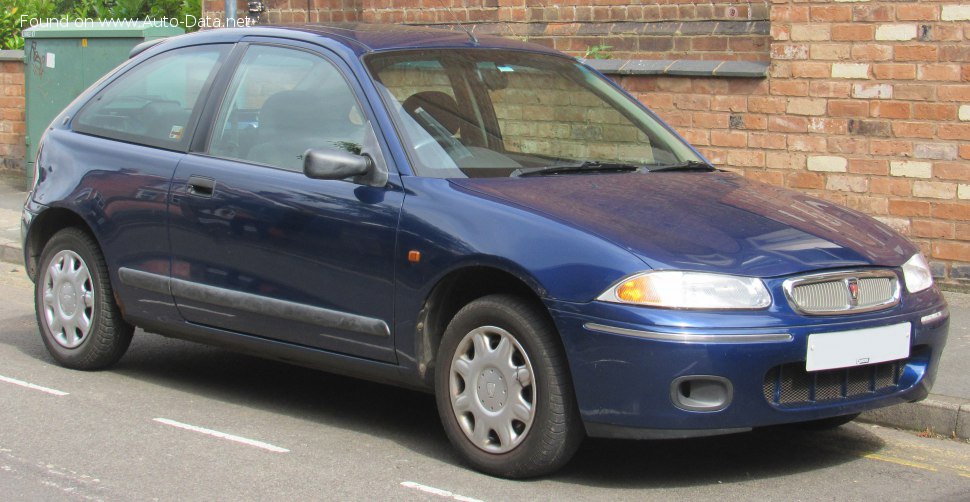
The Rover 200 (XW) generation, and specifically the 220 GTi, featured a contemporary design for the early 1990s, blending European styling cues with a hint of Japanese influence from its Honda Concerto underpinnings. The 3-door hatchback body type accentuated its sporty character, appealing to a younger, more performance-conscious audience. Its dimensions – 166.14 inches (4220 mm) in length, 66.14 inches (1680 mm) in width, and 54.72 inches (1390 mm) in height – made it a compact and agile vehicle, ideal for navigating crowded European cityscapes and winding country roads. The wheelbase of 100.39 inches (2550 mm) contributed to a stable ride and decent interior room.
Inside, the Rover 200 (XW) 220 GTi (140 Hp) offered seating for five, though the rear seats in a 3-door hatchback were typically more suited for occasional use or children. Practicality was a strong suit, with a minimum trunk capacity of 12.36 cubic feet (350 liters), expandable to a generous 42.73 cubic feet (1210 liters) with the rear seats folded, making it versatile for daily errands or weekend trips. Key features for its era included a hydraulic power steering system, making maneuvering easier, and an Anti-lock Braking System (ABS), a significant safety feature for the time, providing enhanced control during emergency braking. The suspension setup, with wishbones at the front and coil springs at the rear, aimed to strike a balance between comfortable ride quality and responsive handling, characteristic of the GTi badge. Ventilated disc brakes at the front and disc brakes at the rear ensured confident stopping power, complementing the car’s performance capabilities. The 185/55 R15 V-rated tires provided adequate grip for spirited driving.
Technical Specifications of the Rover 200 (XW) 220 GTi (140 Hp)
| Category | Specification | US Equivalent / Notes |
|---|---|---|
| General Information | ||
| Brand | Rover | |
| Model | 200 | |
| Generation | 200 (XW) | |
| Type (Engine) | 220 GTi (140 Hp) | |
| Production Start | 1991 year | |
| Production End | 1995 year | |
| Powertrain Architecture | Internal Combustion engine | |
| Body Type | Hatchback | |
| Seats | 5 | |
| Doors | 3 | |
| Performance Specs | ||
| Fuel Consumption (Combined) | 8.3 l/100 km | 28.3 US mpg |
| Fuel Type | Petrol (Gasoline) | |
| Maximum Speed | 202 km/h | 125.52 mph |
| Weight-to-Power Ratio | 8.4 kg/Hp | 118.6 Hp/tonne |
| Weight-to-Torque Ratio | 6.6 kg/Nm | 152.5 Nm/tonne |
| Engine Specs | ||
| Power | 140 Hp @ 6000 rpm | |
| Power per Liter | 70.2 Hp/l | |
| Torque | 180 Nm @ 4500 rpm | 132.76 lb.-ft. @ 4500 rpm |
| Engine Layout | Front, Transverse | |
| Engine Displacement | 1994 cm | 2.0 liters / 121.68 cu. in. |
| Number of Cylinders | 4 | |
| Engine Configuration | Inline | |
| Cylinder Bore | 84.5 mm | 3.33 in. |
| Piston Stroke | 89 mm | 3.5 in. |
| Compression Ratio | 10:1 | |
| Valves per Cylinder | 4 | |
| Fuel Injection System | Multi-port manifold injection | |
| Engine Aspiration | Naturally aspirated engine | |
| Valvetrain | DOHC | |
| Space, Volume and Weights | ||
| Kerb Weight | 1180 kg | 2601.45 lbs. |
| Max. Weight (GVWR) | 1580 kg | 3483.3 lbs. |
| Max Load | 400 kg | 881.85 lbs. |
| Trunk Space (Min) | 350 l | 12.36 cu. ft. |
| Trunk Space (Max) | 1210 l | 42.73 cu. ft. |
| Fuel Tank Capacity | 55 l | 14.53 US gal |
| Dimensions | ||
| Length | 4220 mm | 166.14 in. |
| Width | 1680 mm | 66.14 in. |
| Height | 1390 mm | 54.72 in. |
| Wheelbase | 2550 mm | 100.39 in. |
| Front Track | 1475 mm | 58.07 in. |
| Rear Track | 1470 mm | 57.87 in. |
| Drivetrain, Brakes and Suspension | ||
| Drivetrain Architecture | Front-wheel drive, Internal Combustion engine | |
| Drive Wheel | Front wheel drive | |
| Gearbox Type | 5 gears, manual transmission | |
| Front Suspension | Wishbone | |
| Rear Suspension | Coil spring | |
| Front Brakes | Ventilated discs | |
| Rear Brakes | Disc | |
| Assisting Systems | ABS (Anti-lock braking system) | |
| Steering Type | Steering rack and pinion | |
| Power Steering | Hydraulic Steering | |
| Tires Size | 185/55 R15 V |
Legacy and Market Impact
The Rover 200 (XW) 220 GTi (140 Hp) holds a unique position in the automotive landscape of the early 1990s. While Rover, as a brand, had a limited presence in the United States market during this period, its European impact was considerable. The 200 (XW) generation was a product of a strategic alliance between Rover and Honda, specifically sharing its platform with the Honda Concerto. This partnership was crucial for Rover, enabling them to produce a car with significantly improved build quality, reliability, and dynamic capabilities compared to previous Rover models. The 220 GTi, in particular, benefited from this engineering collaboration, offering a more refined and less raw driving experience than some of its contemporary hot hatch rivals.
In the fiercely competitive European hot hatch market, the Rover 220 GTi faced formidable adversaries such as the Volkswagen Golf GTI, Ford Escort XR3i, Peugeot 309 GTI, and even its platform-mate, the Honda Civic VTi. While it might not have been as overtly aggressive or as sharp-edged as some of its French or German competitors, the 220 GTi carved out its niche as a “gentleman’s hot hatch.” It combined respectable performance with a slightly more upscale interior ambiance and a refined ride quality that appealed to buyers looking for a blend of sportiness and comfort. The availability of ABS as standard was also a strong selling point for safety-conscious consumers.
The 200 (XW) series helped to modernize Rover’s image and was well-received in its primary markets. The 220 GTi variant, with its potent 2.0-liter engine, demonstrated Rover’s capability to produce engaging performance vehicles. Although Rover’s fortunes would eventually decline in the subsequent decades, the 200 (XW) generation, and especially the GTi model, is remembered fondly by enthusiasts for its blend of British style and Japanese engineering integrity. Today, these vehicles are increasingly becoming sought-after modern classics in Europe, appreciated for their unique heritage, robust performance, and the significant role they played in Rover’s efforts to remain competitive in a rapidly evolving automotive world.