
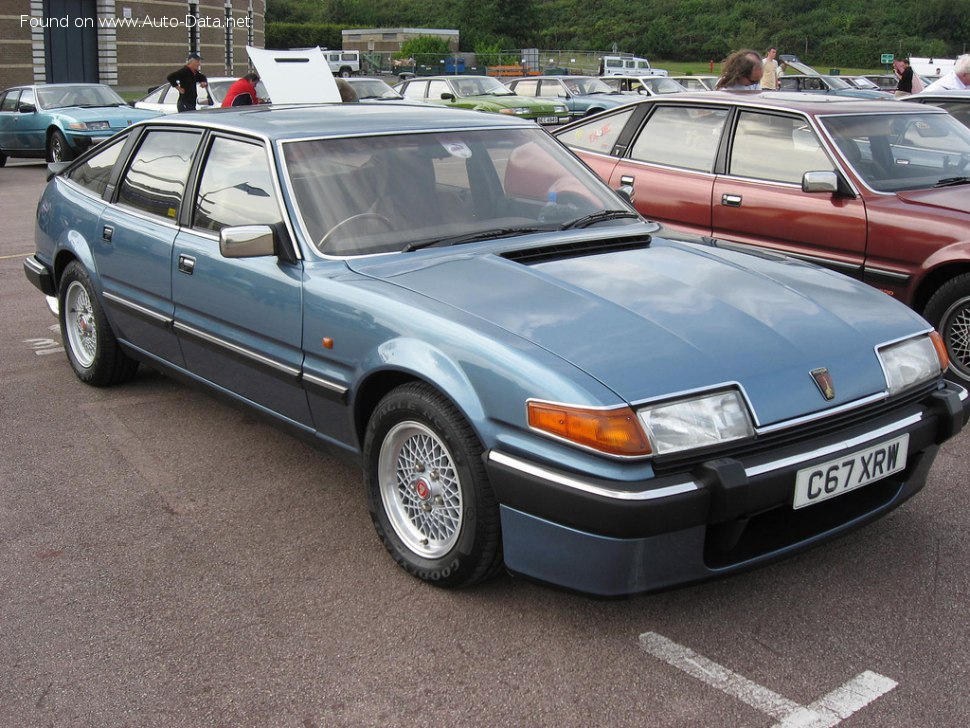
Introduction to the Rover 2000-3500 Hatchback (SD1) 2300 (120 Hp)
The Rover 2000-3500 Hatchback, more famously known by its internal project code SD1 (Specialist Division 1), represents a pivotal, albeit complex, chapter in British automotive history. Launched in 1976, the SD1 was an ambitious project by British Leyland (BL) to replace two distinguished but aging executive models: the Rover P6 and the Triumph 2000/2500. Its mission was to compete head-on with established European rivals from Germany and Sweden, offering a compelling blend of avant-garde design, advanced engineering, and traditional Rover luxury. This particular variant, the Rover 2000-3500 Hatchback (SD1) 2300 (120 Hp), introduced in 1977, served as a key mid-range offering, providing a balance of performance and economy within the broader SD1 lineup.
The SD1 was lauded upon its debut, earning the prestigious European Car of the Year award in 1977, a testament to its innovative design and forward-thinking concept. It was a five-door hatchback, a bold departure from the traditional sedan bodystyles of its predecessors and most competitors in the executive segment. This design choice, coupled with its distinctive fastback profile, aimed to combine the practicality of a hatchback with the sleek aesthetics of a grand tourer. While the V8-powered models often garnered the most attention, the 2300 variant played a crucial role in broadening the SD1’s market appeal, targeting buyers who sought Rover’s characteristic refinement and style in a more fuel-efficient and accessible package. Produced from 1977 to 1986, the SD1’s journey was marked by both critical acclaim and the industrial turbulence that frequently plagued British Leyland during that era.
Engine & Performance: The Rover 2000-3500 Hatchback (SD1) Powertrain
Under the hood of the Rover 2000-3500 Hatchback (SD1) 2300 (120 Hp) lay the PE146 engine, a naturally aspirated inline-six gasoline (petrol) unit. This 2.3-liter powerplant was a new design for Rover, developed to offer a smoother, more refined alternative to four-cylinder engines and a more economical option than the larger V8. With an output of 120 horsepower, the 2300 engine provided respectable, if not exhilarating, performance for its time and class.
The engine’s naturally aspirated design meant a linear power delivery, characteristic of many European engines of the late 1970s. While it lacked the outright punch of its V8 siblings, the 2.3-liter six-cylinder offered a level of sophistication and quiet operation that was highly valued in the executive car market. Its 0-60 mph acceleration time of 11.5 seconds placed it squarely in the competitive mid-range, suitable for comfortable cruising and competent highway travel. This performance profile made the 2300 an attractive proposition for buyers prioritizing refinement and a balanced driving experience over raw speed. The engine was typically mated to either a manual or automatic transmission, delivering power to the rear wheels, a configuration that provided classic executive car dynamics and handling. The focus for this variant was on delivering a premium feel and a smooth ride, qualities that Rover had long been known for.
Design & Features of the Rover 2000-3500 Hatchback (SD1)
The design of the Rover 2000-3500 Hatchback (SD1) was arguably its most striking feature and a significant departure for the brand. Penned by Rover’s chief stylist, David Bache, the exterior drew inspiration from contemporary supercar aesthetics, notably the Ferrari Daytona and the Lancia Gamma. The result was a sleek, wedge-shaped silhouette with a long hood, minimal overhangs, and a distinctive fastback profile that seamlessly integrated the rear hatch. This five-door hatchback body style was a bold move in a segment dominated by traditional three-box sedans, offering enhanced practicality without compromising on style.
The SD1’s exterior was characterized by its clean lines and aerodynamic efficiency, which was cutting-edge for the late 1970s. The front end featured a prominent grille and integrated headlights, giving the car a purposeful and sophisticated demeanor. The 5-door configuration, providing easy access to the rear seating area and a large cargo bay thanks to the hatchback, made it surprisingly versatile for an executive car. Inside, the SD1 offered seating for five occupants in a cabin designed for comfort and ergonomic efficiency. The dashboard layout was modern and driver-focused, featuring clear instrumentation and logically placed controls. While some later models faced criticism for interior fit and finish issues stemming from production woes, the initial design intent was to create a spacious, airy, and luxurious environment. Features for the era would have included power steering, power windows (on higher trims), and a sophisticated heating and ventilation system. Safety considerations included a robust body structure and seatbelts for all occupants, standard for cars of this period. The SD1’s design was truly visionary, setting it apart from its more conventionally styled rivals and establishing a new aesthetic direction for Rover.
Technical Specifications
| Category | Specification |
|---|---|
| Brand | Rover |
| Model | 2000-3500 Hatchback |
| Generation | 2000-3500 Hatchback (SD1) |
| Type (Engine) | 2300 (120 Hp) |
| Start of Production | 1977 year |
| End of Production | 1986 year |
| Powertrain Architecture | Internal Combustion engine |
| Body Type | Hatchback |
| Seats | 5 |
| Doors | 5 |
| Fuel Type | Petrol (Gasoline) |
| Acceleration 0 – 60 mph | 11.5 sec |
| Power | 120 Hp |
| Engine Model/Code | PE146 |
| Engine Aspiration | Naturally aspirated engine |
Legacy & Market Impact of the Rover 2000-3500 Hatchback (SD1)
The Rover 2000-3500 Hatchback (SD1) left an indelible mark on the automotive landscape, particularly in the United Kingdom and Europe. Upon its launch, it was hailed as a beacon of British engineering and design prowess, epitomizing a potential renaissance for the struggling British Leyland. Its European Car of the Year award in 1977 underscored its initial critical success and its perceived superiority over many of its contemporaries. The SD1 aimed to compete with established heavyweights like the BMW 5 Series (E12 and later E28), the Audi 100 (C2), and the Mercedes-Benz W123, as well as mainstream executive offerings like the Ford Granada. Its unique hatchback body style offered a compelling alternative to these more traditional sedans, providing a blend of executive presence and practical utility.
Despite its innovative design and engineering, the SD1’s legacy is often overshadowed by the industrial turmoil and quality control issues that plagued British Leyland during its production run. Frequent strikes, inconsistent build quality, and reliability concerns gradually eroded its initial stellar reputation. Rust protection, a common weakness in cars of that era, was particularly problematic for early SD1s. These issues, unfortunately, detracted from what was fundamentally a well-conceived and dynamically capable car.
However, the SD1 also achieved significant success in motorsport, particularly in touring car racing, where its V8 variants demonstrated formidable performance and reliability on the track, helping to burnish its image. The 2300 variant, while not a track star, was crucial for sales volume and market penetration, appealing to a broader customer base seeking a refined and stylish executive car without the higher running costs of the V8.
Today, the Rover SD1 is recognized as a design icon, a testament to David Bache’s visionary styling. It represents a fascinating period in British automotive history – a car that had immense potential but was ultimately hampered by external factors. Its impact lies not only in its innovative design and bold market positioning but also in its reflection of the challenges and ambitions of the British car industry in the late 20th century. Despite its flaws, the SD1 remains a highly cherished classic among enthusiasts, admired for its distinctive looks, comfortable ride, and its significant, if complicated, place in the automotive pantheon.
