Introduction to the Rover 400 Tourer (XW)
The Rover 400 Tourer (XW) represents a significant chapter in the history of the British automotive manufacturer, Rover Group, during the 1990s. Launched in 1993, this particular generation of the Rover 400 series marked Rover’s foray into the highly competitive compact family car segment with a dedicated station wagon variant. While the Rover brand was not extensively sold in the United States, its models like the Rover 400 Tourer (XW) played a crucial role in the European market, offering a blend of traditional British styling, practicality, and increasingly, modern engineering.
The XW designation for the Tourer differentiated it from the earlier R8 generation of the Rover 200/400 series, indicating a specific body style that prioritized cargo capacity and family utility. The 418 TD variant, the focus of this article, was particularly noteworthy for its diesel powertrain, a popular and economical choice for European motorists. Produced between 1993 and 1998, the Rover 400 Tourer (XW) aimed to compete with established players by offering a distinctive British alternative, combining a comfortable ride with a spacious interior in a practical station wagon format. This model underscored Rover’s commitment to providing versatile vehicles for the discerning European consumer, especially those prioritizing fuel efficiency and load-carrying capability.
Powertrain and Performance: The Rover 400 Tourer (XW) 418 TD
At the heart of the Rover 400 Tourer (XW) 418 TD was a robust and widely used diesel engine, a testament to Rover’s strategic partnerships during the era. The vehicle was powered by a 1.8-liter (1800 cm3, or approximately 109.84 cubic inches) turbocharged diesel engine, identified by the engine code A8A (XUD7TE). This particular powerplant was not an in-house Rover design but rather a product of PSA Peugeot Citroën, a common practice for British manufacturers seeking reliable and proven engine technology. The XUD7TE engine was renowned for its durability and fuel economy, making it an ideal choice for a family station wagon destined for the European market.
Engine Architecture and Dynamics
The engine featured a front, transverse layout, a standard configuration for front-wheel-drive vehicles of its class, which optimized interior space and handling. With a power output of 88 horsepower, the 418 TD was not designed for blistering performance but rather for dependable, economical motoring. Its power-per-liter figure stood at 48.9 Hp/l, respectable for a turbocharged diesel of its time. The presence of a turbocharger was crucial, providing a significant boost in torque and drivability compared to naturally aspirated diesel alternatives, ensuring adequate acceleration and comfortable cruising, even when the vehicle was fully loaded.
The diesel powertrain offered a strong advantage in fuel efficiency, a primary concern for European buyers facing higher fuel costs. While specific torque figures are not provided, the nature of turbocharged diesel engines guarantees a healthy torque output at lower RPMs, which is excellent for pulling power and reduces the need for frequent gear changes, especially in urban driving or when climbing inclines. The 418 TD’s engine oil capacity was 5 liters (5.28 US quarts), and the cooling system held 8.8 liters (9.3 US quarts) of coolant, indicating standard maintenance requirements for a vehicle of its size and engine type. This combination of a proven, economical diesel engine within a practical body style made the Rover 400 Tourer (XW) 418 TD a compelling proposition for families and business users alike.
Design and Practicality of the Rover 400 Tourer (XW)
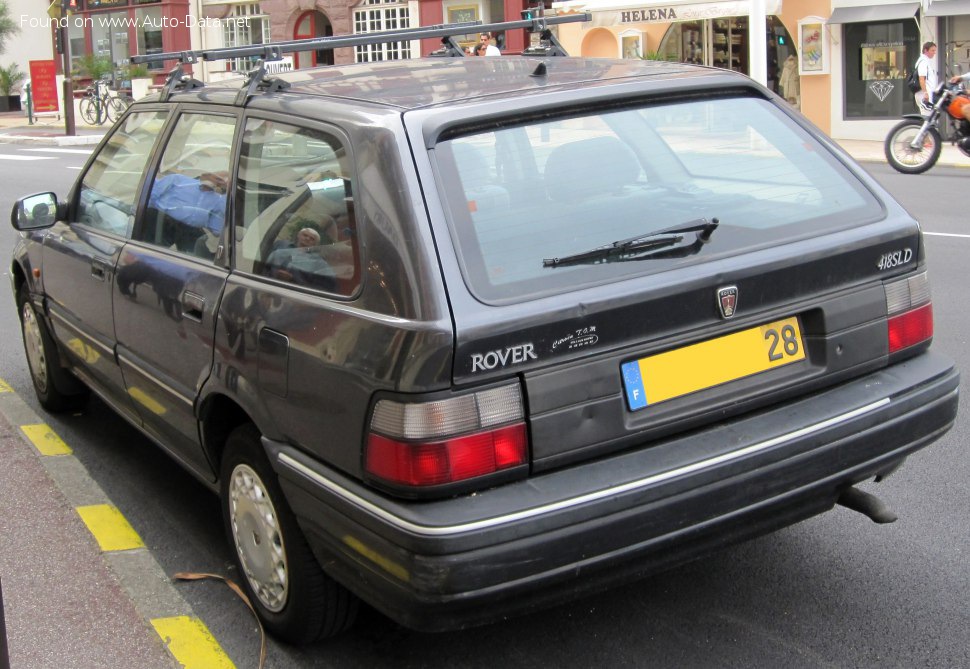
The Rover 400 Tourer (XW) embodied the classic station wagon form factor, a body type highly valued in Europe for its versatility and load-carrying capabilities. With 5 doors and seating for 5 occupants, it was designed from the ground up to serve as a practical family vehicle. The exterior styling of the Tourer, while distinctly Rover, incorporated a more elongated roofline and a generously sized rear cargo area, distinguishing it from its sedan and hatchback siblings. The design language of the Rover 400 series in the 1990s was characterized by a blend of traditional British elegance and contemporary European aesthetics, aiming for a refined yet understated appearance.
Interior and Features
Inside, the Rover 400 Tourer focused on comfort and functionality. The cabin was typically appointed with quality materials for its class, reflecting Rover’s aspiration to offer a slightly more premium feel than some of its direct competitors. Common features for vehicles of this era would have included power windows, central locking, and potentially air conditioning or a sunroof on higher trim levels. Safety features, while not as advanced as modern vehicles, would have included basic seatbelts for all five occupants and potentially driver-side airbags, which were becoming more prevalent in the mid-1990s.
However, the true strength of the Tourer lay in its practicality. The station wagon body offered a substantial cargo volume, easily accessible through a large rear hatch. The rear seats typically featured a split-folding design, allowing for an expanded load floor to accommodate bulkier items, making it ideal for hauling luggage, sports equipment, or even small pieces of furniture. The fuel tank capacity of 55 liters (14.53 US gallons) provided a decent range, especially when coupled with the economical diesel engine, further enhancing its suitability for longer journeys and family road trips across Europe. The Rover 400 Tourer (XW) thus presented itself as a sensible, comfortable, and capacious choice for consumers who needed more than just a regular sedan.
Technical Specifications
| Category | Specification |
|---|---|
| General Information | |
| Brand | Rover |
| Model | 400 |
| Generation | 400 Tourer (XW) |
| Type (Engine) | 418 TD (88 Hp) |
| Start of Production | 1993 year |
| End of Production | 1998 year |
| Powertrain Architecture | Internal Combustion engine |
| Body Type | Station wagon (estate) |
| Seats | 5 |
| Doors | 5 |
| Performance Specs | |
| Fuel Type | Diesel |
| Power | 88 Hp |
| Power per Liter | 48.9 Hp/l |
| Engine Layout | Front, Transverse |
| Engine Model/Code | A8A (XUD7TE) |
| Engine Displacement | 1.8 L (1800 cm3 / 109.84 cu. in.) |
| Engine Aspiration | Turbocharger |
| Engine Oil Capacity | 5 L (5.28 US qt | 4.4 UK qt) |
| Coolant Capacity | 8.8 L (9.3 US qt | 7.74 UK qt) |
| Space, Volume and Weights | |
| Fuel Tank Capacity | 55 L (14.53 US gal | 12.1 UK gal) |
Legacy and Market Impact of the Rover 400 Tourer (XW)
The Rover 400 Tourer (XW) carved out a niche for itself in the highly competitive European C-segment, facing formidable rivals from both domestic and continental manufacturers. Its primary competitors included the Ford Mondeo Estate, Vauxhall Cavalier Estate (known as the Opel Vectra Caravan in other European markets), Peugeot 306 Break, and Renault 19 Nevada/Mégane Estate. In this crowded field, the Rover 400 Tourer sought to differentiate itself through a perceived higher level of refinement and a distinctive British character, traits that Rover traditionally emphasized.
The 418 TD variant, with its economical and reliable PSA-sourced diesel engine, was particularly well-received in markets where diesel power was favored for its lower running costs and robust torque delivery. This made it a popular choice for fleet buyers and families undertaking long-distance travel. Its reputation was generally positive, viewed as a practical, comfortable, and reasonably well-equipped family car. While it might not have been the most dynamically thrilling option, its strengths lay in its solid build quality (for the era), comfortable ride, and excellent cargo capacity.
Historically, the Rover 400 Tourer (XW) represents a period of transition for the Rover Group. While the base Rover 400 (R8) was heavily influenced by a partnership with Honda, the XW Tourer, introduced slightly later, showcased Rover’s own engineering capabilities in developing a specific body variant. It was a product of a time when Rover was attempting to modernize its lineup while retaining a sense of traditional British luxury and craftsmanship. The success of models like the 400 Tourer, particularly in its diesel guise, helped sustain Rover’s presence in the mainstream European market during a challenging decade for the company.
Ultimately, the Rover 400 Tourer (XW) contributed to Rover’s legacy as a manufacturer capable of producing versatile and practical vehicles for the family segment. It highlighted the importance of a station wagon offering in Europe and the growing demand for efficient diesel powertrains. Although Rover as a brand faced significant challenges and ultimately ceased production, cars like the 400 Tourer remain a tangible reminder of its efforts to compete on the international stage, offering a unique blend of heritage and utility to its dedicated customer base. Today, these vehicles are appreciated by enthusiasts for their classic British charm and their role in automotive history.