The Rover 400 Tourer (XW) 420 i (136 Hp): A British Family Workhorse of the Mid-1990s
The
Rover 400 Tourer (XW) 420 i (136 Hp)
represents a pivotal model within the British automaker’s lineup during the mid-1990s. Introduced in 1994 as part of the XW generation, this particular variant carved out a niche in the highly competitive European compact family car segment, specifically targeting buyers seeking the practicality and versatility of a station wagon. While the Rover brand, and indeed this specific model, was never officially sold in the United States, it played a significant role in its primary markets, offering a blend of traditional British styling, respectable performance, and family-friendly utility. The 400 Tourer (XW) was a testament to Rover’s engineering capabilities during a period of evolving corporate partnerships and a rapidly modernizing automotive landscape.
Engine and Performance: Powering the Rover 400 Tourer (XW) 420 i (136 Hp)
At the heart of the
Rover 400 Tourer (XW) 420 i (136 Hp)
was Rover’s venerable M16 engine, a 2.0-liter (1994 cubic inches) inline-four cylinder unit. This naturally aspirated gasoline engine featured a Double Overhead Camshaft (DOHC) valvetrain with four valves per cylinder, a sophisticated setup for a mainstream family car of its era. Fuel delivery was handled by a multi-port manifold injection system, ensuring efficient and responsive power delivery.
The M16 engine generated a healthy 136 horsepower at 6000 rpm, a commendable figure for a non-turbocharged two-liter engine in the mid-1990s. Torque output stood at 136.45 lb.-ft. (185 Nm) at a relatively low 2500 rpm, providing strong pulling power from low engine speeds, which was particularly beneficial for a station wagon often laden with passengers and cargo. This engine was mounted transversely at the front, driving the front wheels through a precise 5-speed manual transmission, a common and reliable configuration for its class.
Performance figures for the
Rover 400 Tourer (XW) 420 i (136 Hp)
were quite respectable, especially for a family wagon. It could accelerate from 0 to 60 mph in an estimated 8.3 seconds and reach a top speed of 124.27 mph (200 km/h). These numbers placed it firmly among the more spirited offerings in its segment, capable of keeping up with faster traffic on European highways. Despite its performance, the M16 engine also offered reasonable fuel economy for its time, with a combined rating of approximately 29.4 US mpg (8 liters per 100 km), thanks to its efficient fuel injection and DOHC design. The balance of performance and economy made the 420 i a compelling choice for European families who valued both dynamism and practicality.
Design and Features: Practicality Meets British Style
The
Rover 400 Tourer (XW)
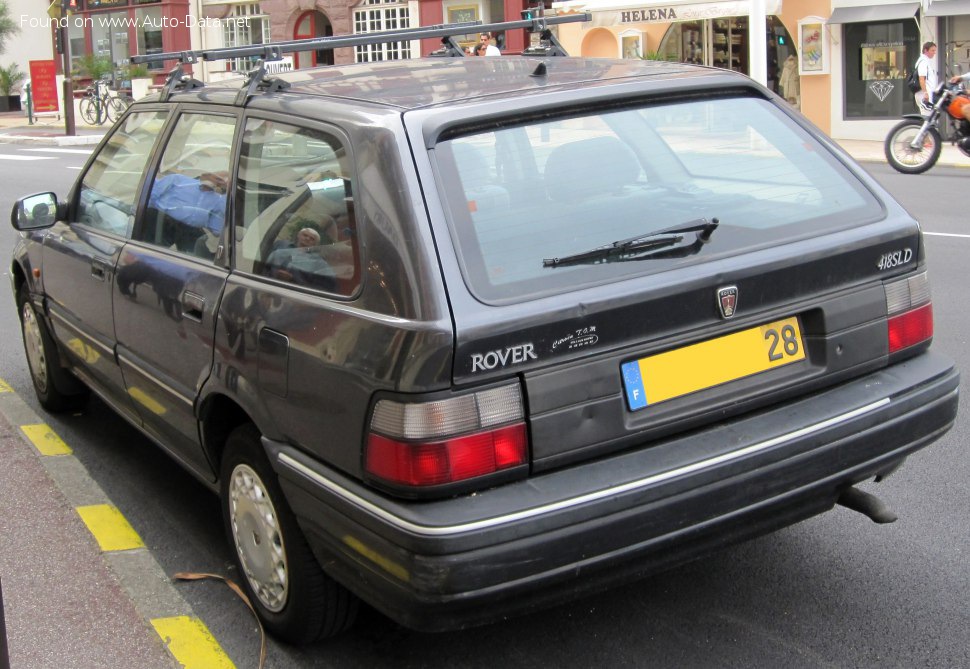
adopted a conventional yet elegant five-door station wagon (often referred to as an “estate car” in Europe) body style, emphasizing practicality and cargo capacity. Its design language was distinctly Rover, featuring understated lines and a conservative aesthetic that appealed to its target demographic. The XW generation, while building on platforms with Honda influences, increasingly incorporated Rover’s own design cues, moving towards a more independent identity.
Measuring 171.85 inches (4365 mm) in length, 66.14 inches (1680 mm) in width, and 54.72 inches (1390 mm) in height, with a wheelbase of 100.39 inches (2550 mm), the 400 Tourer offered a spacious interior for five occupants. A key selling point was its generous cargo volume: a minimum of 15.19 cubic feet (430 liters) with all seats in place, expanding to an impressive 49.79 cubic feet (1410 liters) with the rear seats folded down. This flexibility made it an ideal vehicle for family vacations, hauling groceries, or transporting bulky items.
In terms of features, the
Rover 400 Tourer (XW) 420 i (136 Hp)
was equipped with features considered advanced or desirable for its class in the mid-1990s. Standard safety equipment included an Anti-lock Braking System (ABS), providing enhanced control during emergency braking. The steering system utilized a hydraulic power-assisted rack and pinion setup, offering a comfortable and communicative driving experience. Suspension was a conventional but effective arrangement, with spring struts at the front and coil springs at the rear, tuned for a comfortable ride quality typical of European family cars. Braking was handled by ventilated discs at the front for improved heat dissipation, complemented by drum brakes at the rear. The vehicle rode on 185/55 R15 V tires, providing a good balance of grip and ride comfort.
Technical Specifications
| Category | Specification | US Equivalent |
|---|---|---|
General Information |
||
| Brand | Rover | |
| Model | 400 | |
| Generation | 400 Tourer (XW) | |
| Type (Engine) | 420 i (136 Hp) | |
| Start of Production | 1994 year | |
| End of Production | 1998 year | |
| Powertrain Architecture | Internal Combustion engine | |
| Body Type | Station wagon (estate) | |
| Seats | 5 | |
| Doors | 5 | |
Performance Specs |
||
| Fuel Consumption (Combined) | 8 l/100 km | 29.4 US mpg |
| Fuel Type | Petrol (Gasoline) | |
| Acceleration 0 – 60 mph | 8.3 sec | |
| Maximum Speed | 200 km/h | 124.27 mph |
| Weight-to-Power Ratio | 8.9 kg/Hp | 112.4 Hp/tonne |
| Weight-to-Torque Ratio | 6.5 kg/Nm | 152.9 Nm/tonne |
Engine Specs |
||
| Power | 136 Hp @ 6000 rpm | |
| Power per liter | 68.2 Hp/l | |
| Torque | 185 Nm @ 2500 rpm | 136.45 lb.-ft. @ 2500 rpm |
| Engine Layout | Front, Transverse | |
| Engine Model/Code | M16 | |
| Engine Displacement | 1994 cm3 | 121.68 cu. in. |
| Number of Cylinders | 4 | |
| Engine Configuration | Inline | |
| Cylinder Bore | 84.5 mm | 3.33 in. |
| Piston Stroke | 88.9 mm | 3.5 in. |
| Compression Ratio | 10:1 | |
| Number of Valves per Cylinder | 4 | |
| Fuel Injection System | Multi-port manifold injection | |
| Engine Aspiration | Naturally aspirated engine | |
| Valvetrain | DOHC | |
| Engine Oil Capacity | 4.5 l | 4.76 US qt |
| Coolant Capacity | 7 l | 7.4 US qt |
Space, Volume and Weights |
||
| Kerb Weight | 1210 kg | 2667.59 lbs. |
| Max. Weight | 1650 kg | 3637.63 lbs. |
| Max Load | 440 kg | 970.03 lbs. |
| Trunk (Boot) Space – minimum | 430 l | 15.19 cu. ft. |
| Trunk (Boot) Space – maximum | 1410 l | 49.79 cu. ft. |
| Fuel Tank Capacity | 55 l | 14.53 US gal |
Dimensions |
||
| Length | 4365 mm | 171.85 in. |
| Width | 1680 mm | 66.14 in. |
| Height | 1390 mm | 54.72 in. |
| Wheelbase | 2550 mm | 100.39 in. |
| Front Track | 1475 mm | 58.07 in. |
| Rear (Back) Track | 1470 mm | 57.87 in. |
Drivetrain, Brakes and Suspension Specs |
||
| Drivetrain Architecture | The Internal combustion engine (ICE) drives the front wheels of the vehicle. | |
| Drive Wheel | Front wheel drive | |
| Number of Gears and Type of Gearbox | 5 gears, manual transmission | |
| Front Suspension | Spring Strut | |
| Rear Suspension | Coil spring | |
| Front Brakes | Ventilated discs | |
| Rear Brakes | Drum | |
| Assisting Systems | ABS (Anti-lock braking system) | |
| Steering Type | Steering rack and pinion | |
| Power Steering | Hydraulic Steering | |
| Tires Size | 185/55 R15 V | |
Legacy and Market Impact of the Rover 400 Tourer (XW)
The
Rover 400 Tourer (XW)
, and specifically the 420 i (136 Hp) variant, occupied an important position in the European automotive market during the mid-to-late 1990s. It competed in a fiercely contested segment against established rivals such as the Ford Escort/Focus Wagon, Vauxhall Astra Wagon, Volkswagen Golf Variant, and Renault Megane Estate. What set the Rover apart was its distinctive British character, a perception of quality materials (often including wood trim and comfortable seating), and a slightly more upmarket feel compared to some of its mass-market competitors.
The “Tourer” designation for the station wagon body style underscored its practical intentions, appealing to families and individuals who required substantial cargo space without sacrificing driving enjoyment. The 420 i’s 136 horsepower M16 engine provided a genuinely lively performance, making it one of the more engaging options in the family wagon class. Its ability to accelerate quickly and cruise comfortably at highway speeds was a significant draw, especially in markets where long-distance travel was common.
Historically, the XW generation of the Rover 400 was a crucial step for Rover in distancing itself from the direct rebadging of Honda models that characterized earlier generations. While still sharing some underlying architecture, the XW featured more distinct Rover styling and engineering input, particularly evident in the engine choices and interior design. The 400 Tourer, therefore, represents a period where Rover was striving to reassert its independent identity and engineering prowess before its eventual decline.
Today, the
Rover 400 Tourer (XW) 420 i (136 Hp)
is remembered as a practical, well-engineered, and relatively spirited family car from a bygone era of British automotive manufacturing. Its blend of performance, utility, and a touch of traditional Rover refinement cemented its reputation as a solid choice for European consumers seeking a versatile and capable vehicle that stood out subtly from its more commonplace rivals. It remains a testament to Rover’s efforts to compete effectively in a globalized market with a uniquely British offering.