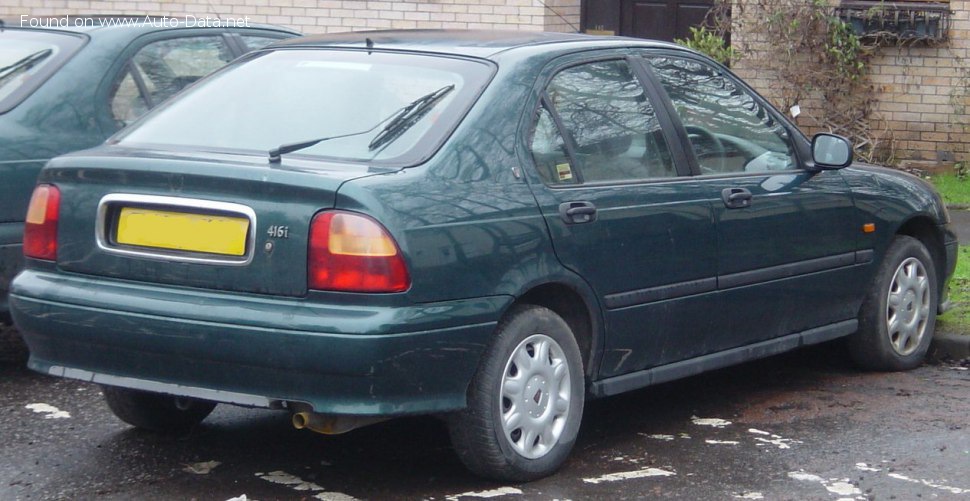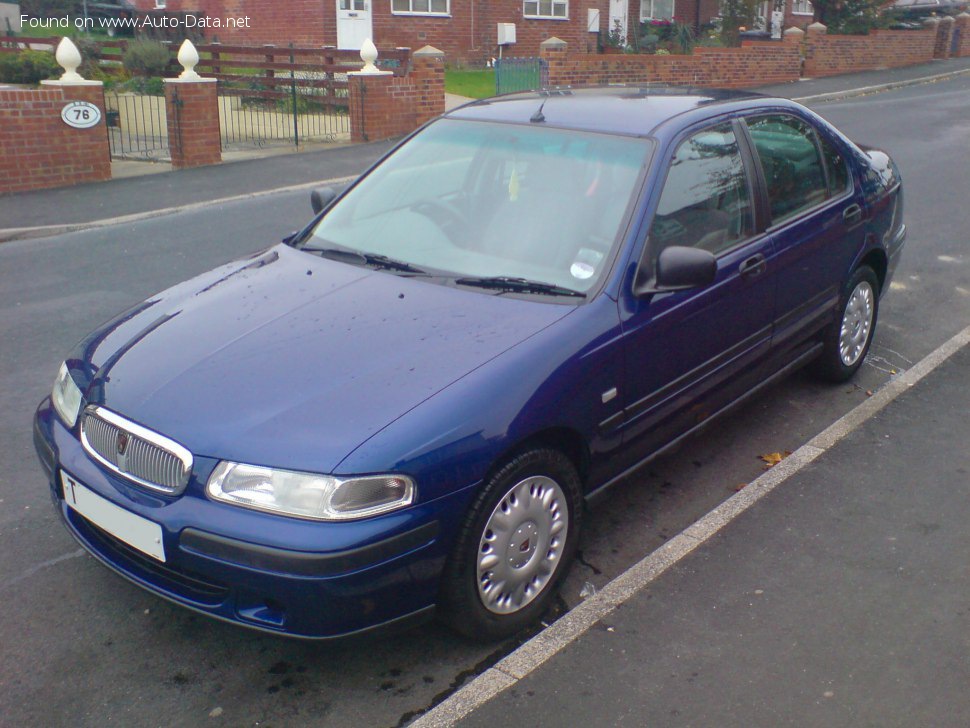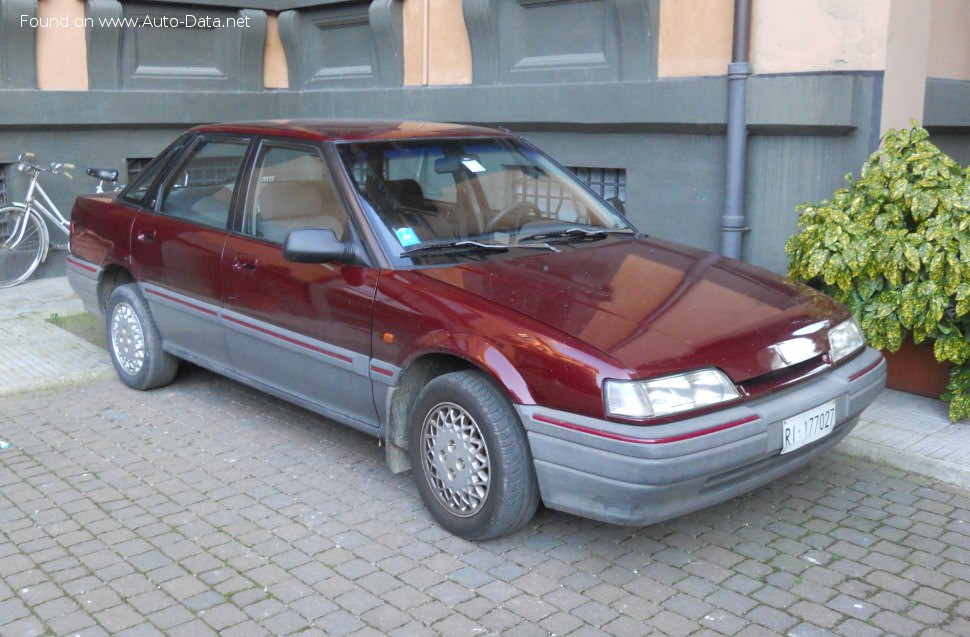
The Rover 400 (XW): A British-Japanese Collaboration in the Early 90s European Market
The Rover 400 (XW), produced from 1990 to 1995, represented a pivotal model for the British automotive manufacturer Rover Group. Positioned in the highly competitive compact executive or family car segment in Europe, the XW generation was the second iteration of the Rover 400 series, succeeding the original SD3 model. Critically, it was a product of the long-standing collaboration between Rover and Honda, sharing its platform and many mechanical components with the Honda Concerto. This strategic alliance aimed to provide Rover with modern, reliable engineering while allowing the British marque to infuse its distinctive styling and traditional British interior ambiance. The variant under review, the 416 GSI (111 Hp) Automatic, was a well-appointed offering that combined a spirited 1.6-liter engine with the convenience of an automatic transmission, catering to a market segment that valued comfort, refinement, and a touch of understated luxury.
During its production run, the Rover 400 (XW) sought to carve out a niche against formidable European and Japanese rivals. It was designed to appeal to buyers looking for a sophisticated alternative to the more mainstream Ford Sierra/Mondeo or Vauxhall Cavalier (Opel Vectra). The 416 GSI, in particular, stood out with its higher trim level, offering a blend of performance and features that were considered premium for its class in the early 1990s. Its introduction marked a period of significant change for Rover, as the company navigated evolving market demands and its complex relationship with Honda, attempting to maintain a distinct British identity within a globally influenced product portfolio.
Engine and Performance: The Heart of the Rover 400 (XW) 416 GSI
At the core of the Rover 400 (XW) 416 GSI was a robust and well-regarded powertrain. The vehicle utilized a 1.6-liter (1590 cm3 or 97.03 cu. in.) naturally aspirated inline-four engine, specifically the K16 model code. This engine was a testament to modern engineering for its time, featuring a Double Overhead Camshaft (DOHC) valvetrain with four valves per cylinder, totaling 16 valves. This configuration allowed for better breathing and efficiency, contributing to both power output and fuel economy. Fuel delivery was handled by a multi-port manifold injection system, ensuring precise fuel metering and improved combustion compared to older carburetor systems.
The engine produced a respectable 111 horsepower at 6300 rpm, translating to a power-per-liter figure of 69.8 HP/l, which was competitive for a non-turbocharged engine in its class. Torque output stood at 137 Nm (or 101.05 lb.-ft.) at 5200 rpm, providing a good balance of low-end pull and high-end responsiveness. The engine’s layout was front, transverse, driving the front wheels, a common and efficient setup for compact sedans of this era. The compression ratio was 9.1:1, optimized for regular unleaded gasoline.
Power was transmitted to the front wheels via a 4-speed automatic transmission. While modern automatics offer more gears, a 4-speed unit was standard for many vehicles in the early 1990s, providing a smooth and convenient driving experience, especially in urban environments. This combination allowed the 416 GSI Automatic to accelerate from 0 to 60 mph in a respectable 10.6 seconds, with a top speed of approximately 115 mph (185 km/h). These figures placed it firmly in the mainstream of family sedans, offering adequate performance for daily commuting and highway cruising.
In terms of fuel efficiency, the Rover 416 GSI Automatic delivered decent numbers for an automatic sedan of its time. The combined fuel economy was rated at 9.1 liters per 100 kilometers, which translates to approximately 25.8 US miles per gallon. Urban driving yielded about 22.4 US mpg, while extra-urban (highway) driving improved to 32.7 US mpg, showcasing its capability for more economical long-distance travel. The fuel tank capacity of 14.53 US gallons (55 liters) provided a practical driving range.
Design and Features: British Elegance Meets Practicality
The Rover 400 (XW) adopted a classic four-door sedan body style, designed to comfortably seat five occupants. Its exterior design was a blend of Rover’s traditional styling cues and the more contemporary lines of its Honda donor platform. While not overtly sporty, the design exuded a sense of understated elegance and maturity, characterized by clean lines and a relatively low drag coefficient for its time. Dimensions were practical for a family car, with a length of 172.05 inches (4370 mm), a width of 66.14 inches (1680 mm), and a height of 55.12 inches (1400 mm). The wheelbase measured 100.39 inches (2550 mm), contributing to a stable ride and a spacious cabin.
Inside, the GSI trim level meant a focus on comfort and quality materials, aiming to differentiate it from its more utilitarian competitors. While specific interior features varied by market and optional extras, the GSI typically included upgraded upholstery, power windows, central locking, and potentially air conditioning as an option. Rover was known for its attention to interior details, often incorporating wood trim or higher-grade plastics to give a more premium feel, a direct contrast to some of its more spartan competitors. The trunk space was generous for its class, offering 14.48 cubic feet (410 liters) of cargo capacity, making it suitable for family trips or substantial grocery runs.
From a chassis perspective, the Rover 400 (XW) was engineered for a comfortable and predictable ride. The front suspension utilized a wishbone setup, known for its ability to provide precise wheel control and good ride quality. The rear suspension featured coil springs, a common and effective design for passenger comfort. The braking system was a significant highlight for its class, employing disc brakes on all four wheels, which provided superior stopping power and fade resistance compared to cars still using rear drum brakes. An Anti-lock Braking System (ABS) was available, enhancing safety by preventing wheel lock-up during hard braking, a crucial safety feature for the early 1990s.
Steering was handled by a rack and pinion system with hydraulic power steering, offering a comfortable and assisted feel, making parking and low-speed maneuvers less strenuous. The vehicle rode on 175/65 R14 tires mounted on 14-inch wheel rims, a common size that balanced ride comfort with adequate grip and affordability. With a curb weight of 2369.97 lbs (1075 kg) and a maximum gross weight of 3417.17 lbs (1550 kg), the 416 GSI was a relatively light vehicle, contributing to its nimble feel and efficiency.
Technical Specifications: Rover 400 (XW) 416 GSI (111 Hp) Automatic
| Category | Specification | Metric Value | US Customary Value |
|---|---|---|---|
| General Information | Brand | Rover | |
| Model | 400 | ||
| Generation | 400 (XW) | ||
| Type (Engine) | 416 GSI (111 Hp) Automatic | ||
| Start of Production | 1990 year | ||
| End of Production | 1995 year | ||
| Powertrain Architecture | Internal Combustion engine, Front Wheel Drive | ||
| Body Type | Sedan | ||
| Seats | 5 | ||
| Doors | 4 | ||
| Performance Specs | Fuel Consumption (Urban) | 10.5 l/100 km | 22.4 US mpg |
| Fuel Consumption (Extra Urban) | 7.2 l/100 km | 32.7 US mpg | |
| Fuel Consumption (Combined) | 9.1 l/100 km | 25.8 US mpg | |
| Fuel Type | Petrol (Gasoline) | ||
| Acceleration 0 – 60 mph | 10.6 sec | 10.6 sec | |
| Maximum Speed | 185 km/h | 114.95 mph | |
| Weight-to-Power Ratio | 9.7 kg/Hp | 103.3 Hp/tonne | |
| Weight-to-Torque Ratio | 7.8 kg/Nm | 127.4 Nm/tonne | |
| Engine Specs | Power | 111 Hp @ 6300 rpm | 111 Hp @ 6300 rpm |
| Power per Liter | 69.8 Hp/l | 69.8 Hp/l | |
| Torque | 137 Nm @ 5200 rpm | 101.05 lb.-ft. @ 5200 rpm | |
| Engine Layout | Front, Transverse | ||
| Engine Model/Code | K16 | ||
| Engine Displacement | 1590 cm3 | 97.03 cu. in. | |
| Number of Cylinders | 4 | ||
| Engine Configuration | Inline | ||
| Cylinder Bore | 75 mm | 2.95 in. | |
| Piston Stroke | 90 mm | 3.54 in. | |
| Compression Ratio | 9.1:1 | ||
| Number of Valves per Cylinder | 4 | ||
| Fuel Injection System | Multi-port manifold injection | ||
| Engine Aspiration | Naturally aspirated engine | ||
| Valvetrain | DOHC | ||
| Engine Oil Capacity | 3.5 l | 3.7 US qt | |
| Coolant Capacity | 5.5 l | 5.81 US qt | |
| Space, Volume and Weights | Kerb Weight | 1075 kg | 2369.97 lbs. |
| Max. Weight | 1550 kg | 3417.17 lbs. | |
| Max Load | 475 kg | 1047.2 lbs. | |
| Trunk (Boot) Space – Minimum | 410 l | 14.48 cu. ft. | |
| Fuel Tank Capacity | 55 l | 14.53 US gal | |
| Dimensions | Length | 4370 mm | 172.05 in. |
| Width | 1680 mm | 66.14 in. | |
| Height | 1400 mm | 55.12 in. | |
| Wheelbase | 2550 mm | 100.39 in. | |
| Front Track | 1475 mm | 58.07 in. | |
| Rear (Back) Track | 1470 mm | 57.87 in. | |
| Drivetrain, Brakes and Suspension Specs | Drivetrain Architecture | Front wheel drive | |
| Drive Wheel | Front wheel drive | ||
| Number of Gears and Type of Gearbox | 4 gears, automatic transmission | ||
| Front Suspension | Wishbone | ||
| Rear Suspension | Coil spring | ||
| Front Brakes | Disc | ||
| Rear Brakes | Disc | ||
| Assisting Systems | ABS (Anti-lock braking system) | ||
| Steering Type | Steering rack and pinion | ||
| Power Steering | Hydraulic Steering | ||
| Tires Size | 175/65 R14 | ||
| Wheel Rims Size | 14 | ||
Legacy and Market Impact of the Rover 400 (XW)
The Rover 400 (XW) played a crucial role in Rover’s strategy during the early to mid-1990s. In its primary European markets, particularly the UK, it competed in a fiercely contested segment against established players like the Ford Sierra (later Mondeo), Vauxhall Cavalier (Opel Vectra), Volkswagen Jetta, and a growing influx of Japanese competitors such as the Toyota Carina E and Nissan Primera. Rover aimed to position the 400 as a more refined and upmarket alternative, leveraging its British heritage and perceived quality, often appealing to buyers who appreciated a slightly more traditional and less overtly modern aesthetic than some of its rivals.
The collaboration with Honda, which underpinned the 400 (XW)’s mechanicals, was a double-edged sword for Rover. On one hand, it provided the company with access to highly reliable, well-engineered platforms and powertrains, significantly improving the quality and durability perception compared to earlier, less robust Rover models. This Honda influence was particularly evident in the smooth-revving K16 engine and the competent chassis dynamics. On the other hand, some critics argued that the deep collaboration diluted Rover’s distinct identity, with the 400 often being seen as a “rebadged Honda Concerto” rather than a truly unique British product. Despite these criticisms, the underlying Honda engineering bestowed the Rover 400 with a level of reliability and refinement that was vital for its market competitiveness.
The 416 GSI Automatic variant, with its 111 HP engine and automatic transmission, was particularly well-suited for buyers seeking convenience and a comfortable daily commute. Its relatively strong performance and comprehensive feature set for the time made it a desirable choice within the range. The availability of features like four-wheel disc brakes and ABS, while becoming more common, still represented a commitment to safety and driving dynamics that enhanced its appeal.
Ultimately, the Rover 400 (XW) helped maintain Rover’s presence in a critical market segment during a challenging period for the British auto industry. It was seen as a competent, comfortable, and reasonably well-equipped family sedan. Its legacy is tied to the broader narrative of Rover’s attempts to remain competitive through strategic alliances, offering a car that blended British styling aspirations with reliable Japanese engineering. It paved the way for its successor, the R3 generation Rover 400/45, which would continue to evolve the brand’s offerings in the compact executive space, though without the direct Honda platform sharing of the XW. The Rover 400 (XW) remains a significant chapter in Rover’s history, representing a period of transition and adaptation in the global automotive landscape.