Introduction to the Rover 400 (XW) 418 TD (88 Hp)
The Rover 400 series, specifically the XW generation produced from 1991 to 1995, represented a significant chapter in the British automaker’s history. Positioned in the highly competitive European C-segment (compact family car), the Rover 400 (XW) 418 TD (88 Hp) was a practical and efficient offering designed to appeal to buyers seeking a blend of comfort, traditional British styling, and robust, economical diesel performance. This particular variant, the 418 TD, was notable for its reliance on a well-regarded Peugeot-Citroën diesel engine, a strategic decision that underscored Rover’s efforts to provide competitive powertrain options in an increasingly demanding market.
Developed as part of a long-standing collaboration with Honda, the XW generation of the Rover 400 shared its underpinnings with the Honda Concerto. However, Rover applied its distinct styling cues and interior treatments to differentiate the vehicle, particularly appealing to a more conservative European clientele. The 418 TD model, with its four-door sedan body style and focus on fuel efficiency, became a popular choice for families and business users across the UK and continental Europe, where diesel engines were gaining considerable traction due to their lower running costs and improved torque characteristics. This article delves into the technical specifics, design philosophy, and market impact of this pragmatic yet quintessential early 1990s Rover.
Engine and Performance: The Power Behind the Rover 400 (XW) 418 TD
At the heart of the Rover 400 (XW) 418 TD (88 Hp) was a robust 1.8-liter (1769 cm3 or 107.95 cu. in.) inline four-cylinder diesel engine, designated A8A (XUD7TE). This powerplant was sourced from PSA Peugeot Citroën, a testament to the era’s cross-manufacturer collaborations aimed at optimizing development costs and leveraging proven technologies. The engine featured an Overhead Camshaft (OHC) valvetrain with two valves per cylinder, a common and reliable configuration for diesel engines of the period.
Crucially, the engine was equipped with a turbocharger, a feature that significantly enhanced its performance over naturally aspirated diesel alternatives. This turbocharging allowed the 418 TD to produce a respectable 88 horsepower at 4300 rpm. More importantly for a diesel, it generated a healthy 133.5 lb.-ft. of torque at a low 2500 rpm. This ample low-end torque was instrumental in providing strong pulling power and a relaxed driving experience, particularly beneficial for highway cruising and carrying passengers or cargo.
Power was delivered to the front wheels via a smooth-shifting 5-speed manual transmission, a standard and reliable setup for compact cars of this vintage. In terms of acceleration, the 418 TD could achieve 0-60 mph in a competitive 11.2 seconds, with a top speed of 106.25 mph (171 km/h). While not a performance car, these figures were perfectly adequate for the everyday demands of a family sedan.
One of the Rover 400 418 TD’s most compelling attributes was its fuel economy. With a combined consumption rating of 38.6 US mpg (6.1 l/100 km), it offered excellent efficiency, particularly in an era before widespread hybrid or advanced common-rail diesel technologies. Urban driving yielded 35.6 US mpg (6.6 l/100 km), while extra-urban (highway) figures were an impressive 54.7 US mpg (4.3 l/100 km), making it a highly economical choice for long-distance travel. Its compression ratio of 22:1 and precombustion chamber injection system were characteristic of the diesel technology prevalent at the time, prioritizing durability and efficiency.
Design and Features of the Rover 400 (XW)
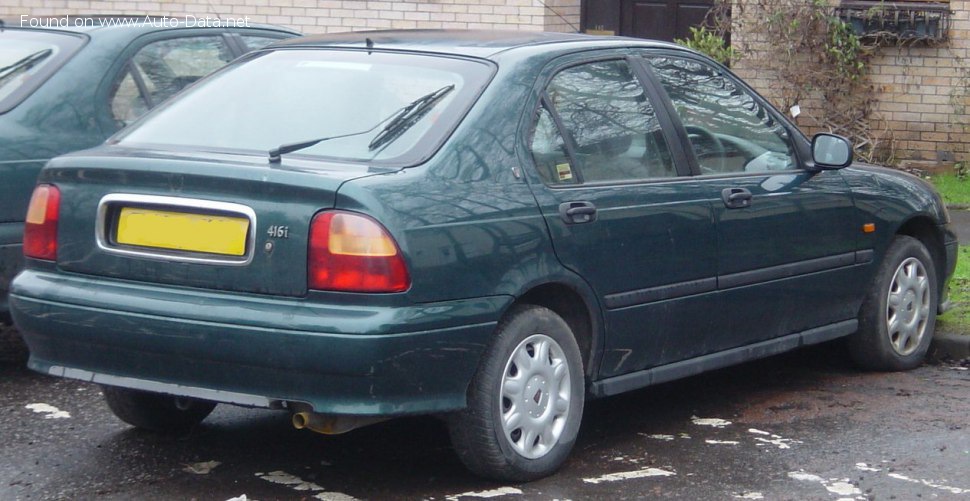
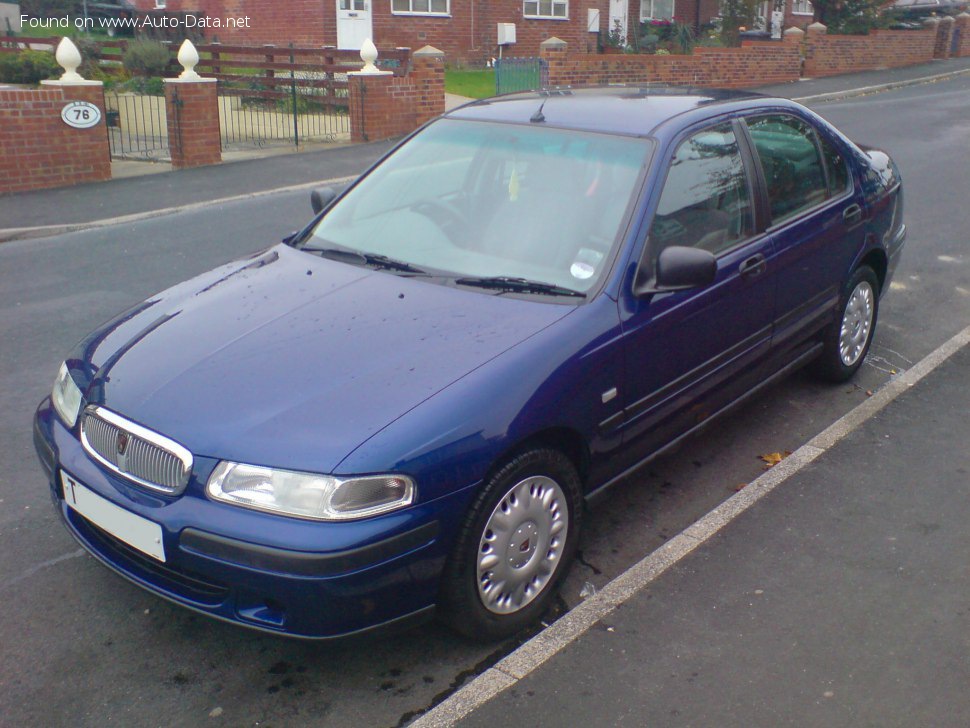
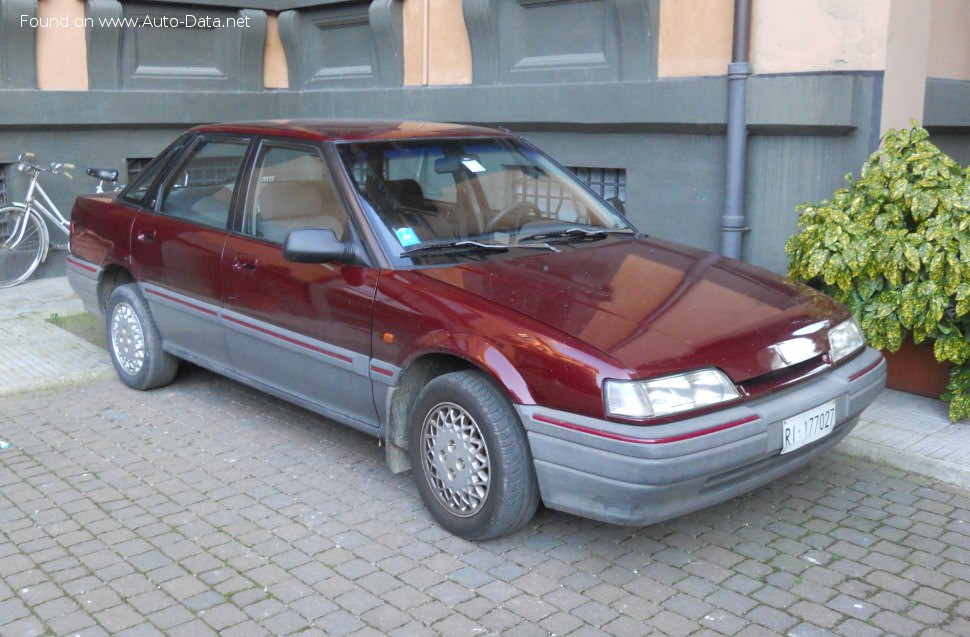
The Rover 400 (XW) 418 TD adopted a classic four-door sedan body style, a popular choice in the early 1990s for its practicality and conventional appeal. Measuring 172.05 inches (4370 mm) in length, 66.14 inches (1680 mm) in width, and 55.12 inches (1400 mm) in height, it offered a compact yet spacious footprint for its segment. The design was understated and elegant, featuring Rover’s characteristic grille and subtle chrome accents that provided a touch of traditional British sophistication, differentiating it from its Honda sibling.
Inside, the 400 (XW) was designed to accommodate five occupants comfortably. The interior focused on ergonomics and a pleasant driving environment, often featuring higher-quality materials than some of its direct competitors. While not laden with the digital extravagances of modern cars, it provided all the essential conveniences expected of a family car in the early 90s. The trunk space was generous for its class, offering 14.48 cu. ft. (410 liters) of cargo volume, making it practical for family vacations or grocery runs.
Safety features for the era included available Anti-lock Braking System (ABS), which was a significant advancement for cars in this segment at the time, improving stopping performance and control under hard braking. The car utilized a robust braking system, with disc brakes at both the front and rear, providing reliable stopping power. The drivetrain architecture was front-wheel drive, offering predictable handling and efficient packaging.
The suspension setup comprised wishbones at the front and coil springs at the rear, a conventional arrangement that provided a good balance between ride comfort and handling stability. Steering was managed by a rack and pinion system with hydraulic power steering, offering a direct feel and ease of maneuverability. The 418 TD rode on 175/65 R13 tires, reflecting the general trend for smaller wheel sizes in the compact segment of the early 1990s, which contributed to its comfortable ride and fuel efficiency. The curb weight of the vehicle was 2557.36 lbs. (1160 kg), contributing to its agile feel and efficient performance.
Technical Specifications
Below are the detailed technical specifications for the Rover 400 (XW) 418 TD (88 Hp):
| Attribute | Value |
|---|---|
| Brand | Rover |
| Model | 400 |
| Generation | 400 (XW) |
| Type (Engine) | 418 TD (88 Hp) |
| Start of Production | 1991 year |
| End of Production | 1995 year |
| Powertrain Architecture | Internal Combustion engine |
| Body Type | Sedan |
| Seats | 5 |
| Doors | 4 |
| Fuel Consumption (Urban) | 6.6 l/100 km (35.6 US mpg) |
| Fuel Consumption (Extra Urban) | 4.3 l/100 km (54.7 US mpg) |
| Fuel Consumption (Combined) | 6.1 l/100 km (38.6 US mpg) |
| Fuel Type | Diesel |
| Acceleration 0 – 60 mph | 11.2 sec |
| Acceleration 0 – 100 km/h | 11.8 sec |
| Maximum Speed | 171 km/h (106.25 mph) |
| Weight-to-Power Ratio | 13.2 kg/Hp (75.9 Hp/tonne) |
| Weight-to-Torque Ratio | 6.4 kg/Nm (156 Nm/tonne) |
| Power | 88 Hp @ 4300 rpm |
| Power per Liter | 49.7 Hp/l |
| Torque | 181 Nm @ 2500 rpm (133.5 lb.-ft. @ 2500 rpm) |
| Engine Layout | Front, Transverse |
| Engine Model/Code | A8A (XUD7TE) |
| Engine Displacement | 1769 cm3 (1.8 Liters / 107.95 cu. in.) |
| Number of Cylinders | 4 |
| Engine Configuration | Inline |
| Cylinder Bore | 80 mm (3.15 in.) |
| Piston Stroke | 88 mm (3.46 in.) |
| Compression Ratio | 22:1 |
| Number of Valves per Cylinder | 2 |
| Fuel Injection System | Precombustion chamber injection |
| Engine Aspiration | Turbocharger |
| Valvetrain | OHC |
| Engine Oil Capacity | 5 Liters (5.28 US qt) |
| Coolant Capacity | 8.8 Liters (9.3 US qt) |
| Kerb Weight | 1160 kg (2557.36 lbs.) |
| Max. Weight | 1610 kg (3549.44 lbs.) |
| Max Load | 450 kg (992.08 lbs.) |
| Trunk (Boot) Space – Minimum | 410 Liters (14.48 cu. ft.) |
| Fuel Tank Capacity | 55 Liters (14.53 US gal) |
| Length | 4370 mm (172.05 in.) |
| Width | 1680 mm (66.14 in.) |
| Height | 1400 mm (55.12 in.) |
| Wheelbase | 2550 mm (100.39 in.) |
| Front Track | 1475 mm (58.07 in.) |
| Rear (Back) Track | 1470 mm (57.87 in.) |
| Drivetrain Architecture | Front-wheel drive (Internal Combustion engine drives front wheels) |
| Drive Wheel | Front wheel drive |
| Number of Gears and Type of Gearbox | 5 gears, Manual transmission |
| Front Suspension | Wishbone |
| Rear Suspension | Coil spring |
| Front Brakes | Disc |
| Rear Brakes | Disc |
| Assisting Systems | ABS (Anti-lock braking system) |
| Steering Type | Steering rack and pinion |
| Power Steering | Hydraulic Steering |
| Tires Size | 175/65 R13 |
Legacy and Market Impact
The Rover 400 (XW) 418 TD (88 Hp) occupied an important niche in the European automotive landscape of the early to mid-1990s. In its primary market, the United Kingdom, it was seen as a sophisticated and slightly more upmarket alternative to mainstream compact sedans. Its blend of traditional British styling, comfortable interior, and the proven reliability and economy of the Peugeot-derived diesel engine made it a compelling proposition.
Competitors in its segment were fierce and varied, including established players like the Ford Escort and Sierra, Vauxhall Astra and Cavalier (Opel Kadett and Vectra in continental Europe), Volkswagen Golf and Jetta, and French rivals such as the Peugeot 306 and 405, and the Citroën ZX and Xantia. The Rover 400 distinguished itself through its perceived quality, a slightly more refined driving experience, and its distinctive “Roverness” – a blend of classic design cues with modern (for the time) engineering.
The XW generation, and particularly the diesel variants like the 418 TD, helped solidify Rover’s reputation for producing practical, comfortable, and economical family cars. The choice of the XUD7TE engine was a shrewd move, as this particular unit was renowned for its durability and excellent fuel efficiency, factors that significantly boosted the 418 TD’s appeal. It offered a compelling alternative to petrol engines, especially for drivers covering high mileage, and contributed to the growing popularity of diesel passenger cars in Europe.
While the Rover 400 (XW) 418 TD was never officially sold in the United States, its legacy is significant within its home markets. It showcased Rover’s ability to combine external design flair with robust, internationally sourced mechanicals to create a competitive product. This model played a crucial role in maintaining Rover’s presence in the critical compact segment during a period of intense competition and evolving consumer tastes. It paved the way for subsequent iterations of the 400 series and contributed to the brand’s identity as a producer of refined, if sometimes understated, vehicles. The 418 TD stands as a testament to the practical, efficient diesel sedans that were a cornerstone of European motoring in the early 1990s.