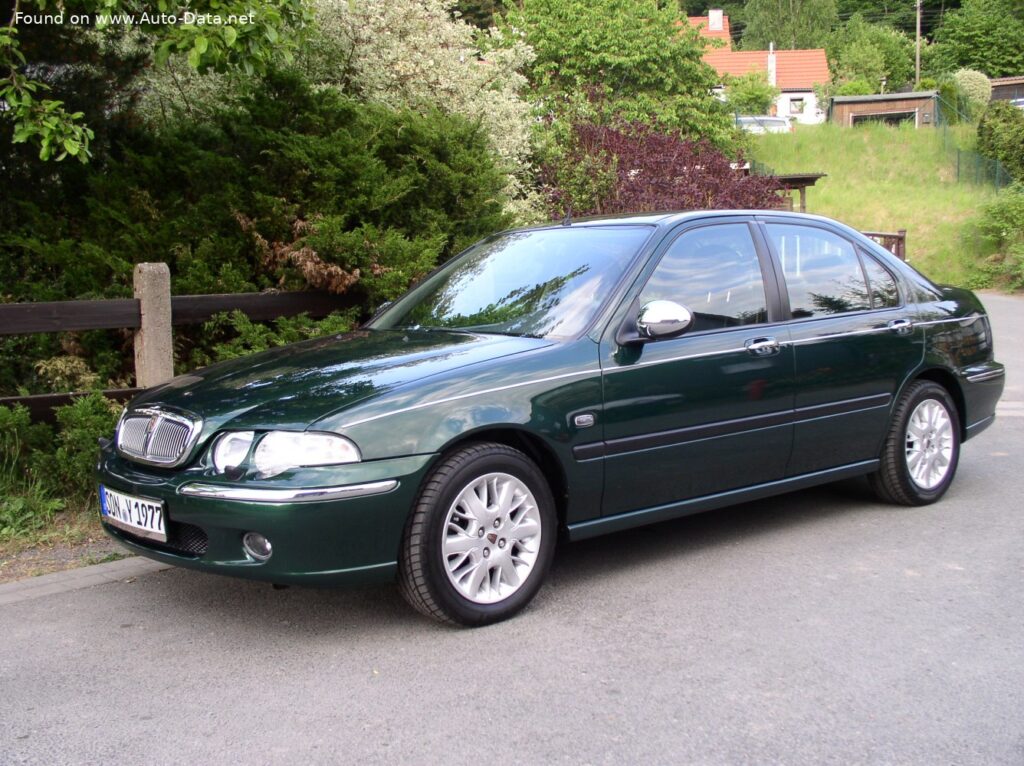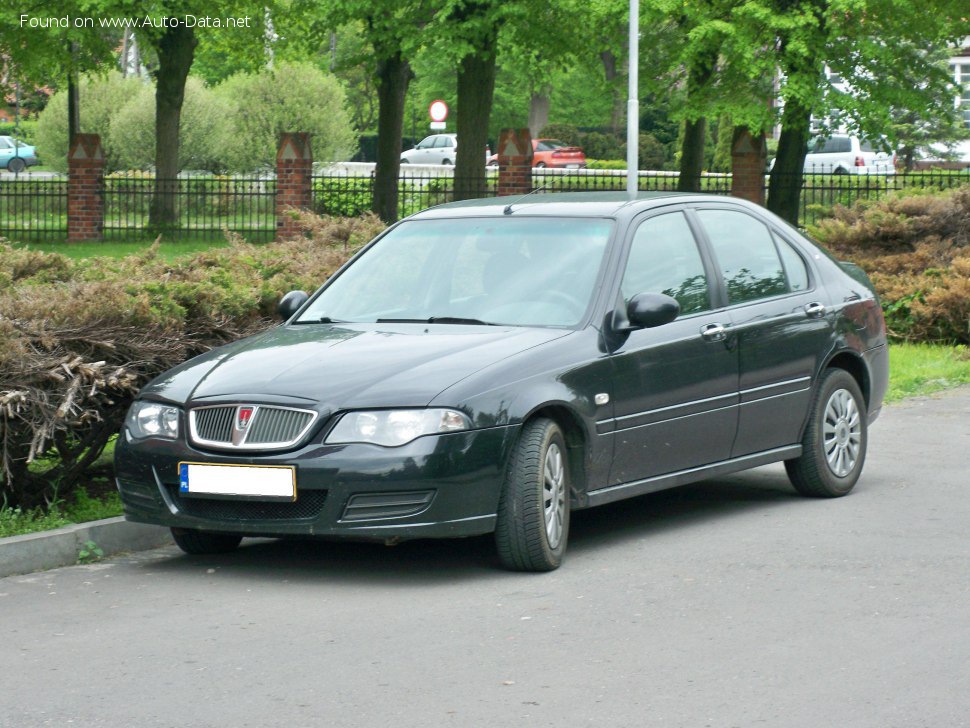
The Rover 45 Hatchback (RT) 1.6 i 16V (109 Hp): A British Compact in a Competitive Era
The Rover 45, produced by the British automaker Rover Group from 1999 to 2005, represented a critical entry in the highly competitive European C-segment, or compact car market. Succeeding the Rover 400 Series, the 45 was essentially a rebadged and re-engineered version of the Honda Domani, itself a derivative of the Honda Civic. This particular variant, the Rover 45 Hatchback (RT) 1.6 i 16V (109 Hp), offered a blend of practicality, traditional British styling cues, and Honda-derived mechanical reliability, aiming to appeal to a demographic seeking a comfortable, well-equipped, and understated family car. Primarily sold in the United Kingdom and continental Europe, the Rover 45 was never officially imported to the United States, making its role and impact distinctly European.
Launched at a challenging time for the Rover brand, the 45 sought to uphold Rover’s reputation for refinement and a slightly more upscale feel than many of its direct competitors. The “RT” designation refers to its internal development code, signifying its generation within the Rover lineup. While sharing its fundamental architecture with Honda, Rover engineers applied their own tuning to the suspension and steering, along with a distinct interior and exterior design, to imbue the car with a characteristic Rover identity. The 1.6-liter engine offered a respectable balance of power and fuel efficiency for its class, positioning this specific model as a popular choice for families and commuters across its primary markets.
Engine and Performance of the Rover 45 Hatchback (RT) 1.6 i 16V (109 Hp)
At the heart of the Rover 45 Hatchback (RT) 1.6 i 16V (109 Hp) was Rover’s K-Series engine, specifically the K16 model, a naturally aspirated inline-four gasoline (petrol) unit. This engine was a hallmark of Rover’s engineering prowess, known for its compact design and efficient power delivery. With a displacement of 1588 cubic centimeters (approximately 1.6 liters or 96.91 cubic inches), the engine featured a Double Overhead Camshaft (DOHC) valvetrain with four valves per cylinder, totaling 16 valves. This setup contributed to its ability to produce 109 horsepower at a relatively high 6000 rpm, providing a lively performance for a car of its size and segment.
Torque output stood at 138 Nm, or 101.78 lb.-ft., peaking at 4500 rpm. This torque curve, combined with a five-speed manual transmission, allowed the front-wheel-drive 45 to accelerate from 0 to 60 mph in a respectable 9.8 seconds. Its maximum speed was rated at 118.06 mph (190 km/h), making it capable of comfortable cruising on European highways. The engine’s multi-port manifold injection system ensured precise fuel delivery, contributing to its overall efficiency. Fuel economy figures were competitive for the era, with a combined rating of 34.1 US mpg (6.9 liters per 100 km), showcasing its practicality for daily driving.
The K-Series engine, despite its initial promise and performance, would later become associated with head gasket issues, particularly in earlier iterations. However, in the 45, many of these issues had been addressed, and the 1.6-liter unit generally proved to be a reliable and willing powerplant. Its front, transverse layout was typical for a front-wheel-drive compact car, optimizing interior space and weight distribution.
Design and Features
The Rover 45 Hatchback (RT) inherited much of its underlying structure from its Honda donor, but Rover made significant efforts to distinguish its aesthetics. The five-door hatchback body style was practical and versatile, offering seating for five occupants. Its exterior design featured the distinctive Rover grille and quad headlamps, giving it a more traditional and slightly conservative appearance compared to some of its more aggressively styled European rivals like the Ford Focus or Vauxhall Astra. The car’s dimensions—171.73 inches (4362 mm) in length, 66.77 inches (1696 mm) in width, and 54.88 inches (1394 mm) in height—placed it firmly within the compact segment, offering a good balance between maneuverability and interior room.
Inside, the Rover 45 aimed for a more upmarket feel than its price point might suggest, often featuring wood trim, chrome accents, and comfortable seating. The dashboard layout was conventional and user-friendly, prioritizing ergonomics and ease of access to controls. The hatchback configuration provided a versatile cargo area, with a minimum trunk space of 13.42 cubic feet (380 liters) that could expand to 25.32 cubic feet (717 liters) with the rear seats folded down. This flexibility made it a practical choice for families or individuals needing to transport varying amounts of cargo.
Mechanically, the Rover 45 Hatchback (RT) 1.6 i 16V (109 Hp) featured a suspension system designed to deliver a comfortable ride, a characteristic often associated with Rover vehicles. The front utilized a wishbone setup, while the rear employed a spring-strut arrangement, providing a compliant ride quality suitable for varied road conditions. Braking was handled by ventilated discs at the front and solid discs at the rear, augmented by an Anti-lock Braking System (ABS) for enhanced safety and control during emergency stops. The hydraulic power steering, a rack and pinion system, offered a good level of feedback and assistance, making the car easy to maneuver in urban environments and stable at higher speeds. Standard tire size was 175/70 R14 T, prioritizing comfort and efficiency.
Technical Specifications
Below is a detailed breakdown of the technical specifications for the Rover 45 Hatchback (RT) 1.6 i 16V (109 Hp):
| Category | Specification | US Equivalent / Notes |
|---|---|---|
| General Information | ||
| Brand | Rover | |
| Model | 45 | |
| Generation | 45 Hatchback (RT) | |
| Type (Engine) | 1.6 i 16V (109 Hp) | |
| Start of Production | 1999 year | |
| End of Production | 2005 year | |
| Powertrain Architecture | Internal Combustion engine | |
| Body type | Hatchback | |
| Seats | 5 | |
| Doors | 5 | |
| Performance Specs | ||
| Fuel Consumption (economy) – urban | 9.2 l/100 km | 25.6 US mpg |
| Fuel Consumption (economy) – extra urban | 5.6 l/100 km | 42 US mpg |
| Fuel Consumption (economy) – combined | 6.9 l/100 km | 34.1 US mpg |
| Fuel Type | Petrol (Gasoline) | |
| Acceleration 0 – 60 mph | 9.8 sec | |
| Maximum speed | 190 km/h | 118.06 mph |
| Weight-to-power ratio | 10.8 kg/Hp | 92.4 Hp/tonne |
| Weight-to-torque ratio | 8.6 kg/Nm | 116.9 Nm/tonne |
| Engine Specs | ||
| Power | 109 Hp @ 6000 rpm | |
| Power per litre | 68.6 Hp/l | |
| Torque | 138 Nm @ 4500 rpm | 101.78 lb.-ft. @ 4500 rpm |
| Engine layout | Front, Transverse | |
| Engine Model/Code | K16 | |
| Engine displacement | 1588 cm3 | 1.6 liters / 96.91 cu. in. |
| Number of cylinders | 4 | Inline configuration |
| Cylinder Bore | 80 mm | 3.15 in. |
| Piston Stroke | 79 mm | 3.11 in. |
| Compression ratio | 10.5:1 | |
| Number of valves per cylinder | 4 | |
| Fuel injection system | Multi-port manifold injection | |
| Engine aspiration | Naturally aspirated engine | |
| Valvetrain | DOHC | |
| Engine oil capacity | 5 l | 5.28 US qt |
| Coolant capacity | 4.6 l | 4.86 US qt |
| Space, Volume and Weights | ||
| Kerb Weight | 1180 kg | 2601.45 lbs. |
| Max. weight | 1640 kg | 3615.58 lbs. |
| Max load | 460 kg | 1014.13 lbs. |
| Trunk (boot) space – minimum | 380 l | 13.42 cu. ft. |
| Trunk (boot) space – maximum | 717 l | 25.32 cu. ft. |
| Fuel tank capacity | 55 l | 14.53 US gal |
| Dimensions | ||
| Length | 4362 mm | 171.73 in. |
| Width | 1696 mm | 66.77 in. |
| Height | 1394 mm | 54.88 in. |
| Wheelbase | 2620 mm | 103.15 in. |
| Front track | 1475 mm | 58.07 in. |
| Rear (Back) track | 1465 mm | 57.68 in. |
| Drivetrain, Brakes and Suspension Specs | ||
| Drivetrain Architecture | Internal combustion engine drives front wheels | |
| Drive wheel | Front wheel drive | |
| Number of gears and type of gearbox | 5 gears, manual transmission | |
| Front suspension | Wishbone | |
| Rear suspension | Spring Strut | |
| Front brakes | Ventilated discs | |
| Rear brakes | Disc | |
| Assisting systems | ABS (Anti-lock braking system) | |
| Steering type | Steering rack and pinion | |
| Power steering | Hydraulic Steering | |
| Tires size | 175/70 R14 T | |
Legacy and Market Impact of the Rover 45
The Rover 45 Hatchback (RT) 1.6 i 16V (109 Hp), like the entire 45 range, faced significant challenges in the European market. Its primary competitors were formidable and included segment leaders such as the Volkswagen Golf, Ford Focus, Vauxhall/Opel Astra, and Peugeot 307. Many of these rivals offered newer platforms, more contemporary styling, and often more advanced technology packages. While the 45 benefited from its Honda underpinnings in terms of reliability and build quality, its design, which was largely a refresh of the 1995 Rover 400, began to look dated by the early 2000s.
Despite its perceived datedness, the Rover 45 carved out a niche for itself, particularly among buyers who appreciated its comfortable ride, traditional styling, and slightly more premium interior ambiance compared to some mass-market offerings. It was often praised for its refined driving experience and reasonable running costs. However, sales volumes struggled against the might of its competitors, and the car was ultimately unable to reverse the fortunes of the embattled Rover Group. The 45, along with other Rover models, became a symbol of the company’s declining competitiveness and its reliance on older platforms.
The legacy of the Rover 45 Hatchback (RT) 1.6 i 16V (109 Hp) is intertwined with the tragic end of the Rover brand itself. Production ceased in 2005 when MG Rover Group entered administration, marking the end of a long-standing British automotive manufacturer. Today, the Rover 45 is remembered as a respectable, if somewhat unadventurous, compact car that offered a solid value proposition for its time. It showcased Rover’s attempts to maintain its identity and market presence amidst intense competition and corporate instability, representing one of the final chapters in the storied history of Rover cars.