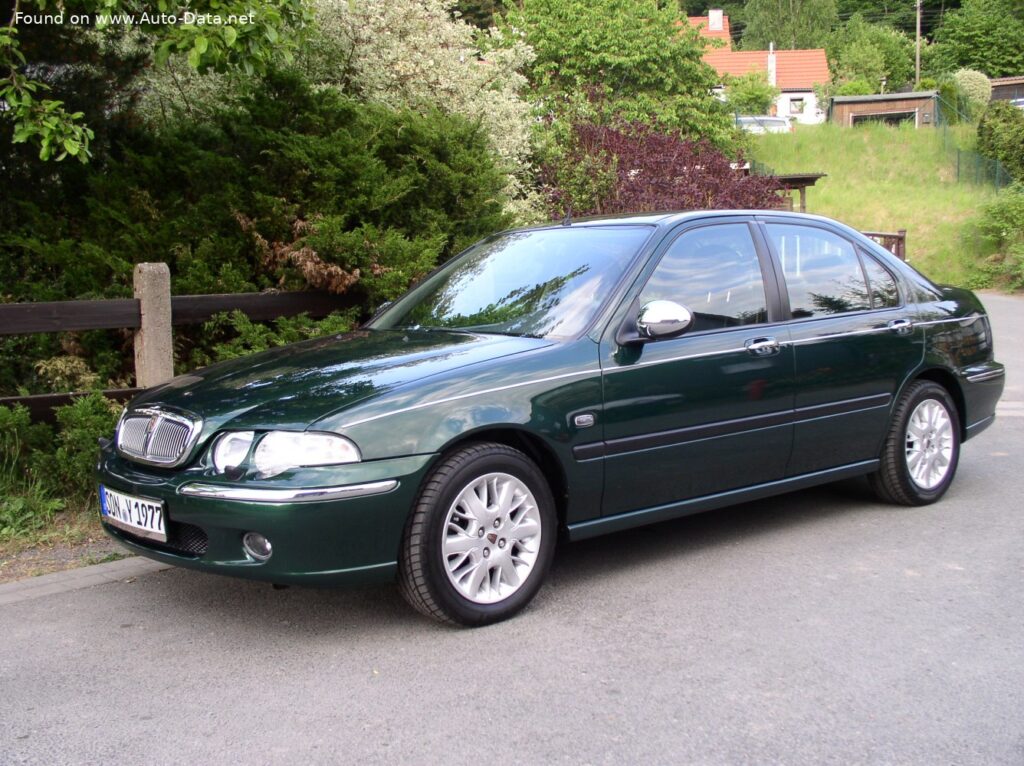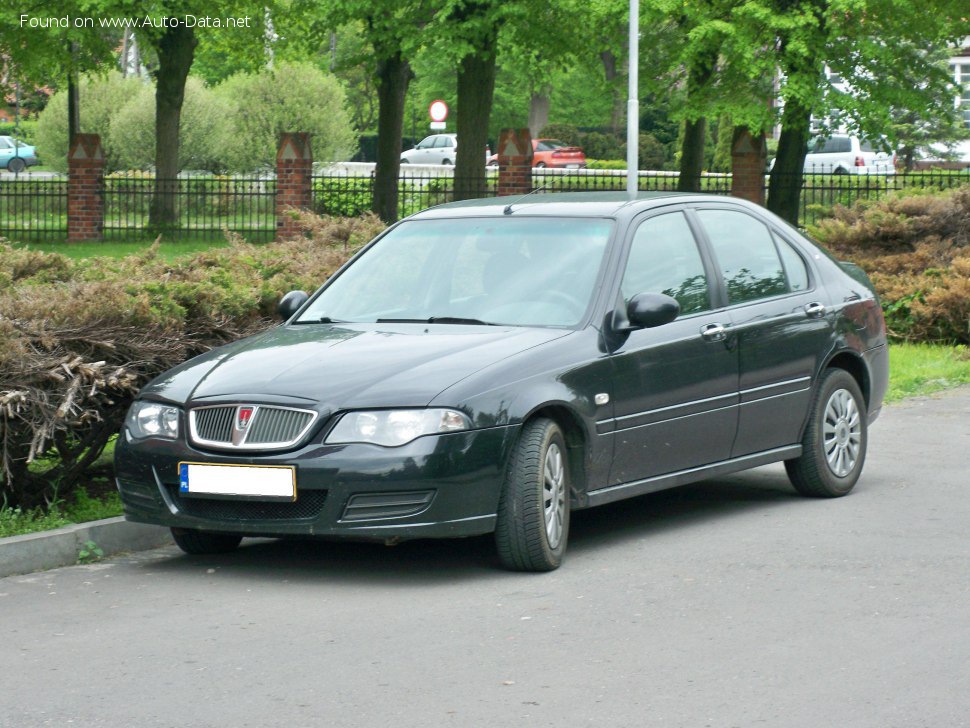
The Rover 45 Hatchback (RT) 1.8i 16V (117 Hp) CVT: A Comprehensive Overview
The Rover 45 Hatchback (RT) 1.8i 16V (117 Hp) CVT represents a significant chapter in the history of the British automotive manufacturer, Rover. Produced from 1999 to 2005, the Rover 45 was the marque’s offering in the highly competitive European C-segment, a compact family car designed to blend practicality with a touch of traditional British refinement. While never officially sold in the United States, the Rover 45 played a crucial role in its primary markets, particularly the United Kingdom and continental Europe, serving as a comfortable and well-equipped option for commuters and families alike. This specific variant, featuring a 1.8-liter 16-valve engine paired with a Continuously Variable Transmission (CVT), aimed to deliver a balance of smooth performance and fuel efficiency, positioning itself as a sophisticated choice in its class.
Engine and Performance of the Rover 45 Hatchback (RT) 1.8i 16V (117 Hp) CVT
At the heart of this Rover 45 variant is the venerable Rover K-series engine, specifically the K18 code, a 1.8-liter (1796 cm³) naturally aspirated inline-four powerplant. This engine, known for its compact design and lively character, was a staple across a range of Rover and MG models. In this application, it features a Double Overhead Camshaft (DOHC) valvetrain with four valves per cylinder, ensuring efficient breathing and combustion. Fuel delivery is managed by a multi-port manifold injection system, providing precise fuel metering for optimal performance and emissions.
The engine produces a respectable 117 horsepower (HP) at 5500 revolutions per minute (rpm), making it a capable performer for its segment. Torque output stands at 118.01 lb.-ft. (160 Nm), peaking at a relatively low 2750 rpm. This low-end torque characteristic contributes to the car’s tractable nature in urban driving and provides ample pulling power for daily use. The power-to-weight ratio is a modest 95.1 HP per ton, indicative of a car designed more for balanced driving than outright sportiness.
One of the most distinctive features of this particular Rover 45 is its transmission: a Continuously Variable Transmission (CVT). Unlike traditional automatic transmissions with fixed gear ratios, a CVT offers an infinite number of ratios within its operating range, allowing the engine to operate at its most efficient rpm for a given speed. This results in remarkably smooth acceleration, free from the noticeable shifts found in conventional automatics. Performance figures include an acceleration from 0 to 60 mph in 9.8 seconds, which was competitive for a family hatchback of its era equipped with an automatic transmission. The top speed is rated at 119.92 mph (193 km/h), demonstrating its capability for highway cruising.
In terms of fuel economy, the 1.8i 16V CVT variant delivered practical figures for its time. The combined fuel consumption is estimated at 27 US mpg (8.7 liters per 100 km). Urban driving yielded approximately 19.3 US mpg (12.2 liters per 100 km), while extra-urban conditions saw efficiency improve to 35.1 US mpg (6.7 liters per 100 km). These figures highlight the CVT’s role in optimizing efficiency, particularly during steady-state cruising. The fuel tank capacity of 14.53 US gallons (55 liters) provided a decent range between fill-ups.
Design and Features
The Rover 45 Hatchback (RT) carried over much of the design language from its predecessor, the Rover 400, which itself shared a platform with the Honda Civic. The 45 featured a five-door hatchback body style, offering practical access to both passenger and cargo areas. Its exterior design was characterized by a conservative yet elegant aesthetic, typical of Rover’s efforts to project an image of understated luxury. The front fascia was updated with Rover’s corporate grille and headlamp design, giving it a more contemporary look than the 400.
Measuring 171.73 inches (4362 mm) in length, 66.77 inches (1696 mm) in width, and 54.88 inches (1394 mm) in height, the 45 was a compact car that offered surprising interior space. The wheelbase of 103.15 inches (2620 mm) contributed to a comfortable ride and stable handling. Inside, the cabin was designed for five occupants, prioritizing comfort and a refined ambiance. Rover interiors of this period often featured traditional elements such as wood trim and comfortable, plush seating materials, aiming to differentiate themselves from more utilitarian competitors.
Practicality was a key consideration for the 45 Hatchback. The trunk space offered a minimum of 13.42 cubic feet (380 liters), which could be expanded to a generous 25.32 cubic feet (717 liters) with the rear seats folded down, making it versatile for family duties or carrying larger items.
In terms of chassis and safety, the Rover 45 was equipped with a front-wheel-drive architecture. The suspension system featured a wishbone setup at the front and a spring strut design at the rear, a common configuration engineered to provide a comfortable ride and predictable handling. Braking power came from ventilated discs at the front and solid discs at the rear, complemented by an Anti-lock Braking System (ABS), which was becoming standard for improved safety in this segment. Steering was handled by a hydraulic rack and pinion system, offering a direct and communicative feel to the driver. The vehicle rode on 175/70 R14 H tires, mounted on 14-inch wheel rims, providing a good balance between ride comfort and grip. The kerb weight of the vehicle was 2711.69 lbs. (1230 kg), with a maximum permissible weight of 3615.58 lbs. (1640 kg), allowing for a maximum load of 903.9 lbs. (410 kg).
Technical Specifications
Below is a detailed table of the Rover 45 Hatchback (RT) 1.8i 16V (117 Hp) CVT’s technical specifications:
| Category | Specification | Value |
|---|---|---|
| General Information | ||
| Brand | Rover | |
| Model | 45 | |
| Generation | 45 Hatchback (RT) | |
| Type (Engine) | 1.8i 16V (117 Hp) CVT | |
| Start of Production | 1999 year | |
| End of Production | 2005 year | |
| Powertrain Architecture | Internal Combustion engine | |
| Body type | Hatchback | |
| Seats | 5 | |
| Doors | 5 | |
| Performance Specs | ||
| Fuel Consumption (Economy) – Urban | 12.2 l/100 km (19.3 US mpg) | |
| Fuel Consumption (Economy) – Extra Urban | 6.7 l/100 km (35.1 US mpg) | |
| Fuel Consumption (Economy) – Combined | 8.7 l/100 km (27 US mpg) | |
| Fuel Type | Petrol (Gasoline) | |
| Acceleration 0 – 60 mph | (Calculated) | 9.8 sec |
| Acceleration 0 – 62 mph (100 km/h) | 10.3 sec | |
| Maximum Speed | 119.92 mph (193 km/h) | |
| Weight-to-power ratio | 10.5 kg/Hp (95.1 Hp/tonne) | |
| Weight-to-torque ratio | 7.7 kg/Nm (130.1 Nm/tonne) | |
| Engine Specs | ||
| Power | 117 Hp @ 5500 rpm | |
| Power per liter | 65.1 Hp/l | |
| Torque | 118.01 lb.-ft. (160 Nm) @ 2750 rpm | |
| Engine Layout | Front, Transverse | |
| Engine Model/Code | K18 | |
| Engine Displacement | 109.6 cu. in. (1796 cm³) | |
| Number of Cylinders | 4 | |
| Engine Configuration | Inline | |
| Cylinder Bore | 3.15 in. (80 mm) | |
| Piston Stroke | 3.52 in. (89.3 mm) | |
| Compression Ratio | 10.5:1 | |
| Number of Valves per Cylinder | 4 | |
| Fuel Injection System | Multi-port manifold injection | |
| Engine Aspiration | Naturally aspirated engine | |
| Valvetrain | DOHC | |
| Engine Oil Capacity | 5.28 US qt (5 l) | |
| Coolant Capacity | 5.81 US qt (5.5 l) | |
| Space, Volume and Weights | ||
| Kerb Weight | 2711.69 lbs. (1230 kg) | |
| Max. Weight | 3615.58 lbs. (1640 kg) | |
| Max Load | 903.9 lbs. (410 kg) | |
| Trunk (Boot) Space – Minimum | 13.42 cu. ft. (380 l) | |
| Trunk (Boot) Space – Maximum | 25.32 cu. ft. (717 l) | |
| Fuel Tank Capacity | 14.53 US gal (55 l) | |
| Dimensions | ||
| Length | 171.73 in. (4362 mm) | |
| Width | 66.77 in. (1696 mm) | |
| Height | 54.88 in. (1394 mm) | |
| Wheelbase | 103.15 in. (2620 mm) | |
| Front Track | 58.07 in. (1475 mm) | |
| Rear (Back) Track | 57.68 in. (1465 mm) | |
| Drivetrain, Brakes and Suspension Specs | ||
| Drivetrain Architecture | Front-wheel drive, Internal Combustion Engine (ICE) | |
| Drive Wheel | Front wheel drive | |
| Number of Gears and Type of Gearbox | 1 gear, automatic transmission CVT | |
| Front Suspension | Wishbone | |
| Rear Suspension | Spring Strut | |
| Front Brakes | Ventilated discs | |
| Rear Brakes | Disc | |
| Assisting Systems | ABS (Anti-lock braking system) | |
| Steering Type | Steering rack and pinion | |
| Power Steering | Hydraulic Steering | |
| Tires Size | 175/70 R14 H | |
| Wheel Rims Size | 14 | |
Legacy and Market Impact
The Rover 45, and particularly the 1.8i 16V CVT variant, carved out a niche for itself in the European compact car market. Its primary competitors included established players like the Ford Focus, Volkswagen Golf, Opel Astra (Vauxhall Astra in the UK), and Peugeot 307. While these rivals often offered more modern platforms or sharper driving dynamics, the Rover 45 distinguished itself with its emphasis on a comfortable ride, a generally well-appointed interior, and a sense of traditional British charm that appealed to a specific demographic.
The 45’s reputation was somewhat mixed. It was praised for its comfortable suspension setup, which absorbed road imperfections effectively, making it an ideal choice for long commutes and family travel. The 1.8-liter K-series engine, when properly maintained, was known for its smooth operation and adequate power delivery. The CVT, while not universally loved by enthusiasts, offered a remarkably seamless driving experience, particularly in congested urban environments, contributing to a relaxed driving style.
However, the Rover 45 also faced challenges. It was essentially a heavily facelifted Rover 400, which itself was based on a mid-1990s Honda Civic platform. By the early 2000s, this platform was showing its age compared to newer, more dynamically capable competitors. Perceptions of Rover’s quality and reliability, particularly regarding the K-series engine’s susceptibility to head gasket issues (though often exaggerated and largely resolved in later iterations), also affected its market standing.
Historically, the Rover 45 represents a critical period for the Rover brand. It was one of the last models developed under BMW’s ownership before the sale of MG Rover Group to the Phoenix Consortium in 2000. Its production continued through the tumultuous years leading up to the eventual collapse of MG Rover in 2005. The 45, therefore, stands as a testament to Rover’s valiant efforts to maintain its identity and market presence amidst significant corporate upheaval and intense competition. It was an attempt to provide a more premium, “junior executive” feel in the compact segment, a strategy that had varying degrees of success.
Though never destined for American shores, the Rover 45 Hatchback (RT) 1.8i 16V (117 Hp) CVT remains an interesting example of European automotive engineering and market strategy from the turn of the millennium. It encapsulates Rover’s enduring commitment to comfort and a distinct British character, even as the company navigated its final, challenging years. Its legacy is one of a comfortable, practical family car that, despite its inherent limitations and the broader struggles of its parent company, offered a unique proposition in its segment.