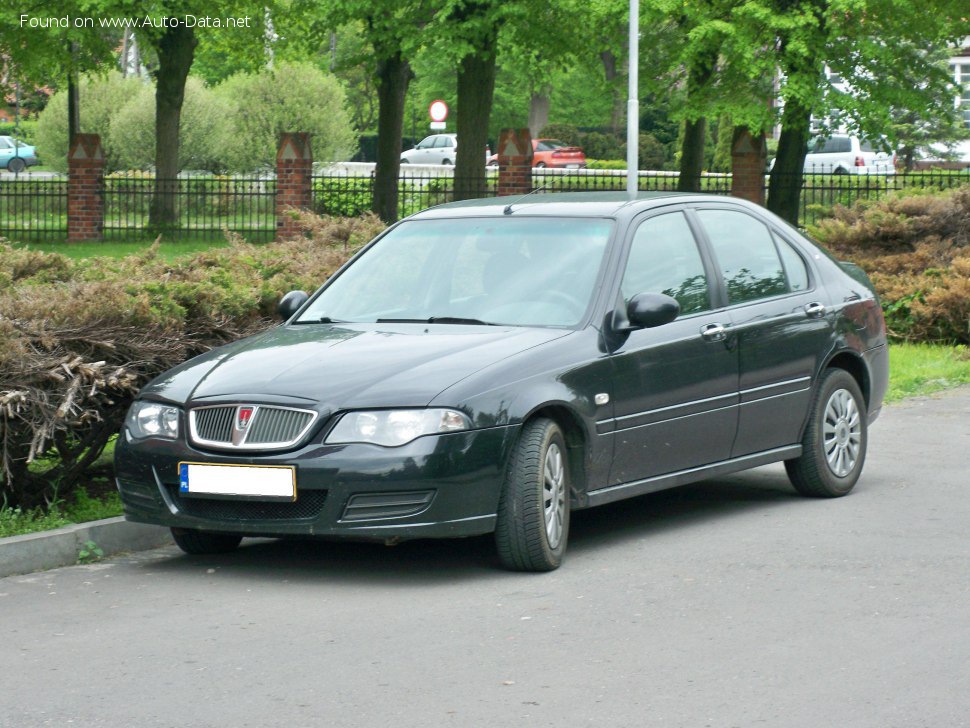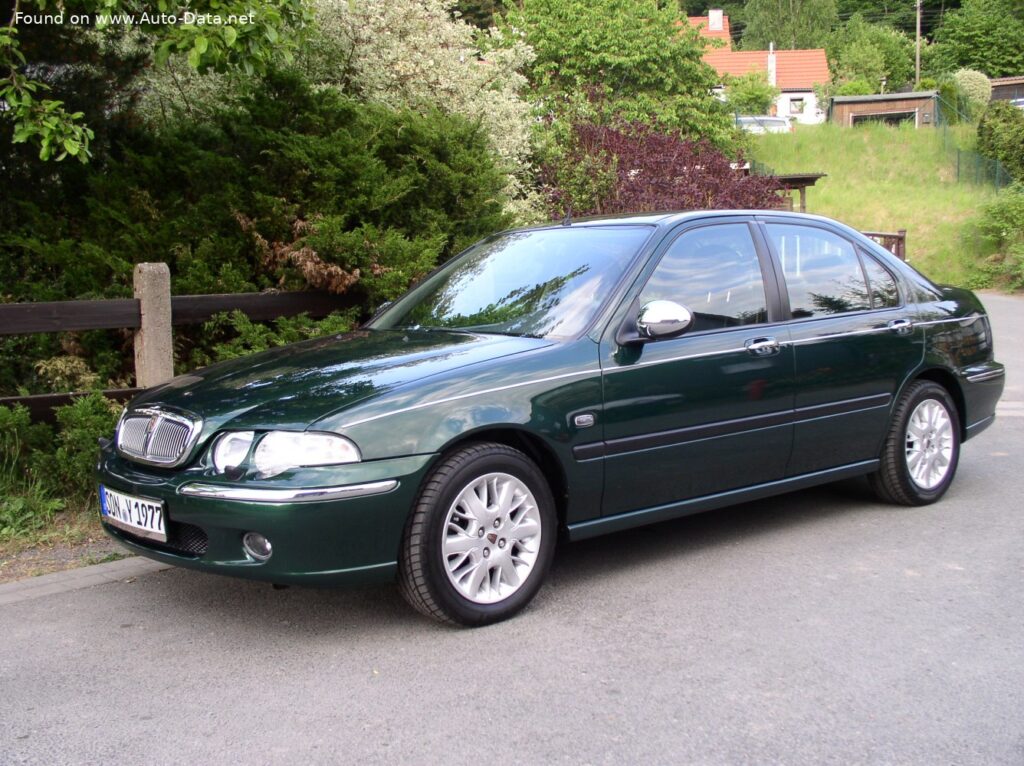
The Rover 45 (RT) 1.4 i 16V (103 Hp): An Overview of a British Compact Sedan
The Rover 45 (RT) represents a significant chapter in the history of the British automotive manufacturer, Rover. Produced from 1999 to 2005, the 45 series was positioned in the highly competitive European C-segment, or compact family car market, serving as a direct successor to the Rover 400. While never officially sold in the United States, the Rover 45 played a crucial role in its primary European market, aiming to blend traditional British styling and perceived quality with a practical, accessible package. This particular variant, the Rover 45 (RT) 1.4 i 16V (103 Hp), was a popular choice for its balance of efficiency and adequate performance, catering to a broad demographic of drivers seeking an economical yet refined daily driver.
Developed during a challenging period for the Rover Group, the 45 was largely based on the Honda Domani/Civic platform, a legacy of the long-standing collaboration between Rover and Honda. However, Rover engineers made significant revisions to the chassis, suspension, and interior to imbue the car with a distinctly British character. The 1.4 i 16V model, equipped with Rover’s K-series engine, was a cornerstone of the lineup, offering a combination of modern multi-valve technology and a relatively low displacement suitable for European taxation and fuel economy demands. This generation of the 45, known by its internal code RT, was offered predominantly as a four-door sedan, providing a conventional and practical solution for families and business users alike.
Powertrain and Performance Characteristics of the Rover 45 (RT) 1.4 i 16V (103 Hp)
At the heart of the Rover 45 (RT) 1.4 i 16V (103 Hp) lay Rover’s venerable K16 engine, a 1.4-liter (1396 cm3 or 85.19 cu. in.) naturally aspirated inline-four unit. This engine featured a modern Dual Overhead Camshaft (DOHC) valvetrain with four valves per cylinder, a configuration that allowed for efficient breathing and a respectable power output for its size. The multi-port manifold injection system ensured precise fuel delivery, contributing to both performance and fuel efficiency.
The engine produced a peak power output of 103 horsepower at 6000 revolutions per minute (rpm), translating to a power-per-liter ratio of 73.8 Hp/l. Torque was rated at 90.72 lb.-ft. (123 Nm) at 4500 rpm, providing a useful mid-range pull for daily driving. Power was sent to the front wheels via a five-speed manual transmission, a common and reliable setup for compact cars of this era. This drivetrain architecture, with the engine mounted transversely at the front, was optimized for space efficiency and cost-effectiveness.
In terms of performance, the Rover 45 1.4 i 16V offered competitive figures for its segment. It could accelerate from 0 to 60 miles per hour in a respectable 10.6 seconds, with a 0 to 100 km/h sprint taking 11.2 seconds. The maximum speed achieved was 114.95 mph (185 km/h). While not a performance leader, these figures ensured that the car was capable of keeping up with highway traffic and provided sufficient responsiveness for urban environments.
Fuel economy was a key selling point in the European market. The 1.4-liter engine delivered a combined fuel consumption of 34.1 US miles per gallon (6.9 l/100 km). In urban driving, it achieved 25.3 US mpg (9.3 l/100 km), while extra-urban driving saw figures as high as 42.8 US mpg (5.5 l/100 km). With a 14.53 US gallon (55-liter) fuel tank, the Rover 45 offered a decent cruising range, making it a practical choice for longer journeys.
Design, Features, and Ergonomics
The Rover 45 (RT) carried forward a design language that emphasized understated elegance, a hallmark of the Rover brand. As a four-door sedan, it offered a conventional and timeless silhouette, appealing to buyers who preferred a more traditional aesthetic over the emerging trend of hatchbacks in the compact segment. The exterior dimensions were practical for European cities, with a length of 177.83 inches (4517 mm), a width of 66.77 inches (1696 mm), and a height of 54.92 inches (1395 mm). The wheelbase of 103.15 inches (2620 mm) contributed to a stable ride and a reasonably spacious cabin for five occupants.
Inside, the Rover 45 aimed to provide a more upscale experience than many of its direct competitors. While material quality varied across trim levels, the overall design was ergonomic and functional. Standard features for the era included power steering, utilizing a hydraulic rack and pinion system for a connected feel. Safety was addressed with the inclusion of an Anti-lock Braking System (ABS) as standard, paired with ventilated disc brakes at the front and disc brakes at the rear, ensuring competent stopping power.
Suspension-wise, the Rover 45 featured a wishbone setup at the front and a spring strut arrangement at the rear. This configuration provided a comfortable ride quality, characteristic of Rover vehicles, while maintaining predictable handling. The car rode on 175/70 R14 T tires, a common size for compact sedans, balancing grip with ride comfort and cost-effectiveness.
Practicality was a strong suit for the sedan body style. The trunk offered a substantial minimum capacity of 16.6 cubic feet (470 liters), which could be expanded to 28.6 cubic feet (810 liters) by folding down the rear seats, providing ample space for luggage or larger items. The curb weight of the 1.4 i 16V model was 2601.45 lbs. (1180 kg), with a maximum permissible weight of 3615.58 lbs. (1640 kg), allowing for a payload of 1014.13 lbs. (460 kg).
Technical Specifications of the Rover 45 (RT) 1.4 i 16V (103 Hp)
| Category | Specification | Value |
|---|---|---|
General Information |
||
| Brand | Rover | |
| Model | 45 | |
| Generation | 45 (RT) | |
| Type (Engine) | 1.4 i 16V (103 Hp) | |
| Start of production | 1999 year | |
| End of production | 2005 year | |
| Powertrain Architecture | Internal Combustion engine | |
| Body type | Sedan | |
| Seats | 5 | |
| Doors | 4 | |
Performance Specs |
||
| Fuel consumption (economy) – urban | 9.3 l/100 km (25.3 US mpg) | |
| Fuel consumption (economy) – extra urban | 5.5 l/100 km (42.8 US mpg) | |
| Fuel consumption (economy) – combined | 6.9 l/100 km (34.1 US mpg) | |
| Fuel Type | Petrol (Gasoline) | |
| Acceleration 0 – 60 mph | 10.6 sec | |
| Acceleration 0 – 100 km/h | 11.2 sec | |
| Maximum speed | 114.95 mph (185 km/h) | |
| Weight-to-power ratio | 11.5 kg/Hp (87.3 Hp/tonne) | |
| Weight-to-torque ratio | 9.6 kg/Nm (104.2 Nm/tonne) | |
Engine Specs |
||
| Power | 103 Hp @ 6000 rpm | |
| Power per liter | 73.8 Hp/l | |
| Torque | 90.72 lb.-ft. (123 Nm) @ 4500 rpm | |
| Engine layout | Front, Transverse | |
| Engine Model/Code | K16 | |
| Engine displacement | 1.4 liters (1396 cm3, 85.19 cu. in.) | |
| Number of cylinders | 4 | |
| Engine configuration | Inline | |
| Cylinder Bore | 2.95 in. (75 mm) | |
| Piston Stroke | 3.11 in. (79 mm) | |
| Compression ratio | 10.5:1 | |
| Number of valves per cylinder | 4 | |
| Fuel injection system | Multi-port manifold injection | |
| Engine aspiration | Naturally aspirated engine | |
| Valvetrain | DOHC | |
| Engine oil capacity | 4.76 US qt (4.5 l) | |
| Engine oil specification | Not specified | |
| Coolant | 5.6 US qt (5.3 l) | |
Space, Volume and Weights |
||
| Kerb Weight | 2601.45 lbs. (1180 kg) | |
| Max. weight | 3615.58 lbs. (1640 kg) | |
| Max load | 1014.13 lbs. (460 kg) | |
| Trunk (boot) space – minimum | 16.6 cu. ft. (470 l) | |
| Trunk (boot) space – maximum | 28.6 cu. ft. (810 l) | |
| Fuel tank capacity | 14.53 US gal (55 l) | |
Dimensions |
||
| Length | 177.83 in. (4517 mm) | |
| Width | 66.77 in. (1696 mm) | |
| Height | 54.92 in. (1395 mm) | |
| Wheelbase | 103.15 in. (2620 mm) | |
| Front track | 58.07 in. (1475 mm) | |
| Rear (Back) track | 57.68 in. (1465 mm) | |
Drivetrain, Brakes and Suspension Specs |
||
| Drivetrain Architecture | The Internal combustion engine (ICE) drives the front wheels of the vehicle. | |
| Drive wheel | Front wheel drive | |
| Number of gears and type of gearbox | 5 gears, manual transmission | |
| Front suspension | Wishbone | |
| Rear suspension | Spring Strut | |
| Front brakes | Ventilated discs | |
| Rear brakes | Disc | |
| Assisting systems | ABS (Anti-lock braking system) | |
| Steering type | Steering rack and pinion | |
| Power steering | Hydraulic Steering | |
| Tires size | 175/70 R14 T | |
Legacy and Market Impact
The Rover 45 (RT) entered a fiercely competitive European market dominated by established players like the Ford Focus, Vauxhall/Opel Astra, Volkswagen Golf/Bora, Peugeot 307, and Renault Mégane. In this environment, the Rover 45 carved out a niche by offering a distinct British character and a slightly more traditional, arguably “premium,” feel compared to some of its more mass-market rivals. While it shared its underpinnings with Honda models, Rover sought to differentiate it with unique styling, suspension tuning, and interior appointments designed to appeal to buyers looking for something a bit different.
Despite its qualities, the Rover 45 faced significant challenges. Its design, though updated from the 400, was perceived by some as somewhat conservative in an era of rapidly evolving automotive aesthetics. More critically, the Rover Group itself was in a precarious financial position throughout the 45’s production run, passing through various ownerships, including BMW and later the MG Rover Group. This instability often led to concerns about the brand’s long-term viability and impacted resale values.
The 1.4 i 16V variant, in particular, was seen as a workhorse of the lineup, providing an accessible entry point to the Rover brand with its economical running costs and reasonable performance. It competed directly with similarly sized and powered variants of its rivals, often offering a slightly more comfortable ride at the expense of outright sportiness. Its reputation was generally that of a comfortable, well-equipped, and reasonably reliable compact sedan, especially for those who appreciated its classic British styling cues.
The Rover 45, and indeed the entire Rover brand, ultimately ceased production in 2005 with the collapse of MG Rover. As one of the last models produced by the original British company, the Rover 45 holds a poignant place in automotive history. It represents the final efforts of a storied British manufacturer to compete in the mainstream market, blending heritage with contemporary engineering. Today, the Rover 45 is remembered as a practical and comfortable European compact car, a testament to the engineering and design capabilities that persisted at Rover until its very end, and a common sight on British and European roads for many years after its production ceased.