The Rover 75 1.8 (120 Hp): British Elegance Reimagined
The Rover 75 1.8 (120 Hp) represents a significant chapter in the history of the British automotive industry. Launched in 1999, the Rover 75 was Rover’s ambitious entry into the premium mid-size sedan segment, aiming to blend traditional British craftsmanship with contemporary engineering. Developed during BMW’s ownership of the Rover Group, the 75 was designed to evoke a sense of heritage and luxury, distinguishing itself from its more overtly sporting or minimalist German rivals. It was conceived as a sophisticated, comfortable, and refined vehicle, appealing to buyers seeking a distinctive alternative in a competitive European market. This particular variant, equipped with the 1.8-liter engine delivering 120 horsepower, served as a popular entry-level offering, balancing performance with accessible running costs. Produced until 2004, the Rover 75 became one of the last truly new models from the original Rover marque, embodying a final, valiant effort to revitalize the storied British brand before its eventual demise.
Rover 75: A Blend of Heritage and Modernity
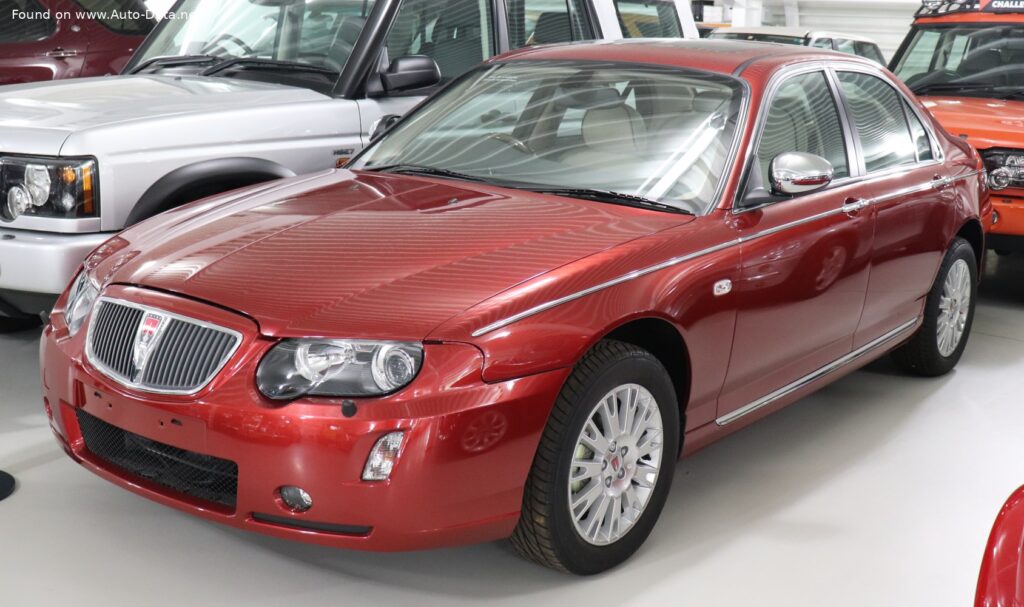
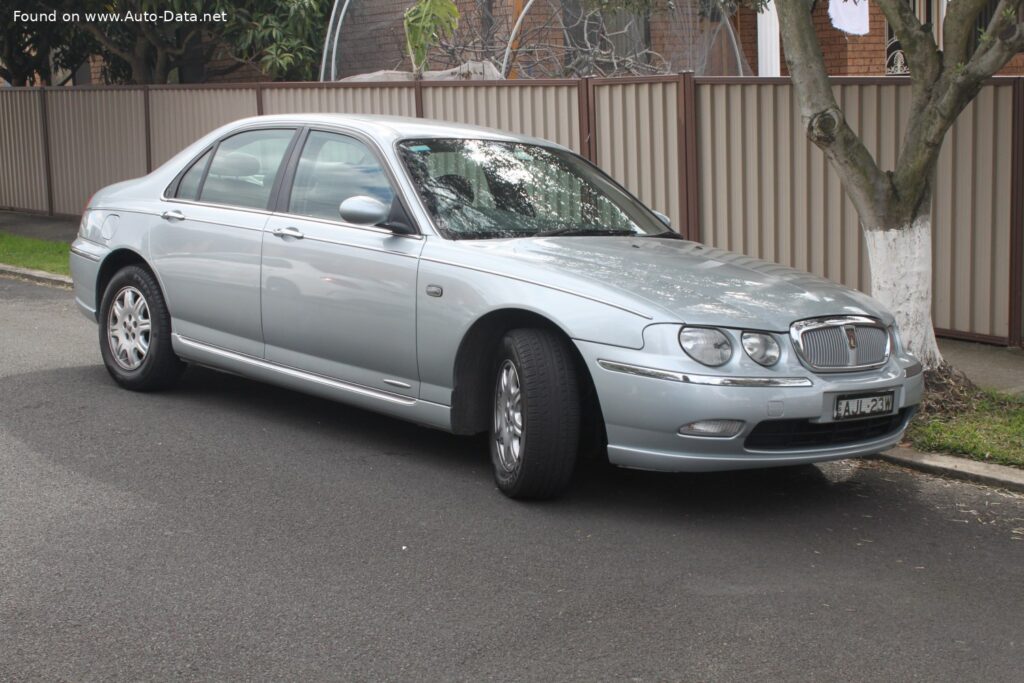
From its inception, the Rover 75 was positioned as a premium product, targeting discerning customers in Europe and other international markets who valued comfort, refinement, and a distinctly British aesthetic. The car’s design, spearheaded by Richard Woolley, was a deliberate retro-modern fusion, drawing inspiration from classic Rover models of the 1940s and 1950s, while incorporating modern proportions and safety standards. This approach resulted in a unique visual identity characterized by its quad headlights, sculpted grille, and elegant, flowing lines that stood apart from the more angular designs prevalent at the turn of the millennium.
The vehicle’s architecture was a significant step forward for Rover, benefiting from BMW’s engineering input during its early development stages. This collaboration aimed to ensure the 75 possessed a robust platform and a high level of build quality, aspects that were crucial for its success in the premium segment. While not officially sold in the United States, the Rover 75 was a familiar sight on European roads, often competing for buyers’ attention against established players like the Ford Mondeo, Vauxhall Vectra (Opel Insignia), and even entry-level variants of the BMW 3 Series and Audi A4, though typically at a more accessible price point. Its role was to offer a compelling blend of luxury, comfort, and distinctive style, carving out a niche for itself as a refined alternative to its more performance-oriented or mass-market competitors.
Engine & Performance: The 1.8-liter K-Series
At the heart of the Rover 75 1.8 (120 Hp) lies the well-known 1.8-liter (109.6 cubic inches or 1796 cm³) K-Series engine, designated as the 18K4F. This naturally aspirated inline-four powerplant was a staple of Rover’s engine lineup, offering a balance of efficiency and adequate performance for a car of the 75’s stature. The engine featured a Double Overhead Camshaft (DOHC) valvetrain with four valves per cylinder, optimizing airflow for improved combustion efficiency. Fuel delivery was managed by a multi-port manifold injection system, ensuring precise fuel metering.
The K-Series engine in this configuration produced a respectable 120 horsepower at 5500 revolutions per minute (rpm). Torque output stood at 118.01 lb.-ft. (160 Nm) peaking at 4000 rpm, providing sufficient pulling power for daily driving. Power was sent to the front wheels via a smooth-shifting 5-speed manual transmission, a common setup for cars in this segment, emphasizing driver engagement and control.
In terms of performance, the Rover 75 1.8 (120 Hp) was not designed as a speed demon but offered a competent drive. It could accelerate from 0 to 60 mph in a calculated 11 seconds, with a top speed reaching 121.17 mph (195 km/h). These figures placed it firmly in the mainstream of its class, suitable for both urban commutes and highway cruising.
Fuel efficiency for the 1.8-liter model was competitive for its time. The combined fuel economy was rated at approximately 30.2 US miles per gallon (7.8 liters per 100 km), with extra-urban driving achieving around 38.6 US mpg (6.1 l/100 km) and urban consumption at 22.2 US mpg (10.6 l/100 km). These figures contributed to a CO2 emissions rating of 185 g/km, reflecting a reasonable environmental footprint for a gasoline-powered vehicle of its vintage. The engine’s oil capacity was 4.76 US quarts (4.5 liters), and the coolant system held 6.55 US quarts (6.2 liters).
Design & Features: Classic British Elegance
The Rover 75’s exterior design was its most distinctive selling point, exuding an air of understated elegance that harked back to a bygone era of British motoring. The four-door sedan body style offered seating for five occupants, making it a practical choice for families and business professionals alike. Its dimensions were substantial, with a length of 186.89 inches (4747 mm), a width of 70 inches (1778 mm), and a height of 56.06 inches (1424 mm). The generous 108.11-inch (2746 mm) wheelbase contributed significantly to the car’s renowned comfortable ride and spacious cabin.
Inside, the Rover 75 continued its theme of classic luxury. While specific trim details for the 1.8-liter variant are not exhaustively listed, the general cabin ambiance was characterized by high-quality materials, often featuring wood and chrome accents, along with comfortable, supportive seating. The dashboard layout was ergonomic and intuitive, with clear instrumentation and controls that were easy to operate. The focus was on creating a tranquil and refined environment for occupants, a stark contrast to the more utilitarian interiors of some competitors.
Practicality was also a consideration, with a trunk capacity of 15.26 cubic feet (432 liters), offering ample space for luggage or groceries. The fuel tank held 17.17 US gallons (65 liters), providing a decent cruising range.
Underneath its stylish exterior, the Rover 75 featured a well-engineered chassis designed for comfort and stability. The front suspension utilized a wishbone setup, while the rear employed coil springs, a combination that delivered a remarkably compliant ride, soaking up road imperfections with ease. Braking performance was handled by ventilated discs at the front and solid discs at the rear, complemented by an Anti-lock Braking System (ABS) for enhanced safety during emergency stops. The hydraulic rack and pinion steering system provided precise control and a good amount of feedback to the driver. The car rode on 215/55 R16 tires mounted on 16-inch wheel rims, contributing to its refined ride and confident handling characteristics.
Technical Specifications
| Category | Specification | US Equivalent |
|---|---|---|
| General Information | ||
| Brand | Rover | |
| Model | 75 | |
| Generation | 75 | |
| Type (Engine) | 1.8 (120 Hp) | |
| Start of Production | 1999 year | |
| End of Production | 2004 year | |
| Powertrain Architecture | Internal Combustion engine | |
| Body Type | Sedan | |
| Seats | 5 | |
| Doors | 4 | |
| Performance Specs | ||
| Fuel consumption (economy) – urban | 10.6 l/100 km | 22.2 US mpg |
| Fuel consumption (economy) – extra urban | 6.1 l/100 km | 38.6 US mpg |
| Fuel consumption (economy) – combined | 7.8 l/100 km | 30.2 US mpg |
| CO2 emissions | 185 g/km | |
| Fuel Type | Petrol (Gasoline) | |
| Acceleration 0 – 60 mph | 11 sec | |
| Maximum speed | 195 km/h | 121.17 mph |
| Weight-to-power ratio | 12 kg/Hp | |
| Weight-to-torque ratio | 9 kg/Nm | |
| Engine Specs | ||
| Power | 120 Hp @ 5500 rpm | |
| Power per liter | 66.8 Hp/l | |
| Torque | 160 Nm @ 4000 rpm | 118.01 lb.-ft. @ 4000 rpm |
| Engine layout | Front, Transverse | |
| Engine Model/Code | 18K4F | |
| Engine displacement | 1796 cm3 | 109.6 cu. in. |
| Number of cylinders | 4 | |
| Engine configuration | Inline | |
| Cylinder Bore | 80 mm | 3.15 in. |
| Piston Stroke | 89.3 mm | 3.52 in. |
| Compression ratio | 10.5:1 | |
| Number of valves per cylinder | 4 | |
| Fuel injection system | Multi-port manifold injection | |
| Engine aspiration | Naturally aspirated engine | |
| Valvetrain | DOHC | |
| Engine oil capacity | 4.5 l | 4.76 US qt |
| Coolant | 6.2 l | 6.55 US qt |
| Space, Volume and Weights | ||
| Kerb Weight | 1445 kg | 3185.68 lbs. |
| Max. weight | 2000 kg | 4409.25 lbs. |
| Max load | 555 kg | 1223.57 lbs. |
| Trunk (boot) space – maximum | 432 l | 15.26 cu. ft. |
| Fuel tank capacity | 65 l | 17.17 US gal |
| Dimensions | ||
| Length | 4747 mm | 186.89 in. |
| Width | 1778 mm | 70 in. |
| Height | 1424 mm | 56.06 in. |
| Wheelbase | 2746 mm | 108.11 in. |
| Front track | 1505 mm | 59.25 in. |
| Rear (Back) track | 1505 mm | 59.25 in. |
| Minimum turning circle (turning diameter) | 11.36 m | 37.27 ft. |
| Drivetrain, Brakes and Suspension Specs | ||
| Drivetrain Architecture | The Internal combustion engine (ICE) drives the front wheels of the vehicle. | |
| Drive wheel | Front wheel drive | |
| Number of gears and type of gearbox | 5 gears, manual transmission | |
| Front suspension | Wishbone | |
| Rear suspension | Coil spring | |
| Front brakes | Ventilated discs | |
| Rear brakes | Disc | |
| Assisting systems | ABS (Anti-lock braking system) | |
| Steering type | Steering rack and pinion | |
| Power steering | Hydraulic Steering | |
| Tires size | 215/55 R16 93 W | |
| Wheel rims size | 16 | |
Legacy & Market Impact: The Rover 75 1.8 (120 Hp)’s Place in Automotive History
The Rover 75 entered a highly competitive market, particularly in Europe, where it faced off against established premium contenders and well-regarded mainstream models. Its primary competitors included cars like the Volkswagen Passat, Peugeot 406, and Volvo S60, alongside the aforementioned German premium sedans. The 75 managed to carve out a distinctive niche, largely due to its unique blend of retro styling, refined ride quality, and a focus on comfort over outright sportiness. It was often praised by automotive journalists for its quiet cabin, supple suspension, and high-quality interior materials, offering a luxurious experience that belied its price point.
Despite its many strengths, the Rover 75, and indeed the entire Rover brand, faced significant challenges. The company’s turbulent ownership history and financial instability often overshadowed the positive attributes of its vehicles. While the 75 was generally well-received for its design and comfort, the K-Series engine, particularly the 1.8-liter variant, gained a reputation for head gasket issues, which, while often fixable, contributed to a perception of unreliability. This perception, alongside an unfortunate “old-man” image in some markets, hindered its broader appeal, especially among younger buyers.
The Rover 75’s market impact was significant in that it represented Rover’s final, most cohesive attempt to reclaim its position as a producer of quality, desirable automobiles. It was a testament to what the brand could achieve, even under challenging circumstances. The car’s development under BMW’s initial stewardship instilled a level of engineering rigor that had been missing from previous Rover models. When BMW sold Rover Group in 2000, the 75 continued production under the newly formed MG Rover Group, eventually spawning the sportier MG ZT variant.
Today, the Rover 75, including the Rover 75 1.8 (120 Hp), holds a special place as a modern classic. It is appreciated by enthusiasts for its distinctive character, comfortable ride, and timeless design. Its legacy is intertwined with the ultimate demise of the original Rover company, making it a poignant symbol of British automotive ambition and the challenges faced by independent manufacturers in a globalized industry. While it never achieved the sales volumes of its German rivals, the Rover 75 remains a cherished example of British luxury and engineering, offering a unique driving experience that continues to attract a dedicated following.