The Rover 75: A British Endeavor in Executive Motoring
The Rover 75 represents a significant chapter in the history of the British automotive manufacturer Rover Group, later MG Rover. Launched in 1998 at the Birmingham Motor Show, the 75 was designed to be a premium mid-size sedan (and later a wagon, known as the Tourer), aimed squarely at the executive car market in Europe. Produced from 1999 to 2004 under Rover Group ownership and then briefly until 2005 under MG Rover, the 75 was lauded for its distinctive “retro-futuristic” styling, luxurious interior, and comfortable ride quality, harking back to a perceived golden age of British motoring while attempting to incorporate modern engineering. This particular article focuses on the 1.8-liter (120 HP) Automatic variant, a popular choice that balanced efficiency with adequate performance for its segment.
Designed by Richard Woolley, the Rover 75 aimed to capture a sense of classic British elegance, a departure from the more utilitarian designs that characterized some of Rover’s earlier models. While never officially sold in the United States, the Rover 75 carved out a niche in its primary European market by offering a compelling alternative to established German rivals, emphasizing comfort, refinement, and a unique aesthetic appeal. It was developed during BMW’s ownership of Rover, benefiting from German engineering input, particularly in its chassis and initial engine lineup, though the 1.8-liter K-Series engine was a well-established Rover design.
Engine & Performance of the Rover 75
The heart of the Rover 75 1.8 (120 Hp) Automatic is its 1.8-liter (1,796 cubic inches) naturally aspirated inline-four gasoline engine, designated by Rover as the 18K4F. This powerplant, a staple of the Rover K-Series family, featured a DOHC (Double Overhead Camshaft) valvetrain with four valves per cylinder, optimizing airflow for both power and efficiency. Fuel delivery was managed by a multi-port manifold injection system, a common and reliable setup for its era.
This engine produced a respectable 120 horsepower at 5500 rpm, coupled with 118 lb.-ft. of torque peaking at 4000 rpm. While these figures might not suggest a performance-oriented vehicle, they were entirely adequate for the Rover 75’s intended role as a comfortable and refined cruiser. The power-to-weight ratio stood at approximately 83 HP per tonne, indicating a focus on smooth power delivery rather than outright acceleration.
Mated to a 5-speed automatic transmission, the powertrain delivered power to the front wheels. This setup contributed to the car’s relaxed driving demeanor, making it well-suited for both urban commuting and longer highway journeys. In terms of acceleration, the 1.8-liter automatic variant could reach 60 mph from a standstill in an estimated 12.5 seconds, with a top speed of 118 mph (190 km/h). These figures placed it competitively within the non-sporting executive sedan segment of its time.
Fuel economy for the Rover 75 1.8 Automatic was rated at a combined 25 US mpg (9.4 l/100 km), with urban consumption at 18.7 US mpg (12.6 l/100 km) and extra-urban at 31.4 US mpg (7.5 l/100 km). CO2 emissions were noted at 224 g/km, reflecting the technology standards of the late 1990s and early 2000s. The generous 17.17 US gallon (65-liter) fuel tank provided a commendable cruising range, enhancing its appeal for long-distance travel.
Design & Features
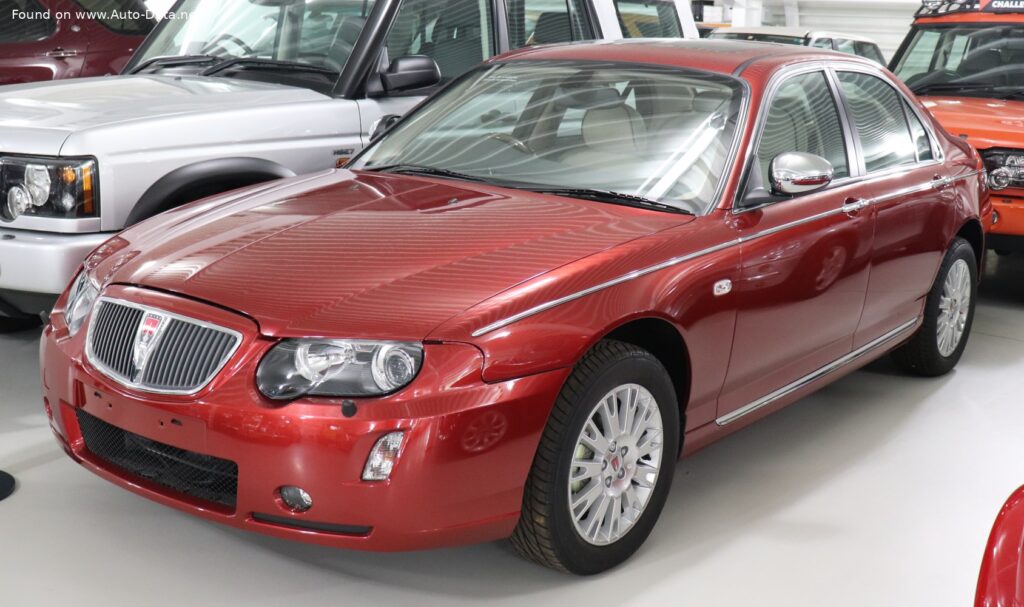
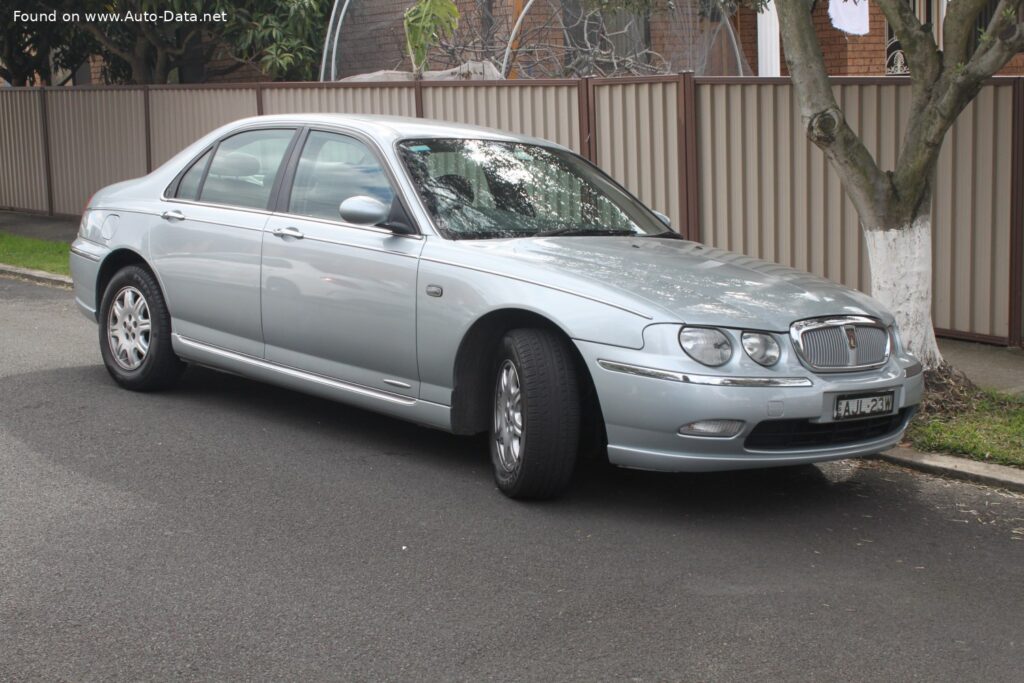
The design of the Rover 75 was arguably its most defining characteristic. As a four-door, five-seat sedan, it blended traditional British automotive styling with contemporary proportions. The exterior featured a distinctive chrome grille, prominent round headlights, and flowing lines that evoked a sense of classic elegance and understated luxury. Chrome detailing was used extensively, particularly around the window frames and door handles, further enhancing its premium appeal. The overall aesthetic was a deliberate nod to Rover’s heritage, aiming to differentiate it from its more angular European rivals.
Inside, the Rover 75 continued its theme of traditional luxury. The cabin was designed to be a comfortable and inviting space, often featuring wood-grain trim, chrome accents, and high-quality upholstery, ranging from plush fabrics to genuine leather in higher trims. The dashboard layout was ergonomic, with clear instrumentation and well-placed controls. The seating was designed for comfort, offering good support for both driver and passengers on extended trips. With a wheelbase of 108.11 inches (2746 mm), the 75 provided ample interior space for five occupants, particularly in the rear, which was a strong selling point in its class.
Practicality was also a consideration, with a respectable trunk (boot) space of 15.26 cubic feet (432 liters), capable of accommodating luggage for a family trip. Standard features for the 1.8 Automatic model included hydraulic power steering, providing a refined and predictable steering feel. Safety was addressed with the inclusion of an Anti-lock Braking System (ABS), a crucial active safety feature for its time. The car’s stopping power was provided by ventilated disc brakes at the front and solid discs at the rear, ensuring confident deceleration.
The suspension system comprised a wishbone setup at the front and a coil spring arrangement at the rear, tuned to deliver a smooth and compliant ride, absorbing road imperfections with a high degree of sophistication. This emphasis on ride comfort was a hallmark of the Rover 75 and contributed significantly to its luxury credentials. The car rode on 16-inch wheels, typically fitted with 215/55 R16 tires, striking a balance between ride comfort and handling stability.
Technical Specifications: Rover 75 1.8 (120 Hp) Automatic (1999-2004)
| Category | Specification |
|---|---|
| Brand | Rover |
| Model | 75 |
| Generation | 75 |
| Type (Engine) | 1.8 (120 Hp) Automatic |
| Start of Production | 1999 year |
| End of Production | 2004 year |
| Powertrain Architecture | Internal Combustion engine, Front Wheel Drive |
| Body Type | Sedan |
| Seats | 5 |
| Doors | 4 |
| Performance Specs | |
| Fuel Consumption (Urban) | 12.6 l/100 km (18.7 US mpg) |
| Fuel Consumption (Extra Urban) | 7.5 l/100 km (31.4 US mpg) |
| Fuel Consumption (Combined) | 9.4 l/100 km (25 US mpg) |
| CO2 Emissions | 224 g/km |
| Fuel Type | Petrol (Gasoline) |
| Acceleration 0-60 mph | 12.5 sec |
| Acceleration 0-62 mph (0-100 km/h) | 13.2 sec |
| Maximum Speed | 118.06 mph (190 km/h) |
| Weight-to-Power Ratio | 12 kg/Hp (83 Hp/tonne) |
| Weight-to-Torque Ratio | 9 kg/Nm (110.7 Nm/tonne) |
| Engine Specs | |
| Power | 120 Hp @ 5500 rpm |
| Power per liter | 66.8 Hp/l |
| Torque | 118.01 lb.-ft. @ 4000 rpm (160 Nm) |
| Engine Layout | Front, Transverse |
| Engine Model/Code | 18K4F |
| Engine Displacement | 109.6 cu. in. (1796 cm3) |
| Number of Cylinders | 4 |
| Engine Configuration | Inline |
| Cylinder Bore | 3.15 in. (80 mm) |
| Piston Stroke | 3.52 in. (89.3 mm) |
| Compression Ratio | 10.5:1 |
| Number of Valves per Cylinder | 4 |
| Fuel Injection System | Multi-port manifold injection |
| Engine Aspiration | Naturally aspirated engine |
| Valvetrain | DOHC |
| Engine Oil Capacity | 4.76 US qt (4.5 l) |
| Coolant Capacity | 6.55 US qt (6.2 l) |
| Space, Volume and Weights | |
| Kerb Weight | 3185.68 lbs. (1445 kg) |
| Max. Weight | 4409.25 lbs. (2000 kg) |
| Max Load | 1223.57 lbs. (555 kg) |
| Trunk (Boot) Space – Maximum | 15.26 cu. ft. (432 l) |
| Fuel Tank Capacity | 17.17 US gal (65 l) |
| Dimensions | |
| Length | 186.89 in. (4747 mm) |
| Width | 70 in. (1778 mm) |
| Height | 56.06 in. (1424 mm) |
| Wheelbase | 108.11 in. (2746 mm) |
| Front Track | 59.25 in. (1505 mm) |
| Rear (Back) Track | 59.25 in. (1505 mm) |
| Minimum Turning Circle | 37.27 ft. (11.36 m) |
| Drivetrain, Brakes and Suspension Specs | |
| Drivetrain Architecture | Internal combustion engine drives the front wheels. |
| Drive Wheel | Front-wheel drive |
| Number of Gears and Type of Gearbox | 5 gears, automatic transmission |
| Front Suspension | Wishbone |
| Rear Suspension | Coil spring |
| Front Brakes | Ventilated discs |
| Rear Brakes | Disc |
| Assisting Systems | ABS (Anti-lock braking system) |
| Steering Type | Steering rack and pinion |
| Power Steering | Hydraulic Steering |
| Tires Size | 215/55 R16 |
| Wheel Rims Size | 16 inches |
Legacy & Market Impact
The Rover 75 was introduced at a critical juncture for the Rover Group. It was intended to be a flagship model that would rejuvenate the brand’s image and sales. In its primary European market, the 75 competed against established players like the BMW 3 Series, Audi A4, and Mercedes-Benz C-Class. While it rarely matched these rivals in outright sales volume or perceived dynamic prowess, the Rover 75 carved out a distinct niche for itself, appealing to buyers who valued its unique blend of traditional British luxury, comfortable ride, and distinctive styling. It offered a softer, more refined alternative to the often sportier and more austere German offerings.
Its impact was significant within the context of the British automotive industry. The 75 was seen as a valiant effort by Rover to produce a competitive and appealing executive car, particularly after the controversial styling of its predecessor, the Rover 600. The car’s development under BMW’s stewardship also gave it a solid engineering foundation, which was often praised. However, despite its many qualities, the Rover 75 ultimately could not reverse the financial fortunes of its parent company. It became one of the last models produced by the original Rover Group before its collapse and subsequent acquisition by MG Rover.
The reputation of the Rover 75 among owners and enthusiasts is generally positive, especially regarding its comfort, quiet cabin, and distinctive character. The 1.8-liter engine, while not the most powerful in the lineup, offered a good balance of running costs and performance for everyday driving. Its automatic transmission further enhanced the relaxed driving experience. Today, the Rover 75 holds a place as a modern classic in the UK and parts of Europe, appreciated for its unique aesthetic and the embodiment of a final, earnest attempt by a historic British brand to compete in the premium segment. It stands as a testament to British design and engineering, even if its commercial success was ultimately overshadowed by the broader challenges faced by the Rover company. For many, it remains a symbol of an era when British luxury cars still had a unique voice on the international stage.