The Rover 75 2.0 CDTi (131 Hp): A British Executive Sedan’s Diesel Heart
The Rover 75, specifically the 2.0 CDTi (131 Hp) variant produced between 2002 and 2004, represents a significant chapter in the history of the British automotive marque, Rover. Launched initially in 1998, the Rover 75 was conceived during BMW’s ownership of the Rover Group, aiming to blend traditional British luxury and styling with German engineering prowess. Positioned as a mid-size executive sedan, it competed primarily in the European market against established players, offering a distinctive blend of retro-modern aesthetics and a focus on ride comfort and refinement. The 2.0 CDTi model, featuring a robust turbodiesel engine, was particularly vital for its efficiency and strong torque output, catering to the growing demand for diesel power in Europe’s executive car segment.
The Rover 75 was celebrated for its elegant lines, reminiscent of classic British cars from the 1940s and 1950s, yet incorporating contemporary safety and convenience features. This specific generation, available as a sedan, was known for its comfortable interior, smooth ride, and a sense of understated luxury that set it apart from many of its more overtly sporty or utilitarian competitors. The 2.0 CDTi variant provided a compelling package for buyers seeking a sophisticated and economical long-distance cruiser, embodying Rover’s final attempt at a premium product before the company’s eventual collapse.
Engine & Performance of the Rover 75 2.0 CDTi (131 Hp)
At the core of the Rover 75 2.0 CDTi (131 Hp) lies a 1,951 cubic inch (2.0-liter) inline four-cylinder turbodiesel engine, internally designated M47R and derived from BMW’s highly regarded M47 engine family. This powertrain architecture, featuring an internal combustion engine driving the front wheels, was a critical component of the 75’s appeal in its primary markets. The engine utilizes a common rail direct fuel injection system, a sophisticated technology for its time that allowed for precise fuel delivery, optimizing both power output and fuel efficiency. Coupled with a turbocharger and intercooler, this setup ensured a strong and linear power delivery across the rev range.
The 2.0 CDTi engine generates a healthy 131 horsepower at 4,000 revolutions per minute (rpm), providing ample power for motorway cruising and confident overtaking. More notably, it produces an impressive 221.27 pound-feet of torque at a low 1,900 rpm. This substantial torque figure, available early in the rev band, contributes significantly to the car’s effortless feel and responsiveness, particularly in urban driving and when accelerating from a standstill. Power is transmitted to the front wheels via a smooth-shifting 5-speed manual transmission, a common choice for European drivers prioritizing engagement and control.
In terms of outright performance, the Rover 75 2.0 CDTi (131 Hp) was no slouch. It could accelerate from 0 to 60 miles per hour in a respectable 9.8 seconds, placing it competitively within its segment. The maximum speed achieved by this variant was approximately 119.92 miles per hour. Despite its solid performance, the true highlight of the diesel powertrain was its remarkable fuel economy. The combined cycle fuel consumption was rated at an impressive 40.6 miles per gallon (US), with extra-urban figures reaching an outstanding 53.5 US mpg. Even in urban environments, the vehicle managed a commendable 29 US mpg. These figures, coupled with CO2 emissions of 163 grams per kilometer, made the 2.0 CDTi an economically sensible choice for European motorists, especially considering its executive car aspirations.
Design & Features
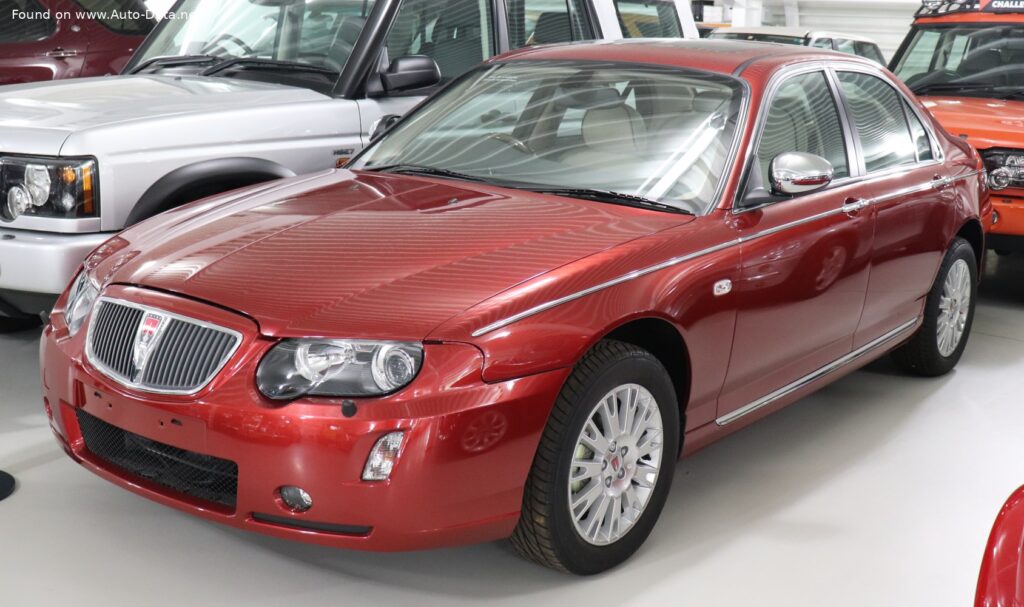
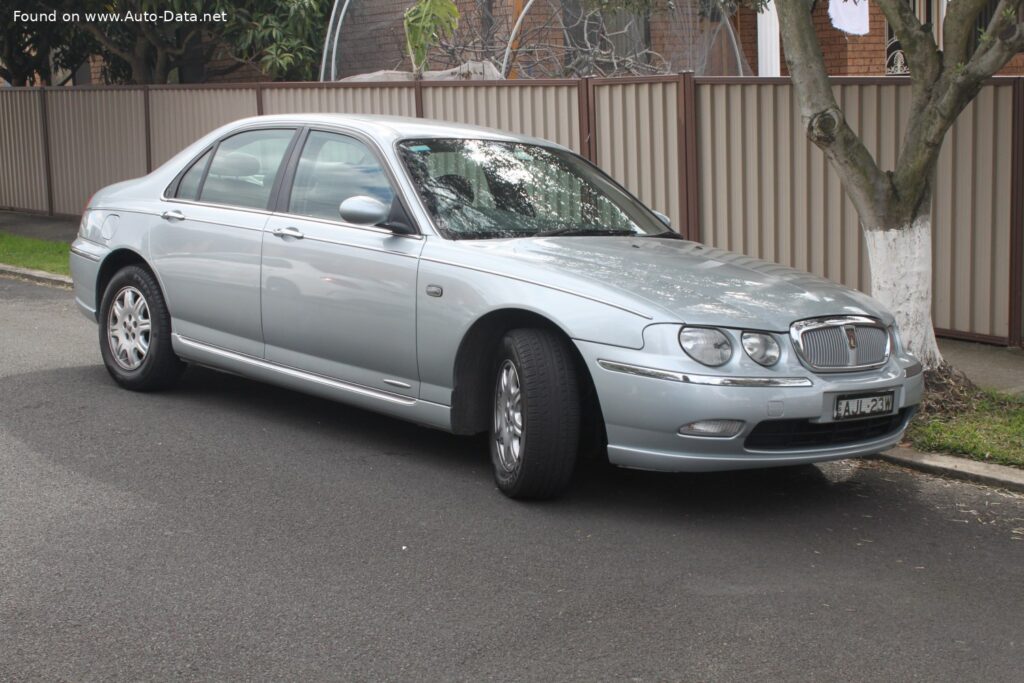
The Rover 75’s design was a deliberate step away from the more angular, contemporary styling prevalent at the turn of the millennium. Its appearance was characterized by a distinctive, elegant, and somewhat nostalgic aesthetic, featuring prominent chrome accents, rounded lines, and a classic Rover grille. This retro-inspired design was a key differentiator, appealing to buyers who appreciated a more traditional and sophisticated look.
As a 4-door sedan, the Rover 75 offered seating for five occupants, prioritizing comfort and refinement. The interior was praised for its high-quality materials, tasteful wood and chrome trim, and an ergonomic layout that contributed to a serene driving environment. Attention to detail was evident throughout, from the analogue clock on the dashboard to the plush seating, creating an atmosphere of understated luxury. The trunk (boot) space was practical, offering 15.26 cubic feet of capacity, sufficient for family trips or business luggage.
Underneath its elegant skin, the Rover 75 featured a well-engineered chassis designed for comfort. The front suspension utilized a wishbone setup, known for its ability to provide good wheel control and ride quality, while the rear employed a coil spring arrangement. This combination, along with a steering rack and pinion system, contributed to the car’s smooth and composed ride, absorbing road imperfections with ease. Braking performance was handled by ventilated discs at the front and solid discs at the rear, augmented by an Anti-lock Braking System (ABS) for enhanced safety and stability during emergency braking. The vehicle rode on 195/65 R15 tires mounted on 6J x 15-inch wheel rims, a specification chosen to balance ride comfort with adequate grip.
Technical Specifications
| Category | Specification | US Equivalent |
|---|---|---|
| Brand | Rover | |
| Model | 75 | |
| Generation | 75 | |
| Type (Engine) | 2.0 CDTi (131 Hp) | |
| Start of Production | 2002 year | |
| End of Production | 2004 year | |
| Powertrain Architecture | Internal Combustion engine | |
| Body Type | Sedan | |
| Seats | 5 | |
| Doors | 4 | |
| Performance Specs | ||
| Fuel Consumption (Economy) – Urban | 8.1 l/100 km | 29 US mpg |
| Fuel Consumption (Economy) – Extra Urban | 4.4 l/100 km | 53.5 US mpg |
| Fuel Consumption (Economy) – Combined | 5.8 l/100 km | 40.6 US mpg |
| CO2 Emissions | 163 g/km | |
| Fuel Type | Diesel | |
| Acceleration 0 – 60 mph | 9.8 sec | |
| Maximum Speed | 193 km/h | 119.92 mph |
| Weight-to-Power Ratio | 11.5 kg/Hp | 86.8 Hp/tonne |
| Weight-to-Torque Ratio | 5 kg/Nm | 198.7 Nm/tonne |
| Engine Specs | ||
| Power | 131 Hp @ 4000 rpm | |
| Power per Liter | 67.1 Hp/l | |
| Torque | 300 Nm @ 1900 rpm | 221.27 lb.-ft. @ 1900 rpm |
| Engine Layout | Front, Transverse | |
| Engine Model/Code | M47R / 204D2 | |
| Engine Displacement | 1951 cm3 | 2.0 Liters (119.06 cu. in.) |
| Number of Cylinders | 4 | |
| Engine Configuration | Inline | |
| Cylinder Bore | 84 mm | 3.31 in. |
| Piston Stroke | 88 mm | 3.46 in. |
| Compression Ratio | 18:1 | |
| Number of Valves per Cylinder | 4 | |
| Fuel Injection System | Diesel Commonrail | |
| Engine Aspiration | Turbocharger, Intercooler | |
| Valvetrain | OHC | |
| Engine Oil Capacity | 6.8 l | 7.19 US qt |
| Coolant Capacity | 8.2 l | 8.66 US qt |
| Space, Volume and Weights | ||
| Kerb Weight | 1510 kg | 3328.98 lbs. |
| Max. Weight | 2030 kg | 4475.38 lbs. |
| Max Load | 520 kg | 1146.4 lbs. |
| Trunk (Boot) Space – Minimum | 432 l | 15.26 cu. ft. |
| Fuel Tank Capacity | 65 l | 17.17 US gal |
| Dimensions | ||
| Length | 4747 mm | 186.89 in. |
| Width | 1778 mm | 70 in. |
| Height | 1424 mm | 56.06 in. |
| Wheelbase | 2746 mm | 108.11 in. |
| Front Track | 1505 mm | 59.25 in. |
| Rear (Back) Track | 1505 mm | 59.25 in. |
| Drivetrain, Brakes and Suspension Specs | ||
| Drivetrain Architecture | Front-wheel drive, Internal Combustion engine | |
| Drive Wheel | Front wheel drive | |
| Number of Gears and Type of Gearbox | 5 gears, manual transmission | |
| Front Suspension | Wishbone | |
| Rear Suspension | Coil spring | |
| Front Brakes | Ventilated discs | |
| Rear Brakes | Disc | |
| Assisting Systems | ABS (Anti-lock braking system) | |
| Steering Type | Steering rack and pinion | |
| Tires Size | 195/65 R15 | |
| Wheel Rims Size | 6J x 15 | |
Legacy & Market Impact of the Rover 75
The Rover 75, and particularly its diesel variants like the 2.0 CDTi (131 Hp), holds a unique place in automotive history. It was developed at a critical juncture for the Rover brand, under BMW’s stewardship, and was intended to elevate Rover back into the premium segment it once occupied. In its primary European market, the 75 was seen as a bold statement, offering a distinct alternative to the more anodyne designs of its competitors such as the Ford Mondeo, Vauxhall Vectra (Opel Insignia), and Volkswagen Passat. It even aimed to capture some buyers considering entry-level models from premium German brands like the BMW 3 Series or Audi A4, albeit with a focus on traditional comfort and elegance rather than outright sportiness.
The car’s reputation centered on its exceptional ride quality, quiet cabin, and overall refinement. The BMW-sourced diesel engine in the 2.0 CDTi model was particularly well-regarded for its smooth operation, strong torque, and outstanding fuel economy, making it a favorite among company car drivers and private buyers who covered significant mileage. This combination of “old-world” charm and modern, efficient German engineering was a compelling proposition.
Despite its critical acclaim and positive reception from many owners, the Rover 75 ultimately could not reverse the fortunes of the ailing Rover Group. Its production run from 1998 to 2005 (with the 2.0 CDTi variant specifically from 2002-2004) coincided with increasing financial difficulties for the company. After BMW sold Rover, the 75 continued under the MG Rover Group, even spawning an MG ZT performance variant and a long-wheelbase version. However, the lack of substantial investment and the company’s eventual collapse in 2005 brought an end to its production.
Today, the Rover 75, especially the diesel models, maintains a loyal following among enthusiasts. It is cherished for its distinctive styling, comfortable driving experience, and robust BMW powertrain, which often outlived the rest of the car’s components. Its legacy is one of a valiant, albeit ultimately unsuccessful, attempt to revive a storied British brand with a genuinely competitive and charming product. For many, it represents the last true Rover, embodying a unique blend of heritage, comfort, and efficiency that continues to resonate with those seeking a classic executive car with a modern, economical heart.