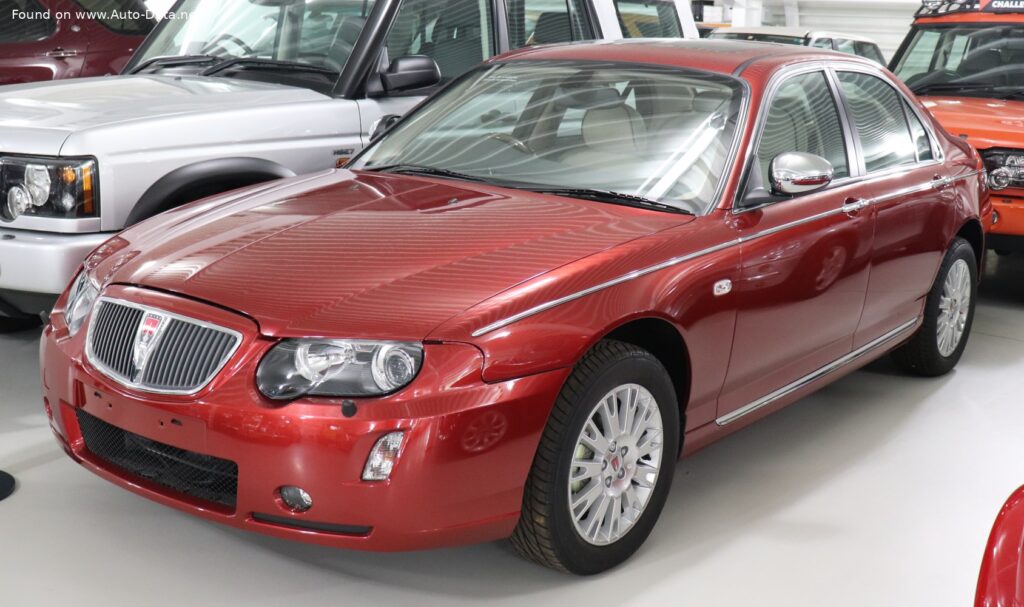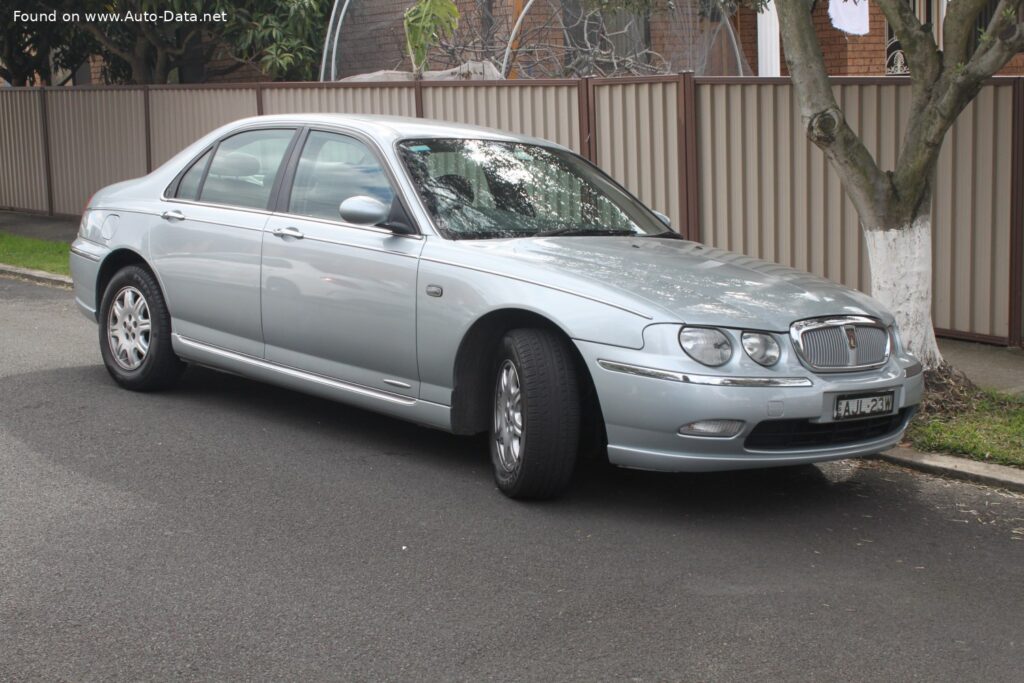
The Rover 75 2.0 V6 (150 Hp) Automatic: A British Executive Sedan
The Rover 75 2.0 V6 (150 Hp) Automatic represents a pivotal, albeit ultimately tragic, chapter in the history of the British automotive marque, Rover. Launched in 1999, the Rover 75 was a mid-size executive sedan developed under the ownership of BMW, intended to elevate Rover’s image and compete with established European rivals. It blended traditional British luxury and styling cues with contemporary engineering, aiming for a refined and comfortable driving experience. This particular variant, featuring a 2.0-liter V6 engine paired with an automatic transmission, was a popular choice in its primary European market, offering a compelling blend of smooth power delivery and sophisticated road manners.
Designed as a four-door sedan with seating for five, the Rover 75 was positioned above mainstream family cars but below the premium German executive sedans in terms of price. It quickly gained a reputation for its distinctive “retro-futuristic” styling, luxurious interior, and exceptional ride quality, setting it apart in a competitive segment. Production of this generation of the Rover 75 spanned from 1999 to 2004, with the model continuing under the MG Rover Group until the company’s collapse in 2005.
Engine and Performance of the Rover 75 2.0 V6 (150 Hp) Automatic
At the heart of the Rover 75 2.0 V6 (150 Hp) Automatic lies the Rover Group’s KV6 engine, a naturally aspirated V-engine renowned for its smoothness and refinement. This particular iteration displaces 1,997 cubic centimeters (approximately 121.86 cubic inches), configured with six cylinders in a “V” layout. Featuring a Double Overhead Camshaft (DOHC) valvetrain and multi-port manifold injection, the engine was engineered for a balance of power and civility, aligning with the Rover 75’s executive aspirations.
The 2.0-liter KV6 engine generates a respectable 150 horsepower at 6,500 rpm, delivering its power linearly and with a pleasing auditory note characteristic of a well-balanced V6. Torque peaks at 136.45 lb.-ft. (185 Nm) at a relatively accessible 4,000 rpm, providing adequate thrust for daily driving and comfortable cruising. Power is transmitted to the front wheels via a 5-speed automatic transmission, which was tuned for seamless shifts and a relaxed driving experience, further enhancing the car’s luxurious character.
Performance figures for the Rover 75 2.0 V6 (150 Hp) Automatic reflect its focus on refinement over outright sportiness. The sedan accelerates from 0 to 60 mph in a calculated 11 seconds, with 0 to 62 mph (100 km/h) taking 11.6 seconds. Its top speed is rated at 127.38 mph (205 km/h). These figures placed it competitively within its segment for those prioritizing comfort and a serene cabin environment. Fuel economy, while not class-leading by today’s standards, was reasonable for a V6-powered automatic sedan of its era, with a combined consumption rate of approximately 22.8 US mpg (10.3 l/100 km). CO2 emissions were rated at 245 g/km.
Design and Features
The design of the Rover 75 was a significant departure from its predecessor, the Rover 600, and was lauded for its distinctive aesthetic. Penned by Richard Woolley, the exterior styling evokes a sense of classic British elegance, yet incorporates modern proportions and details. Its “retro-futuristic” approach is evident in features like the prominent chrome grille, twin headlamps, and flowing lines that give the sedan a stately and distinguished presence. The four-door sedan body type emphasized practicality and passenger comfort, suitable for its executive target market.
Inside, the Rover 75 was celebrated for its opulent and well-appointed cabin. High-quality materials, including genuine wood trim, chrome accents, and plush seating, created an atmosphere of traditional luxury. The ergonomics were generally well-received, with controls logically placed and easy to operate. Seating for five passengers was comfortable, particularly for front and rear occupants on longer journeys. The trunk offered a generous 15.26 cubic feet (432 liters) of cargo space, making it practical for luggage or groceries.
In terms of features, the Rover 75 2.0 V6 (150 Hp) Automatic was equipped with a range of amenities and safety systems appropriate for its time. Standard safety features included an Anti-lock Braking System (ABS), enhancing stopping performance and control. The steering system utilized a hydraulic rack and pinion setup, providing a communicative and comfortable feel. The suspension, featuring a wishbone setup at the front and coil springs at the rear, was tuned for a smooth and compliant ride, effectively isolating occupants from road imperfections. The car rode on 205/65 R15 tires mounted on 15-inch wheel rims, a common specification for comfort-oriented vehicles of its class.
Technical Specifications
| Category | Specification | US Equivalent (Approx.) |
|---|---|---|
| General Information | ||
| Brand | Rover | |
| Model | 75 | |
| Generation | 75 | |
| Type (Engine) | 2.0 V6 (150 Hp) Automatic | |
| Start of Production | 1999 year | |
| End of Production | 2004 year | |
| Powertrain Architecture | Internal Combustion engine | |
| Body type | Sedan | |
| Seats | 5 | |
| Doors | 4 | |
| Performance Specs | ||
| Fuel consumption (economy) – urban | 15.0 l/100 km | 15.7 US mpg |
| Fuel consumption (economy) – extra urban | 7.5 l/100 km | 31.4 US mpg |
| Fuel consumption (economy) – combined | 10.3 l/100 km | 22.8 US mpg |
| CO2 emissions | 245 g/km | |
| Fuel Type | Petrol (Gasoline) | |
| Acceleration 0 – 60 mph (Calculated) | 11 sec | |
| Acceleration 0 – 62 mph (100 km/h) | 11.6 sec | |
| Maximum speed | 205 km/h | 127.38 mph |
| Weight-to-power ratio | 9.6 kg/Hp | 21.16 lbs/Hp |
| Weight-to-torque ratio | 7.8 kg/Nm | |
| Engine Specs | ||
| Power | 150 Hp @ 6500 rpm | |
| Power per liter | 75.1 Hp/l | |
| Torque | 185 Nm @ 4000 rpm | 136.45 lb.-ft. @ 4000 rpm |
| Engine layout | Front, Transverse | |
| Engine Model/Code | KV6 / 20K4F | |
| Engine displacement | 1997 cm3 | 121.86 cu. in. |
| Number of cylinders | 6 | |
| Engine configuration | V-engine | |
| Cylinder Bore | 80 mm | 3.15 in. |
| Piston Stroke | 66.2 mm | 2.61 in. |
| Compression ratio | 10.5:1 | |
| Number of valves per cylinder | 4 | |
| Fuel injection system | Multi-port manifold injection | |
| Engine aspiration | Naturally aspirated engine | |
| Valvetrain | DOHC | |
| Engine oil capacity | 5.2 l | 5.49 US qt |
| Coolant capacity | 7.5 l | 7.93 US qt |
| Space, Volume and Weights | ||
| Kerb Weight | 1445 kg | 3185.68 lbs. |
| Max. weight | 2000 kg | 4409.25 lbs. |
| Max load | 555 kg | 1223.57 lbs. |
| Trunk (boot) space – maximum | 432 l | 15.26 cu. ft. |
| Fuel tank capacity | 65 l | 17.17 US gal |
| Dimensions | ||
| Length | 4747 mm | 186.89 in. |
| Width | 1778 mm | 70 in. |
| Height | 1424 mm | 56.06 in. |
| Wheelbase | 2746 mm | 108.11 in. |
| Front track | 1505 mm | 59.25 in. |
| Rear (Back) track | 1505 mm | 59.25 in. |
| Drivetrain, Brakes and Suspension Specs | ||
| Drivetrain Architecture | The Internal combustion engine (ICE) drives the front wheels of the vehicle. | |
| Drive wheel | Front wheel drive | |
| Number of gears and type of gearbox | 5 gears, automatic transmission | |
| Front suspension | Wishbone | |
| Rear suspension | Coil spring | |
| Front brakes | Ventilated discs | |
| Rear brakes | Disc | |
| Assisting systems | ABS (Anti-lock braking system) | |
| Steering type | Steering rack and pinion | |
| Power steering | Hydraulic Steering | |
| Tires size | 205/65 R15 | |
| Wheel rims size | 15 inches | |
Legacy and Market Impact
The Rover 75, particularly variants like the 2.0 V6 Automatic, left a mixed but ultimately significant legacy in the European automotive landscape. Critically, it was often praised for its refined ride, quiet cabin, and high-quality interior, frequently drawing comparisons to more expensive German rivals in terms of comfort and perceived luxury. Its distinctive styling, a blend of heritage and modernism, also garnered appreciation for offering something different in a market increasingly dominated by more conventional designs.
In its primary market, the Rover 75 competed against a broad range of vehicles. While not a direct competitor to the BMW 3 Series or Mercedes-Benz C-Class in terms of outright performance or brand prestige, it aimed to offer a compelling alternative for buyers seeking comfort, elegance, and a uniquely British character at a more accessible price point. Its rivals were more commonly found among the upper trims of mainstream offerings like the Ford Mondeo, Vauxhall Vectra (Opel Vectra in continental Europe), and potentially entry-level Audi A4 or Volkswagen Passat models.
Despite its strong initial reception and many positive attributes, the Rover 75’s market impact was heavily overshadowed by the tumultuous financial situation of its parent company. Developed under BMW’s ownership, the car was seen as a beacon of hope for the struggling Rover brand. However, BMW’s eventual divestment of Rover Group in 2000, selling it to the Phoenix Consortium, meant the 75 continued under the newly formed MG Rover Group with limited resources for development and marketing. This instability, coupled with a perception of an aging brand and reliability concerns (some of which were exaggerated), hampered its sales potential.
The Rover 75 2.0 V6 (150 Hp) Automatic ultimately stands as one of the last major models produced by the original Rover Group before its demise. It represented the brand’s final attempt to re-establish itself as a purveyor of quality, refined, and distinctively British automobiles. While it never achieved the sales volumes needed to secure Rover’s long-term future, it remains a testament to the engineering and design talent that existed within the company. Today, the Rover 75 is regarded by enthusiasts as a comfortable and characterful executive sedan, a poignant reminder of what might have been for the storied British marque.