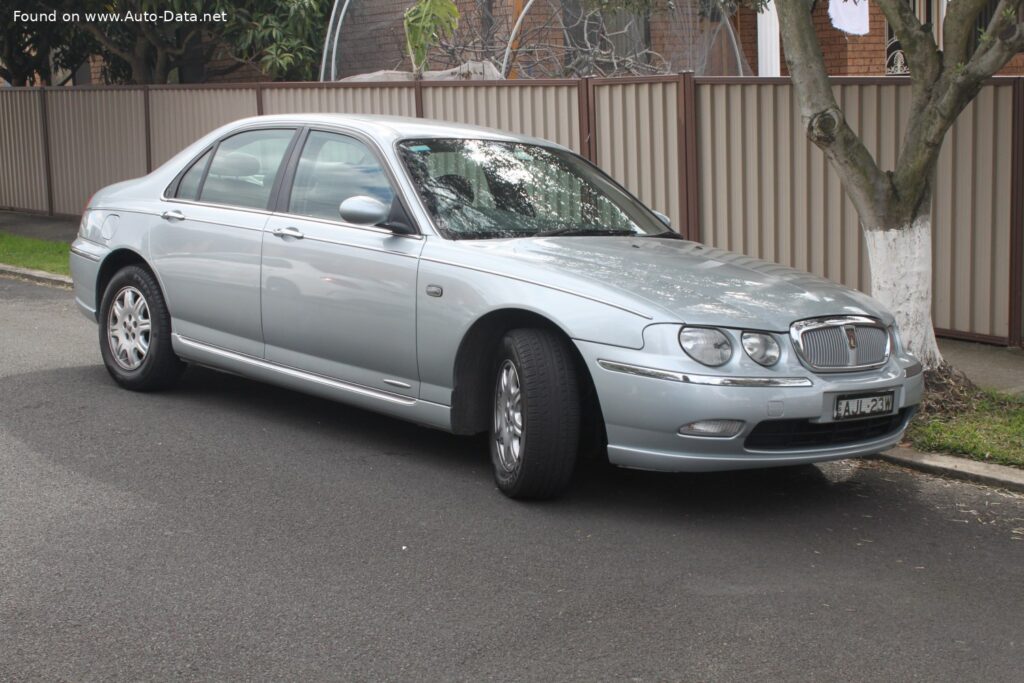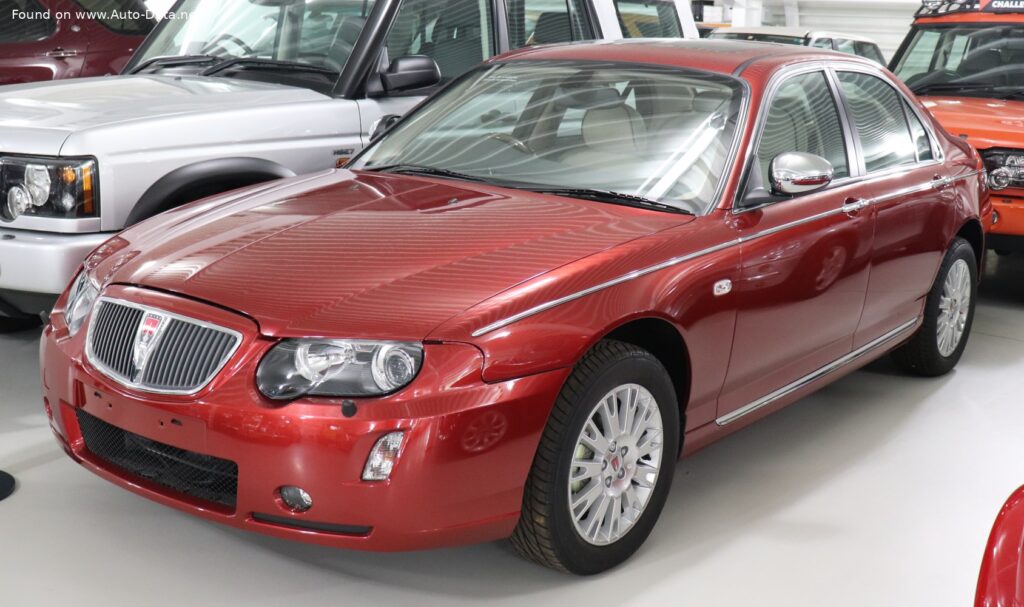
Introduction to the Rover 75 (facelift 2004)
The Rover 75, particularly the facelifted model introduced in 2004, represents a poignant chapter in the history of the British automotive industry. As one of the final new models to emerge from the venerable Rover Group before its eventual collapse, the Rover 75 was designed to embody traditional British luxury and craftsmanship while integrating modern engineering. Launched initially in 1998, the 75 was a mid-size executive car, competing in the highly competitive European D-segment against established German rivals. The 2004 facelift, which continued production until 2005, aimed to refresh its aesthetics and enhance its market appeal during a period of significant corporate uncertainty for MG Rover, the company then responsible for the brand.
This particular variant, the 2.0 CDTi (131 Hp) Automatic, showcased Rover’s commitment to offering a compelling blend of diesel efficiency and refined performance, a crucial combination for the European market. While the Rover 75 was never officially sold in the United States, its design ethos, engineering underpinnings, and market position offer valuable insights into the European automotive landscape of the early 2000s. Its unique blend of retro-classic styling with contemporary technology made it a distinctive choice, offering a comfortable and serene driving experience.
Engine and Performance of the Rover 75 2.0 CDTi
Under the hood of the 2004 facelifted Rover 75 2.0 CDTi (131 Hp) Automatic lies a robust and efficient powertrain, a testament to strategic collaborations in the automotive industry. The heart of this model is a 1,951 cubic inch (2.0-liter) inline four-cylinder diesel engine, specifically the M47R / 204D2 unit. This engine, a derivative of BMW’s highly regarded M47 series, was a significant asset for Rover, providing competitive performance and fuel economy. It features a DOHC (Double Overhead Camshaft) valvetrain with four valves per cylinder, a common rail diesel fuel injection system, and benefits from both a turbocharger and an intercooler, optimizing power delivery and efficiency.
The engine produces a respectable 131 horsepower at 3,500 rpm, delivering a power-per-liter output of 67.1 Hp/l. More impressively for a diesel, it generates a substantial 221.27 pound-feet (300 Nm) of torque, available from a low 1,900 rpm. This ample torque, coupled with the smooth five-speed automatic transmission, ensures effortless acceleration and strong mid-range pull, ideal for both city driving and highway cruising. The vehicle’s front-wheel-drive architecture efficiently transmits power to the road.
In terms of raw performance, the Rover 75 2.0 CDTi (131 Hp) Automatic could accelerate from 0 to 60 mph in a reasonable 11 seconds and achieve a top speed of 118.06 mph (190 km/h). Fuel efficiency was a key selling point for this diesel variant, with a combined fuel consumption rating of 34.1 US mpg (6.9 l/100 km). While urban consumption stood at 23.5 US mpg (10 l/100 km), extra-urban driving could achieve an impressive 45.2 US mpg (5.2 l/100 km). With CO2 emissions of 190 g/km, it met the Euro 3 emission standard of its time, reflecting a commitment to environmental responsibility that was becoming increasingly important in European markets.
Design and Features
The Rover 75‘s design was a deliberate blend of classic British automotive aesthetics and more contemporary styling cues. The 2004 facelift brought subtle but significant changes, primarily to the front and rear fascias, to give the car a more modern and assertive presence. The distinctive quad headlights remained, but the grille was redesigned to be more prominent, and the bumpers were subtly reshaped. These changes aimed to broaden its appeal, moving slightly away from the overtly retro design of the original model, yet retaining its inherent elegance.
The Rover 75 was offered as a four-door sedan, providing seating for five occupants. Its exterior dimensions, with a length of 186.97 inches (4749 mm) and a width of 70 inches (1778 mm), positioned it squarely in the executive sedan segment. The generous 108.11-inch (2746 mm) wheelbase contributed to a spacious and comfortable cabin. Inside, the 75 was renowned for its luxurious and well-appointed interior, featuring high-quality materials, wood trim, and chrome accents that evoked a sense of traditional British club-class luxury. The facelift maintained this commitment to comfort and refinement, ensuring the cabin remained a serene environment for occupants.
Practicality was also a strong suit, with a trunk (boot) space ranging from 15.26 cubic feet (432 liters) to a maximum of 23.8 cubic feet (674 liters) with the rear seats folded, offering ample room for luggage. Safety features, standard for its era, included an Anti-lock Braking System (ABS), complementing the ventilated disc brakes at the front and disc brakes at the rear. The independent McPherson strut front suspension with coil springs and an anti-roll bar, combined with an independent multi-link rear suspension with a stabilizer, provided a comfortable and composed ride, characteristic of a luxury sedan. Power was delivered to the front wheels, and the hydraulic rack-and-pinion steering ensured precise control. Various tire sizes, including 195/65 R15, 205/60 R15, and 215/55 R16, were available, mounted on 15-inch or 16-inch alloy wheels.
Technical Specifications
| Rover 75 (facelift 2004) 2.0 CDTi (131 Hp) Automatic – Specifications | |
|---|---|
General Information |
|
| Brand | Rover |
| Model | 75 |
| Generation | 75 (facelift 2004) |
| Type (Engine) | 2.0 CDTi (131 Hp) Automatic |
| Start of Production | 2004 year |
| End of Production | 2005 year |
| Powertrain Architecture | Internal Combustion engine |
| Body type | Sedan |
| Seats | 5 |
| Doors | 4 |
Performance Specs |
|
| Fuel Consumption (Economy) – Urban | 10 l/100 km (23.5 US mpg) |
| Fuel Consumption (Economy) – Extra Urban | 5.2 l/100 km (45.2 US mpg) |
| Fuel Consumption (Economy) – Combined | 6.9 l/100 km (34.1 US mpg) |
| CO2 Emissions | 190 g/km |
| Fuel Type | Diesel |
| Acceleration 0 – 60 mph | 11 sec |
| Maximum Speed | 118.06 mph (190 km/h) |
| Emission Standard | Euro 3 |
| Weight-to-Power Ratio | 11.7 kg/Hp (85.6 Hp/tonne) |
| Weight-to-Torque Ratio | 5.1 kg/Nm (196.1 Nm/tonne) |
Engine Specs |
|
| Power | 131 Hp @ 3500 rpm |
| Power per Liter | 67.1 Hp/l |
| Torque | 221.27 lb.-ft. @ 1900 rpm (300 Nm @ 1900 rpm) |
| Engine Layout | Front, Transverse |
| Engine Model/Code | M47R / 204D2 |
| Engine Displacement | 119.06 cu. in. (1951 cm3) |
| Number of Cylinders | 4 |
| Engine Configuration | Inline |
| Cylinder Bore | 3.31 in. (84 mm) |
| Piston Stroke | 3.46 in. (88 mm) |
| Compression Ratio | 18:1 |
| Number of Valves per Cylinder | 4 |
| Fuel Injection System | Diesel Commonrail |
| Engine Aspiration | Turbocharger, Intercooler |
| Valvetrain | DOHC |
| Engine Oil Capacity | 7.19 US qt (6.8 l) |
| Coolant Capacity | 8.66 US qt (8.2 l) |
Space, Volume and Weights |
|
| Kerb Weight | 3373.07 – 3648.65 lbs. (1530-1655 kg) |
| Max. Weight | 4475.38 lbs. (2030 kg) |
| Max Load | 826.73 – 1102.31 lbs. (375-500 kg) |
| Trunk (Boot) Space – Minimum | 15.26 cu. ft. (432 l) |
| Trunk (Boot) Space – Maximum | 23.8 cu. ft. (674 l) |
| Fuel Tank Capacity | 17.17 US gal (65 l) |
| Max. Roof Load | 176.37 lbs. (80 kg) |
| Permitted Trailer Load with Brakes (12%) | 3527.4 lbs. (1600 kg) |
| Permitted Trailer Load without Brakes | 1653.47 lbs. (750 kg) |
| Permitted Towbar Download | 220.46 lbs. (100 kg) |
Dimensions |
|
| Length | 186.97 in. (4749 mm) |
| Width | 70 in. (1778 mm) |
| Width Including Mirrors | 77.56 in. (1970 mm) |
| Height | 54.84 in. (1393 mm) |
| Wheelbase | 108.11 in. (2746 mm) |
| Front Track | 59.49 in. (1511 mm) |
| Rear (Back) Track | 59.21 in. (1504 mm) |
| Front Overhang | 36.02 in. (915 mm) |
| Rear Overhang | 42.8 in. (1087 mm) |
| Minimum Turning Circle (Turning Diameter) | 37.17 ft. (11.33 m) |
Drivetrain, Brakes and Suspension Specs |
|
| Drivetrain Architecture | Front-wheel drive with Internal Combustion Engine |
| Drive Wheel | Front wheel drive |
| Number of Gears and Type of Gearbox | 5 gears, automatic transmission |
| Front Suspension | Independent, McPherson type with coil spring and anti-roll bar |
| Rear Suspension | Independent multi-link spring suspension with stabilizer |
| Front Brakes | Ventilated discs |
| Rear Brakes | Disc |
| Assisting Systems | ABS (Anti-lock braking system) |
| Steering Type | Steering rack and pinion |
| Power Steering | Hydraulic Steering |
| Tires Size | 195/65 R15; 205/60 R15; 215/55 R16 |
| Wheel Rims Size | 6J x 15; 6.5J x 16 |
Legacy and Market Impact of the Rover 75
The Rover 75 occupies a unique and somewhat melancholic place in automotive history. Introduced with high hopes as a flagship model for the revitalized Rover brand, it was lauded for its distinctive styling, refined ride, and luxurious interior. In its primary European market, the Rover 75 aimed to carve out a niche against established premium competitors such as the BMW 3 Series, Audi A4, and Mercedes-Benz C-Class, as well as mainstream D-segment contenders like the Ford Mondeo and Opel/Vauxhall Vectra. Its appeal lay in offering a uniquely British alternative, emphasizing comfort, character, and a sense of occasion over outright sporty dynamics or technological avant-garde.
The 2.0 CDTi variant, with its BMW-derived diesel engine, was particularly important for its market success. Diesels dominated the European executive car segment, and the 75’s efficient and torquey powerplant allowed it to compete effectively on running costs and long-distance comfort. The automatic transmission further enhanced its appeal as a relaxed cruiser. Despite its many virtues, the Rover 75 was ultimately overshadowed by the financial instability of its parent company, MG Rover. The 2004 facelift, intended to boost sales and modernize its image, came at a time when the company was facing insurmountable challenges.
The end of production for the Rover 75 in 2005 marked the cessation of production for the entire Rover brand under MG Rover ownership. This event was a significant moment for the British automotive industry, symbolizing the end of an era for a marque with a rich heritage. Today, the Rover 75 is regarded by enthusiasts as a modern classic, appreciated for its distinctive design, comfortable ride, and the quality of its engineering, particularly its diesel powertrains. It stands as a testament to what Rover was capable of producing even in its twilight years, a car that offered a genuine alternative in a fiercely competitive market. Its legacy is one of elegance and quiet competence, representing the final, dignified hurrah of a storied British carmaker.