Introduction to the Rover 75 Tourer 1.8 16V T (150 Hp)
The Rover 75 Tourer represents a significant chapter in the history of the British automotive manufacturer, Rover. Launched in 1999, the Rover 75 was the last entirely new model developed by the company before its eventual demise. The Tourer, or station wagon variant, followed in 2001, expanding the 75’s appeal to families and those requiring greater practicality without sacrificing the sedan’s distinctive retro-modern styling and emphasis on comfort and refinement. The specific variant under review, the Rover 75 Tourer 1.8 16V T (150 Hp), was produced between 2002 and 2004, offering a compelling blend of turbocharged performance and traditional British luxury in the mid-size executive segment.
While the Rover 75 was never officially sold in the United States, it carved out a niche in its primary European market, particularly in the UK, as a distinctive alternative to more conventional German and Japanese rivals. It was celebrated for its elegant design, comfortable ride, and a cabin that evoked a sense of classic British craftsmanship. The 1.8-liter turbocharged engine provided a more energetic driving experience compared to naturally aspirated counterparts, making the Rover 75 Tourer 1.8 16V T (150 Hp) a noteworthy option for buyers seeking a blend of performance and practicality.
Engine and Performance of the Rover 75 Tourer 1.8 16V T (150 Hp)
At the heart of the Rover 75 Tourer 1.8 16V T (150 Hp) lies a turbocharged 1.8-liter (1796 cm3, or 109.6 cubic inches) inline-four gasoline engine, internally designated as the 18K4G. This powerplant was a critical offering for the 75, providing a strong balance of efficiency and spirited performance. With a power output of 150 horsepower at 5500 rpm and a robust 158.58 lb.-ft. of torque available at a low 2100 rpm, the engine delivered impressive responsiveness for its size. The inclusion of a turbocharger and intercooler was key to achieving these figures, giving the relatively small displacement engine the punch expected of a larger unit.
The engine features a DOHC (Double Overhead Camshaft) valvetrain with 4 valves per cylinder, ensuring efficient breathing. Fuel is delivered via a multi-port manifold injection system. With a compression ratio of 9.2:1, the engine was designed for regular unleaded gasoline. Power is transmitted to the front wheels through a 5-speed manual transmission, a common setup for European sedans and wagons of this era, emphasizing driver engagement.
Performance figures for the Rover 75 Tourer 1.8 16V T (150 Hp) were respectable for its class. The vehicle could accelerate from 0 to 60 mph in approximately 9 seconds, and from 0 to 100 km/h in 9.5 seconds. Its top speed was rated at 126.14 mph (203 km/h). These numbers placed it competitively against other mid-range executive wagons, providing sufficient power for both urban driving and highway cruising.
Fuel economy for the Tourer 1.8 16V T was rated at 29.4 US mpg combined (8.0 liters per 100 km). Urban driving yielded 20.8 US mpg (11.3 liters per 100 km), while extra-urban conditions saw consumption improve to 38.6 US mpg (6.1 liters per 100 km). CO2 emissions were 193 g/km, reflecting the technology available at the time. The engine’s layout is front, transverse, contributing to the front-wheel-drive architecture.
Design and Features
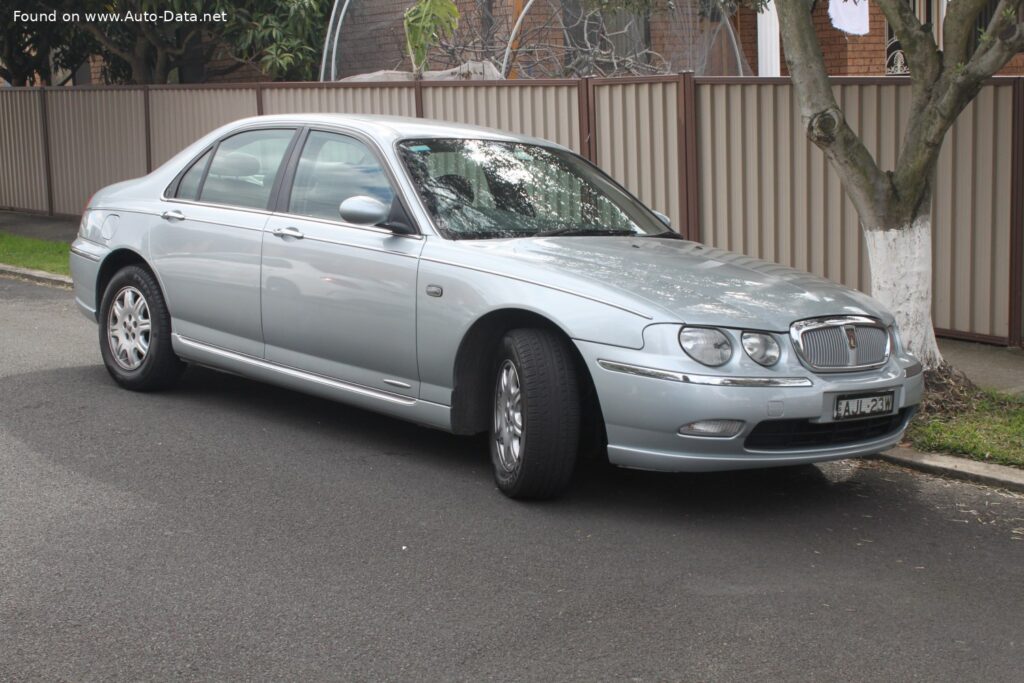
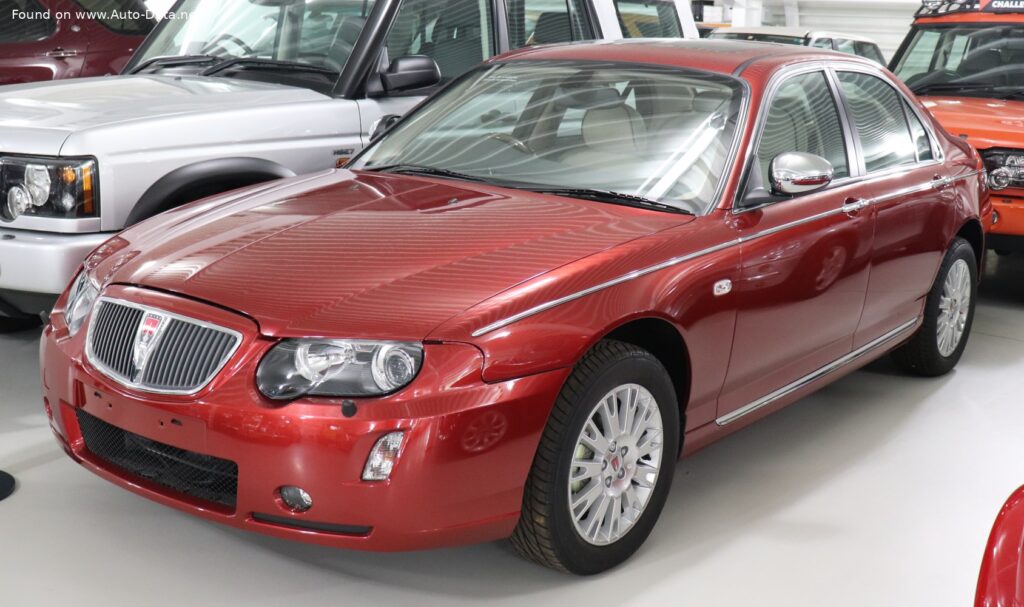
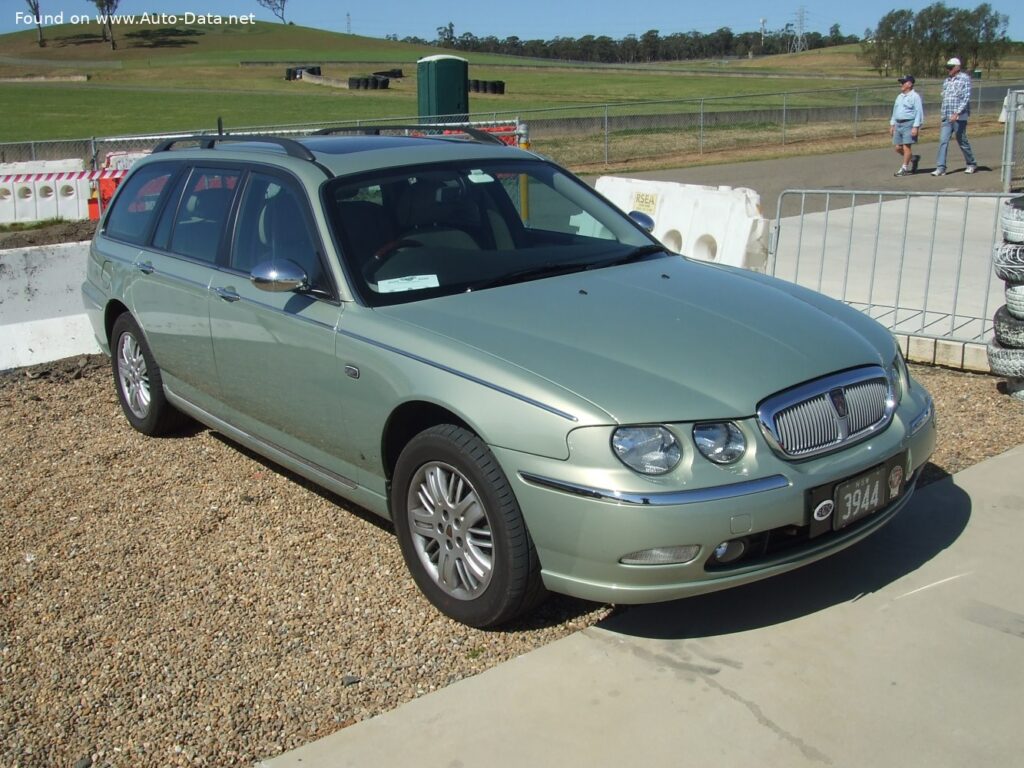
The Rover 75 Tourer, a 5-door station wagon (often referred to as an “estate” in European markets), was celebrated for its distinctive design, which blended classic British automotive aesthetics with modern sensibilities. Its exterior styling featured a prominent chrome grille, twin headlamps, and flowing lines that gave it a stately and somewhat retro appearance, differentiating it sharply from its more aggressively styled German competitors. The Tourer variant maintained the sedan’s elegant front end but extended the roofline to create a more practical cargo area, culminating in a gracefully integrated tailgate.
Measuring 188.66 inches (4792 mm) in length, 70 inches (1778 mm) in width, and 56.06 inches (1424 mm) in height, with a generous wheelbase of 108.11 inches (2746 mm), the 75 Tourer provided ample interior space for five occupants. The cabin was a particular highlight, known for its comfortable seating and a design that exuded a sense of traditional luxury. Features like wood and chrome trim were common, contributing to an ambiance reminiscent of older Jaguars or classic Rovers.
Practicality was a strong suit for the Tourer. The trunk (boot) offered a minimum cargo volume of 14.13 cubic feet (400 liters), which could be expanded significantly to 43.15 cubic feet (1222 liters) with the rear seats folded down, making it highly versatile for family use or hauling luggage. The vehicle’s curb weight was 3251.82 lbs (1475 kg), with a maximum permissible weight of 4365.15 lbs (1980 kg), allowing for a max load of 1113.33 lbs (505 kg).
In terms of chassis and safety, the 75 Tourer featured a wishbone front suspension and a coil spring rear suspension, tuned for a comfortable and composed ride characteristic of Rover. Braking was handled by ventilated discs at the front and disc brakes at the rear, supplemented by an Anti-lock Braking System (ABS) for enhanced safety, a standard feature for cars in this segment during the early 2000s. Steering was a hydraulic rack and pinion setup, providing a traditional, communicative feel. The car was fitted with 195/65 R15 tires, balancing ride comfort and grip.
Technical Specifications
| Category | Specification |
|---|---|
| Brand | Rover |
| Model | 75 |
| Generation | 75 Tourer |
| Type (Engine) | 1.8 16V T (150 Hp) |
| Production Years | 2002 – 2004 |
| Powertrain Architecture | Internal Combustion Engine (ICE) |
| Body Type | Station wagon (estate) |
| Seats | 5 |
| Doors | 5 |
| Performance Specs | |
| Fuel Consumption (Urban) | 11.3 l/100 km (20.8 US mpg) |
| Fuel Consumption (Extra Urban) | 6.1 l/100 km (38.6 US mpg) |
| Fuel Consumption (Combined) | 8.0 l/100 km (29.4 US mpg) |
| CO2 Emissions | 193 g/km |
| Fuel Type | Petrol (Gasoline) |
| Acceleration 0 – 60 mph | 9 sec |
| Acceleration 0 – 100 km/h | 9.5 sec |
| Maximum Speed | 126.14 mph (203 km/h) |
| Weight-to-power ratio | 9.8 kg/Hp (101.7 Hp/tonne) |
| Weight-to-torque ratio | 6.9 kg/Nm (145.8 Nm/tonne) |
| Engine Specs | |
| Power | 150 Hp @ 5500 rpm |
| Power per liter | 83.5 Hp/l |
| Torque | 158.58 lb.-ft. (215 Nm) @ 2100 rpm |
| Engine Layout | Front, Transverse |
| Engine Model/Code | 18K4G |
| Engine Displacement | 1.8 liters (1796 cm3 / 109.6 cu. in.) |
| Number of Cylinders | 4 |
| Engine Configuration | Inline |
| Cylinder Bore | 3.15 in. (80 mm) |
| Piston Stroke | 3.52 in. (89.3 mm) |
| Compression Ratio | 9.2:1 |
| Valves per Cylinder | 4 |
| Fuel Injection System | Multi-port manifold injection |
| Engine Aspiration | Turbocharger, Intercooler |
| Valvetrain | DOHC |
| Engine Oil Capacity | 4.5 liters (4.76 US qt) |
| Coolant Capacity | 6.2 liters (6.55 US qt) |
| Space, Volume and Weights | |
| Kerb Weight | 3251.82 lbs (1475 kg) |
| Max. Weight | 4365.15 lbs (1980 kg) |
| Max Load | 1113.33 lbs (505 kg) |
| Trunk (boot) Space – Minimum | 14.13 cu. ft. (400 l) |
| Trunk (boot) Space – Maximum | 43.15 cu. ft. (1222 l) |
| Fuel Tank Capacity | 17.17 US gal (65 l) |
| Dimensions | |
| Length | 188.66 in. (4792 mm) |
| Width | 70 in. (1778 mm) |
| Height | 56.06 in. (1424 mm) |
| Wheelbase | 108.11 in. (2746 mm) |
| Front Track | 59.25 in. (1505 mm) |
| Rear (Back) Track | 59.25 in. (1505 mm) |
| Drivetrain, Brakes and Suspension Specs | |
| Drivetrain Architecture | Front-wheel drive, Internal Combustion Engine |
| Drive Wheel | Front wheel drive |
| Number of Gears and Type of Gearbox | 5 gears, manual transmission |
| Front Suspension | Wishbone |
| Rear Suspension | Coil spring |
| Front Brakes | Ventilated discs |
| Rear Brakes | Disc |
| Assisting Systems | ABS (Anti-lock braking system) |
| Steering Type | Steering rack and pinion |
| Power Steering | Hydraulic Steering |
| Tires Size | 195/65 R15 |
Legacy and Market Impact
The Rover 75 Tourer, and indeed the entire 75 range, holds a unique and somewhat poignant place in automotive history. It was the last major model developed by Rover Group under BMW ownership, and it aimed to redefine the brand’s image, moving away from its more humble roots and targeting a segment occupied by premium European brands. The car’s design, penned by Richard Woolley, intentionally evoked a sense of classic British luxury and craftsmanship, a stark contrast to the more modernist designs prevalent at the turn of the millennium. This “retro-modern” approach was a deliberate strategy to differentiate Rover.
In its primary European market, particularly the United Kingdom, the Rover 75 Tourer competed against a diverse array of vehicles. Its direct rivals included mainstream executive wagons like the Ford Mondeo Estate, Vauxhall/Opel Vectra Caravan, and Volkswagen Passat Variant. However, with its distinctly more luxurious interior and emphasis on comfort over outright sportiness, it also sought to capture buyers considering entry-level premium wagons such as the BMW 3 Series Touring or Audi A4 Avant, offering a similar level of perceived quality and refinement at a more accessible price point. The Rover 75 Tourer 1.8 16V T (150 Hp), with its turbocharged engine, provided a compelling performance argument against some of these competitors.
Despite its critical acclaim for design, ride quality, and interior ambiance, the Rover 75’s market impact was ultimately hampered by the tumultuous financial state of its parent company, MG Rover. The car was well-received by owners who appreciated its unique character and comfortable cruising ability, often touting its “waftability” – a term used to describe its smooth, effortless ride. It developed a loyal following among those who valued traditional British automotive virtues.
The 75 Tourer’s historical significance lies in its embodiment of Rover’s final attempt to establish itself as a credible premium brand before its collapse in 2005. It represented a bold vision for the future of Rover, combining heritage with contemporary engineering. Today, the Rover 75 Tourer is remembered as a comfortable, stylish, and often underrated vehicle, a testament to what British engineering and design could achieve, even under challenging circumstances. Its legacy is one of elegant resilience, offering a glimpse into an alternative path for British luxury motoring that, regrettably, was never fully realized.