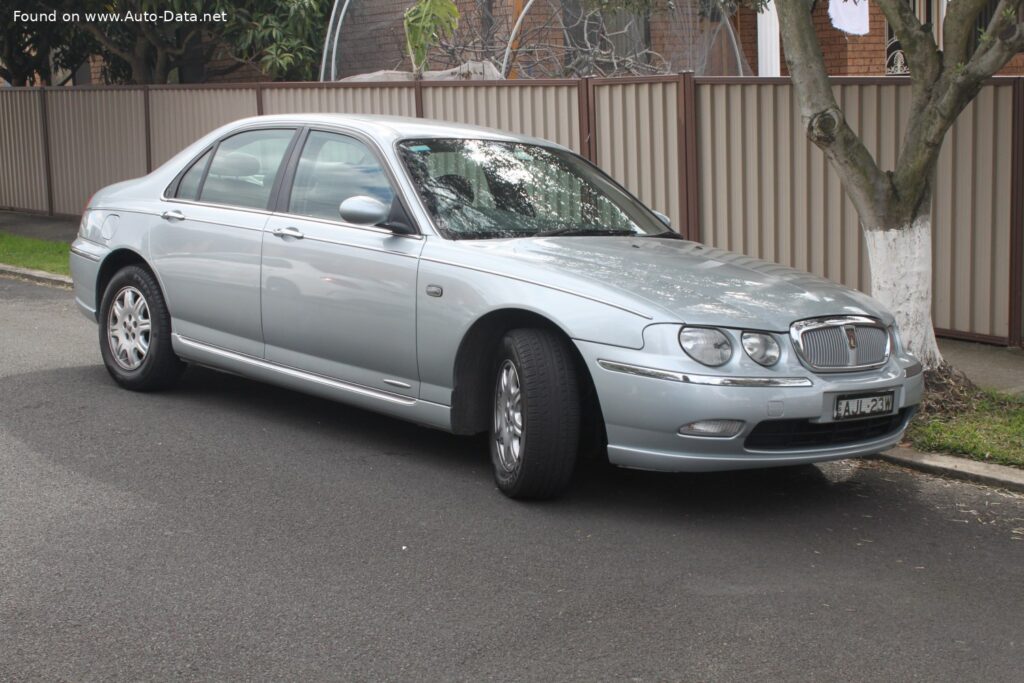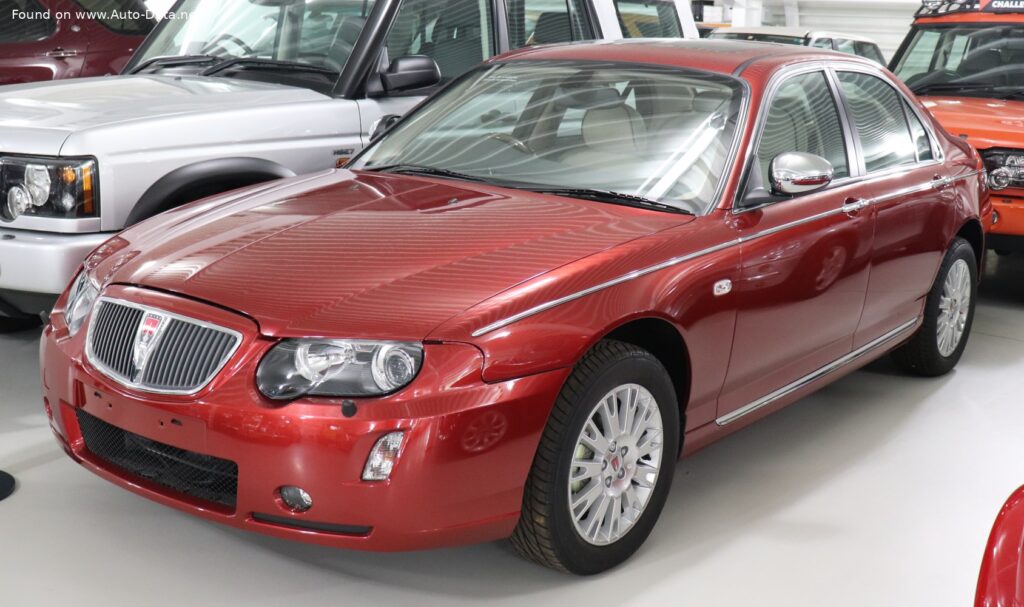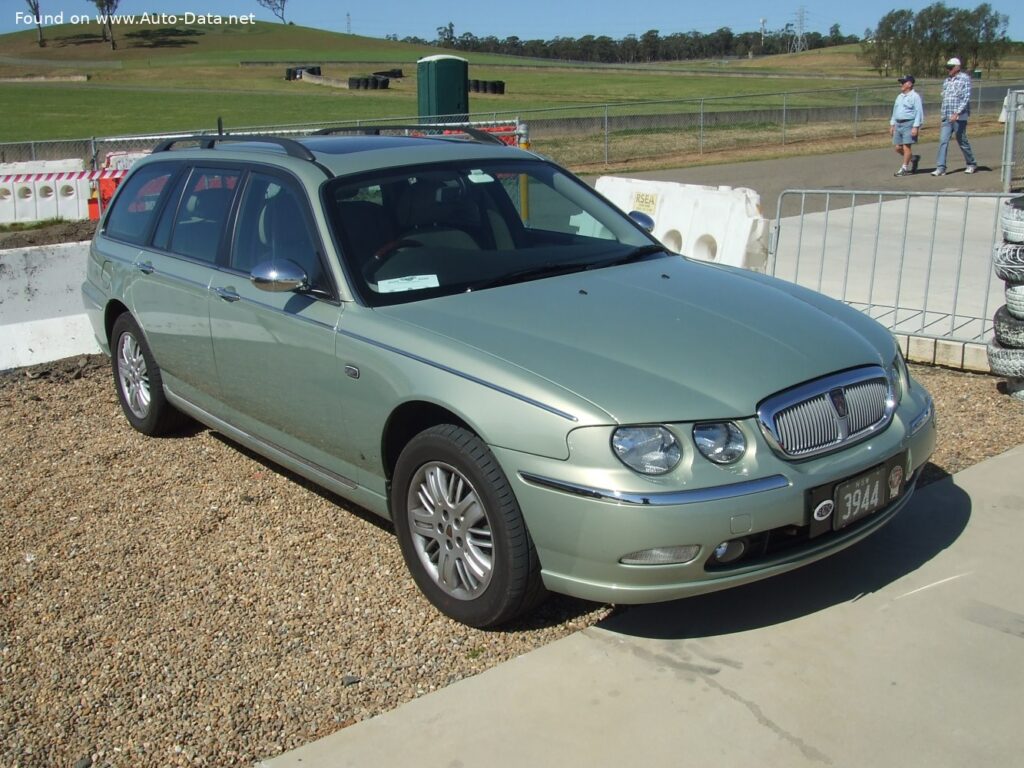
Introduction to the Rover 75 Tourer 2.0 V6
The Rover 75 Tourer 2.0 V6 represents a significant chapter in the history of the British automotive industry, specifically during a period of transition and ultimately, decline for the Rover brand. Launched in 2001, the Tourer (or estate, as it’s known in many markets) variant of the acclaimed Rover 75 sedan extended the model’s appeal, offering enhanced practicality without compromising the distinctive blend of classic British luxury and modern engineering. While the Rover 75 was never officially sold in the United States, it carved out a niche in its primary European market, particularly the UK, as a more traditional, comfort-oriented alternative to its German rivals. This specific iteration, powered by a 2.0-liter V6 engine, aimed to deliver a refined driving experience with adequate performance for its segment, targeting consumers who valued comfort, style, and a sense of understated prestige.
The Rover 75 was developed under BMW ownership, a period that significantly influenced its engineering, build quality, and overall sophistication. The Tourer generation, produced from 2001 to 2004, adopted the same “retro-modern” styling cues as the sedan, characterized by its elegant lines, prominent grille, and distinctive quad headlights, which evoked a sense of classic British motoring while incorporating contemporary safety and convenience features. This vehicle served as Rover’s flagship offering in the mid-size executive segment, providing a compelling package for families and business users seeking a refined and spacious vehicle.
The Rover 75 Tourer 2.0 V6: Engineering and Performance
At the heart of the Rover 75 Tourer 2.0 V6 lies Rover’s proprietary KV6 engine. This 2.0-liter (1,997 cm³ or 121.86 cu. in.) V6 unit was a key component of Rover’s powertrain strategy, offering a smooth and characterful alternative to the more common four-cylinder engines in its class. With a DOHC (Double Overhead Camshaft) valvetrain and multi-port manifold injection, the naturally aspirated engine was designed for refinement and a linear power delivery, rather than outright sportiness. It produced a respectable 150 horsepower at 6500 rpm, translating to 75.1 horsepower per liter, which was competitive for a non-turbocharged V6 of its displacement during that era.
Torque output for the 2.0 V6 was 185 Newton-meters (136.45 lb.-ft.) peaking at 4000 rpm, providing sufficient pulling power for daily driving and light hauling, befitting its station wagon body style. This power was channeled to the front wheels via a 5-speed manual transmission, offering direct driver engagement. The drivetrain architecture, with its front-transverse engine layout and front-wheel drive, was typical for the segment, prioritizing interior space and packaging efficiency.
In terms of raw performance, the Rover 75 Tourer 2.0 V6 was capable of accelerating from 0 to 60 mph in an estimated 9.7 seconds, with a top speed of 124.9 mph (201 km/h). While not a performance leader, these figures underscored its role as a comfortable cruiser rather than a sports wagon. Fuel economy figures, crucial for European markets, were reported at 24.5 US mpg (9.6 l/100 km) combined, with urban consumption at 16.9 US mpg (13.9 l/100 km) and extra-urban at 33.6 US mpg (7 l/100 km). CO2 emissions stood at 228 g/km, reflecting the technology of its time. The car’s weight-to-power ratio was 10 kg/Hp, or approximately 99.7 Hp per tonne, indicating a balanced approach to performance and efficiency for its class.
Design and Features of the Rover 75 Tourer
The design of the Rover 75 Tourer was a significant aspect of its appeal. Adopting a classic station wagon (estate) body type, it maintained the sedan’s elegant and somewhat nostalgic aesthetic, extending the roofline gracefully to create a practical cargo area. With five doors and seating for five, it offered versatility for families. The exterior was characterized by its smooth, flowing lines, chrome accents, and distinctive front fascia, which paid homage to classic Rover models while presenting a modern and sophisticated profile.
Inside, the Rover 75 Tourer exuded a sense of traditional British luxury. The cabin featured high-quality materials, often including wood veneers and chrome trim, creating a warm and inviting atmosphere. Comfort was a key priority, with supportive seating and a well-insulated cabin designed to minimize road and wind noise. The Tourer’s primary advantage was its cargo capacity, offering a minimum trunk space of 14.13 cubic feet (400 liters), which could expand significantly to 43.15 cubic feet (1222 liters) with the rear seats folded down, making it highly practical for luggage, groceries, or larger items.
Safety features for the era included standard ABS (Anti-lock Braking System), ventilated discs at the front, and disc brakes at the rear, providing reliable stopping power. The steering system utilized a hydraulic power-assisted rack and pinion setup, offering a traditional, communicative feel. The suspension comprised a wishbone setup at the front and coil springs at the rear, tuned for a comfortable and compliant ride, absorbing road imperfections effectively. The car rode on 195/65 R15 tires, a common size that balanced ride comfort with adequate grip.
Technical Specifications
| Category | Specification |
|---|---|
| Brand | Rover |
| Model | 75 Tourer |
| Engine Type | 2.0 V6 (150 Hp) |
| Production Start | 2001 |
| Production End | 2004 |
| Body Type | Station Wagon (Estate) |
| Seats | 5 |
| Doors | 5 |
| Performance Specs | |
| Fuel Consumption (Urban) | 13.9 l/100 km (16.9 US mpg) |
| Fuel Consumption (Extra Urban) | 7 l/100 km (33.6 US mpg) |
| Fuel Consumption (Combined) | 9.6 l/100 km (24.5 US mpg) |
| CO2 Emissions | 228 g/km |
| Fuel Type | Petrol (Gasoline) |
| Acceleration 0-60 mph | 9.7 sec |
| Maximum Speed | 124.9 mph (201 km/h) |
| Weight-to-Power Ratio | 10 kg/Hp (99.7 Hp/tonne) |
| Weight-to-Torque Ratio | 8.1 kg/Nm (122.9 Nm/tonne) |
| Engine Specs | |
| Power | 150 Hp @ 6500 rpm |
| Torque | 185 Nm (136.45 lb.-ft.) @ 4000 rpm |
| Engine Layout | Front, Transverse |
| Engine Model/Code | KV6 / 20K4F |
| Engine Displacement | 1997 cm³ (121.86 cu. in.) |
| Number of Cylinders | 6 |
| Engine Configuration | V-engine |
| Cylinder Bore | 80 mm (3.15 in.) |
| Piston Stroke | 66.2 mm (2.61 in.) |
| Compression Ratio | 10.5:1 |
| Valves per Cylinder | 4 |
| Fuel Injection System | Multi-port manifold injection |
| Engine Aspiration | Naturally aspirated |
| Valvetrain | DOHC |
| Engine Oil Capacity | 5.2 l (5.49 US qt) |
| Coolant Capacity | 7.5 l (7.93 US qt) |
| Space, Volume and Weights | |
| Kerb Weight | 1505 kg (3317.96 lbs.) |
| Maximum Weight | 2050 kg (4519.48 lbs.) |
| Maximum Load | 545 kg (1201.52 lbs.) |
| Trunk Space (Minimum) | 400 l (14.13 cu. ft.) |
| Trunk Space (Maximum) | 1222 l (43.15 cu. ft.) |
| Fuel Tank Capacity | 65 l (17.17 US gal) |
| Dimensions | |
| Length | 4792 mm (188.66 in.) |
| Width | 1778 mm (70 in.) |
| Height | 1424 mm (56.06 in.) |
| Wheelbase | 2746 mm (108.11 in.) |
| Front Track | 1505 mm (59.25 in.) |
| Rear Track | 1505 mm (59.25 in.) |
| Drivetrain, Brakes and Suspension Specs | |
| Drivetrain Architecture | Front-wheel drive (Internal Combustion Engine drives front wheels) |
| Drive Wheel | Front-wheel drive |
| Number of Gears/Gearbox Type | 5 gears, manual transmission |
| Front Suspension | Wishbone |
| Rear Suspension | Coil spring |
| Front Brakes | Ventilated discs |
| Rear Brakes | Disc |
| Assisting Systems | ABS (Anti-lock braking system) |
| Steering Type | Steering rack and pinion |
| Power Steering | Hydraulic Steering |
| Tire Size | 195/65 R15 |
Legacy and Market Impact
The Rover 75 Tourer, and indeed the entire 75 range, holds a unique place in automotive history. Launched at a time when Rover was striving to redefine itself under BMW’s stewardship, the car was initially well-received for its distinctive styling, refined ride, and high-quality interior, particularly when compared to its immediate predecessors. The Rover 75 Tourer 2.0 V6 aimed to compete in the highly competitive European mid-size executive segment, going head-to-head with established players like the BMW 3 Series Touring, Audi A4 Avant, Mercedes-Benz C-Class Estate, and more mainstream offerings such as the Ford Mondeo Estate and Vauxhall/Opel Vectra Estate.
Its reputation was built on comfort, quietness, and a sense of old-world charm, differentiating it from the more dynamically focused German rivals. Owners often praised its smooth V6 engine, comfortable suspension, and spacious cabin, especially the versatility offered by the Tourer variant’s generous cargo capacity. The “retro-modern” design, though polarizing for some, resonated with a segment of buyers looking for something distinct from the increasingly angular and aggressive designs of its competitors.
However, despite its intrinsic qualities, the Rover 75 Tourer’s market impact was ultimately overshadowed by the broader struggles of the Rover brand. The constant changes in ownership and the persistent financial difficulties of MG Rover Group (which acquired Rover from BMW in 2000) created uncertainty among potential buyers. This, combined with a perception of an aging brand identity and a limited dealer network outside of the UK, hampered its ability to truly challenge the market leaders. The 2.0 V6, while refined, was sometimes seen as less powerful or fuel-efficient than some of its turbocharged four-cylinder or larger displacement six-cylinder rivals, particularly as environmental concerns grew.
Today, the Rover 75 Tourer, especially with the V6 engine, is remembered as one of the last truly British executive cars before the collapse of MG Rover in 2005. It represents a poignant attempt to revive a storied brand with a product that, on its own merits, was a commendable blend of comfort, style, and practicality. For enthusiasts and collectors, it stands as a testament to what Rover was capable of, offering a comfortable and characterful driving experience that remains appealing to those who appreciate its unique heritage and understated elegance. Its legacy is thus a bittersweet one, marking both a high point in product development for Rover and a symbol of the challenges that ultimately led to the brand’s demise.