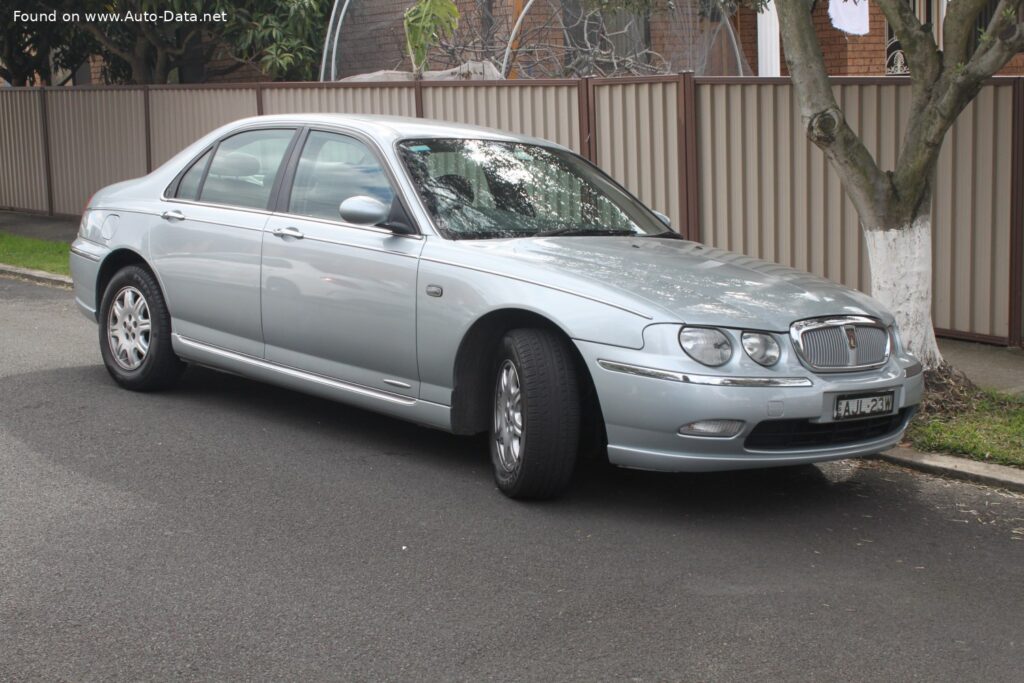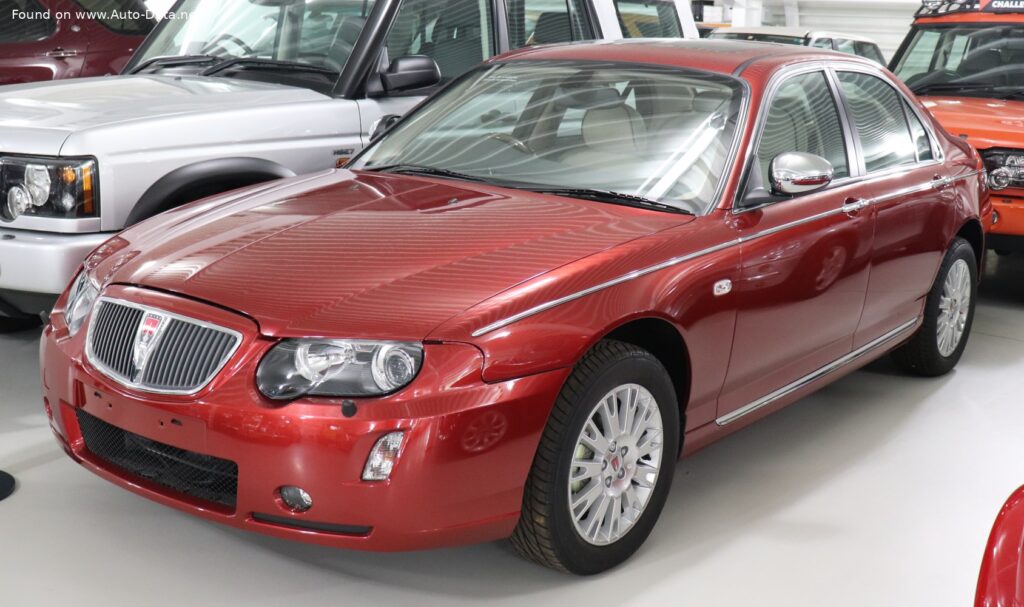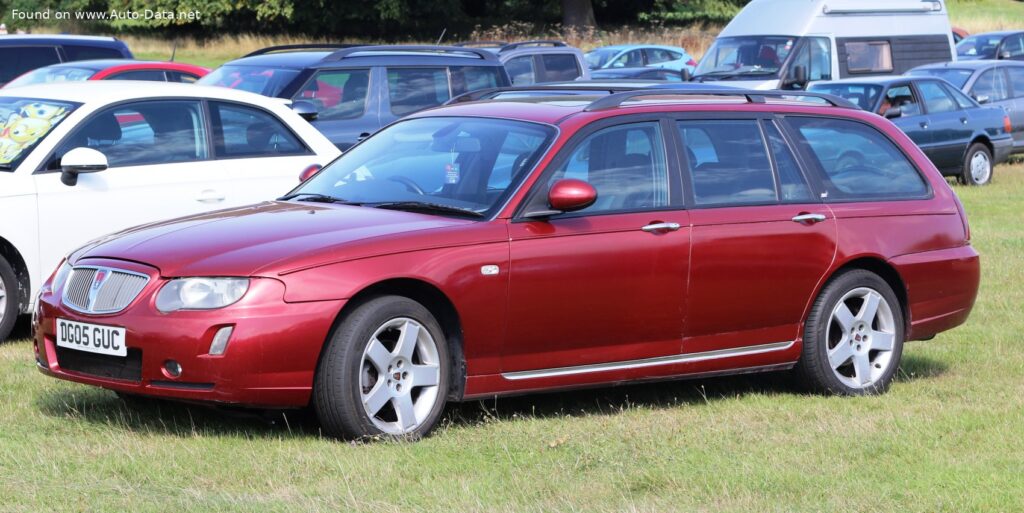
The Rover 75 Tourer (facelift 2004): A Swan Song for British Motoring
The Rover 75 Tourer (facelift 2004) represents a poignant chapter in the history of the British automotive industry. Launched originally in 1998, the Rover 75 was a mid-size executive car designed to evoke a sense of traditional British luxury and craftsmanship, blending retro-futuristic styling with contemporary engineering. The facelifted model, introduced in 2004, sought to modernize its appeal slightly while retaining the distinctive character that had garnered a loyal following, particularly in its primary European market. This particular variant, the 1.8-liter (120 Hp) with an automatic transmission, offered a comfortable and practical station wagon experience, aimed at discerning buyers who valued refinement and a unique aesthetic over outright performance.
Produced during a turbulent period for the MG Rover Group, the 75 Tourer (facelift 2004) was one of the last new models released before the company’s collapse in 2005. Despite its short production run in this updated guise, it stood as a testament to Rover’s ambition to compete with established European rivals like BMW and Mercedes-Benz, offering a distinctive British alternative in the fiercely competitive executive segment. While never officially sold in the United States, its design, engineering, and market positioning provide a fascinating insight into the European automotive landscape of the early 21st century.
Powertrain and Performance of the Rover 75 Tourer (facelift 2004)
Under the hood of the Rover 75 Tourer (facelift 2004) 1.8 (120 Hp) Automatic lay Rover’s venerable 18K4F engine, a naturally aspirated 1.8-liter inline-four gasoline unit. This engine, known for its compact design and efficient packaging, delivered 120 horsepower at 5500 rpm and a peak torque of 118 lb-ft (160 Nm) at 4000 rpm. While not a powerhouse, this output was considered adequate for the car’s intended role as a comfortable cruiser rather than a performance machine.
Power was delivered to the front wheels via a 5-speed automatic transmission, emphasizing smooth shifts and ease of driving in urban and highway conditions. The powertrain architecture, featuring a front, transverse engine layout, was conventional for its class, contributing to predictable handling characteristics. Performance figures for this combination included an acceleration time from 0 to 60 mph in 13.1 seconds and a maximum speed of 113.09 mph (182 km/h). These figures positioned the 1.8-liter automatic as a competent, if not brisk, performer, perfectly suited for the relaxed pace of European motoring.
In terms of efficiency, the Rover 75 Tourer (facelift 2004) 1.8 Automatic registered a combined fuel economy of approximately 25 US mpg (9.4 l/100 km). Urban consumption was rated at 18.7 US mpg (12.6 l/100 km), while extra-urban driving yielded a more respectable 31.4 US mpg (7.5 l/100 km). With CO2 emissions of 224 g/km, the vehicle met the Euro 3 emission standard, reflecting the environmental regulations pertinent at the time of its production. The 1.8-liter engine also featured a multi-port manifold injection system and a DOHC valvetrain, showcasing relatively modern engine technology for its era.
Design and Features: Practicality Meets British Elegance
The Rover 75 Tourer (facelift 2004) retained the distinctive “new retro” styling that had defined the model since its debut. The facelift brought subtle revisions, including a more prominent grille and updated headlamp clusters, giving the car a slightly more contemporary, yet still unmistakably British, appearance. The station wagon, or “Tourer” body type, offered significant practicality, making it a popular choice for families and those requiring greater cargo capacity.
With five doors and seating for five occupants, the Tourer provided a versatile interior. The trunk space was generous for its class, ranging from 14.13 cubic feet (400 liters) with all seats in place, expanding to a substantial 43.15 cubic feet (1222 liters) with the rear seats folded down. This adaptability, combined with a maximum roof load of 220.46 lbs (100 kg) and a permitted trailer load with brakes of 3086.47 lbs (1400 kg), underscored its utility as a family vehicle.
Inside, the Rover 75 was renowned for its “club class” ambiance. High-quality materials, often including wood and chrome trim, complemented the comfortable seating and ergonomic layout. While specific trim levels varied, typical features for a car of this segment in 2004 included power steering (hydraulic), an anti-lock braking system (ABS) for enhanced safety, and a comprehensive independent suspension system (McPherson struts at the front, multi-link at the rear) designed to deliver a smooth and refined ride. Ventilated disc brakes at the front and disc brakes at the rear provided confident stopping power. The available tire sizes (195/65 R15, 205/60 R15, 215/55 R16) and corresponding wheel rim sizes (6J x 15, 6.5J x 16) offered a balance of ride comfort and handling.
Technical Specifications: Rover 75 Tourer (facelift 2004) 1.8 (120 Hp) Automatic
| Category | Specification |
|---|---|
| General Information | |
| Brand | Rover |
| Model | 75 |
| Generation | 75 Tourer (facelift 2004) |
| Type (Engine) | 1.8 (120 Hp) Automatic |
| Start of Production | 2004 year |
| End of Production | 2005 year |
| Powertrain Architecture | Internal Combustion engine |
| Body type | Station wagon (estate) |
| Seats | 5 |
| Doors | 5 |
| Performance Specs | |
| Fuel consumption (economy) – urban | 12.6 l/100 km / 18.7 US mpg |
| Fuel consumption (economy) – extra urban | 7.5 l/100 km / 31.4 US mpg |
| Fuel consumption (economy) – combined | 9.4 l/100 km / 25 US mpg |
| CO2 emissions | 224 g/km |
| Fuel Type | Petrol (Gasoline) |
| Acceleration 0 – 60 mph | 13.1 sec |
| Maximum speed | 113.09 mph (182 km/h) |
| Emission standard | Euro 3 |
| Weight-to-power ratio | 12.5 kg/Hp, 80.3 Hp/tonne |
| Weight-to-torque ratio | 9.3 kg/Nm, 107 Nm/tonne |
| Engine Specs | |
| Power | 120 Hp @ 5500 rpm |
| Power per liter | 66.8 Hp/l |
| Torque | 118.01 lb.-ft. (160 Nm) @ 4000 rpm |
| Engine layout | Front, Transverse |
| Engine Model/Code | 18K4F |
| Engine displacement | 1.8 l (1796 cm3 / 109.6 cu. in.) |
| Number of cylinders | 4 |
| Engine configuration | Inline |
| Cylinder Bore | 3.15 in. (80 mm) |
| Piston Stroke | 3.52 in. (89.3 mm) |
| Compression ratio | 10.5:1 |
| Number of valves per cylinder | 4 |
| Fuel injection system | Multi-port manifold injection |
| Engine aspiration | Naturally aspirated engine |
| Valvetrain | DOHC |
| Engine oil capacity | 4.76 US qt (4.5 l) |
| Coolant | 6.55 US qt (6.2 l) |
| Space, Volume and Weights | |
| Kerb Weight | 3295.91 – 3527.4 lbs. (1495-1600 kg) |
| Max. weight | 4431.29 lbs. (2010 kg) |
| Max load | 903.9 – 1135.38 lbs. (410-515 kg) |
| Trunk (boot) space – minimum | 14.13 cu. ft. (400 l) |
| Trunk (boot) space – maximum | 43.15 cu. ft. (1222 l) |
| Fuel tank capacity | 17.17 US gal (65 l) |
| Max. roof load | 220.46 lbs. (100 kg) |
| Permitted trailer load with brakes (12%) | 3086.47 lbs. (1400 kg) |
| Permitted trailer load without brakes | 1653.47 lbs. (750 kg) |
| Permitted towbar download | 220.46 lbs. (100 kg) |
| Dimensions | |
| Length | 188.58 in. (4790 mm) |
| Width | 70 in. (1778 mm) |
| Width including mirrors | 77.56 in. (1970 mm) |
| Wheelbase | 108.11 in. (2746 mm) |
| Front track | 59.49 in. (1511 mm) |
| Rear (Back) track | 59.21 in. (1504 mm) |
| Minimum turning circle (turning diameter) | 37.17 ft. (11.33 m) |
| Drivetrain, Brakes and Suspension Specs | |
| Drivetrain Architecture | The Internal combustion engine (ICE) drives the front wheels of the vehicle. |
| Drive wheel | Front wheel drive |
| Number of gears and type of gearbox | 5 gears, automatic transmission |
| Front suspension | Independent, type McPherson with coil spring and anti-roll bar |
| Rear suspension | Independent multi-link spring suspension with stabilizer |
| Front brakes | Ventilated discs |
| Rear brakes | Disc |
| Assisting systems | ABS (Anti-lock braking system) |
| Steering type | Steering rack and pinion |
| Power steering | Hydraulic Steering |
| Tires size | 195/65 R15; 205/60 R15; 215/55 R16 |
| Wheel rims size | 6J x 15; 6.5J x 16 |
Legacy and Market Impact
The Rover 75, and particularly its Tourer variant, holds a unique place in automotive history. Launched at a time when Rover was desperately trying to reassert its identity and independence, the 75 was largely praised by the automotive press for its exceptional ride comfort, quiet cabin, and distinctive, elegant styling. It offered a compelling alternative to the more clinical German executive cars, appealing to a segment of buyers who appreciated its traditional British charm and “gentleman’s club” interior ambiance.
In the European market, the Rover 75 Tourer competed against a diverse range of vehicles. Its direct rivals in the premium mid-size wagon segment included the BMW 3 Series Touring, Mercedes-Benz C-Class Estate, and Audi A4 Avant, though the Rover often undercut these German rivals on price. It also faced competition from more mainstream, but still well-appointed, options like the Ford Mondeo Estate and Vauxhall/Opel Vectra Estate. The Rover 75 carved out a niche by offering a distinct personality, a comfortable and refined driving experience, and a perceived sense of understated luxury.
However, the 75’s legacy is inextricably linked to the tragic demise of the MG Rover Group. Despite its positive attributes, the company’s financial instability, coupled with evolving market trends and persistent (though sometimes overstated) concerns about the reliability of the K-Series engine (which, in its later iterations like the 18K4F, had seen improvements), hampered its long-term success. The facelifted 2004 model, including the 1.8-liter automatic Tourer, was one of the last attempts to inject new life into the brand, but it came too late to save the company.
Today, the Rover 75 Tourer remains a beloved classic among enthusiasts, particularly in the UK and parts of Europe. It is appreciated for its distinctive styling, comfortable ride, and relative affordability on the used car market. It stands as a symbol of British automotive design and engineering prowess, a final elegant statement from a storied brand before its unfortunate end. Its impact was less about groundbreaking technology or sales dominance and more about offering a unique, characterful driving experience that truly embodied a certain British sensibility.