The Rover 75 Tourer (facelift 2004): A British Executive Estate
The Rover 75 Tourer, particularly in its facelifted 2004 guise with the 2.5 V6 automatic powertrain, represents a significant chapter in the history of British automotive engineering. Launched initially in 1998, the Rover 75 was Rover’s ambitious attempt to re-establish itself in the premium executive segment, offering a distinctively British alternative to the dominant German marques. The “Tourer” designation, common in European markets for station wagons, provided enhanced practicality without compromising the model’s inherent elegance and comfort. The 2004 facelift introduced subtle yet effective updates, aiming to modernize its appeal while retaining its classic charm, just a year before the Rover Group’s unfortunate demise.
Positioned as a mid-size executive car, the Rover 75 Tourer (facelift 2004) 2.5 V6 (177 Hp) Automatic was a front-wheel-drive, five-door station wagon designed for discerning buyers in Europe and other international markets who valued refinement, comfort, and a touch of traditional luxury. While never officially sold in the United States, its mechanical specifications and market role align with what Americans would recognize as a premium mid-size sedan or wagon, competing indirectly with vehicles like the BMW 3 Series Wagon or Volvo V70 in terms of segment, though offering a uniquely British driving and ownership experience. This particular variant, with its potent V6 engine and smooth automatic transmission, epitomized the blend of performance and effortless cruising Rover aimed to deliver.
Engine and Performance: The Rover 75 Tourer’s KV6 Heart
At the core of the 2004 Rover 75 Tourer’s appeal, especially in this specification, was its sophisticated 2.5-liter KV6 engine. This naturally aspirated, V-configuration six-cylinder powerplant was a hallmark of Rover’s engineering prowess, known for its smoothness and refinement. With a displacement of 2,497 cubic centimeters (152.38 cu. in.), the engine was meticulously engineered with a DOHC (Double Overhead Camshaft) valvetrain and four valves per cylinder, ensuring efficient breathing and optimal power delivery.
The KV6 engine produced a respectable 177 horsepower at 6,500 rpm, providing ample power for both urban commuting and high-speed highway cruising. Torque output stood at 177.01 lb.-ft. (240 Nm) peaking at 4,000 rpm, delivering a broad powerband that contributed to the car’s relaxed yet capable driving dynamics. Power was transmitted to the front wheels via a five-speed automatic transmission, a choice that further emphasized the Tourer’s focus on smooth, unhurried progress rather than outright sportiness.
Performance figures for the 2.5 V6 automatic variant were competitive for its class and era. The Rover 75 Tourer could accelerate from 0 to 60 mph in 9.5 seconds, reaching a maximum speed of 128 mph (206 km/h). While not a sports car, these figures underscored its capability as a comfortable and competent long-distance cruiser. Fuel economy, measured by European standards, translated to approximately 22.2 US mpg combined (10.6 l/100 km), with extra-urban figures reaching 30.9 US mpg (7.6 l/100 km). Urban consumption was rated at 14.9 US mpg (15.8 l/100 km). This powertrain met the Euro 3 emission standard, with CO2 emissions of 254 g/km, reflecting the environmental considerations of its time. The engine’s layout, front and transverse, contributed to the car’s front-wheel-drive architecture, optimizing interior space and driving stability.
Design and Features: Timeless British Elegance and Practicality
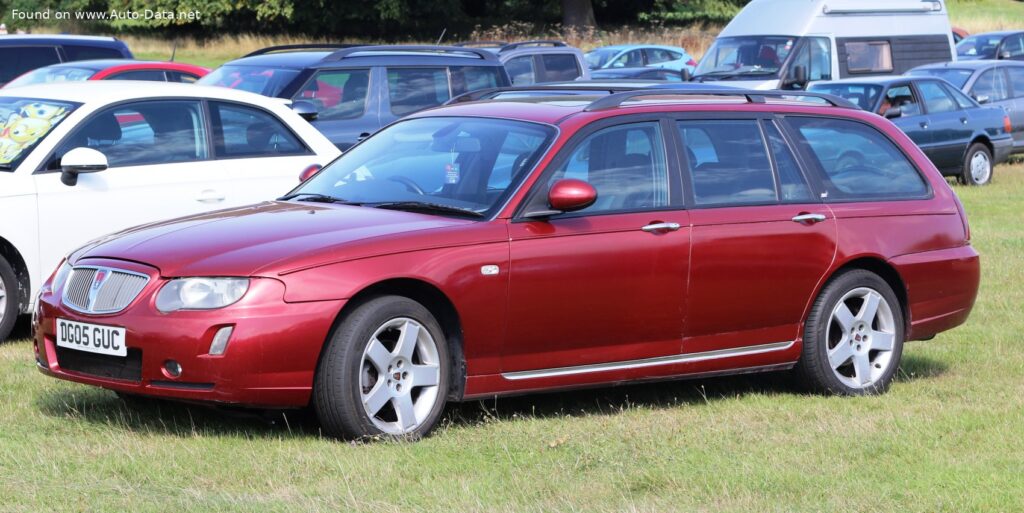
The 2004 facelift of the Rover 75 Tourer brought subtle but significant changes to its exterior and interior, enhancing its appeal without detracting from its original, much-praised design. The body style remained a five-door station wagon (or estate, as it’s known in Europe), offering a blend of executive comfort and practical utility. Its overall length of 188.58 inches (4,790 mm) and width of 70 inches (1,778 mm) gave it a substantial road presence, while a generous wheelbase of 108.11 inches (2,746 mm) contributed to a smooth ride and spacious cabin.
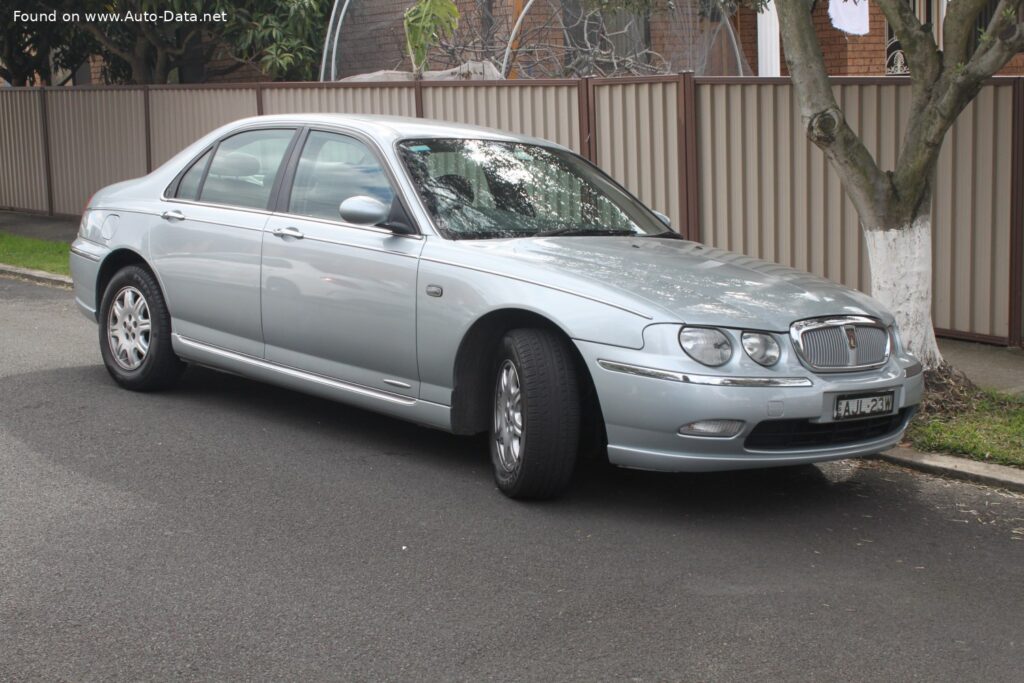
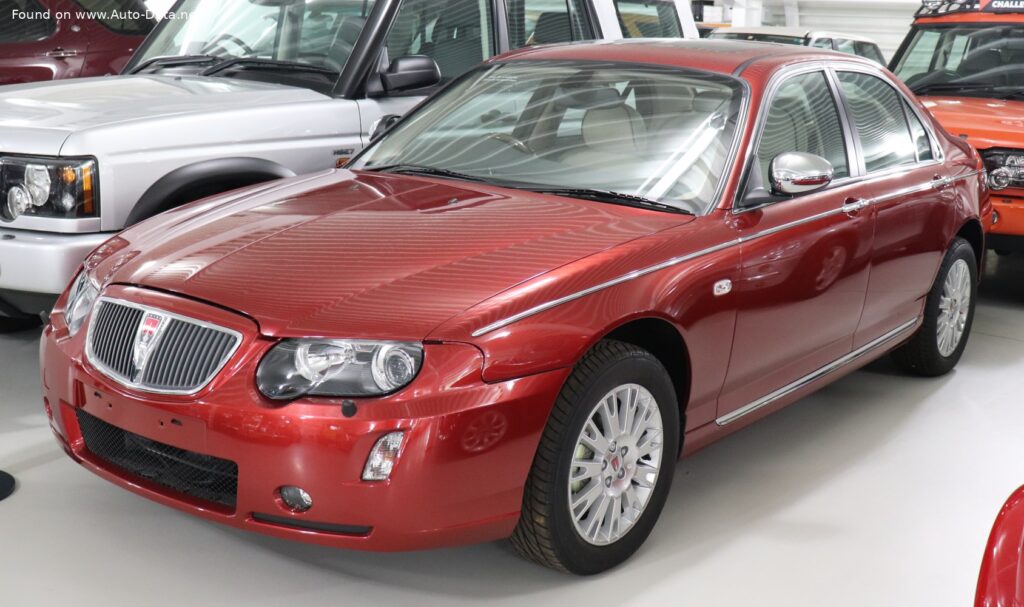
Externally, the facelift introduced a more prominent, redesigned grille, updated headlights, and revised taillights, giving the car a slightly more modern and assertive look. Despite these changes, the 75 Tourer retained its distinctive retro-inspired styling, characterized by elegant curves, chrome accents, and a refined silhouette that evoked classic British luxury. Its design stood in stark contrast to the often more aggressive or utilitarian aesthetics of its contemporary rivals.
Inside, the Rover 75 Tourer continued to impress with its “olde worlde” charm and emphasis on comfort. The cabin was renowned for its high-quality materials, including available wood trim, chrome detailing, and plush upholstery or leather seating options. The five-seat configuration offered ample space for occupants, while the Tourer’s primary advantage lay in its versatile cargo area. With the rear seats in place, it offered a respectable 14.13 cubic feet (400 liters) of trunk space, expanding significantly to 43.15 cubic feet (1,222 liters) with the rear seats folded down, making it a highly practical vehicle for families or those needing extra carrying capacity.
Standard features for the era included power steering with a hydraulic rack and pinion system, ensuring a comfortable and communicative driving experience. Safety was addressed with an Anti-lock Braking System (ABS), complementing the ventilated disc brakes at the front and disc brakes at the rear. The independent McPherson strut front suspension with a coil spring and anti-roll bar, combined with an independent multi-link spring suspension with a stabilizer bar at the rear, provided a compliant ride quality that soaked up road imperfections, a characteristic highly valued in executive cars. The car typically rode on 215/55 R16 or 215/50 R17 tires, mounted on 16 or 17-inch wheel rims, offering a good balance of grip and comfort.
Technical Specifications
| Category | Specification |
|---|---|
General Information |
|
| Brand | Rover |
| Model | 75 Tourer (facelift 2004) |
| Type (Engine) | 2.5 V6 (177 Hp) Automatic |
| Start of Production | 2004 year |
| End of Production | 2005 year |
| Powertrain Architecture | Internal Combustion engine |
| Body type | Station wagon (estate) |
| Seats | 5 |
| Doors | 5 |
Performance Specs |
|
| Fuel Consumption (Urban) | 14.9 US mpg (15.8 l/100 km) |
| Fuel Consumption (Extra Urban) | 30.9 US mpg (7.6 l/100 km) |
| Fuel Consumption (Combined) | 22.2 US mpg (10.6 l/100 km) |
| CO2 Emissions | 254 g/km |
| Fuel Type | Petrol (Gasoline) |
| Acceleration 0 – 60 mph | 9.5 sec |
| Maximum Speed | 128 mph (206 km/h) |
| Emission Standard | Euro 3 |
| Weight-to-Power Ratio | 8.9 kg/Hp, 112.7 Hp/tonne |
| Weight-to-Torque Ratio | 6.5 kg/Nm, 152.9 Nm/tonne |
Engine Specs |
|
| Power | 177 Hp @ 6500 rpm |
| Power per liter | 70.9 Hp/l |
| Torque | 177.01 lb.-ft. (240 Nm) @ 4000 rpm |
| Engine Layout | Front, Transverse |
| Engine Model/Code | KV6 / 25K4F |
| Engine Displacement | 2.5 liters (2497 cm3, 152.38 cu. in.) |
| Number of Cylinders | 6 |
| Engine Configuration | V-engine |
| Cylinder Bore | 3.15 in. (80 mm) |
| Piston Stroke | 3.26 in. (82.8 mm) |
| Compression Ratio | 10.25:1 |
| Number of Valves per Cylinder | 4 |
| Fuel Injection System | Multi-port manifold injection |
| Engine Aspiration | Naturally aspirated engine |
| Valvetrain | DOHC |
| Engine Oil Capacity | 5.49 US qt (5.2 l) |
| Coolant Capacity | 7.93 US qt (7.5 l) |
Space, Volume and Weights |
|
| Kerb Weight | 3461.26 – 3692.74 lbs. (1570-1675 kg) |
| Max. Weight (Gross Vehicle Weight) | 4607.66 lbs. (2090 kg) |
| Max Load | 914.92 – 1146.4 lbs. (415-520 kg) |
| Trunk (boot) Space – Minimum | 14.13 cu. ft. (400 l) |
| Trunk (boot) Space – Maximum | 43.15 cu. ft. (1222 l) |
| Fuel Tank Capacity | 17.17 US gal (65 l) |
| Max. Roof Load | 220.46 lbs. (100 kg) |
| Permitted Trailer Load with Brakes (12%) | 3527.4 lbs. (1600 kg) |
| Permitted Trailer Load without Brakes | 1653.47 lbs. (750 kg) |
| Permitted Towbar Download | 220.46 lbs. (100 kg) |
Dimensions |
|
| Length | 188.58 in. (4790 mm) |
| Width | 70 in. (1778 mm) |
| Width Including Mirrors | 77.56 in. (1970 mm) |
| Wheelbase | 108.11 in. (2746 mm) |
| Front Track | 59.49 in. (1511 mm) |
| Rear (Back) Track | 59.21 in. (1504 mm) |
| Minimum Turning Circle (Turning Diameter) | 37.17 ft. (11.33 m) |
Drivetrain, Brakes and Suspension Specs |
|
| Drivetrain Architecture | The Internal combustion engine (ICE) drives the front wheels of the vehicle. |
| Drive Wheel | Front-wheel drive |
| Number of Gears and Type of Gearbox | 5 gears, automatic transmission |
| Front Suspension | Independent, type McPherson with coil spring and anti-roll bar |
| Rear Suspension | Independent multi-link spring suspension with stabilizer |
| Front Brakes | Ventilated discs |
| Rear Brakes | Disc |
| Assisting Systems | ABS (Anti-lock braking system) |
| Steering Type | Steering rack and pinion |
| Power Steering | Hydraulic Steering |
| Tires Size | 215/55 R16; 215/50 R17 |
| Wheel Rims Size | 16; 17 |
Legacy and Market Impact
The Rover 75 Tourer (facelift 2004) 2.5 V6 Automatic holds a unique and poignant place in automotive history, particularly as it represents one of the final significant models produced by the original Rover Group before its collapse in 2005. Its legacy is intertwined with the fate of the British automotive industry itself.
In its primary European market, the Rover 75 Tourer was praised for its distinct character, offering a refreshing alternative to the typically more austere German executive cars. While competitors like the BMW 3 Series Touring, Audi A4 Avant, Mercedes-Benz C-Class Estate, and even the Volvo V70 often emphasized sportiness, technology, or Scandinavian practicality, the Rover 75 leaned into traditional British luxury, comfort, and a sense of occasion. Its ride quality was consistently lauded for its refinement, soaking up road imperfections with an ease that few rivals could match. The interior, with its warm colors, wood trim, and comfortable seating, created an inviting and serene environment, a welcome escape from the hustle and bustle of modern life.
However, the car also faced challenges. Despite its inherent qualities, Rover’s brand image had been in decline for years, suffering from a perception of unreliability and outdated technology, even if the 75 itself largely defied these stereotypes. Its styling, while elegant, was sometimes seen as too traditional or “retro” for some buyers seeking cutting-edge design. Performance, while adequate, wasn’t as engaging as some German competitors, and the automatic transmission, while smooth, could feel less responsive than newer, more advanced gearboxes entering the market.
The Rover 75 Tourer, especially in its V6 guise, was a car that appealed to a specific niche: buyers who appreciated understated luxury, a comfortable journey, and a sense of British heritage. It wasn’t a sales leader, but it garnered a loyal following who valued its unique blend of qualities. Its ultimate historical significance lies in being the swan song for a storied British brand. After Rover’s demise, the tooling and designs for the 75 were acquired by Chinese companies, leading to the creation of models under the Roewe and MG brands, thus extending its design and engineering influence into a new era. Today, the Rover 75 Tourer is remembered as a dignified, comfortable, and distinctively British executive estate, a testament to what Rover could achieve, even in its twilight years.