
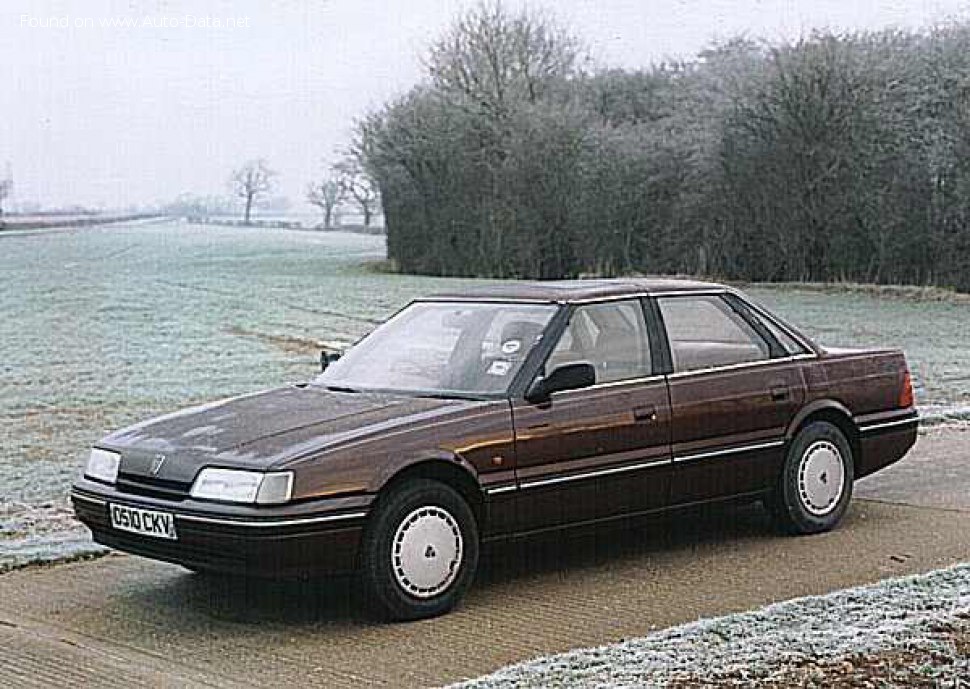
Introduction to the Rover 800 820 (100 Hp)
The Rover 800 series, known internally by its development codename XX, represented a pivotal and ambitious venture for the British Leyland (later Rover Group) in the late 1980s. Launched in 1986, it was designed as the successor to the aging Rover SD1 and aimed to re-establish Rover’s presence in the competitive executive car segment. Crucially, the 800 series was the result of a significant Anglo-Japanese collaboration with Honda, leading to a twin model known as the Acura Legend in North America and Honda Legend in other global markets. This strategic partnership was intended to infuse Rover with modern engineering prowess, enhanced build quality standards, and contemporary technology, while simultaneously allowing the brand to retain a distinct British aesthetic and a characteristic driving feel.
The specific variant under discussion, the Rover 800 820 (100 Hp), produced from 1988 to 1991, served as an entry-level offering within the broader 800 range. Its primary target market was Europe, where its blend of executive comfort and economical four-cylinder power appealed to a broader spectrum of buyers than its more potent V6 siblings. While the Acura Legend carved out a formidable reputation for luxury, performance, and impeccable reliability in the United States, the `Rover 800` maintained a more conservative, executive sedan image in its home territories. The 820 variant, with its 100 horsepower engine, provided an accessible and cost-effective gateway to the executive class, offering a sophisticated package without the higher running costs associated with larger engines, making it a pragmatic choice for many European consumers.
Engine and Performance of the Rover 800
At the core of the Rover 800 820 (100 Hp) was its longitudinally mounted, naturally aspirated internal combustion engine. This powerplant, while not engineered for outright blistering performance or high-speed thrills, was meticulously designed to deliver reliable, smooth, and efficient power, making it well-suited for daily commuting and longer journeys across the varied road networks of Europe. Producing a modest 100 horsepower, the engine provided adequate propulsion for the sedan, with a strong emphasis on linear power delivery and refinement rather than aggressive acceleration.
Given its production period from 1988 to 1991, this engine almost certainly featured a multi-point fuel injection system. This technology was becoming standard in the automotive industry during this era, offering significant improvements in fuel efficiency, emissions control, and overall drivability compared to older carbureted designs. The engine’s naturally aspirated nature ensured predictable power delivery, devoid of the complexity, potential maintenance issues, or turbo lag often associated with the nascent turbocharging systems of the time. For the European market, where factors such as fuel economy, vehicle taxation, and insurance costs often favored smaller displacement engines, the 100 Hp unit was a highly pragmatic choice. It successfully balanced the executive aspirations and comfortable ride quality inherent to the `Rover 800` with more economical running costs, a crucial selling point for many buyers.
While specific displacement details are not provided in the technical data, an engine producing 100 horsepower in this particular era would typically be in the 2.0-liter range, a common size for four-cylinder engines in executive sedans of the period. This engine was strategically positioned within the `Rover 800` lineup to offer a comfortable, quiet, and refined driving experience, a hallmark characteristic of the Rover brand, albeit without the sporting pretensions of the larger V6 engines or the more performance-oriented variants found in some competing models. Its primary objective was to provide a composed and serene ride, perfectly aligning with the car’s executive positioning and target demographic.
Design and Features
The Rover 800’s Executive Sedan Aesthetics
The `Rover 800` series, including the 820 (100 Hp) variant, embodied a distinct design philosophy that successfully blended contemporary European styling cues with subtle British elegance, all heavily influenced by its collaborative development with Honda. The body type for this specific model was a classic Sedan, characterized by its traditional three-box silhouette: a clearly defined engine compartment at the front, a spacious passenger cabin in the middle, and a distinct trunk at the rear. This timeless and traditional shape held significant appeal in the executive market, effectively conveying a sense of gravitas, professionalism, and understated luxury.
The exterior design featured clean, uncluttered lines, a relatively low beltline, and a prominent grille that, particularly after the 1991 “R17” facelift (though this specific 1988-1991 model largely predates the full R17 transformation), maintained a strong and recognizable Rover brand identity. The overall aesthetic aimed for a sophisticated and enduring look, rather than chasing fleeting design trends.
Interior Comfort and Amenities of the Rover 800 820 (100 Hp)
Inside, the Rover 800 820 (100 Hp) offered a remarkably spacious and comfortable cabin, meticulously designed to accommodate four to five occupants with ease and provide a pleasant environment for both short and long journeys. Interior appointments for an entry-level executive sedan of this era would typically include durable and comfortable cloth upholstery, power windows (at least for the front passengers, with all-around power windows often an option or standard on higher trims), central locking, and a highly competent heating and ventilation system. While higher trims might have offered luxurious options such as air conditioning, premium leather seating surfaces, and more advanced audio systems, the 820 would likely have focused on providing core comfort and essential functionality, delivering excellent value within its segment.
The dashboard layout was characterized by its ergonomic design, featuring clear, easy-to-read instrumentation and logically placed, accessible controls. This thoughtful design was a testament to the positive influence of Honda’s renowned principles of usability and driver-centric ergonomics. Safety features, while less comprehensive than modern standards, were appropriate for the late 1980s. These would have included three-point seatbelts for front and outer rear passengers, and likely incorporated impact-absorbing bumpers and a reinforced passenger cell structure to enhance occupant protection. The overall design language, both inside and out, aimed to project an image of understated luxury, reliability, and executive competence, which were critical factors for its target demographic in the European market.
Technical Specifications
| Category | Specification |
|---|---|
| Brand | Rover |
| Model | 800 |
| Generation | 800 |
| Type (Engine) | 820 (100 Hp) |
| Start of production | 1988 year |
| End of production | 1991 year |
| Powertrain Architecture | Internal Combustion engine |
| Body type | Sedan |
| Fuel Type | Petrol (Gasoline) |
| Power | 100 Hp |
| Engine aspiration | Naturally aspirated engine |
| Drivetrain | Internal Combustion engine |
Legacy and Market Impact of the Rover 800
The `Rover 800` series, and by extension the Rover 800 820 (100 Hp), occupies a complex and often debated position in the annals of automotive history. In its primary European markets, the Rover 800 was strategically positioned as a direct competitor to a formidable array of established executive sedans. This included popular models such as the Ford Granada/Scorpio, the Vauxhall Carlton/Opel Omega, and even entry-level variants of more premium German offerings like the BMW 5 Series and Mercedes-Benz E-Class. Its greatest inherent strengths lay in its refined ride quality, its impressively comfortable interior, and the perceived boost in reliability and engineering integrity brought about by the significant partnership with Honda. The 820 variant, in particular, offered a more accessible entry point into this highly competitive segment, providing a compelling blend of executive car amenities and Rover’s characteristic refinement at a competitive price point. This made it particularly appealing to fleet buyers and private individuals who sought a sophisticated yet economical vehicle for their daily needs.
However, the `Rover 800` also faced its share of significant challenges. While the Honda-derived components and platforms were generally robust and well-engineered, Rover’s own manufacturing processes and some specific component choices sometimes lagged behind, leading to a lingering reputation for electrical gremlins and inconsistencies in build quality. These issues, though perhaps minor in isolation, unfortunately tarnished the car’s overall image and long-term reliability perception over time. This disparity became particularly noticeable when compared directly to its Honda Legend/Acura Legend sibling, which enjoyed an almost faultless reputation for unwavering reliability and superior fit-and-finish in the North American and Japanese markets.
The 800 series represented Rover’s final major and ambitious attempt to compete independently in the highly lucrative premium executive segment before its later acquisition by BMW. While the 820 (100 Hp) may not have been the most glamorous or performance-oriented model in the extensive `Rover 800` lineup, it played a truly crucial role in widening the appeal and market reach of the series. It offered a sensible, well-appointed, and economically viable option for those discerning buyers who prioritized fuel economy, comfort, and a sophisticated driving experience over outright engine power or blistering acceleration.
The legacy of the `Rover 800` is a testament to the ambitious Anglo-Japanese collaboration, a car that promised much and delivered a sophisticated and comfortable experience for its time. However, it also inadvertently highlighted the growing challenges faced by the British automotive industry in a rapidly globalizing and increasingly competitive market. The `Rover 800`’s impact was significant in demonstrating Rover’s capability to produce a truly competitive executive car, even if its long-term reliability record and consistency in build quality sometimes fell short of its grand aspirations and the high standards set by its Japanese partner. It remains an important chapter in the story of the British automotive industry, a symbol of both its potential and its struggles.
