The Rover 800 Coupe 820 i Turbo (180 Hp): A British Grand Tourer’s Legacy
The Rover 800 Coupe 820 i Turbo (180 Hp) represents a distinctive chapter in the history of the British automotive industry, serving as the halo model for Rover’s executive 800 Series. Produced between 1992 and 1999, this two-door, five-seat grand tourer was a bold statement from a brand striving to maintain its position in the competitive European luxury segment. While never officially sold in the United States, the 800 Coupe garnered attention in its primary European markets for its unique blend of traditional British elegance, a comfortable ride, and a surprisingly potent turbocharged powertrain. It was designed to offer a more exclusive and sporting experience than its saloon counterparts, appealing to buyers seeking an alternative to the more ubiquitous German and Japanese executive coupes of the era.
The 800 Series itself was a product of a collaboration between Rover and Honda, initially launched in the mid-1980s. However, the Coupe, conceived later in the series’ lifecycle, featured unique styling elements and was primarily an in-house Rover design, aiming to evoke a more classic, upscale feel. The 820 i Turbo variant, in particular, stood out with its performance-oriented engine, offering a compelling package of speed and refinement for the discerning European motorist.
Engine and Performance: Powering the Rover 800 Coupe
At the heart of the Rover 800 Coupe 820 i Turbo was Rover’s own M16i engine, a sophisticated 2.0-liter (121.68 cubic inches) inline-four-cylinder unit. This engine was notable for its double overhead camshaft (DOHC) valvetrain and four valves per cylinder, a modern configuration for its time that allowed for efficient breathing and higher revs. The key to its performance, however, was the addition of a turbocharger, which significantly boosted its output.
The turbocharged M16i engine produced a respectable 180 horsepower at 6000 rpm, translating to a power-per-liter figure of 90.3 HP/L. More impressively for a grand tourer, it delivered a healthy 159.31 lb.-ft. of torque at a low 2000 rpm. This early torque delivery, characteristic of turbocharged engines, made for a flexible and responsive driving experience, allowing for effortless cruising and confident overtaking on European motorways.
Power was sent to the front wheels via a five-speed manual transmission, a common setup for performance-oriented sedans and coupes of the era. This drivetrain architecture, with the engine mounted transversely at the front, contributed to efficient packaging and predictable handling. The 820 i Turbo could accelerate from 0 to 60 mph in a swift 8.2 seconds and reach a maximum speed of 136.7 mph. These figures were competitive for an executive coupe in the early to mid-1990s, placing it squarely against rivals from established European brands.
Despite its performance capabilities, the 800 Coupe 820 i Turbo also offered reasonable fuel economy for its class. The combined fuel consumption was rated at 29 US mpg, with extra-urban figures reaching 35.6 US mpg, demonstrating a commendable balance between power and efficiency. The vehicle’s kerb weight of 3097.49 lbs. (1405 kg) contributed to a weight-to-power ratio of 7.8 kg/Hp, further highlighting its robust performance characteristics.
Design and Features: A Distinctly British Aesthetic
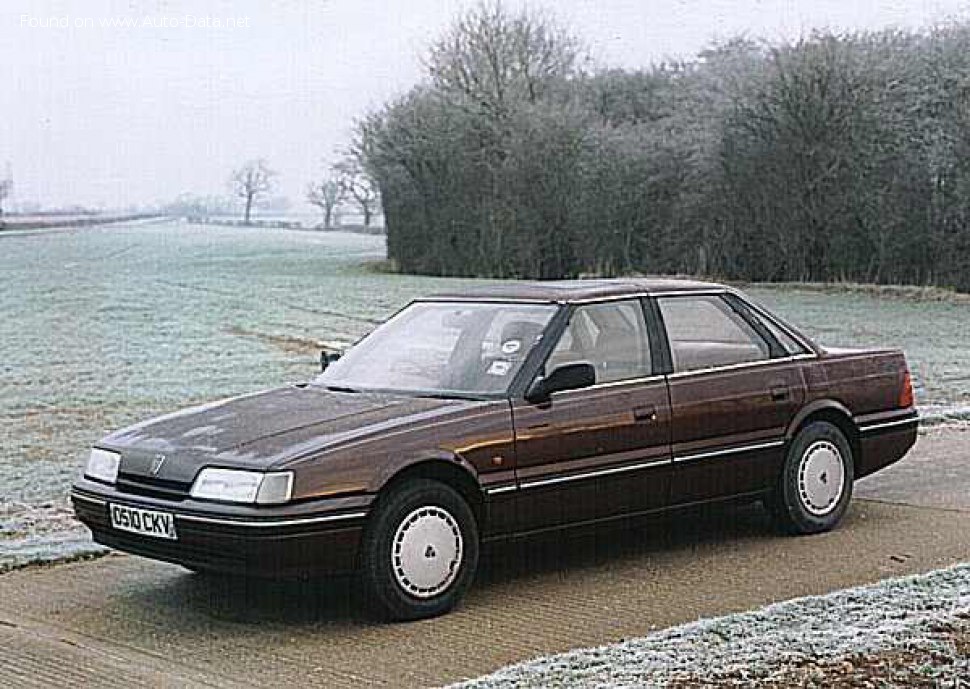
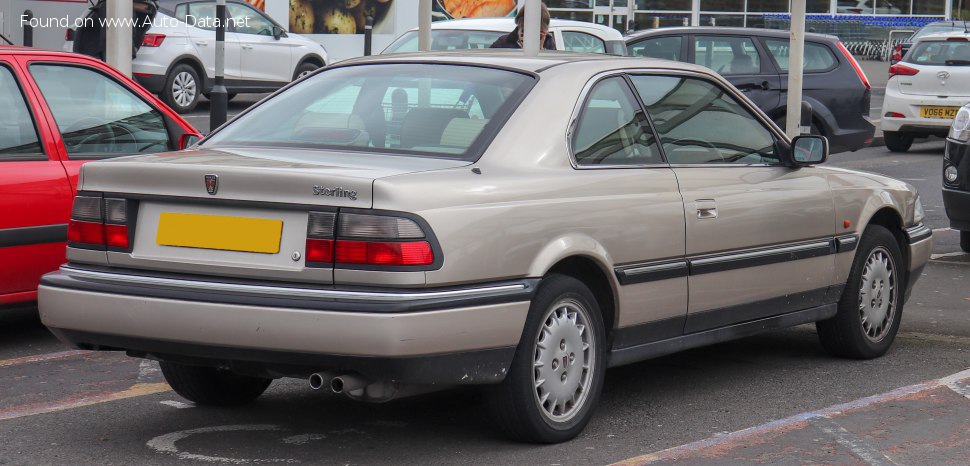
The design of the Rover 800 Coupe was a significant departure from the more restrained styling of the 800 Series saloon and fastback models. Conceived as a two-door, five-seat coupe, it featured a longer wheelbase than its saloon siblings, contributing to its elegant proportions and enhanced rear passenger space. At 192.2 inches in length, 68.11 inches in width, and 54.84 inches in height, the Coupe possessed a substantial road presence. The distinctive styling, including a unique roofline and pillarless doors, gave it a refined and somewhat timeless aesthetic that resonated with buyers looking for classic British luxury.
Inside, the 800 Coupe was designed to be a comfortable grand tourer. While specific interior material details are not provided in the technical data, Rover’s reputation for using high-quality wood veneers and Connolly leather in its executive models suggests a luxurious cabin environment. The five-seat configuration, unusual for many coupes, underscored its practicality as a genuine four-seater with occasional space for a fifth passenger, making it suitable for longer journeys. The trunk space was a generous 15.72 cubic feet (445 liters), further enhancing its touring credentials.
From a chassis perspective, the 800 Coupe featured a double-wishbone front suspension and a coil spring rear suspension, a setup engineered to provide a comfortable yet composed ride, characteristic of a luxury grand tourer. Braking performance was handled by ventilated discs at the front and solid discs at the rear, augmented by an Anti-lock Braking System (ABS), which was an important safety feature for vehicles of this era. The hydraulic power steering, with a rack and pinion system, offered precise control and feedback. The car rode on 205/55 R16 tires, providing a good balance of grip and ride comfort.
Technical Specifications for the Rover 800 Coupe 820 i Turbo (180 Hp)
| Category | Specification | Value |
|---|---|---|
| General Information | Brand | Rover |
| Model | 800 Coupe | |
| Type (Engine) | 820 i Turbo (180 Hp) | |
| Start of Production | 1992 | |
| End of Production | 1999 | |
| Body Type | Coupe | |
| Seats | 5 | |
| Doors | 2 | |
| Performance Specs | Fuel Consumption (Urban) | 19 US mpg (12.4 l/100 km) |
| Fuel Consumption (Extra Urban) | 35.6 US mpg (6.6 l/100 km) | |
| Fuel Consumption (Combined) | 29 US mpg (8.1 l/100 km) | |
| Fuel Type | Petrol (Gasoline) | |
| Acceleration 0-60 mph | 8.2 seconds | |
| Maximum Speed | 136.7 mph (220 km/h) | |
| Weight-to-Power Ratio | 7.8 kg/Hp | |
| Weight-to-Torque Ratio | 6.5 kg/Nm | |
| Engine Specs | Power | 180 Hp @ 6000 rpm |
| Torque | 159.31 lb.-ft. @ 2000 rpm (216 Nm) | |
| Engine Layout | Front, Transverse | |
| Engine Model/Code | M16i | |
| Engine Displacement | 2.0 liters (1994 cm3 / 121.68 cu. in.) | |
| Number of Cylinders | 4, Inline | |
| Cylinder Bore | 3.32 in. (84.45 mm) | |
| Piston Stroke | 3.5 in. (89 mm) | |
| Compression Ratio | 8.5:1 | |
| Valves per Cylinder | 4 | |
| Fuel Injection System | Multi-port manifold injection | |
| Engine Aspiration | Turbocharger | |
| Valvetrain | DOHC | |
| Engine Oil Capacity | 4.76 US qt (4.5 l) | |
| Coolant Capacity | 10.57 US qt (10 l) | |
| Space, Volume & Weights | Kerb Weight | 3097.49 lbs. (1405 kg) |
| Max. Weight | 4210.83 lbs. (1910 kg) | |
| Max Load | 1113.33 lbs. (505 kg) | |
| Trunk (Boot) Space | 15.72 cu. ft. (445 l) | |
| Fuel Tank Capacity | 17.96 US gal (68 l) | |
| Dimensions | Length | 192.2 in. (4882 mm) |
| Width | 68.11 in. (1730 mm) | |
| Height | 54.84 in. (1393 mm) | |
| Wheelbase | 108.9 in. (2766 mm) | |
| Front Track | 58.54 in. (1487 mm) | |
| Rear Track | 57.09 in. (1450 mm) | |
| Drivetrain, Brakes & Suspension | Drivetrain Architecture | Front-wheel drive, Internal Combustion engine |
| Drive Wheel | Front Wheel Drive | |
| Gearbox Type | 5-speed, Manual Transmission | |
| Front Suspension | Double Wishbone | |
| Rear Suspension | Coil Spring | |
| Front Brakes | Ventilated Discs | |
| Rear Brakes | Disc | |
| Assisting Systems | ABS (Anti-lock Braking System) | |
| Steering Type | Steering Rack and Pinion | |
| Power Steering | Hydraulic Steering | |
| Tires Size | 205/55 R16 |
Legacy and Market Impact in Europe
The Rover 800 Coupe, particularly the 820 i Turbo variant, occupied a unique niche in the European automotive landscape during the 1990s. As Rover’s flagship coupe, it aimed to compete with more established luxury two-doors such as the Volvo C70, the Peugeot 406 Coupe, and even entry-level offerings from BMW (like the 3 Series Coupe) and Mercedes-Benz (the CLK-Class). However, the Rover offered a distinctively British flavor, emphasizing comfort, traditional styling cues, and a sense of understated luxury rather than outright sporting aggression.
Its reputation was largely positive among those who appreciated its blend of refinement and performance. The turbocharged engine provided a pleasing surge of power without being overly demanding, making it a capable long-distance cruiser. The ride quality, enhanced by the sophisticated suspension setup, was often praised for its comfort, a hallmark of British luxury cars. The distinctive styling, with its pillarless doors and elegant profile, ensured it stood out from the crowd.
Historically, the 800 Coupe represents one of the last attempts by Rover to produce a truly aspirational, in-house designed executive vehicle before the company’s eventual decline. It showcased Rover’s capabilities in design and engineering, particularly with the M16i turbo engine, which was a robust and well-regarded unit. While it may not have achieved the sales volumes of its German rivals, the 800 Coupe carved out a loyal following among enthusiasts and buyers who valued its individuality and classic British charm. Today, it is regarded by many as a modern classic, a testament to a bygone era of British automotive craftsmanship and a reminder of Rover’s ambition to compete at the top tier of the European executive market. Its impact, though localized to Europe, solidified its place as a unique and memorable grand tourer.