The Rover 800 Coupe 827 24V (RS): A British Grand Tourer
The Rover 800 Coupe 827 24V (RS), produced from 1992 to 1999, represented the pinnacle of Rover’s ambition in the executive car segment during the 1990s. As the flagship variant of the second-generation Rover 800 series, known internally as the R17, this distinctive two-door coupe was a bold statement from the British automaker. While not officially sold in the United States, its design and engineering principles, heavily influenced by Rover’s collaboration with Honda, resonate with global automotive trends of its era. Positioned as a luxurious grand tourer, the Rover 800 Coupe 827 24V (RS) aimed to blend traditional British craftsmanship with contemporary performance and reliability, targeting discerning buyers in its primary European markets who sought a sophisticated and exclusive driving experience.
This particular model, the 827 24V (RS), was distinguished by its powerful Honda-sourced V6 engine, a testament to the Anglo-Japanese partnership that underpinned much of the 800 series’ development. The coupe body style, a departure from the sedan and fastback variants, offered a more sporting and elegant profile, emphasizing personal luxury rather than outright practicality. It was a car designed to turn heads and provide a comfortable, refined journey, embodying Rover’s aspirations to compete with established European luxury marques.
Engine and Performance: The Heart of the Rover 800 Coupe 827 24V (RS)
At the core of the Rover 800 Coupe 827 24V (RS) was its robust and refined 2.7-liter (2675 cm3 or 163.24 cu. in.) C27A-V6 engine, a naturally aspirated, multi-port manifold injection unit. This powerplant, a direct result of the collaboration with Honda, was renowned for its smoothness, reliability, and respectable power delivery. With an overhead camshaft (OHC) valvetrain and four valves per cylinder, the V6 produced a healthy 169 horsepower at 5900 rpm. This output translated to a power-to-liter ratio of 63.2 horsepower per liter, a competitive figure for a naturally aspirated engine of its time.
Torque production was equally impressive, with 225 Nm (165.95 lb.-ft.) delivered at 4500 rpm, ensuring ample pulling power across a broad rev range. The engine was configured in a front, transverse layout, driving the front wheels through a 4-speed automatic transmission. While a manual option might have appealed to some purists, the automatic gearbox underscored the car’s grand touring credentials, prioritizing smooth shifts and relaxed cruising.
Performance figures for the Rover 800 Coupe 827 24V (RS) were solid for a luxury coupe weighing 3196.7 lbs (1450 kg). It could accelerate from 0 to 60 mph in a calculated 8.6 seconds (0-100 km/h in 9 seconds) and reach a maximum speed of 131.11 mph (211 km/h). Fuel economy, while not its primary selling point, was rated at a combined 23.3 US mpg (10.1 l/100 km), which was reasonable for a V6-powered vehicle of its size and era. The combination of a potent engine and a smooth automatic transmission provided a refined and effortless driving experience, perfectly suited for long-distance cruising.
Design and Features: Elegance and Comfort
Exterior Design
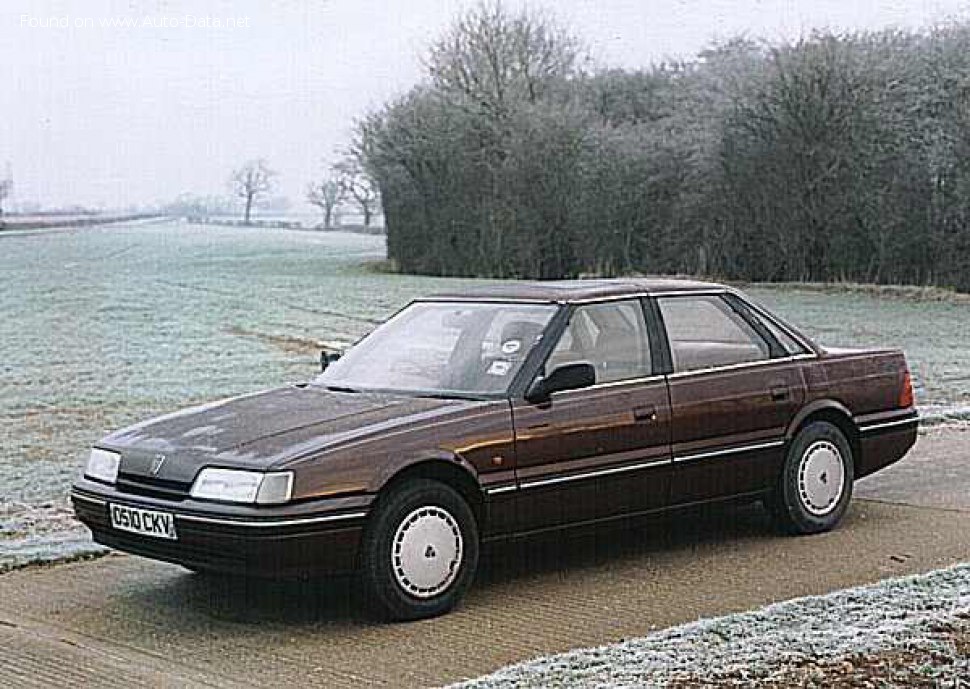
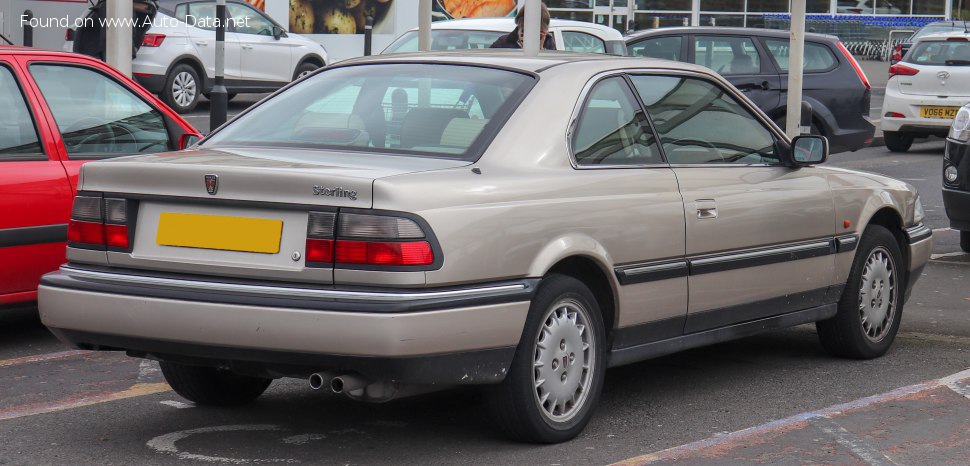
The Rover 800 Coupe boasted a distinctive and elegant two-door body style. Its design was a significant departure from the more conventional sedan, featuring a lower roofline, a raked windshield, and a unique rear treatment that gave it a sleek, aerodynamic profile. Measuring 192.2 inches (4882 mm) in length, 68.11 inches (1730 mm) in width, and 54.84 inches (1393 mm) in height, the coupe had a substantial road presence. The long wheelbase of 108.9 inches (2766 mm) contributed to both its stable ride and its graceful proportions. The RS designation often hinted at a sportier trim, typically featuring alloy wheels and specific badging that subtly enhanced its visual appeal. The car rolled on 205/55 R16 V tires, offering a good balance of grip and ride comfort.
Interior and Amenities
Inside, the Rover 800 Coupe was configured for four occupants, emphasizing comfort and luxury for its passengers. The cabin was trimmed with high-quality materials, often featuring leather upholstery and wood veneer accents, reflecting Rover’s traditional approach to interior design. The trunk space of 15.72 cu. ft. (445 liters) was generous for a coupe, providing ample room for luggage on extended trips.
For its time, the 800 Coupe was well-equipped with features aimed at enhancing convenience and safety. Standard equipment included a hydraulic power steering system with a rack and pinion setup, ensuring effortless maneuverability. The braking system comprised ventilated discs at the front and solid discs at the rear, complemented by an Anti-lock Braking System (ABS), a crucial safety feature that was becoming standard in premium vehicles of the 1990s. The front suspension utilized a double wishbone setup, while the rear featured coil springs, contributing to the car’s composed ride and handling characteristics.
Technical Specifications
| Category | Specification |
|---|---|
| General Information | |
| Brand | Rover |
| Model | 800 Coupe |
| Generation | 800 Coupe |
| Type (Engine) | 827 24V (RS) (169 Hp) |
| Production Start | 1992 |
| Production End | 1999 |
| Powertrain Architecture | Internal Combustion Engine |
| Body Type | Coupe |
| Seats | 4 |
| Doors | 2 |
| Performance Specifications | |
| Fuel Consumption (Combined) | 23.3 US mpg (10.1 l/100 km) |
| Fuel Type | Petrol (Gasoline) |
| Acceleration 0-60 mph | 8.6 seconds |
| Acceleration 0-100 km/h | 9 seconds |
| Maximum Speed | 131.11 mph (211 km/h) |
| Weight-to-Power Ratio | 8.6 kg/Hp (116.6 Hp/tonne) |
| Weight-to-Torque Ratio | 6.4 kg/Nm (155.2 Nm/tonne) |
| Engine Specifications | |
| Power | 169 Hp @ 5900 rpm |
| Power per Liter | 63.2 Hp/l |
| Torque | 165.95 lb.-ft. (225 Nm) @ 4500 rpm |
| Engine Layout | Front, Transverse |
| Engine Model/Code | C27A-V6 |
| Engine Displacement | 2.7 liters (2675 cm3 / 163.24 cu. in.) |
| Number of Cylinders | 6 |
| Engine Configuration | V-engine |
| Cylinder Bore | 3.43 inches (87 mm) |
| Piston Stroke | 2.95 inches (75 mm) |
| Compression Ratio | 9:1 |
| Valves per Cylinder | 4 |
| Fuel Injection System | Multi-port manifold injection |
| Engine Aspiration | Naturally aspirated |
| Valvetrain | OHC |
| Engine Oil Capacity | 4.76 US qt (4.5 l) |
| Coolant Capacity | 9.09 US qt (8.6 l) |
| Dimensions, Volume, and Weights | |
| Kerb Weight | 3196.7 lbs (1450 kg) |
| Max. Weight | 4343.11 lbs (1970 kg) |
| Max Load | 1146.4 lbs (520 kg) |
| Trunk (Boot) Space – Minimum | 15.72 cu. ft. (445 l) |
| Fuel Tank Capacity | 17.96 US gallons (68 l) |
| Length | 192.2 inches (4882 mm) |
| Width | 68.11 inches (1730 mm) |
| Height | 54.84 inches (1393 mm) |
| Wheelbase | 108.9 inches (2766 mm) |
| Front Track | 58.54 inches (1487 mm) |
| Rear Track | 57.09 inches (1450 mm) |
| Drivetrain, Brakes, and Suspension | |
| Drivetrain Architecture | Front-wheel drive (ICE drives front wheels) |
| Drive Wheel | Front-wheel drive |
| Number of Gears & Type | 4 gears, automatic transmission |
| Front Suspension | Double wishbone |
| Rear Suspension | Coil spring |
| Front Brakes | Ventilated discs |
| Rear Brakes | Disc |
| Assisting Systems | ABS (Anti-lock braking system) |
| Steering Type | Steering rack and pinion |
| Power Steering | Hydraulic Steering |
| Tires Size | 205/55 R16 V |
Legacy and Market Impact
The Rover 800 series, including the elegant Rover 800 Coupe 827 24V (RS), holds a unique place in automotive history, particularly within the narrative of the British car industry. Launched at a time when Rover was striving to regain its foothold in the premium segment, the 800 series represented a significant effort to blend traditional British luxury with modern engineering and reliability, largely thanks to its extensive collaboration with Honda. The Coupe variant, in particular, was an attempt to inject glamour and exclusivity into the range, competing in the niche executive coupe market.
In its primary European markets, the Rover 800 Coupe faced stiff competition from established German rivals like the BMW 3-Series Coupe and the Mercedes-Benz CLK, as well as offerings from other European manufacturers such as the Peugeot 406 Coupe and the Volvo C70. While it may not have achieved the sales volumes of its rivals, the 800 Coupe carved out a reputation for its distinctive styling, comfortable ride, and the smooth power delivery of its Honda V6 engine. It appealed to buyers who appreciated a less conventional choice and a more understated form of luxury.
The car’s heritage is deeply intertwined with the Anglo-Japanese alliance. The C27A-V6 engine, shared with Honda models like the Legend (Acura Legend in North America), provided a level of refinement and durability that Rover might have struggled to achieve independently. This partnership allowed Rover to offer competitive technology and performance, enhancing the brand’s image for a period.
Today, the Rover 800 Coupe, especially the V6-powered 827 24V (RS) model, is regarded by enthusiasts as a modern classic. Its rarity, distinctive styling, and the blend of British luxury and Japanese engineering make it a noteworthy example of 1990s executive motoring. While Rover ultimately faced significant challenges and ceased production, the 800 Coupe stands as a testament to a period when the marque aspired to global recognition, offering a sophisticated and comfortable grand touring experience that still holds appeal for collectors and admirers of unique automotive design. It represents an interesting chapter in the evolution of the executive coupe, a segment that continues to fascinate car enthusiasts worldwide.