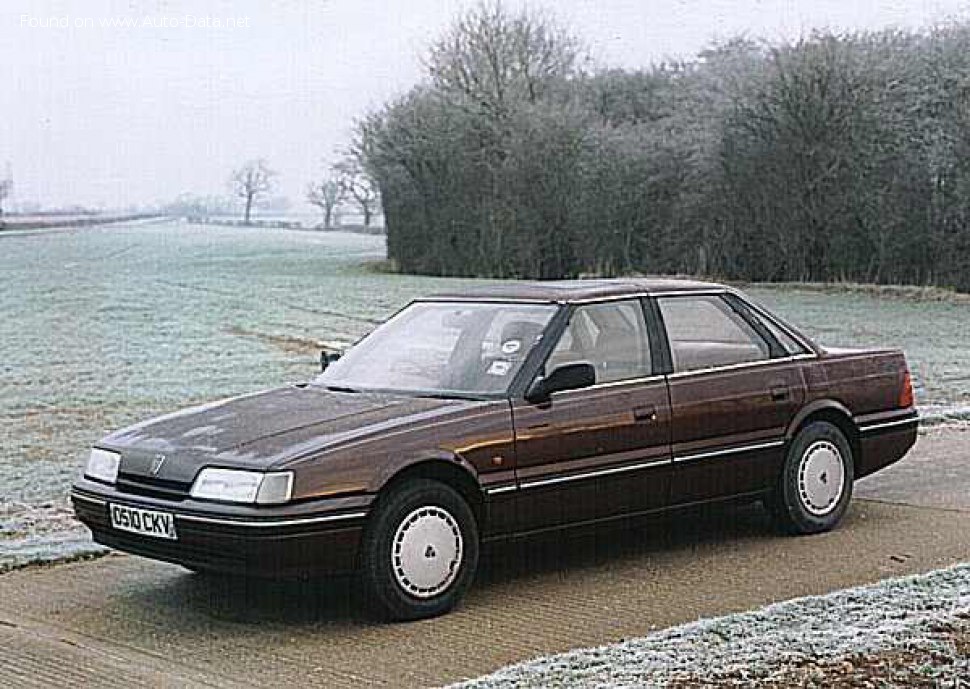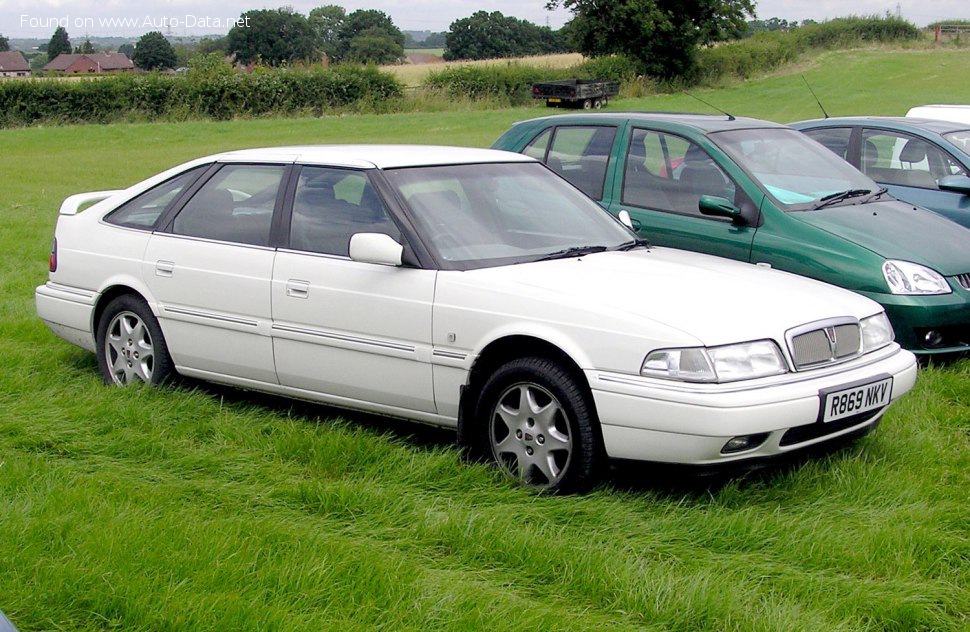
Introduction: The Rover 800 Hatchback 820 16V Turbo (RS) (180 Hp)
The Rover 800 series represented a pivotal moment for the British automaker, serving as its flagship executive car throughout the 1980s and 1990s. Developed in collaboration with Honda as part of the “XX” project (which also spawned the Honda Legend), the 800 aimed to re-establish Rover’s presence in the competitive premium segment. The generation in focus, the Rover 800 Hatchback, emerged from the significant “R17” facelift introduced in 1991. Among its variants, the Rover 800 Hatchback 820 16V Turbo (RS) (180 Hp) stood out as a performance-oriented model, combining executive comfort with a potent turbocharged powertrain.
Primarily marketed in the United Kingdom and across Europe, where it competed against established German and other European executive sedans and hatchbacks, the 800 Hatchback offered a practical yet refined alternative. The 820 16V Turbo (RS) variant, produced from 1992 to 1999, was particularly notable for its robust 180 horsepower engine, making it one of the more spirited offerings in Rover’s lineup and a compelling option for buyers seeking a blend of performance and practicality in a sophisticated package.
The Rover 800 Hatchback: Genesis and Market Position
The original Rover 800 series, launched in 1986, was a crucial product for Rover Group, aiming to replace the venerable Rover SD1. Its development alongside the Honda Legend allowed Rover access to modern engineering and quality standards, while Honda benefited from Rover’s European design sensibilities and market understanding. The car was offered in both sedan (Saloon) and fastback (Hatchback) body styles from its inception, catering to different market preferences.
The “R17” facelift, introduced in 1991, brought a significant refresh to the 800 series. This update addressed criticisms of the original model’s styling and interior quality, giving the car a more modern and cohesive appearance. The R17 introduced a more traditional Rover grille, softer lines, and a thoroughly revised interior with improved materials and ergonomics. The Hatchback variant, in particular, gained a more elegant profile, often referred to as a “fastback” due to its sloping rear roofline, which blended the practicality of a hatchback with the sleekness of a coupe-like sedan. This body style was less common in the executive segment at the time, offering a distinctive proposition against rivals like the Ford Scorpio, Vauxhall Omega (Opel Omega in mainland Europe), and entry-level variants of the BMW 5 Series and Audi 100.
The Rover 800 Hatchback sought to appeal to a demographic that valued both executive comfort and enhanced utility. With its five doors and five seats, it provided greater cargo flexibility than a traditional sedan, without compromising on the interior space or premium feel expected of a car in its class. The RS designation on the 820 16V Turbo further underscored its position as a performance-oriented flagship, signaling a commitment to a more dynamic driving experience.
Engine and Performance: The Turbocharged M16i Heart
At the core of the Rover 800 Hatchback 820 16V Turbo (RS) was Rover’s M16i engine, a sophisticated 2.0-liter, 16-valve, twin-overhead camshaft unit. While naturally aspirated versions of this engine were widely used across Rover’s range, the variant in the 820 Turbo was equipped with a turbocharger, significantly boosting its output and transforming its character. This forced induction system was a key differentiator, allowing the relatively modest 2.0-liter displacement to produce power figures competitive with larger, multi-cylinder engines.
The turbocharger delivered a robust 180 horsepower (Hp), a considerable figure for a front-wheel-drive executive car in the early to mid-1990s. This power output enabled the 820 Turbo (RS) to offer brisk acceleration and strong highway performance, allowing it to keep pace with, and in some cases outperform, its more expensive German counterparts. The engine’s design, with its 16-valve cylinder head, ensured efficient breathing and a broad power band, while the turbocharger provided a surge of torque that made for effortless overtaking and a more engaging driving experience. For a Rover, the M16i Turbo represented the pinnacle of its four-cylinder engine development, showcasing the brand’s engineering prowess in delivering high performance from a compact, efficient package.
The “RS” designation typically indicated a sportier trim level, often accompanied by suspension tweaks, larger wheels, and specific interior appointments designed to enhance the driving experience and aesthetic appeal. While specific dynamic data like 0-60 mph times and top speed are not provided, a 180 Hp output in a car of this size and era would typically translate to a 0-60 mph sprint in the low 8-second range and a top speed approaching 140 mph, placing it firmly in the performance executive category.
Design and Features: Executive Practicality
The design of the Rover 800 Hatchback, particularly after the R17 facelift, represented a blend of British executive styling with practical considerations. Its five-door fastback body offered a sleeker profile than a conventional sedan, yet provided the versatility of a large tailgate, making loading and unloading cargo significantly easier. This enhanced practicality was a major selling point, distinguishing it from many of its segment rivals.
On the exterior, the R17 facelift introduced a more contemporary look with a redesigned front end featuring a prominent chrome grille, updated headlights, and smoother body lines. The rear received revised tail lights and a more integrated bumper design, giving the car a more cohesive and upmarket appearance. The RS variant likely featured specific alloy wheel designs, subtle aerodynamic enhancements, and discreet badging to denote its sporting intentions.
Inside, the Rover 800 Hatchback aimed for an atmosphere of refined comfort. The interior of the R17 was a significant improvement over its predecessor, with a redesigned dashboard, higher quality materials, and better fit and finish. Executive features typical of the era included power windows, central locking, power mirrors, and a sophisticated audio system. Depending on the trim and optional extras, leather upholstery, wood veneer trim, and air conditioning would have been available, reinforcing its premium aspirations. Safety features, increasingly important in the 1990s, would have included anti-lock braking systems (ABS) and potentially driver’s side airbags, though passenger airbags and more advanced safety systems were still becoming mainstream.
Technical Specifications: Rover 800 Hatchback 820 16V Turbo (RS) (180 Hp)
| General Information | |
| Brand | Rover |
| Model | 800 |
| Generation | 800 Hatchback |
| Type (Engine) | 820 16V Turbo (RS) (180 Hp) |
| Start of Production | 1992 year |
| End of Production | 1999 year |
| Powertrain Architecture | Internal Combustion engine |
| Body type | Hatchback |
| Seats | 5 |
| Doors | 5 |
| Performance Specs | |
| Fuel Type | Petrol (Gasoline) |
| Engine Specs | |
| Power | 180 Hp |
| Engine Model/Code | M16i |
| Engine Aspiration | Turbocharger |
| Engine Oil Capacity | 4.5 liters (4.76 US quarts) |
| Coolant Capacity | 10 liters (10.57 US quarts) |
Legacy and Market Impact: A British Executive’s Tale
The Rover 800 series, including the Rover 800 Hatchback, holds a complex place in automotive history. It was Rover’s ambitious attempt to remain competitive in the executive car segment, a battleground dominated by well-established German marques. While the 800 offered a comfortable ride, a well-appointed interior, and, in the case of the 820 16V Turbo (RS), impressive performance, it faced an uphill struggle against rivals perceived to have superior build quality and brand prestige. Competitors such as the BMW 5 Series, Mercedes-Benz E-Class, Audi 100/A6, and even more mainstream options like the Ford Scorpio and Vauxhall Omega, often overshadowed the Rover in sales figures, particularly outside of the UK.
Despite these challenges, the 800 Hatchback 820 16V Turbo (RS) carved out a niche for itself. Its turbocharged engine provided a distinct performance advantage over many similarly priced naturally aspirated rivals, offering a more engaging driving experience without straying into high-performance specialist territory. The combination of executive comfort, a practical hatchback body, and genuine performance made it a unique proposition.
The 800 series also marked a significant period in Rover’s corporate history. It was the last model developed under the Honda collaboration, a partnership that brought both benefits in terms of engineering and financial stability, but also limitations on Rover’s independent design and engineering direction. The end of the 800’s production in 1999 coincided with a period of significant change for Rover Group, eventually leading to its decline. Today, the Rover 800 Hatchback 820 16V Turbo (RS) is remembered by enthusiasts as a distinctive British executive car, embodying Rover’s final efforts to compete at the higher end of the market. It represents a piece of British automotive heritage, appreciated for its comfort, its unique styling, and the surprisingly potent performance offered by its turbocharged engine. It stands as a testament to Rover’s ambition, even as the company navigated increasingly turbulent waters.