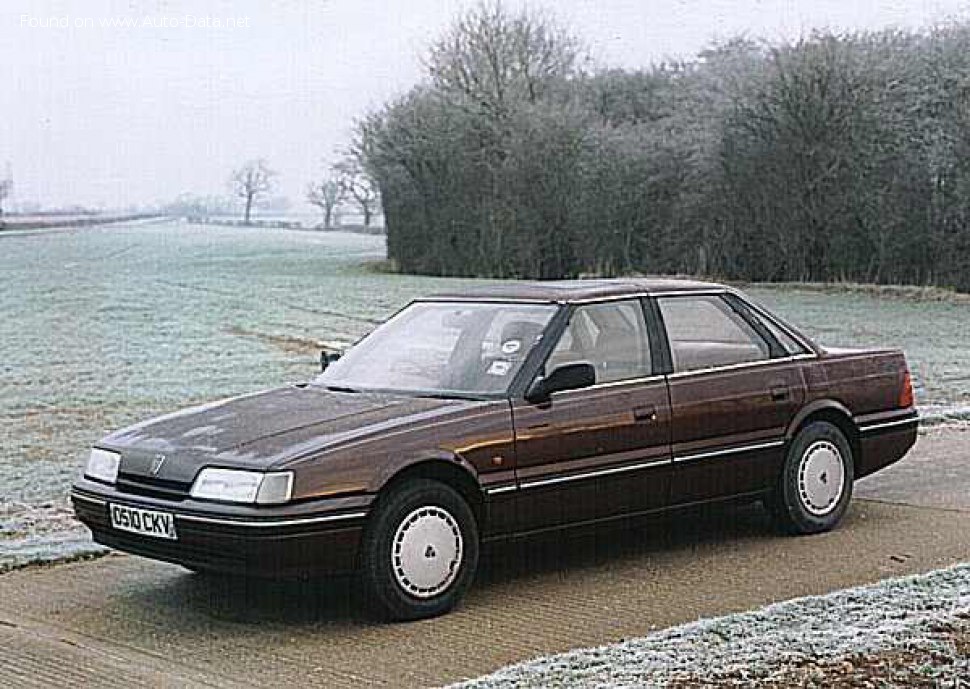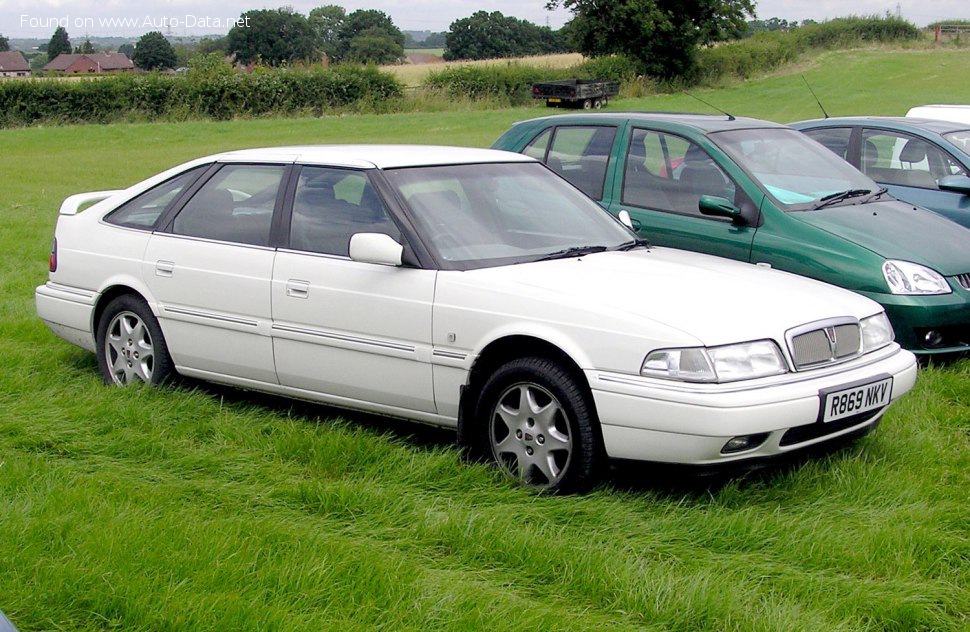
Introduction to the Rover 800 Hatchback 820 I/SI (XS) (136 Hp)
The Rover 800 series represented a pivotal and ambitious chapter in the history of the British automaker Rover, aiming to establish a strong presence in the executive car market. Introduced in 1986 as a collaborative effort with Honda, the 800 series evolved significantly over its lifespan. The particular model under examination, the Rover 800 Hatchback 820 I/SI (XS) (136 Hp), belongs to the second generation, often referred to as the “R17” or “XS” generation, which saw production commence in 1993 and continue through 1999. This iteration was a comprehensive facelift and re-engineering of the original “XX” model, designed to give the Rover 800 a more distinct and upmarket British identity, moving further away from its Honda Legend twin.
Positioned in the competitive European executive segment, the Rover 800 Hatchback was a large, five-door vehicle designed to offer a blend of comfort, practicality, and a touch of traditional British luxury. While never officially sold in the United States, its engineering lineage and market aspirations mirrored those of premium sedans and hatchbacks of the era. The 820 I/SI (XS) variant, equipped with a 2.0-liter, 136 horsepower engine, served as a core offering, balancing performance with a focus on refinement and everyday usability within its primary European and Asian markets. Its powertrain architecture utilized a conventional internal combustion engine driving the front wheels, a common configuration for mainstream executive cars of the 1990s.
Engine and Performance of the Rover 800 Hatchback
At the heart of the Rover 800 Hatchback 820 I/SI (XS) (136 Hp) was Rover’s own M16i engine, a naturally aspirated, 2.0-liter (1994 cubic centimeters or 121.68 cubic inches) inline four-cylinder powerplant. This engine featured a Double Overhead Camshaft (DOHC) valvetrain with four valves per cylinder, a sophisticated setup for its time that allowed for efficient breathing and improved power delivery across the rev range. Fuel delivery was managed by a multi-port manifold injection system, ensuring precise fuel metering for optimal combustion and emissions control.
The M16i engine produced a respectable 136 horsepower at 6000 revolutions per minute (rpm), making it a capable performer for an executive sedan of its size and weight. Torque output was equally impressive for a naturally aspirated four-cylinder, reaching 135.71 lb.-ft. (184 Nm) at a relatively low 2500 rpm. This broad torque band contributed to the car’s flexible driving characteristics, providing ample pulling power for city driving and relaxed cruising on highways without constant downshifting. The engine’s layout was front, transverse, contributing to the front-wheel-drive architecture and maximizing interior space.
Power was transmitted to the front wheels via a five-speed manual transmission, offering direct engagement and driver control. This combination allowed the Rover 800 Hatchback 820 I/SI (XS) to accelerate from 0 to 60 mph in a brisk 9.7 seconds, with a top speed of 124.9 mph (201 km/h). These figures placed it competitively within its segment, offering a balance of performance suitable for both daily commuting and longer journeys. The engine’s compression ratio of 10:1 further optimized its efficiency and power output, burning regular unleaded gasoline. With an engine oil capacity of 4.76 US quarts and a coolant capacity of 10.57 US quarts, the M16i was designed for robust and reliable operation.
Design and Features
The Rover 800 Hatchback 820 I/SI (XS) was a distinctive vehicle in its class, primarily due to its five-door hatchback body style in a segment typically dominated by sedans. This design choice provided a significant practical advantage, offering a large and versatile cargo area. With a minimum trunk space of 18.72 cubic feet (530 liters), the hatchback offered excellent utility for luggage, groceries, or larger items, making it a highly functional family or executive vehicle.
Aesthetically, the XS generation of the Rover 800 featured a more rounded and contemporary design compared to its predecessor. Its length of 192.13 inches, width of 68.11 inches, and height of 54.72 inches gave it a substantial road presence. The design incorporated elements that aimed to evoke a sense of traditional British elegance, with a revised grille, updated lighting, and smoother body lines. The interior was designed to accommodate five occupants comfortably, with attention paid to material quality and ergonomics, reflecting its executive aspirations.
Underneath its refined exterior, the 800 Hatchback employed a sophisticated chassis. The front suspension featured a double wishbone setup, known for its ability to provide excellent handling characteristics and ride comfort. The rear suspension utilized a coil spring arrangement, further contributing to a composed and comfortable ride. Braking duties were handled by ventilated discs at the front and solid discs at the rear, providing strong and consistent stopping power. The inclusion of an Anti-lock Braking System (ABS) as standard or optional equipment was a significant safety feature for the era, enhancing control during emergency braking. Steering was managed by a hydraulic rack and pinion system, offering direct feedback and a pleasant driving experience. The vehicle rode on 195/65 R15 tires, a common size that balanced grip, comfort, and durability. With a curb weight of 2932.15 pounds and a maximum permissible weight of 4210.83 pounds, the 800 Hatchback was a solid and well-built vehicle.
Technical Specifications
| Specification | Value |
|---|---|
| Brand | Rover |
| Model | 800 |
| Generation | 800 Hatchback |
| Type (Engine) | 820 I/SI (XS) (136 Hp) |
| Start of Production | 1993 year |
| End of Production | 1999 year |
| Powertrain Architecture | Internal Combustion engine |
| Body Type | Hatchback |
| Seats | 5 |
| Doors | 5 |
| Performance Specs | |
| Fuel Type | Petrol (Gasoline) |
| Acceleration 0-60 mph | 9.7 sec |
| Maximum Speed | 124.9 mph (201 km/h) |
| Weight-to-power ratio | 9.8 kg/Hp, 102.3 Hp/tonne |
| Weight-to-torque ratio | 7.2 kg/Nm, 138.3 Nm/tonne |
| Engine Specs | |
| Power | 136 Hp @ 6000 rpm |
| Power per liter | 68.2 Hp/l |
| Torque | 135.71 lb.-ft. @ 2500 rpm (184 Nm) |
| Engine Layout | Front, Transverse |
| Engine Model/Code | M16i |
| Engine Displacement | 2.0 l (1994 cm3 / 121.68 cu. in.) |
| Number of Cylinders | 4 |
| Engine Configuration | Inline |
| Cylinder Bore | 3.32 in. (84.45 mm) |
| Piston Stroke | 3.5 in. (89 mm) |
| Compression Ratio | 10:1 |
| Number of Valves per Cylinder | 4 |
| Fuel Injection System | Multi-port manifold injection |
| Engine Aspiration | Naturally aspirated engine |
| Valvetrain | DOHC |
| Engine Oil Capacity | 4.76 US qt (4.5 l) |
| Coolant Capacity | 10.57 US qt (10 l) |
| Space, Volume and Weights | |
| Kerb Weight | 2932.15 lbs (1330 kg) |
| Max. Weight | 4210.83 lbs (1910 kg) |
| Max Load | 1278.68 lbs (580 kg) |
| Trunk (boot) Space – Minimum | 18.72 cu. ft. (530 l) |
| Fuel Tank Capacity | 17.96 US gal (68 l) |
| Dimensions | |
| Length | 192.13 in. (4880 mm) |
| Width | 68.11 in. (1730 mm) |
| Height | 54.72 in. (1390 mm) |
| Wheelbase | 108.9 in. (2766 mm) |
| Front Track | 58.66 in. (1490 mm) |
| Rear (Back) Track | 57.09 in. (1450 mm) |
| Drivetrain, Brakes and Suspension Specs | |
| Drivetrain Architecture | The Internal combustion engine (ICE) drives the front wheels of the vehicle. |
| Drive Wheel | Front wheel drive |
| Number of Gears and Type of Gearbox | 5 gears, manual transmission |
| Front Suspension | Double wishbone |
| Rear Suspension | Coil spring |
| Front Brakes | Ventilated discs |
| Rear Brakes | Disc |
| Assisting Systems | ABS (Anti-lock braking system) |
| Steering Type | Steering rack and pinion |
| Power Steering | Hydraulic Steering |
| Tires Size | 195/65 R15 |
Legacy and Market Impact of the Rover 800 Hatchback
The Rover 800 series, and specifically the Rover 800 Hatchback, holds a unique place in automotive history, representing Rover’s earnest attempt to compete in the premium segment during the 1990s. In its primary markets, particularly the UK and Europe, it was positioned as an alternative to more established German rivals like the BMW 5-Series and Mercedes-Benz E-Class, as well as mainstream executive cars such as the Ford Scorpio and Vauxhall Omega. While it never achieved the same sales volume or prestige as its German competitors, it garnered a loyal following for its distinctive British character and value proposition.
The XS generation, produced from 1993 to 1999, was crucial in defining the 800’s final identity. Rover had taken greater control over the design and engineering compared to the original XX model, which was heavily based on the Honda Legend. This allowed Rover to infuse more of its traditional styling cues and interior ambiance, which resonated with buyers seeking something different from the continental offerings. The hatchback variant, in particular, stood out. In an era where executive cars were almost exclusively sedans, the 5-door hatchback offered unparalleled practicality, appealing to buyers who needed the versatility of a larger cargo area without sacrificing the comfort and features of an executive vehicle. This unique selling proposition helped carve out a niche for the 800 Hatchback.
The M16i engine, while not a powerhouse compared to the larger V6 options available in the 800 range, was praised for its refinement and adequate performance for daily driving. Its DOHC four-cylinder design was modern for its time, and the engine’s reliability was generally good, a testament to Rover’s engineering capabilities, often influenced by its past collaborations. The 800’s chassis, with its double wishbone front suspension, provided a ride that was often described as comfortable and composed, a hallmark of British luxury cars.
However, the Rover 800 series also faced challenges. Perceived quality issues, while often exaggerated, and the looming shadow of Rover’s financial difficulties and eventual acquisition by BMW, impacted its long-term market perception. Despite this, the Rover 800 Hatchback 820 I/SI (XS) remains a significant vehicle, symbolizing Rover’s ambition and its ability to produce a competitive and distinctive executive car. It represents a fascinating period in British automotive history, showcasing a blend of traditional craftsmanship and modern engineering that continues to be appreciated by enthusiasts today. Its legacy is one of a courageous attempt to uphold a historic marque’s position in a fiercely contested global market.