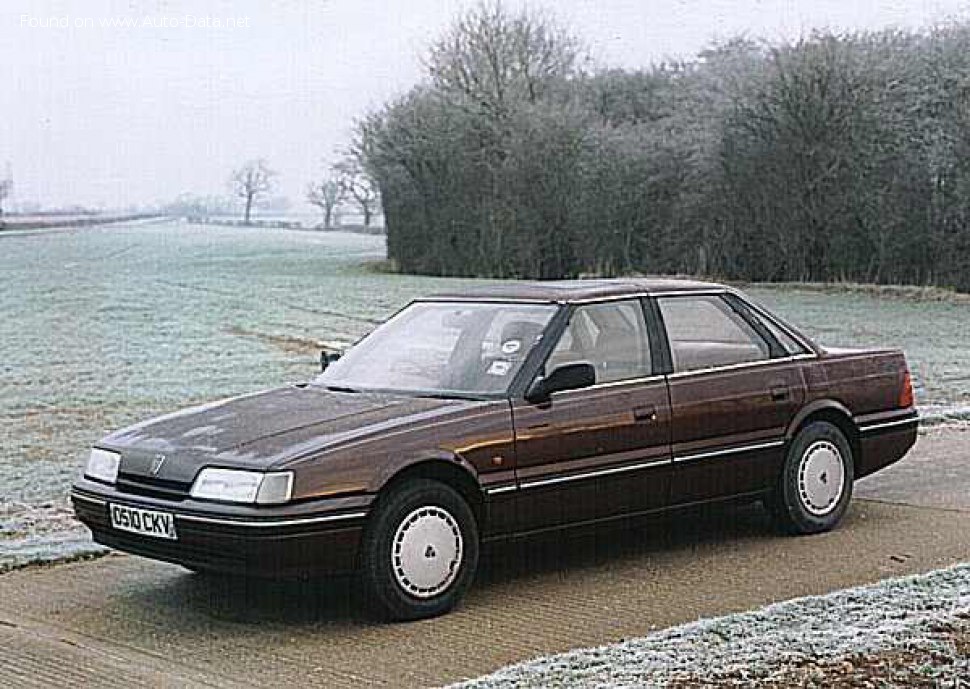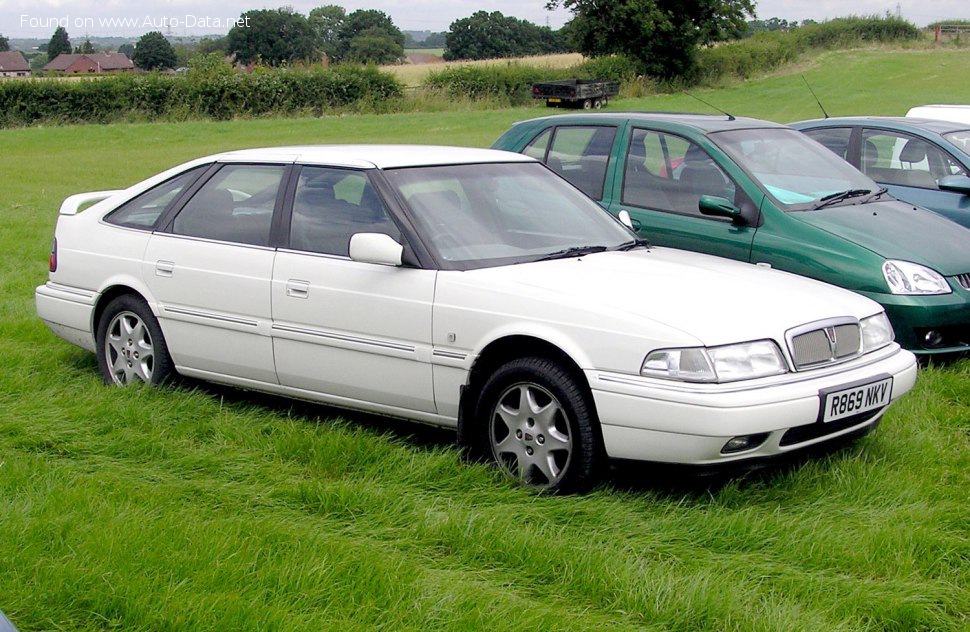
The Rover 800 Hatchback 825 Si (175 Hp): A British Executive Express
The Rover 800 Hatchback 825 Si (175 Hp) represents a significant chapter in the history of the British automotive industry, particularly during a period of evolving alliances and design philosophies. Launched in 1994 as part of the second generation of the Rover 800 series, this executive-class hatchback was Rover’s flagship offering, designed to compete in the competitive European large car segment. While not officially sold in the United States, the Rover 800, known as the Sterling 825 and 827 in its first generation, had a brief, albeit challenging, stint on American shores. The 800 Hatchback, specifically the 825 Si variant, showcased Rover’s ambition to blend traditional British luxury with modern engineering, largely influenced by its long-standing collaboration with Honda.
Produced until 1999, the 800 Hatchback was a sophisticated five-door vehicle that prioritized comfort, refinement, and a distinctly British driving experience. The 825 Si trim, with its potent V6 engine, was positioned as a performance-oriented yet luxurious option within the lineup, appealing to buyers who desired both practicality and spirited dynamics in a premium package. This article delves into the technical prowess, design characteristics, and market legacy of this compelling European executive car.
Engine and Performance: The Heart of the Rover 800 Hatchback
At the core of the Rover 800 Hatchback 825 Si (175 Hp) lay an impressive powertrain, highlighted by its 2.5-liter (2497 cm³) V6 engine. Coded as the C25A, this naturally aspirated, multi-port manifold injected engine was a derivative of Honda’s renowned C-series V6, a testament to the engineering partnership between Rover and the Japanese automaker. This collaboration allowed Rover to equip its flagship model with a powerplant known for its smoothness, reliability, and refined operation, qualities crucial for an executive vehicle.
The V-engine configuration, coupled with a Double Overhead Camshaft (DOHC) valvetrain and four valves per cylinder, enabled the 825 Si to produce a robust 175 horsepower at 6500 rpm. This power output was quite respectable for its class in the mid-1990s, especially when considering the car’s emphasis on comfort. Equally important was the torque figure: 177.01 lb.-ft. (240 Nm) delivered at a relatively low 2400 rpm. This low-end torque ensured responsive acceleration and effortless cruising, contributing significantly to the car’s executive demeanor.
Power was delivered to the front wheels via a precise 5-speed manual transmission, offering an engaging driving experience that many enthusiasts appreciated. While automatic transmissions were common in this segment, the manual option underscored a more driver-focused approach for the 825 Si. This combination allowed the 800 Hatchback to accelerate from 0 to 60 mph in a brisk 8.3 seconds, with a top speed of 134.84 mph (217 km/h). These figures placed it firmly among its European competitors, offering a blend of performance and luxury.
Fuel efficiency, while not the primary concern for an executive V6, was reasonable for its era. The 825 Si achieved an urban fuel economy of approximately 17.8 US mpg and an extra-urban figure of 29.8 US mpg, making it a capable long-distance cruiser. The 17.96 US gallon fuel tank further supported extended journeys without frequent stops.
Design and Features: British Elegance and Practicality
The Rover 800 Hatchback, particularly in its second-generation guise (often referred to as the R17 generation), presented a distinctively British design language. Measuring 192.13 inches in length, 68.11 inches in width, and 54.72 inches in height, with a substantial 108.9-inch wheelbase, the 800 Hatchback was a sizable vehicle, offering generous interior space. Its five-door hatchback body style provided a blend of executive presence and practical versatility, differentiating it from more conventional sedan offerings.
The exterior styling of the 800 Hatchback, while sometimes considered conservative, exuded a sense of understated elegance. It featured a sleek, aerodynamic profile with a sloping rear, giving it a more dynamic appearance than its sedan counterpart. The design was characterized by smooth lines and a refined grille, reflecting Rover’s aspiration for a premium image.
Inside, the 800 Hatchback was designed to accommodate five occupants in comfort. Rover was known for its luxurious interiors, and the 800 series was no exception, often featuring wood trim, quality fabrics, and optional leather upholstery. The focus was on creating a serene and comfortable cabin environment, suitable for long journeys. Practicality was also a strong suit, with a substantial minimum trunk space of 18.72 cubic feet (530 liters), making it highly capable for luggage or cargo.
Mechanically, the 825 Si was well-appointed for its time. It featured a sophisticated suspension setup with double wishbones at the front and coil springs at the rear, contributing to a compliant ride quality and stable handling. The braking system utilized ventilated discs at the front and solid discs at the rear, complemented by an Anti-lock Braking System (ABS), a crucial safety feature in the mid-90s. Steering was managed by a hydraulic rack and pinion system, providing direct feedback and ease of maneuverability. The car rode on 205/55 R16 tires, offering a good balance of grip and ride comfort.
Technical Specifications
| Category | Specification |
|---|---|
| Brand | Rover |
| Model | 800 Hatchback |
| Generation | 800 Hatchback |
| Type (Engine) | 825 Si (175 Hp) |
| Start of Production | 1994 year |
| End of Production | 1999 year |
| Powertrain Architecture | Internal Combustion engine |
| Body type | Hatchback |
| Seats | 5 |
| Doors | 5 |
| Performance Specs | |
| Fuel consumption (economy) – urban | 17.8 US mpg (13.2 l/100 km) |
| Fuel consumption (economy) – extra urban | 29.8 US mpg (7.9 l/100 km) |
| Fuel Type | Petrol (Gasoline) |
| Acceleration 0 – 60 mph | 8.3 sec |
| Acceleration 0 – 100 km/h | 8.7 sec |
| Maximum speed | 134.84 mph (217 km/h) |
| Weight-to-power ratio | 7.9 kg/Hp, 126.8 Hp/tonne |
| Weight-to-torque ratio | 5.8 kg/Nm, 173.9 Nm/tonne |
| Engine Specs | |
| Power | 175 Hp @ 6500 rpm |
| Power per liter | 70.1 Hp/l |
| Torque | 177.01 lb.-ft. (240 Nm) @ 2400 rpm |
| Engine layout | Front, Transverse |
| Engine Model/Code | C25A |
| Engine displacement | 2.5 liters (2497 cm³ / 152.38 cu. in.) |
| Number of cylinders | 6 |
| Engine configuration | V-engine |
| Cylinder Bore | 3.15 in. (80 mm) |
| Piston Stroke | 3.26 in. (82.8 mm) |
| Compression ratio | 10.5:1 |
| Number of valves per cylinder | 4 |
| Fuel injection system | Multi-port manifold injection |
| Engine aspiration | Naturally aspirated engine |
| Valvetrain | DOHC |
| Engine oil capacity | 4.76 US qt (4.5 l) |
| Coolant | 10.57 US qt (10 l) |
| Space, Volume and Weights | |
| Kerb Weight | 3042.38 lbs. (1380 kg) |
| Max. weight | 4210.83 lbs. (1910 kg) |
| Max load | 1168.45 lbs. (530 kg) |
| Trunk (boot) space – minimum | 18.72 cu. ft. (530 l) |
| Fuel tank capacity | 17.96 US gal (68 l) |
| Dimensions | |
| Length | 192.13 in. (4880 mm) |
| Width | 68.11 in. (1730 mm) |
| Height | 54.72 in. (1390 mm) |
| Wheelbase | 108.9 in. (2766 mm) |
| Front track | 58.66 in. (1490 mm) |
| Rear (Back) track | 68.11 in. (1730 mm) |
| Drivetrain, Brakes and Suspension Specs | |
| Drivetrain Architecture | Front-wheel drive, Internal Combustion engine |
| Drive wheel | Front wheel drive |
| Number of gears and type of gearbox | 5 gears, manual transmission |
| Front suspension | Double wishbone |
| Rear suspension | Coil spring |
| Front brakes | Ventilated discs |
| Rear brakes | Disc |
| Assisting systems | ABS (Anti-lock braking system) |
| Steering type | Steering rack and pinion |
| Power steering | Hydraulic Steering |
| Tires size | 205/55 R16 |
Legacy and Market Impact of the Rover 800 Hatchback
The Rover 800 series, and specifically the 800 Hatchback, held a unique position in the European automotive landscape. It was Rover’s attempt to offer a competitive executive car that combined British styling and comfort with reliable, high-performance engines, largely due to its Honda connection. In its primary markets like the United Kingdom and continental Europe, it competed against established players such as the Ford Scorpio, Vauxhall Omega (Opel Omega), and the Saab 9000. While it may not have matched the perceived prestige of German luxury brands like BMW or Mercedes-Benz, the 800 offered a distinct value proposition with its blend of luxury features, spaciousness, and refined powertrains.
The 825 Si, with its powerful V6 and manual transmission, carved out a niche for buyers who appreciated a more engaging driving experience in an executive package. Its reputation was a mix of admiration for its comfortable ride, quiet cabin, and the smooth power delivery of the Honda-derived V6, counterbalanced by some criticisms regarding build quality and reliability issues not related to the engine itself, which were sometimes associated with Rover as a brand during this period. Nevertheless, the Honda engine was a significant asset, lending credibility and performance to the Rover flagship.
Historically, the Rover 800 Hatchback represented a pivotal moment for the Rover Group. It was the last large executive car developed largely under the influence of the Honda partnership before BMW’s acquisition of Rover in 1994. The second-generation 800, introduced that same year, was a facelift and refinement of the original, aiming to address some of the criticisms and modernize its appeal. The hatchback variant, in particular, offered a practical alternative to the traditional sedan, appealing to a segment of the market that valued versatility without compromising on executive comfort.
In retrospect, the Rover 800 Hatchback 825 Si (175 Hp) stands as a testament to Rover’s ambition to remain a significant player in the premium segment. It showcased the brand’s ability to produce a comfortable, well-equipped, and adequately powerful executive car. While the Rover brand itself would eventually cease to exist, models like the 800 Hatchback provide a glimpse into the company’s efforts to innovate and compete, leaving behind a legacy as one of the last truly British executive cars of its era before the landscape of the automotive industry shifted dramatically.