
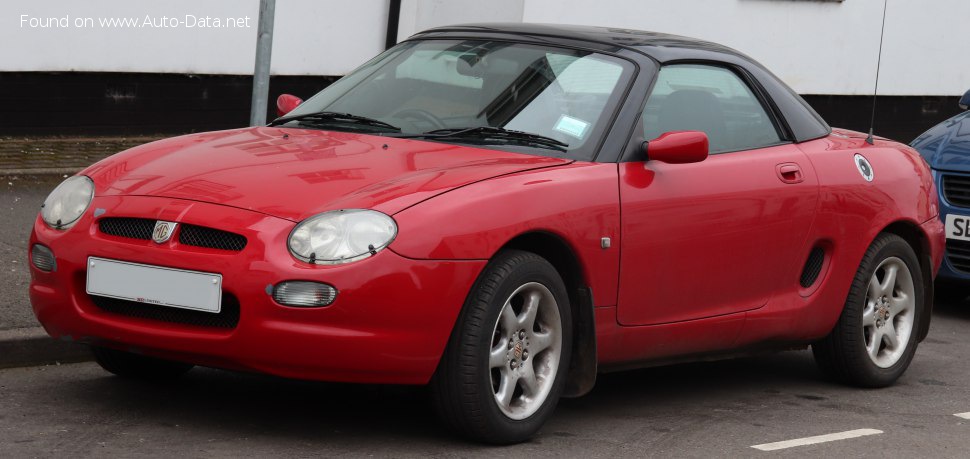
The Rover MGF (RD) 1.8 i VVC (145 Hp): A Modern British Roadster
The Rover MGF, specifically the RD generation, represented a significant moment for the British automotive industry upon its launch in 1995. Positioned as a contemporary two-seater mid-engine roadster, the MGF was the first all-new MG-badged car produced since the MG B Roadster ceased production in 1980. It aimed to rekindle the spirit of affordable British sports cars, a segment that had been largely dormant. While never officially imported to the United States, the Rover MGF (RD) 1.8 i VVC (145 Hp) carved out a distinct niche in its primary European market, offering a unique blend of accessible performance, engaging handling, and classic roadster charm, all wrapped in a distinctly modern package for its time. Produced from 1995 to 2000, this particular variant, equipped with the innovative 1.8-liter VVC engine, stood out as a performance leader within the MGF lineup, showcasing Rover’s engineering capabilities.
Engine and Performance of the Rover MGF (RD)
At the heart of the Rover MGF (RD) 1.8 i VVC (145 Hp) was its naturally aspirated 1.8-liter (1796 cm3 or 109.6 cu. in.) inline four-cylinder engine, designated by the code 18K4K. What made this powerplant particularly noteworthy was Rover’s Variable Valve Control (VVC) technology. This sophisticated system allowed for continuous and stepless adjustment of the intake valve timing and lift, optimizing engine breathing across the entire rev range. The result was a remarkable balance of low-end torque and high-revving power, a characteristic not always common in naturally aspirated four-cylinder engines of its era.
This VVC-equipped engine delivered a robust 145 horsepower at a spirited 7000 rpm, translating to an impressive 80.7 horsepower per liter. Torque figures were equally respectable, peaking at 128.34 lb.-ft. (174 Nm) at 4500 rpm. Such output, combined with the MGF’s relatively light curb weight of 2336.9 lbs. (1060 kg), resulted in an excellent weight-to-power ratio of 7.3 kg/Hp (approximately 136.8 Hp/tonne).
Performance metrics underscored the MGF’s sporting intentions. The car could accelerate from 0 to 60 mph in a swift 7.3 seconds and reach a top speed of 131.73 mph (212 km/h). Power was sent to the rear wheels via a precise 5-speed manual transmission, offering an engaging driving experience. The mid-engine, transverse layout of the powertrain was crucial to the MGF’s dynamic character, contributing to a near-perfect weight distribution and a low center of gravity, factors vital for a responsive and agile sports car. The DOHC valvetrain, multi-port manifold injection system, and a compression ratio of 10.5:1 further highlighted the engine’s advanced design for its time.
Design and Features
The Rover MGF (RD) adopted a classic two-seater cabriolet body type, a design choice that immediately evoked the heritage of British roadsters while incorporating modern styling cues. Its compact dimensions – 154.06 inches (3913 mm) in length, 64.09 inches (1628 mm) in width, and 50 inches (1270 mm) in height – gave it a nimble appearance. The short overhangs and purposeful stance were accentuated by a wheelbase of 93.5 inches (2375 mm), promising agile handling.
Visually, the MGF featured smooth, rounded lines, a departure from the more angular designs of some of its competitors. The soft-top roof, which could be manually operated, allowed for open-air driving, a quintessential element of the roadster experience. Inside, the MGF offered a driver-focused cockpit, typical of a sports car. Despite its compact footprint, the interior was designed to be comfortable for two occupants, though trunk space was modest at 7.38 cu. ft. (209 liters), primarily located in the rear.
Mechanically, the MGF was notable for its sophisticated suspension system. It employed a double wishbone setup at both the front and rear, complemented by Rover’s Hydragas suspension. This interconnected hydraulic system, originally developed by BMC (British Motor Corporation), offered a unique combination of ride comfort and handling prowess, allowing the MGF to absorb road imperfections while maintaining excellent body control during spirited driving. Braking performance was handled by ventilated discs at the front and solid discs at the rear, with ABS (Anti-lock Braking System) provided as a standard assisting system, enhancing safety. The hydraulic power steering, utilizing a rack and pinion system, offered direct feedback to the driver, further contributing to the car’s engaging dynamics. The car rode on staggered tire sizes, 185/55 VR15 at the front and 205/50 VR15 at the rear, optimized for grip and balance.
Technical Specifications
| Category | Specification |
|---|---|
| General Information | |
| Brand | Rover |
| Model | MGF |
| Generation | MGF (RD) |
| Type (Engine) | 1.8 i VVC (145 Hp) |
| Production Start | 1995 |
| Production End | 2000 |
| Powertrain Architecture | Internal Combustion Engine |
| Body Type | Cabriolet |
| Seats | 2 |
| Doors | 2 |
| Performance Specs | |
| Fuel Consumption (Combined) | 34.1 US mpg (6.9 l/100 km) |
| Fuel Type | Petrol (Gasoline) |
| Acceleration 0 – 60 mph | 7.3 seconds |
| Acceleration 0 – 62 mph (0-100 km/h) | 7.7 seconds |
| Maximum Speed | 131.73 mph (212 km/h) |
| Weight-to-Power Ratio | 7.3 kg/Hp, 136.8 Hp/tonne |
| Weight-to-Torque Ratio | 6.1 kg/Nm, 164.2 Nm/tonne |
| Engine Specs | |
| Power | 145 Hp @ 7000 rpm |
| Power per Liter | 80.7 Hp/l |
| Torque | 128.34 lb.-ft. (174 Nm) @ 4500 rpm |
| Engine Layout | Middle, Transverse |
| Engine Model/Code | 18K4K |
| Engine Displacement | 1.8 liters (1796 cm3 / 109.6 cu. in.) |
| Number of Cylinders | 4 |
| Engine Configuration | Inline |
| Cylinder Bore | 3.15 in. (80 mm) |
| Piston Stroke | 3.52 in. (89.3 mm) |
| Compression Ratio | 10.5:1 |
| Valves per Cylinder | 4 |
| Fuel Injection System | Multi-port manifold injection |
| Engine Aspiration | Naturally aspirated |
| Valvetrain | DOHC (Variable Valve Control – VVC) |
| Dimensions, Volume & Weights | |
| Kerb Weight | 2336.9 lbs. (1060 kg) |
| Maximum Weight | 2910.1 lbs. (1320 kg) |
| Maximum Load | 573.2 lbs. (260 kg) |
| Trunk (Boot) Space | 7.38 cu. ft. (209 liters) |
| Fuel Tank Capacity | 13.21 US gal (50 liters) |
| Length | 154.06 in. (3913 mm) |
| Width | 64.09 in. (1628 mm) |
| Height | 50 in. (1270 mm) |
| Wheelbase | 93.5 in. (2375 mm) |
| Front Track | 55.12 in. (1400 mm) |
| Rear Track | 55.35 in. (1406 mm) |
| Drivetrain, Brakes & Suspension | |
| Drivetrain Architecture | Mid-engine, Rear-wheel drive |
| Drive Wheel | Rear wheel drive |
| Gearbox Type | 5-speed manual transmission |
| Front Suspension | Double wishbone with Hydragas |
| Rear Suspension | Double wishbone with Hydragas |
| Front Brakes | Ventilated discs |
| Rear Brakes | Disc |
| Assisting Systems | ABS (Anti-lock braking system) |
| Steering Type | Steering rack and pinion |
| Power Steering | Hydraulic Steering |
| Tires Size | Front: 185/55 VR15; Rear: 205/50 VR15 |
Legacy and Market Impact
The Rover MGF (RD) arrived at a time when the market for affordable two-seater roadsters was experiencing a resurgence, largely thanks to the phenomenal success of the Mazda MX-5 Miata. The MGF was Rover’s answer to this trend, and it quickly established itself as a credible competitor, particularly in Europe. While the Miata offered traditional front-engine, rear-wheel-drive dynamics, the MGF stood out with its mid-engine layout, which many enthusiasts considered superior for handling balance. Its Hydragas suspension also provided a distinctive ride quality, often praised for its blend of compliance and control, setting it apart from more conventionally sprung rivals like the Fiat Barchetta and the BMW Z3.
The MGF, and especially the 1.8 i VVC variant, was instrumental in re-establishing the MG brand’s presence in the sports car segment after a long hiatus. It garnered a reputation for being a fun-to-drive, stylish, and relatively practical sports car for its segment. Its success demonstrated that there was still a strong demand for British open-top motoring, even as the Rover Group faced increasing financial pressures.
Despite its positive reception, the MGF’s journey was not without challenges. Quality perceptions and long-term reliability concerns, unfortunately, sometimes shadowed its engineering merits, a common issue for some British manufacturers of the era. However, its innovative VVC engine and sophisticated suspension system were often highlighted as key differentiators. The MGF’s design language also proved influential, paving the way for its successor, the MG TF, which continued the roadster legacy with a more conventional coil-spring suspension but retained many of the MGF’s core attributes.
Today, the Rover MGF remains a beloved modern classic among enthusiasts, particularly in the UK and Europe. It represents a significant chapter in the history of the MG brand and the wider British automotive landscape – a valiant and largely successful effort to bring back the joy of affordable open-top driving with a distinctly British flair and innovative engineering. Its impact lies in proving that the spirit of the classic British roadster could indeed be reimagined for a new generation.
