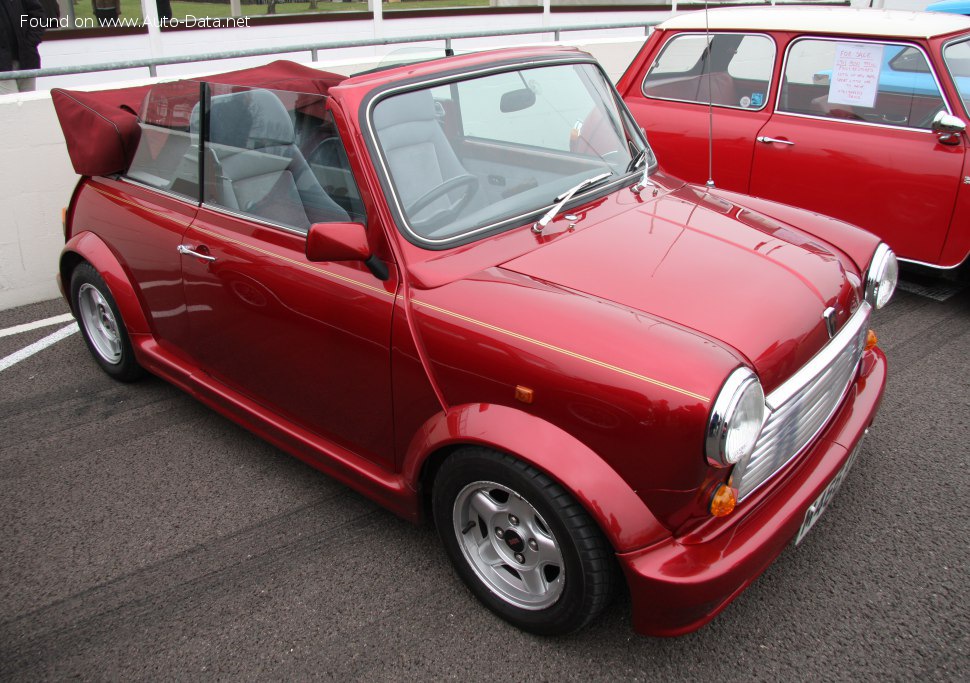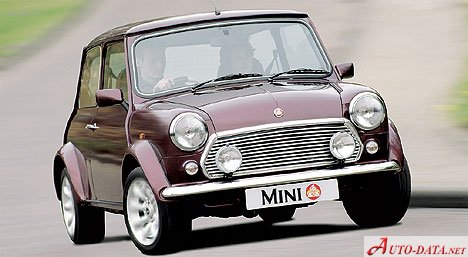
The Iconic Rover Mini MK I 1.3 i (53 Hp): A Timeless British Legend
The
Rover Mini MK I 1.3 i (53 Hp)
, produced between 1991 and 1995, represents a significant chapter in the storied history of one of the automotive world’s most recognizable and beloved vehicles. While the “Mark I” designation typically refers to the original Mini launched in 1959, the Rover Group, which owned the Mini brand during this period, continued to use the “MK I” nomenclature for its modernized, albeit still fundamentally classic, Mini models. This particular variant, the 1.3 i, was a refined iteration that aimed to blend the Mini’s timeless charm and agile driving dynamics with contemporary (for its time) engine technology and safety features. Primarily sold in Europe and other select markets, this Mini was never officially distributed in the United States, yet its global influence and iconic status transcend geographical boundaries. It served as a testament to the enduring appeal of Sir Alec Issigonis’ original design, showcasing how a revolutionary concept could adapt and thrive for decades.
During the early 1990s, as many manufacturers shifted towards more aerodynamic and complex designs, the Rover Mini MK I 1.3 i stood out as a charming anachronism. It continued to embody the principles of “minimum car, maximum space” that defined its inception, offering surprisingly practical interior room within an incredibly compact footprint. This particular model, with its fuel-injected 1.3-liter engine, represented a modernization effort aimed at complying with stricter emissions regulations and improving drivability, ensuring the Mini could remain competitive and relevant in its primary European market even as its fundamental architecture remained largely unchanged from its 1959 origins. It appealed to a diverse clientele, from urban commuters seeking nimble maneuverability to enthusiasts drawn to its legendary handling and quintessential British character.
Engine and Performance: The Heart of the Rover Mini MK I
At the core of the
Rover Mini MK I 1.3 i (53 Hp)
was a transversely mounted, naturally aspirated 1.3-liter (1273 cm³) inline-four engine, a direct descendant of the venerable A-series engine that had powered Minis for decades. This particular iteration benefited from single-point fuel injection, a significant upgrade from earlier carbureted versions. This fuel injection system not only improved fuel efficiency and reduced emissions but also offered more reliable starting and smoother power delivery across the rev range. The engine produced a modest but characterful 53 horsepower at 5000 revolutions per minute (rpm) and generated 67.86 lb.-ft. of torque at a low 2600 rpm. While these figures might seem humble by modern standards, they were more than adequate for a vehicle weighing in at a mere 1543.24 pounds (700 kg).
The lightweight construction of the Mini, combined with its compact dimensions, allowed the 53-horsepower engine to deliver a surprisingly sprightly performance for urban environments. The Mini MK I 1.3 i could accelerate from 0 to 60 miles per hour in approximately 13.1 seconds, with a top speed of 88.86 mph (143 km/h). These figures underscored its primary role as an agile city car rather than a highway cruiser. Power was sent to the front wheels via a classic 4-speed manual transmission, a setup that contributed significantly to the Mini’s engaging and tactile driving experience. The gearbox was renowned for its direct feel, encouraging drivers to make the most of the engine’s power band.
Fuel economy was another strong suit for this Mini, especially considering its era. It achieved a combined fuel consumption rating of 32.2 US miles per gallon (7.3 liters per 100 km), making it an economical choice for daily driving. The engine’s design, with two valves per cylinder and a compression ratio of 9.4:1, prioritized reliability and efficiency. Its engine oil capacity stood at 5.07 US quarts, with a coolant capacity of 4.23 US quarts, reflecting its simple yet robust mechanical design. The powertrain architecture, with the engine driving the front wheels, was a groundbreaking innovation in its original form and remained a hallmark of the Mini’s efficient packaging.
Design and Features: The Enduring Charm of the Mini
The design of the
Rover Mini MK I 1.3 i (53 Hp)
remained remarkably true to the original 1959 concept, embodying an unmistakable character that has captivated generations. Its hatchback body type, featuring three doors and surprisingly accommodating seating for up to five occupants (though typically more comfortable for four), was a masterclass in spatial efficiency. Measuring just 122.05 inches (3100 mm) in length, 56.69 inches (1440 mm) in width, and 53.19 inches (1351 mm) in height, the Mini was incredibly compact, making it ideal for navigating crowded European city streets and tight parking spaces. The wheelbase of 80.12 inches (2035 mm) contributed to its famously short turning circle of 29.2 feet (8.9 meters), enhancing its urban agility.
Aesthetically, the 1991-1995 Mini retained its classic round headlights, distinctive grille, and minimalist lines. The exterior design was more about functional elegance than ostentatious styling, a philosophy that contributed to its timeless appeal. Inside, the cabin was simple and functional, prioritizing driver engagement over elaborate features. The dashboard typically featured a central instrument cluster, a signature Mini trait, providing essential information to the driver. Despite its small size, the Mini offered a minimum trunk (boot) space of 4.24 cubic feet (120 liters), sufficient for daily errands or a weekend bag.
In terms of chassis and suspension, the Mini MK I 1.3 i continued to utilize its iconic setup. The front suspension employed wishbones, while the rear featured trailing arms, a configuration that, combined with its small 12-inch wheels (tire size 145/70 R12 Q), contributed to its legendary “go-kart” handling. This independent suspension system, along with its low center of gravity, allowed the Mini to corner with remarkable flatness and precision, providing an incredibly engaging driving experience. Braking was handled by disc brakes at the front and drum brakes at the rear, a common setup for cars of its class and era. A notable safety enhancement for this period was the inclusion of ABS (Anti-lock Braking System) as an assisting system, which provided improved stopping control, especially on slippery surfaces – a significant feature for a car with such a long-standing design. The steering system utilized a precise rack and pinion setup, offering direct feedback to the driver.
Technical Specifications: Rover Mini MK I 1.3 i (53 Hp)
| Category | Specification |
|---|---|
| General Information | |
| Brand | Rover |
| Model | Mini MK I |
| Type (Engine) | 1.3 i (53 Hp) |
| Production Start | 1991 year |
| Production End | 1995 year |
| Powertrain Architecture | Internal Combustion Engine |
| Body Type | Hatchback |
| Seats | 5 |
| Doors | 3 |
| Performance Specs | |
| Fuel Consumption (Combined) | 32.2 US mpg (7.3 l/100 km) |
| Fuel Type | Petrol (Gasoline) |
| Acceleration 0-60 mph | 13.1 sec |
| Maximum Speed | 88.86 mph (143 km/h) |
| Weight-to-Power Ratio | 13.2 kg/Hp (75.7 Hp/tonne) |
| Weight-to-Torque Ratio | 7.6 kg/Nm (131.4 Nm/tonne) |
| Engine Specs | |
| Power | 53 Hp @ 5000 rpm |
| Power per Liter | 41.6 Hp/l |
| Torque | 67.86 lb.-ft. @ 2600 rpm (92 Nm @ 2600 rpm) |
| Engine Layout | Front, Transverse |
| Engine Displacement | 1.3 Liters (1273 cm³ / 77.68 cu. in.) |
| Number of Cylinders | 4 |
| Engine Configuration | Inline |
| Cylinder Bore | 2.78 in. (70.6 mm) |
| Piston Stroke | 3.2 in. (81.3 mm) |
| Compression Ratio | 9.4:1 |
| Valves per Cylinder | 2 |
| Fuel Injection System | Single-point injection |
| Engine Aspiration | Naturally aspirated engine |
| Engine Oil Capacity | 5.07 US qt (4.8 l) |
| Coolant Capacity | 4.23 US qt (4 l) |
| Space, Volume, and Weights | |
| Kerb Weight | 1543.24 lbs. (700 kg) |
| Maximum Weight | 2314.85 lbs. (1050 kg) |
| Maximum Load | 771.62 lbs. (350 kg) |
| Trunk (Boot) Space – Minimum | 4.24 cu. ft. (120 l) |
| Fuel Tank Capacity | 8.98 US gal (34 l) |
| Dimensions | |
| Length | 122.05 in. (3100 mm) |
| Width | 56.69 in. (1440 mm) |
| Height | 53.19 in. (1351 mm) |
| Wheelbase | 80.12 in. (2035 mm) |
| Front Track | 49.21 in. (1250 mm) |
| Rear Track | 47.44 in. (1205 mm) |
| Minimum Turning Circle | 29.2 ft. (8.9 m) |
| Drivetrain, Brakes, and Suspension | |
| Drivetrain Architecture | Internal Combustion Engine drives front wheels |
| Drive Wheel | Front-wheel drive |
| Number of Gears & Type | 4 gears, manual transmission |
| Front Suspension | Wishbone |
| Rear Suspension | Trailing arm |
| Front Brakes | Disc |
| Rear Brakes | Drum |
| Assisting Systems | ABS (Anti-lock braking system) |
| Steering Type | Steering rack and pinion |
| Tire Size | 145/70 R12 Q |
Legacy and Market Impact: The Undying Spirit of the Rover Mini MK I
The
Rover Mini MK I 1.3 i (53 Hp)
, produced in the twilight years of the original Mini’s production run under the Rover Group, holds a unique place in automotive history. While it wasn’t a groundbreaking new model, it represented the culmination of decades of refinement for an already legendary design. Its market impact was primarily felt in Europe, where the Mini continued to be a cultural icon, cherished for its British heritage, distinctive styling, and unparalleled driving dynamics. In an increasingly competitive small car segment, the Mini’s unique character allowed it to carve out a niche, appealing to buyers who valued charm and driving fun over cutting-edge technology or spacious practicality.
Competitors in its primary European market during the early 1990s included a diverse range of small city cars. Models like the Fiat Panda, Renault Clio, and even entry-level versions of the Volkswagen Polo offered more modern designs, greater interior space, and often more robust safety features. However, none could match the Mini’s inimitable personality or its celebrated “go-kart” handling. The Mini’s direct steering, firm suspension, and wheels pushed out to the corners of the car provided a driving experience that was both intuitive and exhilarating, fostering a loyal following of enthusiasts who appreciated its raw, unfiltered connection to the road. This driver-centric approach became a core part of its reputation.
The Mini’s historical significance extends far beyond its sales figures during this period. It remained a powerful symbol of British engineering ingenuity and cultural identity. The 1.3 i models, with their fuel injection and improved reliability, were popular choices for those seeking a classic Mini experience with a touch more everyday usability. They are now highly sought after by collectors and enthusiasts worldwide, appreciated for being some of the last examples of the “true” Mini before BMW’s reinterpretation. The inclusion of ABS in these later models was a nod to evolving safety standards, making them slightly more palatable for modern driving conditions while preserving the core Mini experience.
The legacy of the Rover Mini MK I 1.3 i is not just about its technical specifications or sales performance; it’s about its enduring spirit. It continued the tradition of a car that transcended its humble origins to become a global phenomenon, beloved by everyone from royalty to racing drivers. Its compact dimensions, efficient packaging, and engaging driving dynamics set benchmarks that influenced countless subsequent car designs. Even today, decades after its final production, the sight of a classic Mini, including this 1.3 i variant, evokes smiles and admiration, cementing its status as a timeless automotive masterpiece and a testament to the power of original, innovative design.