The Rover Mini MK I 1.3i (50 Hp) Automatic: A Late-Era Classic Icon
The Rover Mini MK I 1.3i (50 Hp) Automatic represents a fascinating chapter in the storied history of one of the world’s most recognizable automobiles. While the designation “MK I” typically refers to the very first iteration of the Mini produced from 1959, the specific model in question, manufactured between 1992 and 2000 under the Rover brand, signifies a late-production example of the original Mini’s enduring body style. This particular variant, equipped with a 1.3-liter fuel-injected engine and an automatic transmission, was primarily targeted at the European market, where the Mini’s compact dimensions and spirited character had cultivated a loyal following for decades. It served as a testament to the original design’s timeless appeal and adaptability, offering a blend of nostalgic charm and modern convenience for its era.
As a subcompact hatchback, the Rover Mini continued to define the segment with its exceptionally small footprint and clever packaging. Unlike many contemporary vehicles designed for global markets, the Mini’s unique heritage and specific engineering meant it was not widely distributed in the United States during this period, having ceased official sales there much earlier. However, its global impact on automotive design, engineering, and popular culture is undeniable. This 1990s iteration, while maintaining the iconic silhouette, incorporated updates in engine management, safety features like ABS, and interior refinements, positioning it as a premium city car in its primary European strongholds.
Engine and Performance: The Heart of the Rover Mini MK I
Powering the Rover Mini MK I 1.3i (50 Hp) Automatic was a robust and well-proven 1.3-liter (1274 cm³ or 77.74 cu. in.) inline four-cylinder engine. This naturally aspirated unit, bearing the engine code 12A2EK72, was a direct descendant of the legendary A-series engine that had propelled Minis since their inception. For this late-model variant, Rover adopted a single-point fuel injection system, a significant upgrade from the earlier carbureted versions, improving fuel efficiency, emissions, and cold-start reliability. The engine produced a modest 50 horsepower at 5000 rpm and 65.64 lb.-ft. of torque at 2600 rpm. While these figures might seem low by modern standards, they were adequate for the Mini’s incredibly light curb weight of just 1421.98 lbs.
Paired with this engine was a 4-speed automatic transmission, a feature that significantly enhanced the Mini’s appeal as a city car, especially in congested urban environments where manual shifting could become tedious. The automatic gearbox made the driving experience smoother and more accessible, albeit at the expense of some acceleration compared to its manual counterparts. The Mini could accelerate from 0 to 60 mph in a respectable 12.7 seconds, with a top speed of 82.02 mph. Fuel economy was a notable strong suit, with a combined rating of approximately 33.1 US mpg (7.1 liters per 100 km), making it an economical choice for daily commuting.
The engine’s front, transverse layout, a revolutionary design choice in 1959, continued to be central to the Mini’s exceptional space utilization. Its compact dimensions, combined with short overhangs and wheels pushed to the corners, contributed to its renowned “go-kart” handling and agile nature. The power-to-weight ratio of 77.5 Hp per tonne underscored its energetic character despite the modest horsepower figures.
Design and Features: Enduring Style and Practicality
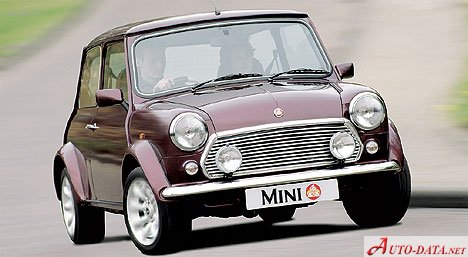
The design of the Rover Mini MK I 1.3i (50 Hp) Automatic remained fundamentally true to Alec Issigonis’s original vision, embodying a philosophy of maximal interior space within minimal exterior dimensions. It retained the iconic three-door hatchback body type, instantly recognizable globally. Measuring just 120.08 inches in length, 55.51 inches in width, and 53.15 inches in height, the Mini was a masterclass in compact design, making it ideal for navigating narrow European streets and fitting into tight parking spaces. Despite its diminutive size, the car offered seating for up to five occupants, though realistically, four would be a more comfortable fit, particularly for longer journeys.
Key features of this late-production Mini included its distinct exterior styling, which had evolved subtly over the decades but never strayed from its core aesthetic. Chrome accents, classic round headlights, and an upright stance were all hallmarks. Inside, while still maintaining a relatively spartan layout compared to contemporary cars, Rover introduced improved trim materials, more comfortable seating, and updated instrumentation. For its era and class, the inclusion of an Anti-lock Braking System (ABS) was a significant safety enhancement, providing improved stopping power and control, especially on slippery surfaces. The steering system utilized a rack and pinion setup, contributing to the Mini’s direct and communicative steering feel, a characteristic much loved by enthusiasts.
The suspension system, comprising wishbones at the front and trailing arms at the rear, was a variation of the original design, providing a surprisingly compliant ride for such a small vehicle, while still retaining the Mini’s famous nimble handling. Braking was handled by discs at the front and drums at the rear, a common and effective setup for vehicles of its weight and performance. The 145/70 R12 tires on 12-inch wheel rims completed the classic Mini stance, emphasizing its low center of gravity and planted feel.
Technical Specifications
| Rover Mini MK I 1.3i (50 Hp) Automatic – Technical Specifications | |
|---|---|
| General Information | |
| Brand | Rover |
| Model | Mini MK I |
| Type (Engine) | 1.3i (50 Hp) Automatic |
| Start of Production | 1992 |
| End of Production | 2000 |
| Powertrain Architecture | Internal Combustion Engine |
| Body Type | Hatchback |
| Seats | 5 |
| Doors | 3 |
| Performance Specs | |
| Fuel Consumption (Combined) | 33.1 US mpg (7.1 l/100 km) |
| Fuel Type | Petrol (Gasoline) |
| Acceleration 0-60 mph | 12.7 sec |
| Maximum Speed | 82.02 mph (132 km/h) |
| Weight-to-Power Ratio | 12.9 kg/Hp, 77.5 Hp/tonne |
| Weight-to-Torque Ratio | 7.2 kg/Nm, 138 Nm/tonne |
| Engine Specs | |
| Power | 50 Hp @ 5000 rpm |
| Power per Liter | 39.2 Hp/l |
| Torque | 65.64 lb.-ft. @ 2600 rpm (89 Nm) |
| Engine Layout | Front, Transverse |
| Engine Model/Code | 12A2EK72 |
| Engine Displacement | 1274 cm³ (77.74 cu. in.) |
| Number of Cylinders | 4 |
| Engine Configuration | Inline |
| Cylinder Bore | 2.78 in. (70.6 mm) |
| Piston Stroke | 3.2 in. (81.33 mm) |
| Compression Ratio | 10.5:1 |
| Valves per Cylinder | 2 |
| Fuel Injection System | Single-point injection |
| Engine Aspiration | Naturally aspirated |
| Engine Oil Capacity | 5.07 US qt (4.8 l) |
| Coolant Capacity | 4.23 US qt (4 l) |
| Space, Volume and Weights | |
| Kerb Weight | 1421.98 lbs. (645 kg) |
| Max. Weight | 2204.62 lbs. (1000 kg) |
| Max Load | 782.64 lbs. (355 kg) |
| Trunk (Boot) Space – Minimum | 4.24 cu. ft. (120 l) |
| Fuel Tank Capacity | 8.98 US gal (34 l) |
| Dimensions | |
| Length | 120.08 in. (3050 mm) |
| Width | 55.51 in. (1410 mm) |
| Height | 53.15 in. (1350 mm) |
| Wheelbase | 80.12 in. (2035 mm) |
| Front Track | 48.82 in. (1240 mm) |
| Rear Track | 47.64 in. (1210 mm) |
| Minimum Turning Circle | 28.22 ft. (8.6 m) |
| Drivetrain, Brakes and Suspension Specs | |
| Drivetrain Architecture | Front-wheel drive, Internal Combustion Engine |
| Drive Wheel | Front-wheel drive |
| Number of Gears and Type of Gearbox | 4 gears, automatic transmission |
| Front Suspension | Wishbone |
| Rear Suspension | Trailing arm |
| Front Brakes | Disc |
| Rear Brakes | Drum |
| Assisting Systems | ABS (Anti-lock Braking System) |
| Steering Type | Steering rack and pinion |
| Tires Size | 145/70 R12 |
| Wheel Rims Size | 12 inches |
Legacy and Market Impact of the Rover Mini MK I
The Rover Mini MK I 1.3i (50 Hp) Automatic holds a unique place in automotive history as one of the final iterations of the original Mini design. Produced up until the year 2000, it effectively served as a bridge between the classic era of British Leyland/Rover and the dawn of the BMW-owned MINI brand. Its continued production into the late 20th century, despite its fundamentally 1950s design, speaks volumes about its enduring appeal and the sheer brilliance of its original engineering.
In its primary European markets, the Rover Mini continued to be a beloved icon. While it faced competition from more modern, technologically advanced small cars like the Fiat Cinquecento, Renault Twingo, and early versions of the Ford Ka, the Mini carved out its niche by offering unparalleled character, a sense of heritage, and a driving experience unlike any other. It was less about cutting-edge technology (though it did adopt fuel injection and ABS) and more about pure, unadulterated driving fun and a strong emotional connection with its owners. Its compact size made it an ideal choice for urban dwellers, and its distinctive styling ensured it always stood out from the crowd.
The market impact of these late-model Minis was significant in solidifying the Mini’s status as a cultural phenomenon rather than just a car. They were often seen as fashionable accessories, particularly in markets like Japan and Italy, and their collectibility began to grow even before production ceased. The Rover Mini’s final years under the Rover badge were characterized by a series of special editions, each celebrating the car’s rich history and further enhancing its desirability. These models, including the 1.3i automatic, showcased how a classic design could be gently modernized to meet contemporary demands for comfort, convenience, and safety, without sacrificing its core identity.
Ultimately, the Rover Mini MK I 1.3i (50 Hp) Automatic stands as a testament to automotive longevity and iconic design. It represents the culmination of over four decades of continuous production for the original Mini, embodying its spirit of ingenious packaging, nimble handling, and undeniable charm. Its legacy continues to influence the automotive world, not least through the successful reinvention of the brand under BMW, which took many cues from the original’s character. For enthusiasts and collectors, these late-model Rover Minis are cherished examples of a true automotive legend, offering a tangible connection to a bygone era of British motoring ingenuity.