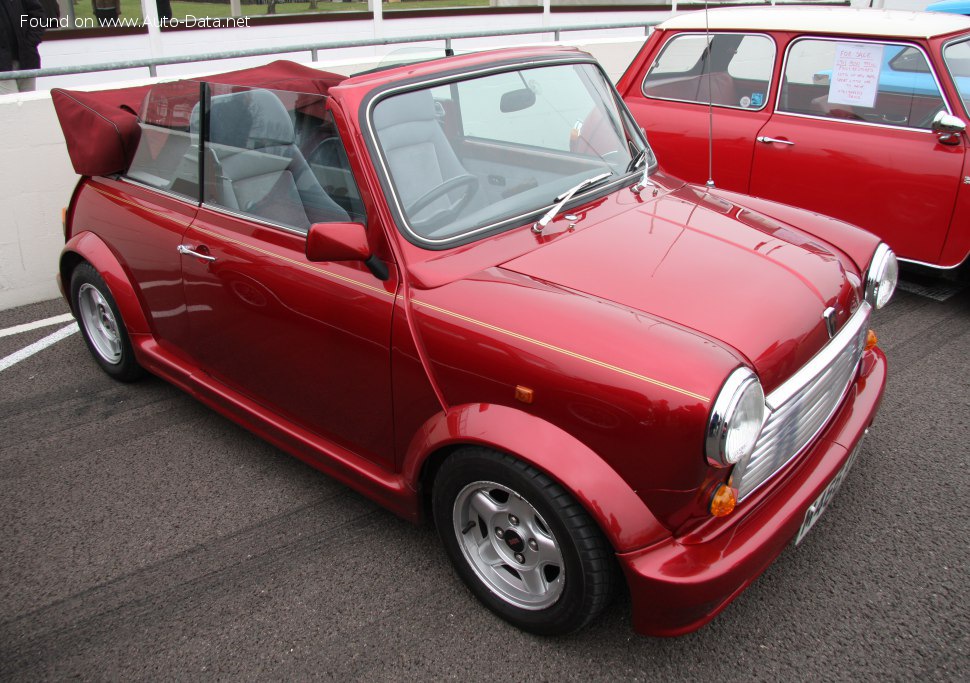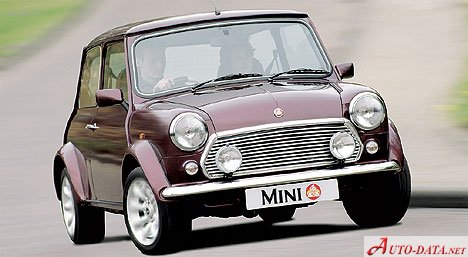
Introduction to the Rover Mini MK I 1300
The Rover Mini MK I 1300 represents a fascinating chapter in the storied history of one of the world’s most iconic automobiles. Produced from 1996 to 2000, this particular variant hails from the final years of the original Mini’s production run under the Rover Group before the brand’s re-imagining by BMW. While the designation “MK I” might typically refer to the earliest models of the Mini from the late 1950s and early 1960s, in this context, it signifies a late-production model that retained the timeless aesthetic and fundamental engineering principles of the original, albeit with modernizations befitting its era. This three-door hatchback, designed primarily for the European market where it enjoyed immense popularity, embodied the spirit of compact, agile, and fun-to-drive motoring that had defined the Mini for decades.
As an international automotive expert, it’s crucial to recognize that while the Mini was never a mainstream seller in the United States in its original form, its global cultural impact is undeniable. The Rover Mini MK I 1300, with its compact dimensions and sprightly performance, continued to serve as a beloved urban commuter and a symbol of British automotive ingenuity, particularly in the United Kingdom and across continental Europe. It blended nostalgic charm with practical improvements, making it a cherished choice for enthusiasts and daily drivers alike.
Engine and Performance of the Rover Mini MK I 1300
At the heart of the Rover Mini MK I 1300 was a robust and well-proven powertrain, a testament to the Mini’s enduring engineering. This model was equipped with a 1.3-liter (1273 cm³) naturally aspirated inline-four engine, designated with the code 12A2LK70. This unit, a direct descendant of the venerable A-series engine, was configured for front, transverse mounting, driving the front wheels – a revolutionary layout for its time that maximized interior space and handling dynamics.
The engine delivered a respectable 63 horsepower at 5700 rpm, with a peak torque of 70.07 lb-ft (95 Nm) arriving at a relatively low 3900 rpm. This torque characteristic, combined with the Mini’s exceptionally low curb weight of just 1543.24 lbs (700 kg), resulted in a lively and engaging driving experience. The power-to-weight ratio stood at an impressive 90 HP per tonne (11.1 kg/Hp), enabling the Mini to feel quicker than its raw power figures might suggest.
Power was transferred to the front wheels via a four-speed manual transmission, a setup that provided direct driver engagement and was perfectly suited to the car’s agile nature. Performance figures for the Rover Mini MK I 1300 included an acceleration from 0 to 60 mph in a calculated 12.1 seconds, with a top speed of 91.96 mph (148 km/h). While not a speed demon by modern standards, these figures were more than adequate for urban driving and spirited excursions on winding country roads, which the Mini handled with characteristic aplomb.
Fuel efficiency was also a key consideration for this compact car. The 1.3-liter engine offered an urban fuel consumption of approximately 27.7 US mpg (8.5 l/100 km) and an impressive extra-urban economy of around 42.8 US mpg (5.5 l/100 km) on gasoline. The multi-port manifold injection system, a significant upgrade over earlier carbureted versions, contributed to improved efficiency and emissions control, making it a more environmentally conscious choice in its later years of production.
Design and Features
The design of the Rover Mini MK I 1300 is immediately recognizable and universally beloved. It retained the classic three-door hatchback silhouette that had been largely unchanged since its inception in 1959. Its compact dimensions were a hallmark: a mere 122.05 inches (3100 mm) in length, 56.69 inches (1440 mm) in width, and 53.15 inches (1350 mm) in height. These diminutive measurements, coupled with a tight turning circle of 29.2 feet (8.9 m), made the Mini exceptionally maneuverable in congested city environments, a feature that contributed significantly to its enduring popularity.
Despite its small exterior, the Mini was surprisingly practical. It offered seating for five, though realistically, four adults would find it a more comfortable fit. The trunk (boot) space provided a modest 4.24 cubic feet (120 liters), sufficient for daily errands or a weekend bag. The interior, while simple, was charming and functional, emphasizing the car’s no-nonsense approach to motoring.
For a vehicle with such a long production run, the late-model Rover Minis incorporated several modern features. This specific variant included disc brakes at the front and drum brakes at the rear, complemented by an Anti-lock Braking System (ABS) – a significant safety enhancement for a car of its vintage design. The steering system utilized a precise rack and pinion setup, further contributing to the Mini’s renowned direct and communicative handling. The suspension, featuring a wishbone setup at the front and a trailing arm design at the rear, provided a firm yet compliant ride characteristic that became synonymous with the Mini’s go-kart-like feel. The car rode on 145/70 R12 tires, perfectly proportioned for its size and handling dynamics.
Technical Specifications
| Category | Specification |
|---|---|
| General Information | |
| Brand | Rover |
| Model | Mini MK |
| Generation | Mini MK I |
| Type (Engine) | 1300 (63 Hp) |
| Start of Production | 1996 year |
| End of Production | 2000 year |
| Powertrain Architecture | Internal Combustion engine |
| Body Type | Hatchback |
| Seats | 5 |
| Doors | 3 |
| Performance Specifications | |
| Fuel Consumption (Urban) | 8.5 l/100 km (27.7 US mpg) |
| Fuel Consumption (Extra Urban) | 5.5 l/100 km (42.8 US mpg) |
| Fuel Type | Petrol (Gasoline) |
| Acceleration 0 – 60 mph | 12.1 sec |
| Maximum Speed | 148 km/h (91.96 mph) |
| Weight-to-Power Ratio | 11.1 kg/Hp (90 Hp/tonne) |
| Weight-to-Torque Ratio | 7.4 kg/Nm (135.7 Nm/tonne) |
| Engine Specifications | |
| Power | 63 Hp @ 5700 rpm |
| Power per Liter | 49.5 Hp/l |
| Torque | 95 Nm @ 3900 rpm (70.07 lb.-ft. @ 3900 rpm) |
| Engine Layout | Front, Transverse |
| Engine Model/Code | 12A2LK70 |
| Engine Displacement | 1273 cm³ (77.68 cu. in.) |
| Number of Cylinders | 4 |
| Engine Configuration | Inline |
| Cylinder Bore | 70.6 mm (2.78 in.) |
| Piston Stroke | 81.3 mm (3.2 in.) |
| Compression Ratio | 10.1:1 |
| Number of Valves per Cylinder | 2 |
| Fuel Injection System | Multi-port manifold injection |
| Engine Aspiration | Naturally aspirated engine |
| Engine Oil Capacity | 4.8 l (5.07 US qt) |
| Coolant Capacity | 4 l (4.23 US qt) |
| Space, Volume, and Weights | |
| Kerb Weight | 700 kg (1543.24 lbs) |
| Max. Weight | 1050 kg (2314.85 lbs) |
| Max Load | 350 kg (771.62 lbs) |
| Trunk (boot) Space – Minimum | 120 l (4.24 cu. ft.) |
| Fuel Tank Capacity | 34 l (8.98 US gal) |
| Dimensions | |
| Length | 3100 mm (122.05 in.) |
| Width | 1440 mm (56.69 in.) |
| Height | 1350 mm (53.15 in.) |
| Wheelbase | 2035 mm (80.12 in.) |
| Front Track | 1250 mm (49.21 in.) |
| Rear (Back) Track | 1208 mm (47.56 in.) |
| Minimum Turning Circle | 8.9 m (29.2 ft.) |
| Drivetrain, Brakes, and Suspension | |
| Drivetrain Architecture | The Internal combustion engine (ICE) drives the front wheels of the vehicle. |
| Drive Wheel | Front wheel drive |
| Number of Gears and Type of Gearbox | 4 gears, manual transmission |
| Front Suspension | Wishbone |
| Rear Suspension | Trailing arm |
| Front Brakes | Disc |
| Rear Brakes | Drum |
| Assisting Systems | ABS (Anti-lock braking system) |
| Steering Type | Steering rack and pinion |
| Tires Size | 145/70 R12 |
Legacy and Market Impact
The Rover Mini MK I 1300 holds a unique place in automotive history as one of the final iterations of the original Mini design. Its production from 1996 to 2000 marked the end of an era that began in 1959 with Sir Alec Issigonis’s revolutionary design. This particular model benefited from decades of refinement, incorporating modern necessities like multi-port fuel injection and ABS, while resolutely retaining the cherished character and driving dynamics that made the Mini a legend.
In its primary markets, particularly the United Kingdom and Europe, the Rover Mini MK I 1300 was more than just a car; it was a cultural icon. It represented continuity and tradition, a tangible link to Britain’s rich automotive heritage. Its compact size made it ideal for navigating narrow European streets and its nimble handling offered an unparalleled sense of fun behind the wheel. The car’s enduring appeal meant that even in its twilight years, it faced little direct competition in terms of its unique blend of charm, heritage, and driving purity. While contemporary small cars like the Ford Fiesta, Volkswagen Polo, or Renault Clio offered more modern amenities, greater space, and often more robust safety structures, they simply couldn’t replicate the Mini’s unique personality or its “go-kart” driving feel.
The Rover Mini MK I 1300’s legacy is defined by its role as the ultimate expression of the classic Mini. It offered a slightly more refined and reliable package than its predecessors, making it a desirable collectible for enthusiasts seeking an authentic Mini experience with a touch of modern convenience. Its historical significance lies in bridging the gap between the original, rudimentary Mini and the thoroughly modern, BMW-era Mini that would follow. It stands as a testament to a design that truly transcended generations, remaining relevant and beloved for over four decades.
Today, these late-model Rover Minis are highly sought after by collectors and enthusiasts worldwide. Their blend of classic aesthetics with a more dependable and drivable powertrain makes them popular choices for those looking to experience the Mini legend. The Rover Mini MK I 1300 is not just a car; it’s a piece of living history, a reminder of a time when automotive design prioritized character, efficiency of space, and sheer driving enjoyment above all else.