
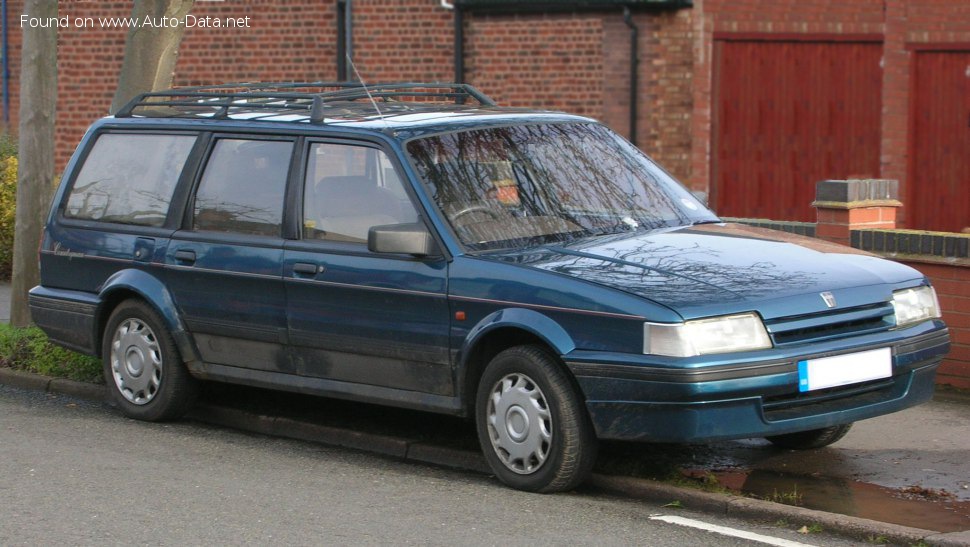
The Rover Montego Estate (XE) 2.0 Turbo-D (82 Hp), produced exclusively in 1993, represented a pragmatic offering from the British automaker Rover, primarily targeting the European family car market. As a station wagon (estate) variant of the Montego saloon, it was designed to provide ample cargo space and robust, economical motoring for its target demographic. While never officially sold in the United States, the Montego played a significant role in the UK and select European markets, embodying the practical and often understated design ethos prevalent in British family vehicles of its era. This particular iteration, equipped with a 2.0-liter turbodiesel engine, underscored a growing consumer demand for fuel efficiency and durability, especially for those requiring a reliable workhorse for daily commutes and family excursions.
The Rover Montego Estate (XE): A British Family Workhorse
The Rover Montego, first launched in 1984, was a pivotal, albeit often challenging, model for the Austin Rover Group (later Rover Group). Positioned as a mid-size family car, it succeeded the Morris Ital and was intended to compete fiercely with established rivals like the Ford Sierra and Vauxhall Cavalier. The XE generation, which included this 1993 2.0 Turbo-D Estate, represented the Montego’s later life cycle, where improvements were made to address earlier criticisms regarding build quality and refinement. The estate version, in particular, was crucial to its market appeal, offering a practical alternative to sedans by maximizing versatility and load-carrying capacity. For many British families and businesses, the Montego Estate was a sensible choice, valuing its utility and relatively low running costs over more aspirational or performance-oriented alternatives.
In the early 1990s, the automotive landscape in Europe was shifting, with increasing emphasis on efficiency and environmental considerations. Diesel engines, once relegated to commercial vehicles, were gaining traction in passenger cars due to their superior fuel economy and torque characteristics. The Montego Estate (XE) 2.0 Turbo-D was Rover’s answer to this trend, offering a diesel option that promised longevity and economical operation, essential attributes for a vehicle designed for heavy use. Its design, while not groundbreaking, was functional and familiar, fitting seamlessly into the visual landscape of European roads at the time.
Engine and Performance: The Perkins Prima Turbo-Diesel
Powertrain Overview
The heart of the 1993 Rover Montego Estate (XE) 2.0 Turbo-D was its 2.0-liter (122 cubic inch) Perkins Prima 80T turbodiesel engine. This particular powerplant was a significant aspect of the Montego’s appeal, especially for buyers prioritizing fuel efficiency and robust performance for an estate car. Generating 82 horsepower, the engine provided adequate power for daily driving and highway cruising, especially when considering the vehicle’s primary role as a family hauler. The inclusion of a turbocharger was key, allowing the relatively modest 2.0-liter displacement to produce sufficient torque, crucial for moving a loaded station wagon and offering a more responsive driving experience than naturally aspirated diesels of the era.
The Perkins Prima engine itself had a reputation for durability and reliability, being a product of a company renowned for its diesel engine technology. While 82 horsepower might seem modest by today’s standards, for a 1993 turbodiesel family estate, it was competitive and delivered a characteristic surge of low-end torque that made the Montego feel capable. The internal combustion engine architecture, a staple of the era, was straightforward and designed for ease of maintenance, further contributing to its appeal as a practical vehicle. The engine oil capacity of 5.25 liters (5.55 US quarts) and a coolant capacity of 7.5 liters (7.93 US quarts) were standard for engines of this size, indicating conventional cooling and lubrication systems.
Fuel Economy and Practicality
Despite the data initially listing “Fuel Type Petrol (Gasoline),” the “Turbo-D” designation and the “Perkins Prima 80T” engine model unequivocally confirm this variant ran on diesel fuel. This diesel engine was a major selling point for the Montego Estate. Diesel engines of the early 1990s were celebrated for their superior fuel economy compared to their gasoline counterparts, making them an attractive option for motorists covering long distances or those looking to minimize running costs. The 50-liter (13.21 US gallon) fuel tank capacity, combined with the diesel engine’s inherent efficiency, would have provided a substantial driving range, reducing the frequency of fuel stops – a valuable attribute for a family or business vehicle.
The practical benefits extended beyond just fuel consumption. Diesel engines typically offer greater longevity and lower maintenance requirements over their lifespan, albeit with higher initial purchase costs. For the Montego Estate, this meant a vehicle that could withstand the rigors of family life, including hauling luggage, groceries, or even towing small trailers. The torque delivery characteristic of the Perkins Prima engine also made it well-suited for carrying heavy loads, providing steady pulling power without excessive strain on the powertrain. This blend of economy, durability, and practical performance cemented the 2.0 Turbo-D as a sensible choice within the Montego lineup.
Design and Features: Functional British Styling
Body Type and Ergonomics
The Rover Montego Estate (XE) adopted the classic station wagon body type, a design choice driven purely by practicality and utility. With five doors and seating for five occupants, it offered a versatile interior layout that was highly valued in the European market. The design philosophy of the Montego Estate was rooted in functionality rather than flamboyant aesthetics. Its lines were clean, if somewhat conservative, reflecting the prevailing trends for family cars in the early 1990s. The elongated roofline and expansive rear cargo area were the defining features, providing a substantial increase in luggage capacity compared to the Montego sedan.
Ergonomically, the Montego Estate was designed to be user-friendly. Entry and exit were straightforward, and the interior layout was conventional, with controls positioned logically. The large glass area typical of station wagons offered good visibility, aiding in maneuvering and parking. The rear tailgate provided a wide opening for easy loading and unloading of bulky items, a crucial aspect for any estate car. While specific interior features are not detailed in the provided data, one could infer standard amenities for a 1993 family car, likely including cloth upholstery, a basic radio/cassette player, manual window winders (though power windows might have been an option), and a functional heating and ventilation system. The emphasis was on durability and straightforward operation, rather than luxurious appointments.
Interior and Convenience
Inside, the Montego Estate prioritized space and utility. The five-seat configuration was comfortable for a family, with adequate headroom and legroom for front and rear passengers. The true strength, however, lay behind the rear seats. When folded down, the cargo area transformed into a large, flat load bay, capable of accommodating significant volumes of luggage, sports equipment, or even furniture. This adaptability was a key differentiator for estate cars and a major reason for their popularity among families and tradespeople alike. Storage compartments and cubbies would have been incorporated throughout the cabin to enhance practicality.
Safety features for a 1993 vehicle were more rudimentary than today’s standards. Expecting features like anti-lock brakes (ABS) or airbags as standard on a mainstream family car like the Montego would have been optimistic, though they might have been available as optional extras on higher trims. The car would have featured three-point seatbelts for all outboard passengers and possibly a lap belt for the central rear passenger. The Montego Estate’s design, while not revolutionary, was a testament to the enduring appeal of a practical, no-nonsense vehicle that fulfilled its primary purpose with competence.
Technical Specifications for the Rover Montego Estate (XE) 2.0 Turbo-D
| General Information | Details |
|---|---|
| Brand | Rover |
| Model | Montego |
| Generation | Montego Estate (XE) |
| Type (Engine) | 2.0 Turbo-D (82 Hp) |
| Start of Production | 1993 year |
| End of Production | 1993 year |
| Powertrain Architecture | Internal Combustion engine |
| Body Type | Station wagon (estate) |
| Seats | 5 |
| Doors | 5 |
| Performance Specs | Details |
| Fuel Type | Diesel (based on “Turbo-D” engine designation) |
| Power | 82 Hp |
| Engine Model/Code | Perkins Prima 80T |
| Engine Aspiration | Turbocharger |
| Engine Oil Capacity | 5.25 l (5.55 US qt | 4.62 UK qt) |
| Engine Oil Specification | Not specified |
| Coolant Capacity | 7.5 l (7.93 US qt | 6.6 UK qt) |
| Space, Volume and Weights | Details |
| Fuel Tank Capacity | 50 l (13.21 US gal | 11 UK gal) |
Legacy and Market Impact in the UK and Europe
Market Positioning and Competitors
In its primary market, the UK, and to a lesser extent, parts of Europe, the Rover Montego Estate (XE) 2.0 Turbo-D found its niche as a value-oriented, practical family car. It competed in a fiercely contested segment against formidable rivals such as the Ford Sierra Estate, Vauxhall Cavalier Estate (Opel Vectra Estate in mainland Europe), Peugeot 405 Estate, and Volkswagen Passat Estate. While the Montego struggled to match the perceived sophistication or build quality of some of its German and French competitors, it often appealed on the basis of its competitive pricing and the perceived robustness of its diesel engine. The Perkins Prima turbodiesel was a significant asset, offering a compelling blend of economy and torque that many rivals found hard to beat at a similar price point.
However, the Montego’s legacy was also intertwined with the broader challenges faced by the Rover Group during this period. Often criticized for its somewhat dated styling and occasional quality control issues, it struggled to shake off a reputation for being less refined than its best-selling rivals. Despite this, the estate version, particularly with the diesel engine, was highly regarded for its sheer practicality and low running costs, making it a popular choice among fleet buyers and budget-conscious families. It carved out a loyal following among those who valued honest, unpretentious motoring over brand image or cutting-edge technology.
Historical Significance
The Rover Montego Estate holds a unique place in the history of the British automotive industry. It was one of the last vestiges of the Austin Rover era, a period marked by significant industrial strife and a struggle to remain competitive against global giants. The XE generation, including the 1993 2.0 Turbo-D, represented the Montego in its most refined form, benefiting from years of incremental improvements. It symbolized the British industry’s attempt to produce a practical, mass-market family vehicle that could compete on its merits, particularly in terms of space and economy.
Ultimately, the Montego was discontinued in 1994, replaced by the Rover 400 (which shared platforms with the Honda Civic) and later the more modern Rover 75. Its departure marked the end of an era for Rover, as the company moved towards more collaborative ventures and a focus on premium segments. While not remembered as a glamorous or groundbreaking car, the Montego Estate, especially its diesel variants, was a dependable workhorse that served countless families and businesses. It stands as a testament to a time when British engineering, even amidst significant challenges, continued to deliver functional and economical solutions to the everyday motoring needs of its home market and beyond. Its impact was less about innovation and more about consistent, if sometimes understated, utility, making it a quietly significant model in Rover’s complex narrative.

