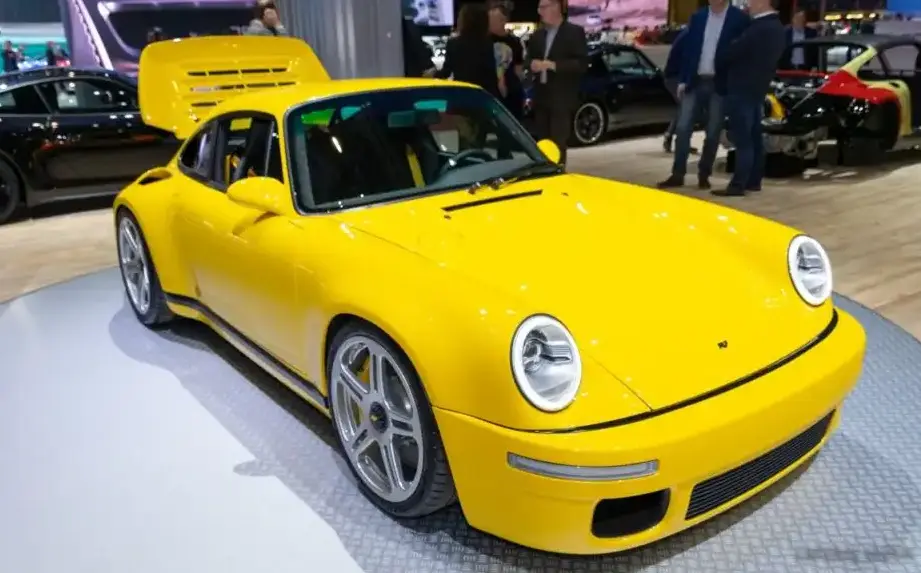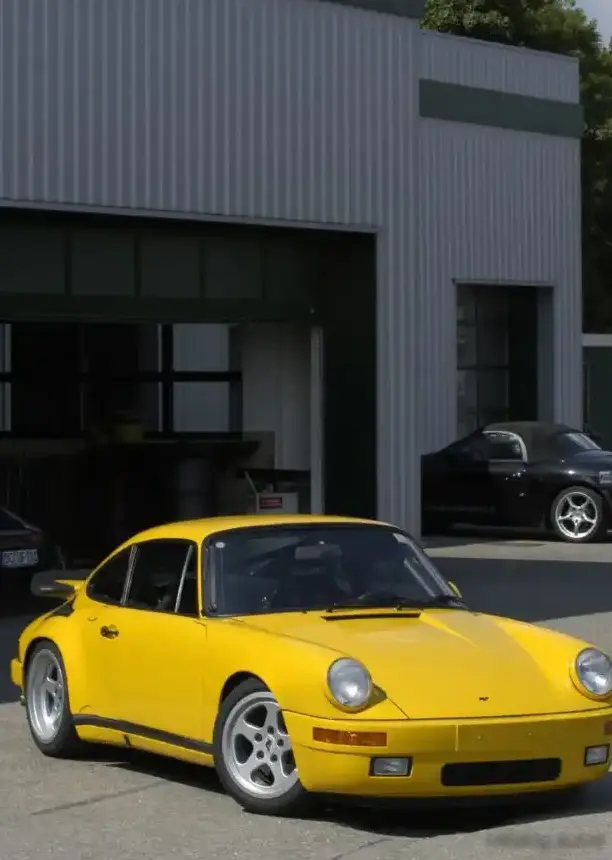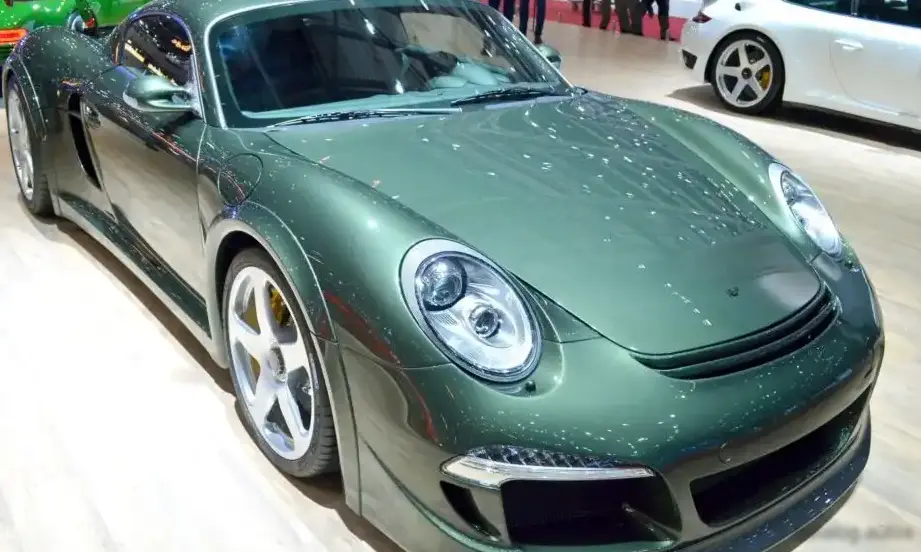
The RUF CTR 3 3.7, producing 700 horsepower, represents the pinnacle of RUF Automobile’s modern supercar lineage. Introduced in 2007 and continuing production through 2012, this vehicle is not merely a modified Porsche, but a completely re-engineered and hand-built automobile based on the 997-generation Porsche 911. RUF operates as a manufacturer in its own right, and the CTR 3 is a testament to their dedication to high-performance engineering and exclusivity. The “CTR” designation, standing for “Group C Racing,” pays homage to RUF’s successful racing history, and the 3.7 signifies the engine displacement. This model aimed to recapture the spirit of the original CTR “Yellowbird” while incorporating contemporary technology and safety features.
Technical Specifications
| Brand | RUF |
| Model | CTR |
| Generation | CTR 3 |
| Type (Engine) | 3.7 (700 Hp) |
| Start of production | 2007 |
| End of production | 2012 |
| Powertrain Architecture | Internal Combustion engine |
| Body type | Coupe |
| Seats | 2 |
| Doors | 2 |
| Fuel Type | Petrol (Gasoline) |
| Acceleration 0 – 100 km/h | 3.2 sec |
| Acceleration 0 – 62 mph | 3.2 sec |
| Acceleration 0 – 60 mph | 3 sec |
| Maximum speed | 375 km/h (233.01 mph) |
| Weight-to-power ratio | 2 kg/Hp, 500 Hp/tonne |
| Weight-to-torque ratio | 1.6 kg/Nm, 635.7 Nm/tonne |
| Power | 700 Hp @ 7000 rpm |
| Power per litre | 186.9 Hp/l |
| Torque | 890 Nm @ 4000 rpm (656.43 lb.-ft. @ 4000 rpm) |
| Engine layout | Middle, Longitudinal |
| Engine displacement | 3746 cm3 (228.59 cu. in.) |
| Number of cylinders | 6 |
| Engine configuration | Boxer |
| Cylinder Bore | 102 mm (4.02 in.) |
| Piston Stroke | 76.4 mm (3.01 in.) |
| Compression ratio | 9.2:1 |
| Number of valves per cylinder | 4 |
| Fuel injection system | Direct injection |
| Engine aspiration | Twin-Turbo, Intercooler |
| Valvetrain | DOHC |
| Kerb Weight | 1400 kg (3086.47 lbs.) |
| Length | 4445 mm (175 in.) |
| Width | 1944 mm (76.54 in.) |
| Height | 1200 mm (47.24 in.) |
| Wheelbase | 2625 mm (103.35 in.) |
| Front track | 1506 mm (59.29 in.) |
| Rear track | 1585 mm (62.4 in.) |
| Drivetrain Architecture | Rear wheel drive |
| Number of gears | 6 |
| Type of gearbox | Manual transmission |
| Front suspension | Independent, McPherson with coil spring and anti-roll bar |
| Rear suspension | Independent multi-link spring suspension with stabilizer |
| Front brakes | Ventilated discs |
| Rear brakes | Ventilated discs |
| Assisting systems | ABS (Anti-lock braking system) |
| Steering type | Steering rack and pinion |
| Power steering | Electric |
| Tires size | 255/35 R19; 335/30 R20 |
| Wheel rims size | 8.5J x 19; 12.5J x 20 |
Powertrain & Engine Architecture
The heart of the CTR 3 3.7 is its twin-turbocharged 3.7-liter flat-six engine. This engine is not based on a standard Porsche unit, but rather a completely bespoke design developed by RUF. It utilizes direct fuel injection and a sophisticated engine management system to deliver its impressive 700 horsepower and 656 lb-ft of torque. The twin-turbochargers, coupled with an intercooler, provide significant boost while minimizing turbo lag. The engine’s dry-sump lubrication system ensures consistent oil supply during high-g maneuvers. Power is delivered to the rear wheels via a six-speed manual transmission, chosen for its direct connection and driver engagement. The transmission features close gear ratios optimized for both acceleration and high-speed cruising.
Driving Characteristics
The driving experience in the CTR 3 3.7 is characterized by its raw power and precise handling. The combination of the lightweight chassis (approximately 3,086 lbs) and the potent engine results in blistering acceleration – 0 to 60 mph in around 3 seconds and a top speed exceeding 233 mph. The manual transmission demands skillful operation, but rewards the driver with complete control. The suspension, tuned for performance, provides a firm yet compliant ride, allowing for confident cornering. While not designed for everyday comfort, the CTR 3 offers a surprisingly usable experience for a car of its caliber. Compared to a standard Porsche 911 Turbo of the same era, the CTR 3 offers a more visceral and engaging driving experience, prioritizing performance over refinement.
Equipment & Trim Levels
RUF, being a low-volume manufacturer, offered a high degree of customization for the CTR 3. However, standard features included a meticulously crafted interior with high-quality leather upholstery, carbon fiber trim, and lightweight bucket seats. The dashboard layout retained a Porsche-inspired design but featured unique RUF instrumentation and detailing. Options included a bespoke exhaust system, upgraded audio system, and various exterior customization options. Air conditioning and a basic navigation system were typically included, but the focus remained on minimizing weight and maximizing performance. The CTR 3 was not offered in multiple trim levels; each vehicle was essentially a bespoke creation tailored to the customer’s preferences.
Chassis & Braking
The CTR 3’s chassis is a heavily modified version of the Porsche 911 platform, featuring extensive reinforcement and lightweighting measures. The suspension utilizes adjustable dampers and coil springs, allowing drivers to fine-tune the handling characteristics. Large ventilated disc brakes at all four corners, coupled with an ABS system, provide exceptional stopping power. The car’s wide track and low center of gravity contribute to its stability and cornering ability. RUF also incorporated aerodynamic enhancements, including a distinctive rear wing and front splitter, to improve downforce and reduce drag.
Market Reception & Comparison
The RUF CTR 3 3.7 was widely praised by automotive journalists for its exceptional performance and exclusivity. Critics lauded its powerful engine, precise handling, and overall driving experience. Compared to other supercars of the era, such as the Ferrari 458 Italia or Lamborghini Gallardo, the CTR 3 offered a unique blend of Porsche engineering and RUF’s bespoke craftsmanship. While its price tag was substantial, it represented a compelling alternative for those seeking a truly individual and high-performance automobile. Fuel economy was not a primary concern for buyers of this vehicle, but it was generally estimated to be in the range of 15-20 mpg.
Legacy
The RUF CTR 3 3.7 remains a highly sought-after collector’s item. Its limited production run and exceptional performance have ensured its place in automotive history. The powertrain, while demanding in terms of maintenance, has proven to be relatively reliable when properly cared for. Today, examples of the CTR 3 command significant prices in the used car market, reflecting their rarity and desirability. The CTR 3 represents a high point in RUF’s history, showcasing their ability to create truly exceptional and unique automobiles that rival the best in the world.