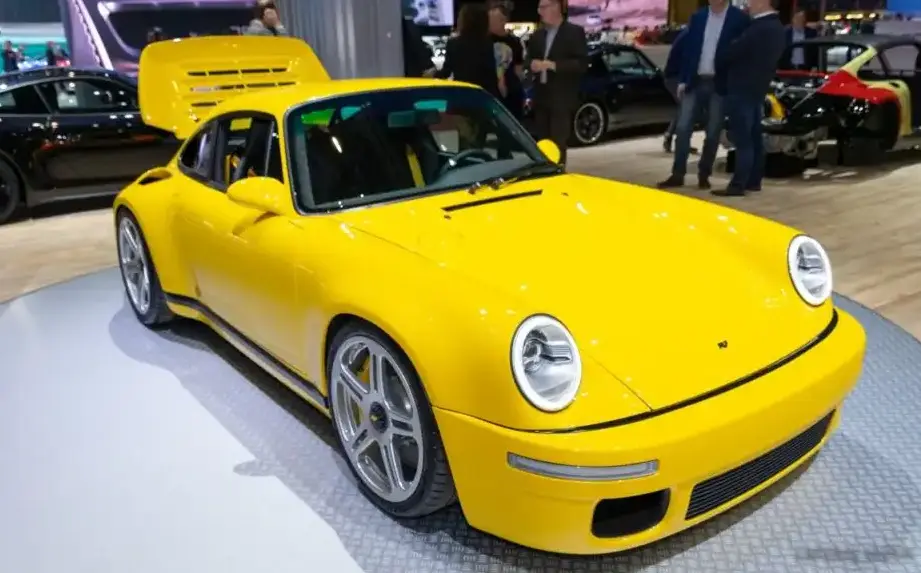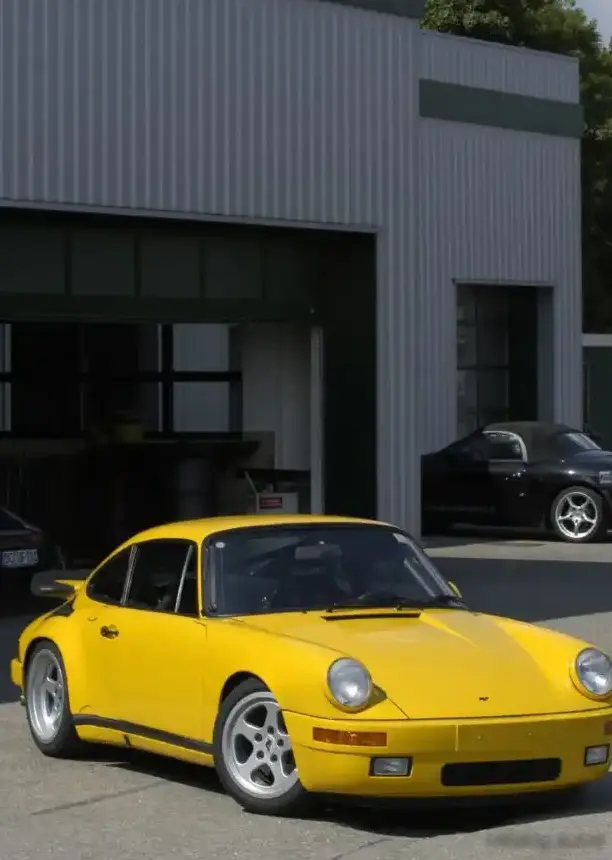
The RUF CTR 3.4 Turbo, produced between 1987 and 1991, represents a pinnacle of 1980s sports car engineering. Built by the independent German manufacturer RUF Automobile, the CTR (Gruppe C Racing Transfiguration) wasn’t simply a modified Porsche 911; it was a comprehensively re-engineered machine designed for exceptional performance and driving experience. The “3.4” designation refers to the engine displacement, and the “Turbo” indicates its forced induction system. This model cemented RUF’s reputation for creating some of the fastest and most capable road cars of its era, often exceeding the performance of contemporary supercars. The CTR 3.4 Turbo is highly sought after by collectors and enthusiasts, celebrated for its raw power, analog feel, and limited production numbers.
Technical Specifications
| Brand | RUF |
| Model | CTR |
| Generation | CTR |
| Type (Engine) | 3.4 Turbo (469 Hp) |
| Start of production | 1987 year |
| End of production | 1991 year |
| Powertrain Architecture | Internal Combustion engine |
| Body type | Coupe |
| Seats | 2 |
| Doors | 2 |
| Fuel Type | Petrol (Gasoline) |
| Maximum speed | 335 km/h (208.16 mph) |
| Weight-to-power ratio | 2.5 kg/Hp, 400.9 Hp/tonne |
| Weight-to-torque ratio | 2.1 kg/Nm, 472.6 Nm/tonne |
| Power | 469 Hp @ 5950 rpm |
| Power per litre | 139.3 Hp/l |
| Torque | 553 Nm @ 5100 rpm (407.87 lb.-ft. @ 5100 rpm) |
| Maximum engine speed | 6800 rpm |
| Engine layout | Rear, Longitudinal |
| Engine displacement | 3367 cm3 (205.47 cu. in.) |
| Number of cylinders | 6 |
| Engine configuration | Boxer |
| Cylinder Bore | 98 mm (3.86 in.) |
| Piston Stroke | 74.4 mm (2.93 in.) |
| Compression ratio | 7.5:1 |
| Number of valves per cylinder | 2 |
| Engine aspiration | Twin-Turbo, Intercooler |
| Kerb Weight | 1170 kg (2579.41 lbs.) |
| Length | 4290 mm (168.9 in.) |
| Width | 1775 mm (69.88 in.) |
| Height | 1311 mm (51.61 in.) |
| Wheelbase | 2273 mm (89.49 in.) |
| Front track | 1433 mm (56.42 in.) |
| Rear (Back) track | 1491 mm (58.7 in.) |
| Drivetrain Architecture | The Internal combustion engine (ICE) drives the rear wheels of the vehicle. |
| Drive wheel | Rear wheel drive |
| Number of gears and type of gearbox | 5 gears, manual transmission |
| Front brakes | Ventilated discs |
| Rear brakes | Ventilated discs |
| Steering type | Steering rack and pinion |
| Tires size | 215/45 R17; 255/40 R17 |
| Wheel rims size | 8.0J x 17; 10J x 17 |
Powertrain & Engine Architecture
The heart of the RUF CTR 3.4 Turbo is its 3.4-liter, twin-turbocharged flat-six engine. Based on the Porsche 930’s engine block, RUF extensively modified the internals to handle the significantly increased power output. Key changes included strengthened connecting rods, a revised crankshaft, and larger cylinder heads. The twin KKK turbochargers, with an intercooler, provided substantial boost, contributing to the engine’s 469 horsepower and 407.87 lb-ft of torque. Fuel delivery was managed by Bosch Motronic fuel injection. The engine’s 7.5:1 compression ratio was a compromise to accommodate the turbocharging system and prevent detonation. The engine is mounted longitudinally in the rear of the vehicle, a hallmark of the 911 platform, but with RUF’s signature engineering enhancements. The CTR utilized a robust 5-speed manual transmission, designed to withstand the engine’s considerable output.
Driving Characteristics
The driving experience in the RUF CTR 3.4 Turbo is renowned for its immediacy and raw power. The combination of the turbocharged engine and rear-wheel drive delivers exhilarating acceleration. The 5-speed manual transmission provides precise control, although the turbo lag requires skillful clutch and throttle modulation. Compared to a standard Porsche 911 of the era, the CTR offers a significantly more aggressive and responsive driving experience. The relatively lightweight construction (around 2579 lbs) contributes to its nimble handling. While the CTR is not forgiving of driver errors, it rewards skilled drivers with an unparalleled connection to the road. The power delivery is not linear; the turbochargers build boost progressively, resulting in a surge of acceleration once they spool up.
Equipment & Trim Levels
The RUF CTR 3.4 Turbo was not offered with extensive trim levels in the traditional sense. RUF focused primarily on performance and engineering, offering a relatively spartan interior. Standard features included sport seats, a three-spoke steering wheel, and basic instrumentation. The interior was largely functional, prioritizing weight reduction and driver focus. Optional extras were limited but could include upgraded audio systems and custom upholstery. The exterior was characterized by its wide bodywork, prominent rear wing, and distinctive RUF wheels. The bodywork was largely constructed from aluminum to minimize weight.
Chassis & Braking
The CTR’s chassis was heavily modified from the standard Porsche 911. RUF reinforced the chassis structure to handle the increased power and stresses. The suspension was upgraded with stiffer springs, adjustable dampers, and thicker stabilizer bars. The braking system featured ventilated discs on all four wheels, providing ample stopping power. The steering utilized a rack-and-pinion system for precise control. The CTR’s wider track and lower ride height contributed to its improved handling characteristics. Tire sizes were 215/45 R17 at the front and 255/40 R17 at the rear, providing a substantial contact patch for enhanced grip.
Market Reception & Comparison
The RUF CTR 3.4 Turbo was widely praised by automotive journalists and enthusiasts for its exceptional performance and driving experience. It was often compared favorably to contemporary supercars such as the Ferrari F40 and Lamborghini Countach. Critics lauded its raw power, precise handling, and analog feel. The CTR’s fuel economy was relatively poor, typical of high-performance turbocharged engines of the era. Reliability was generally good, although maintenance costs were high due to the complexity of the engine and the limited availability of parts. Compared to other 911-based RUF models, the CTR 3.4 Turbo represented the pinnacle of their engineering capabilities.
Legacy
The RUF CTR 3.4 Turbo remains a highly collectible and sought-after sports car. Its limited production numbers and exceptional performance have ensured its status as a classic. The powertrain, while complex, has proven to be relatively durable when properly maintained. Today, the CTR commands a significant premium in the used car market. It is regarded as a landmark achievement in automotive engineering, representing a unique blend of Porsche heritage and RUF’s independent spirit. The CTR’s influence can be seen in subsequent generations of high-performance sports cars, and it continues to inspire enthusiasts around the world.