
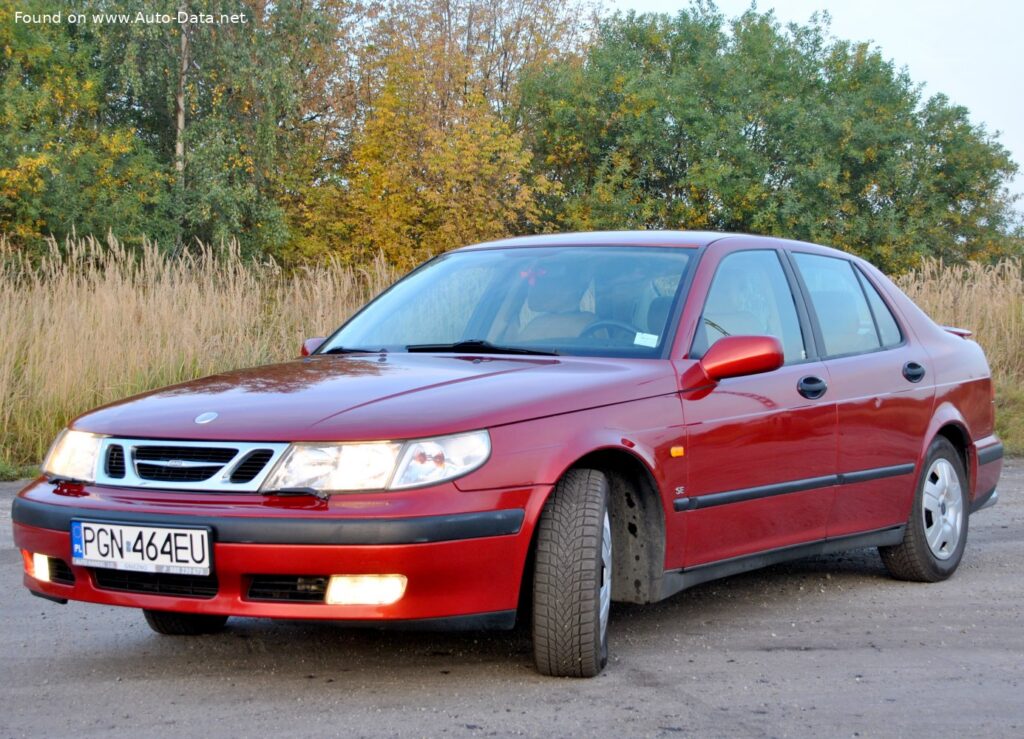
The first-generation Saab 9-5, produced from 1997 to 2010, represented a pivotal moment for the idiosyncratic Swedish automaker. Positioned as a premium executive car, it replaced the long-serving Saab 9000 and aimed to fuse Saab’s cherished traditions of safety, practicality, and turbocharged performance with more refined styling and modern technology. Among its numerous variants, the Saab 9-5 2.3 T 16V Aero (250 Hp), produced between 1999 and 2001, stood out as the undisputed performance flagship. This particular iteration of the 9-5 embodied Saab’s unique engineering philosophy, offering a distinctive blend of spirited driving dynamics and understated luxury, carving out a niche in a market segment typically dominated by German luxury brands. While not a volume seller in the United States, the 9-5 Aero developed a cult following among enthusiasts who appreciated its unconventional charm, robust powertrain, and a driving experience that felt distinctly different from its competitors, reflecting Saab’s commitment to innovation and driver engagement.
Performance and Engineering of the Saab 9-5 2.3 T 16V Aero (250 Hp)
At the heart of the formidable Saab 9-5 2.3 T 16V Aero (250 Hp) was the renowned B235R engine, a turbocharged 2.3-liter (2290 cm3 or 139.74 cu. in.) inline four-cylinder unit. This powerplant was a testament to Saab’s long-standing expertise in turbocharging technology, delivering an impressive 250 horsepower at 5300 RPM. More significantly, its torque output of 258.15 lb.-ft. (350 Nm) arrived remarkably early at just 1900 RPM. This characteristic low-end torque was a hallmark of Saab’s turbocharged engines, providing exceptional responsiveness and muscular acceleration from virtually any RPM, making the Aero a highly engaging car for both city driving and highway cruising. The engine featured a Double Overhead Camshaft (DOHC) valvetrain with four valves per cylinder, a compression ratio of 9.3:1, and a multi-port manifold injection system, all optimized for efficient and potent power delivery.
Paired with a crisp 5-speed manual transmission, the Aero’s powertrain directed power to the front wheels, a configuration that Saab meticulously engineered to minimize torque steer despite the substantial output. This setup, combined with a relatively low curb weight of 3395.12 lbs. (1540 kg), contributed to the Aero’s impressive performance figures. The car could rocket from 0 to 60 mph in a mere 6.6 seconds, and complete the 0-100 km/h sprint in 6.9 seconds. Its top speed was electronically limited to 155.34 mph (250 km/h), firmly placing it in contention with many European sports sedans of its era. The weight-to-power ratio stood at 6.2 kg/Hp (162.3 Hp/tonne), underscoring its performance credentials. Despite its spirited performance, Saab also focused on efficiency for its time, with a combined fuel economy rating of approximately 24 US mpg (9.8 l/100 km), demonstrating a balanced approach to power and practicality.
Design and Features of the Saab 9-5 Aero Sedan
The Saab 9-5 adopted a sleek, aerodynamic sedan body style, characterized by its distinctive Saab “hockey stick” waistline and a practical four-door, five-seat configuration. With a length of 189.37 inches (4810 mm), a width of 70.47 inches (1790 mm), and a height of 57.09 inches (1450 mm), the 9-5 offered a substantial road presence. Its wheelbase of 106.5 inches (2705 mm) provided a stable ride and generous interior space. Saab’s design philosophy prioritized functionality and safety, with subtle curves and a purposeful stance. The Aero variant further distinguished itself with specific cosmetic enhancements, including unique alloy wheels and subtle badging, hinting at its performance capabilities without resorting to overt aggression.
Inside, the 9-5 Aero upheld Saab’s reputation for ergonomic design and thoughtful features. While specific interior features like heated seats or a premium sound system are not detailed in the provided data, Saab vehicles of this vintage were known for their driver-centric cockpits, often featuring innovations like the “Night Panel” function (which dimmed all but essential instrumentation at night) and ignition key placement between the front seats. Safety was paramount, and the 9-5 incorporated advanced features for its time, including ABS (Anti-lock Braking System) as standard, along with robust structural integrity and Saab’s innovative active head restraints designed to reduce whiplash injuries. The suspension system utilized spring struts at both the front and rear, providing a balance of comfortable ride quality and capable handling, complemented by ventilated disc brakes at the front and disc brakes at the rear for confident stopping power. The car rode on 225/45 R17 tires, mounted on 17-inch wheel rims, which provided ample grip and enhanced the vehicle’s dynamic prowess. Furthermore, the 9-5 offered impressive practicality with a substantial trunk capacity of 17.66 cu. ft. (500 liters), reinforcing its utility as a high-performance family sedan.
Technical Specifications: Saab 9-5 2.3 T 16V Aero (250 Hp)
| Characteristic | Specification |
|---|---|
| Brand | Saab |
| Model | 9-5 |
| Generation | 9-5 |
| Type (Engine) | 2.3 T 16V Aero (250 Hp) |
| Start of Production | 1999 year |
| End of Production | 2001 year |
| Powertrain Architecture | Internal Combustion engine |
| Body Type | Sedan |
| Seats | 5 |
| Doors | 4 |
| Fuel Consumption (Economy) – Urban | 15.9 US mpg (14.8 l/100 km) |
| Fuel Consumption (Economy) – Extra Urban | 34.6 US mpg (6.8 l/100 km) |
| Fuel Consumption (Economy) – Combined | 24 US mpg (9.8 l/100 km) |
| Fuel Type | Petrol (Gasoline) |
| Acceleration 0 – 60 mph | 6.6 sec |
| Acceleration 0 – 100 km/h | 6.9 sec |
| Maximum Speed | 155.34 mph (250 km/h) |
| Weight-to-Power Ratio | 6.2 kg/Hp, 162.3 Hp/tonne |
| Weight-to-Torque Ratio | 4.4 kg/Nm, 227.3 Nm/tonne |
| Power | 250 Hp @ 5300 rpm |
| Power per Liter | 109.2 Hp/l |
| Torque | 258.15 lb.-ft. @ 1900 rpm (350 Nm @ 1900 rpm) |
| Engine Layout | Front, Transverse |
| Engine Model/Code | B235R |
| Engine Displacement | 139.74 cu. in. (2290 cm3) |
| Number of Cylinders | 4 |
| Engine Configuration | Inline |
| Cylinder Bore | 3.54 in. (90 mm) |
| Piston Stroke | 3.54 in. (90 mm) |
| Compression Ratio | 9.3:1 |
| Number of Valves per Cylinder | 4 |
| Fuel Injection System | Multi-port manifold injection |
| Engine Aspiration | Turbocharger |
| Valvetrain | DOHC |
| Engine Oil Capacity | 4.23 US qt (4 l) |
| Coolant Capacity | 7.82 US qt (7.4 l) |
| Kerb Weight | 3395.12 lbs. (1540 kg) |
| Max. Weight | 4651.75 lbs. (2110 kg) |
| Max Load | 1256.63 lbs. (570 kg) |
| Trunk (Boot) Space – Minimum | 17.66 cu. ft. (500 l) |
| Fuel Tank Capacity | 18.49 US gal (70 l) |
| Length | 189.37 in. (4810 mm) |
| Width | 70.47 in. (1790 mm) |
| Height | 57.09 in. (1450 mm) |
| Wheelbase | 106.5 in. (2705 mm) |
| Front Track | 59.84 in. (1520 mm) |
| Rear (Back) Track | 59.84 in. (1520 mm) |
| Drivetrain Architecture | The Internal combustion engine (ICE) drives the front wheels of the vehicle. |
| Drive Wheel | Front-wheel drive |
| Number of Gears and Type of Gearbox | 5 gears, manual transmission |
| Front Suspension | Spring Strut |
| Rear Suspension | Spring Strut |
| Front Brakes | Ventilated discs |
| Rear Brakes | Disc |
| Assisting Systems | ABS (Anti-lock braking system) |
| Steering Type | Steering rack and pinion |
| Power Steering | Hydraulic Steering |
| Tires Size | 225/45 R17 |
| Wheel Rims Size | 17 inches |
