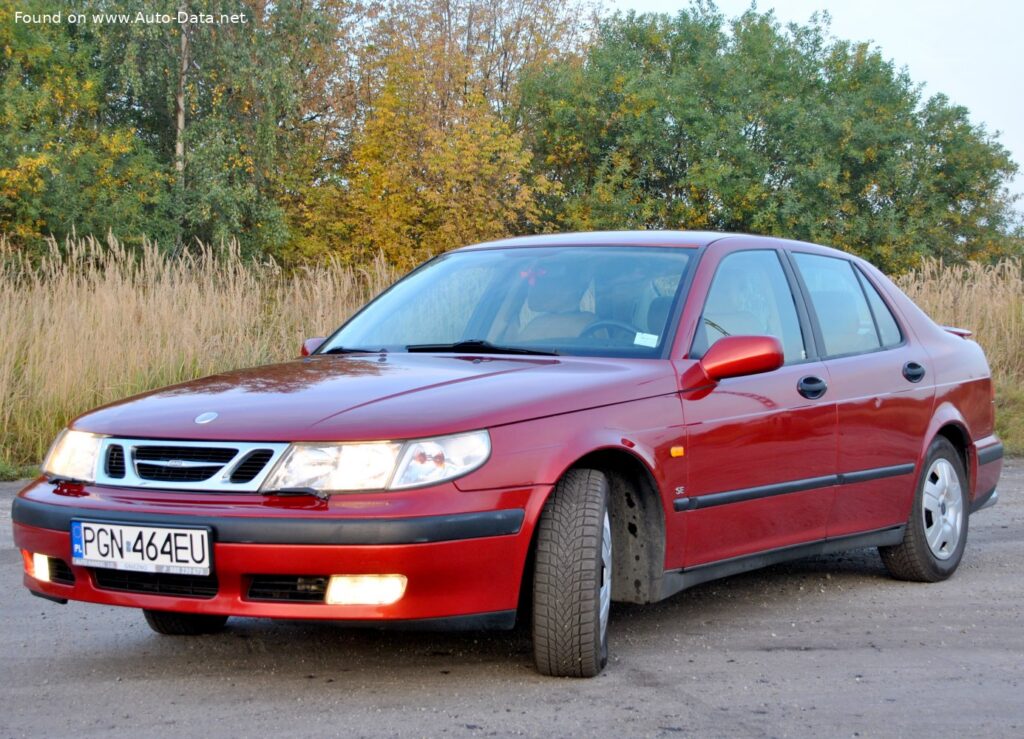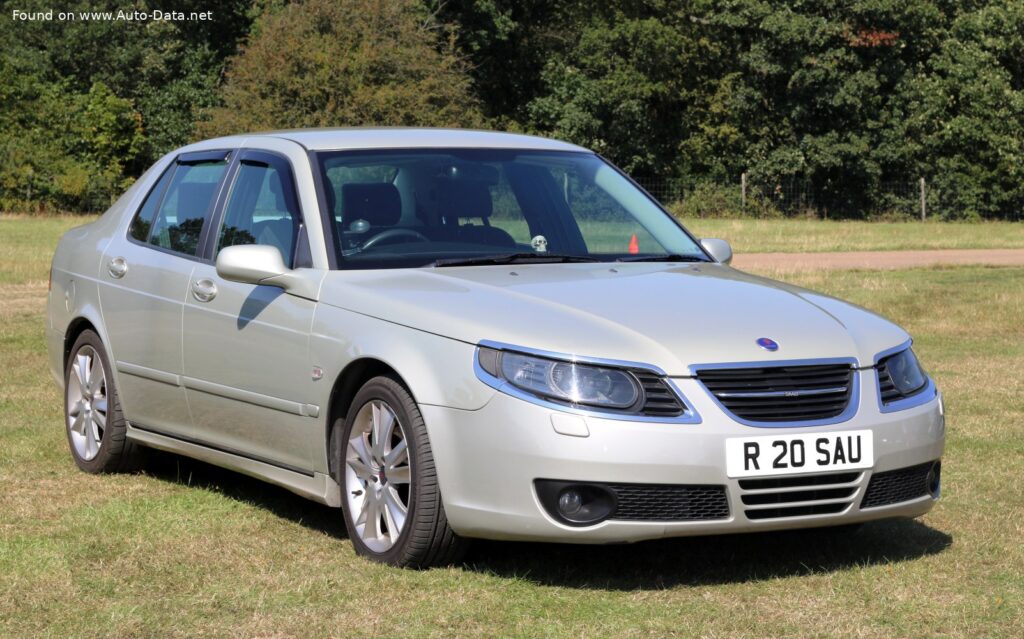
The Saab 9-5, particularly the facelifted model introduced in 2005, represents a significant chapter in the history of the distinctive Swedish automaker, embodying a unique blend of executive comfort, robust performance, and idiosyncratic Scandinavian design. This specific iteration, the Saab 9-5 (facelift 2005) 2.3 Turbo (260 Hp), served as a potent flagship within the 9-5 lineup, which first debuted in 1997 as a successor to the long-running Saab 9000. The facelifted generation, produced from 2005 to 2009, refined an already established platform, aiming to modernize its aesthetics and enhance its mechanical prowess to remain competitive in the discerning European mid-size luxury segment. While Saab vehicles always held a niche appeal in the United States, their primary market and design ethos were deeply rooted in European sensibilities, focusing on intelligent engineering, safety, and a driver-centric experience that often eschewed conventional luxury tropes for a more pragmatic yet sophisticated approach. The 2.3 Turbo with 260 horsepower was a testament to Saab’s long-standing commitment to forced induction technology, offering a compelling power output that belied its four-cylinder configuration, delivering performance typically associated with larger, naturally aspirated engines. This model, a four-door sedan, was designed to comfortably accommodate five occupants, blending practical utility with a sporty edge, reflecting Saab’s enduring legacy of combining aviation-inspired innovation with everyday usability.
Engine & Performance: The Heart of the Saab 9-5
At the core of the 2005 facelifted Saab 9-5 2.3 Turbo lies the venerable B235R engine, a 2.3-liter (2290 cm3 or 139.74 cu. in.) inline four-cylinder powertrain that epitomizes Saab’s mastery of turbocharging. This engine, featuring a DOHC (Double Overhead Camshaft) valvetrain and multi-port manifold injection, was meticulously engineered to deliver an impressive 260 horsepower at 5200 RPM. More remarkably, it produced a substantial 258.15 lb.-ft. of torque across a broad and accessible range, from 1900 to 4500 RPM, ensuring robust acceleration and flexible in-gear performance. The inclusion of a turbocharger and intercooler was crucial to achieving such high power output from a relatively small displacement, providing immediate throttle response and a strong, linear power delivery characteristic of Saab’s performance philosophy. With a compression ratio of 9.3:1 and a square bore/stroke ratio of 90 mm (3.54 in.) by 90 mm (3.54 in.), the engine was designed for both efficiency and durability under boost.
This powerful engine, coupled with a standard five-speed manual transmission, allowed the Saab 9-5 2.3 Turbo to achieve commendable performance figures for its class. It could sprint from 0 to 60 mph in a swift 6.6 seconds, with 0 to 100 km/h completed in 6.9 seconds, ultimately reaching a top speed electronically limited to 155.34 mph (250 km/h). Power was efficiently transferred to the front wheels, adhering to Saab’s traditional front-wheel-drive architecture, which contributed to predictable handling characteristics. Despite its performance capabilities, the vehicle also aimed for a respectable balance of fuel economy, especially for a turbocharged executive sedan of its era. The combined fuel consumption, according to NEDC standards, was rated at 8.9 l/100 km, translating to approximately 26.4 US mpg. Urban driving yielded about 18.2 US mpg, while extra-urban cruising improved to an economical 35.6 US mpg. The engine met Euro 4 emission standards, with CO2 emissions of 213 g/km, reflecting a conscious effort towards environmental responsibility within the performance segment. The 4-liter engine oil capacity and 7.4-liter coolant capacity indicate a robust thermal management system designed to handle the demands of forced induction.
Design & Features: Scandinavian Practicality and Executive Refinement
The facelifted 2005 Saab 9-5 sedan maintained its distinctive profile while incorporating subtle yet effective updates to its exterior and interior. As a