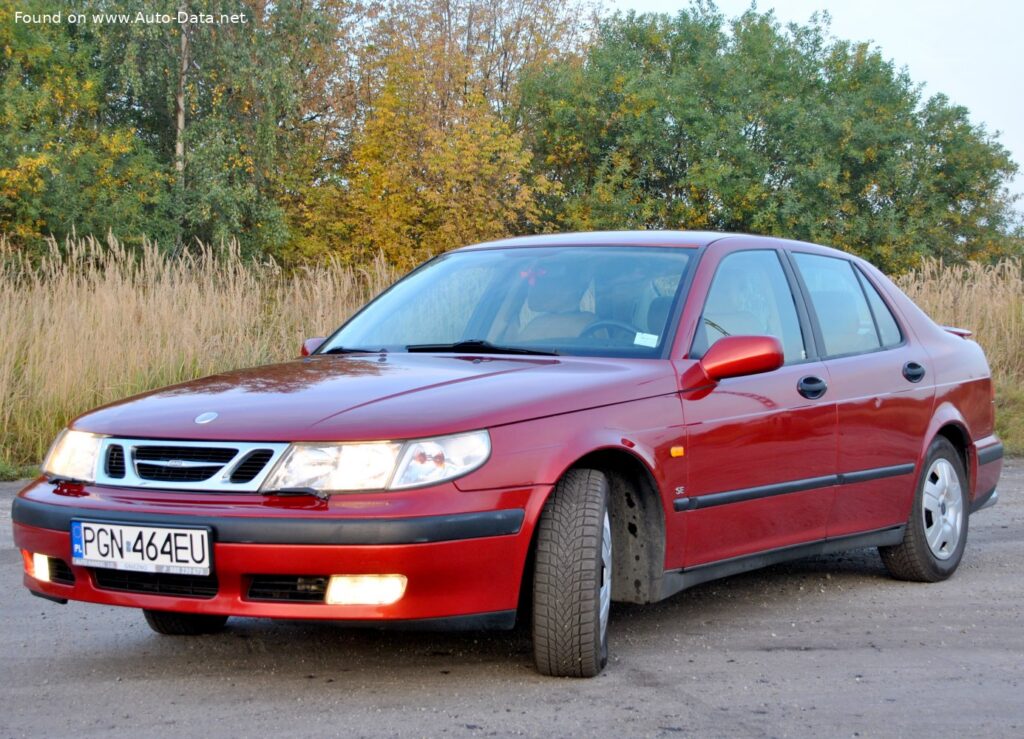
The Saab 9-5, particularly the facelifted model introduced in 2001, represented a significant chapter in the history of the distinctive Swedish automaker. Positioned in the competitive European executive sedan segment, the 9-5 aimed to blend Saab’s idiosyncratic design philosophy and commitment to safety with a more contemporary appeal. The specific variant, the Saab 9-5 (facelift 2001) 3.0 TiD (176 Hp), offered a compelling combination of robust diesel power and refined comfort, catering to a market increasingly valuing fuel efficiency without sacrificing performance. While never officially sold in the United States with this particular diesel powertrain, its engineering and design principles resonate with Saab’s global reputation for innovation and driver focus. This generation, produced from 2001 to 2005, continued to embody Saab’s unique blend of aeronautical heritage, ergonomic interior design, and a strong emphasis on real-world usability and safety, distinguishing it from its more conventionally styled German and Japanese rivals.
Engine and Performance of the Saab 9-5 (facelift 2001) 3.0 TiD (176 Hp)
At the heart of the Saab 9-5 (facelift 2001) 3.0 TiD (176 Hp) lies a sophisticated 3.0-liter V6 common rail diesel engine, designated with the internal code D308L. This powertrain marked a notable departure for Saab, which had traditionally relied on four-cylinder gasoline engines and a unique low-pressure turbocharging philosophy. The adoption of a V6 diesel, particularly one utilizing common rail fuel injection, was a strategic move to compete effectively in the European market where diesel engines were gaining significant traction due to their fuel efficiency and torque characteristics. The engine’s configuration, a V-engine with six cylinders, each featuring four valves, contributed to its smooth operation and efficient combustion. With a displacement of 2959 cm³ (180.57 cu. in.), it delivered a respectable 176 horsepower at 4400 rpm, translating to a power per liter figure of 59.5 Hp/l. More importantly for a diesel, it produced a substantial 350 Nm (258.15 lb.-ft.) of torque at a low 1800 rpm, providing excellent mid-range acceleration and effortless cruising.
The engine’s performance was further enhanced by a turbocharger and intercooler system, which optimized air intake for increased power and efficiency. Mated to a 5-speed manual transmission, the 3.0 TiD variant channeled its power to the front wheels, a characteristic layout for Saab vehicles. This drivetrain architecture, combined with the engine’s robust torque delivery, allowed the 9-5 to accelerate from 0 to 60 mph in a brisk 8.8 seconds, with a maximum speed of 133.59 mph. These figures were competitive for its class at the time, offering a blend of sportiness and executive comfort. The diesel engine also excelled in fuel economy, a critical factor for European buyers. It achieved an impressive 40.6 US mpg on the extra-urban cycle and 23.5 US mpg in urban driving conditions, making it a cost-effective choice for long-distance travel. The vehicle’s weight-to-power ratio stood at 9.6 kg/Hp, or 104.5 Hp/tonne, indicating a balanced approach to performance and mass. The engine oil capacity was 7.3 liters (7.71 US qt), and the cooling system held 8.1 liters (8.56 US qt) of coolant, emphasizing the robust engineering required for a high-performance diesel.
Design and Features of the Saab 9-5 (facelift 2001)
The Saab 9-5 (facelift 2001) retained the brand’s distinctive design language while incorporating subtle updates that refreshed its aesthetic appeal. As a 4-door sedan designed to accommodate five occupants, it exuded a sense of understated elegance and functional purpose. The facelift introduced revised front and rear styling, including new headlights, grille, and bumpers, giving it a more modern and cohesive appearance without straying from Saab’s unique identity. Its dimensions—189.17 inches in length, 70.55 inches in width, and 58.07 inches in height—contributed to a commanding road presence while maintaining maneuverability. The wheelbase of 106.42 inches ensured a stable ride and generous interior space for passengers.
Inside, the 9-5 continued Saab’s tradition of aviation-inspired ergonomics and attention to detail. The cockpit-like cabin was designed with the driver in mind, featuring logically placed controls and clear instrumentation. A notable feature was the “Black Panel” function, which allowed the driver to switch off non-essential instrument lighting at night, reducing distractions and enhancing focus – a direct nod to aircraft cockpit design. Safety, a paramount concern for Saab, was comprehensively addressed. The vehicle was equipped with an Anti-lock Braking System (ABS) as standard, complementing the ventilated disc brakes at the front and disc brakes at the rear. The robust chassis and advanced crumple zones were engineered to provide exceptional occupant protection, a reputation Saab had meticulously built over decades. The suspension system, featuring Spring Struts at both the front and rear, provided a comfortable yet composed ride, balancing handling prowess with long-distance cruising comfort. Hydraulic power steering, utilizing a rack and pinion system, offered precise feedback to the driver.
Practicality was also a strong suit of the 9-5. The trunk offered a generous 500 liters (17.66 cu. ft.) of cargo space, making it highly suitable for family use or business travel. The fuel tank capacity of 75 liters (19.81 US gal) ensured a substantial driving range, particularly when combined with the diesel engine’s efficiency. The vehicle rode on 205/65 R16 tires, providing a good balance of grip, comfort, and durability. The combination of its distinctive design, focus on safety, ergonomic interior, and robust engineering made the Saab 9-5 (facelift 2001) a compelling, if unconventional, choice in its segment, particularly for those who appreciated Saab’s unique approach to automotive design and engineering.
Technical Specifications
| Brand | Saab |
| Model | 9-5 |
| Generation | 9-5 (facelift 2001) |
| Type (Engine) | 3.0 TiD (176 Hp) |
| Start of Production | 2001 year |
| End of Production | 2005 year |
| Powertrain Architecture | Internal Combustion engine |
| Body Type | Sedan |
| Seats | 5 |
| Doors | 4 |
| Fuel Consumption (Economy) – Urban | 10 l/100 km (23.5 US mpg) |
| Fuel Consumption (Economy) – Extra Urban | 5.8 l/100 km (40.6 US mpg) |
| Fuel Type | Diesel |
| Acceleration 0 – 60 mph | 8.8 sec |
| Maximum Speed | 215 km/h (133.59 mph) |
| Weight-to-Power Ratio | 9.6 kg/Hp (104.5 Hp/tonne) |
| Weight-to-Torque Ratio | 4.8 kg/Nm (207.7 Nm/tonne) |
| Power | 176 Hp @ 4400 rpm |
| Power per Liter | 59.5 Hp/l |
| Torque | 350 Nm (258.15 lb.-ft.) @ 1800 rpm |
| Engine Layout | Front, Transverse |
| Engine Model/Code | D308L |
| Engine Displacement | 2959 cm³ (180.57 cu. in.) |
| Number of Cylinders | 6 |
| Engine Configuration | V-engine |
| Cylinder Bore | 87.5 mm (3.44 in.) |
| Piston Stroke | 82 mm (3.23 in.) |
| Compression Ratio | 18:1 |
| Number of Valves per Cylinder | 4 |
| Fuel Injection System | Diesel Commonrail |
| Engine Aspiration | Turbocharger, Intercooler |
| Valvetrain | OHC |
| Engine Oil Capacity | 7.3 l (7.71 US qt) |
| Coolant | 8.1 l (8.56 US qt) |
| Kerb Weight | 1685 kg (3714.79 lbs.) |
| Max. Weight | 2130 kg (4695.85 lbs.) |
| Max Load | 445 kg (981.06 lbs.) |
| Trunk (Boot) Space – Maximum | 500 l (17.66 cu. ft.) |
| Fuel Tank Capacity | 75 l (19.81 US gal) |
| Length | 4805 mm (189.17 in.) |
| Width | 1792 mm (70.55 in.) |
| Height | 1475 mm (58.07 in.) |
| Wheelbase | 2703 mm (106.42 in.) |
| Front Track | 1522 mm (59.92 in.) |
| Rear (Back) Track | 1522 mm (59.92 in.) |
| Drivetrain Architecture | The Internal combustion engine (ICE) drives the front wheels of the vehicle. |
| Drive Wheel | Front wheel drive |
| Number of Gears and Type of Gearbox | 5 gears, manual transmission |
| Front Suspension | Spring Strut |
| Rear Suspension | Spring Strut |
| Front Brakes | Ventilated discs |
| Rear Brakes | Disc |
| Assisting Systems | ABS (Anti-lock braking system) |
| Steering Type | Steering rack and pinion |
| Power Steering | Hydraulic Steering |
| Tires Size | 205/65 R16 |