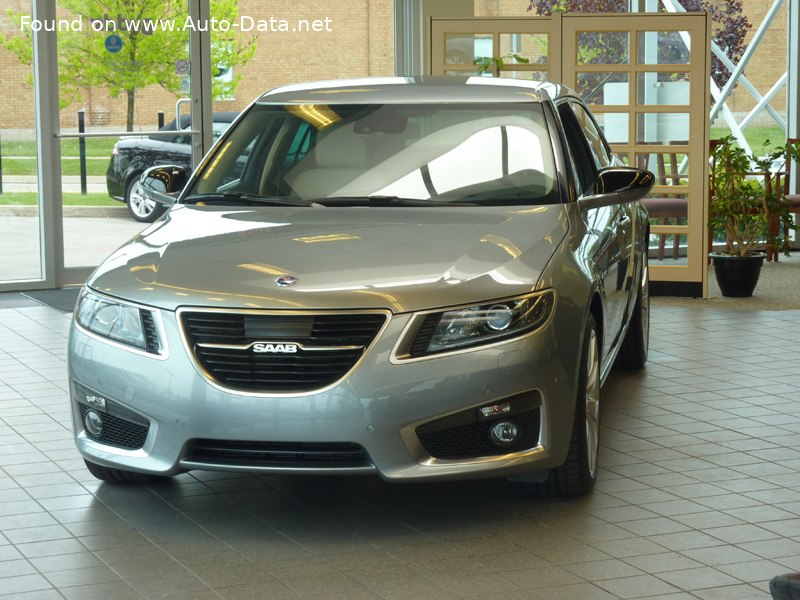
The Saab 9-5 II 2.0i (220 Hp) represents the second and final generation of the Swedish automaker’s executive sedan, a vehicle that, despite its brief production run from October 2009 to March 2011, embodied Saab’s distinctive approach to automotive design and engineering. Born during a tumultuous period for the brand, this iteration of the 9-5 was an ambitious attempt to rejuvenate Saab’s presence in the competitive premium segment, primarily targeting European markets where the marque had a loyal following. It sought to blend Saab’s long-standing aviation heritage with modern automotive technology, offering a unique alternative to established German and American luxury offerings. While its time on the market was tragically cut short, the 9-5 II remains a testament to Saab’s innovative spirit, showcasing a blend of robust performance, distinctive styling, and a focus on driver-centric ergonomics that defined the brand for decades.
Engine and Performance of the Saab 9-5 II 2.0i (220 Hp)
At the heart of the Saab 9-5 II 2.0i (220 Hp) lies a meticulously engineered 2.0-liter inline-four gasoline engine, designated A20NHT. This powertrain was a crucial component in Saab’s strategy to deliver compelling performance with contemporary efficiency. Generating a robust 220 horsepower at 5300 rpm, the engine showcased a significant power-per-liter output of 110.1 HP/l, underscoring its advanced design. Torque delivery was equally impressive, peaking at 350 Nm (258.15 lb.-ft.) at a remarkably accessible 2500 rpm. This broad torque band ensured strong acceleration and flexible driving dynamics across a wide range of speeds, making the 9-5 II a capable performer in both urban environments and on the open highway.
Key to the engine’s performance characteristics was its sophisticated fuel injection system, utilizing direct injection to optimize combustion efficiency and fuel delivery. Furthermore, the engine benefited from a twin-scroll turbocharger paired with an intercooler. The twin-scroll design helped to mitigate turbo lag by separating the exhaust pulses, leading to quicker spool-up times and a more immediate throttle response. The intercooler, in turn, cooled the compressed air before it entered the engine, increasing its density and thus enhancing power output and efficiency, particularly under sustained high-load conditions. The engine’s architecture featured four cylinders in an inline configuration, with a bore and stroke both measuring 86 mm (3.39 inches), indicating a square engine design often associated with a good balance of power and torque. A compression ratio of 9.5:1 was well-suited for a turbocharged direct-injection engine, balancing performance with fuel economy and emissions control. Each cylinder was equipped with four valves, promoting efficient gas flow and contributing to the engine’s overall respiratory efficiency. Power was transmitted to the front wheels via a precise 6-speed manual transmission, offering drivers an engaging and direct connection to the vehicle’s capabilities. This front-wheel-drive architecture, combined with a kerb weight ranging from 4155.71 to 4354.13 lbs., resulted in a weight-to-power ratio of 8.6 kg/Hp (116.7 Hp/tonne) and a weight-to-torque ratio of 5.4 kg/Nm (185.7 Nm/tonne), indicating a well-balanced power delivery for its class.
Design and Features of the Saab 9-5 II
The design of the Saab 9-5 II was a bold statement, reflecting a modern interpretation of Saab’s iconic styling cues while embracing a contemporary luxury aesthetic. As a four-door sedan with seating for five, it offered a spacious and comfortable cabin, designed with Saab’s characteristic focus on ergonomics and driver-centric controls. The exterior dimensions were substantial, with a length of 5009 mm (197.2 inches), a width of 2113 mm (83.19 inches), and a height of 1466 mm (57.72 inches). These proportions contributed to a commanding road presence and a remarkably generous interior volume. The long wheelbase of 2837 mm (111.69 inches) was instrumental in providing both a smooth ride quality and expansive legroom for rear passengers.
Aerodynamic efficiency was a hallmark of Saab design, and the 9-5 II continued this tradition with an impressive drag coefficient (Cd) of 0.28. This low figure contributed not only to fuel efficiency but also to reduced wind noise at higher speeds, enhancing the overall refinement of the cabin. The trunk offered a capacious minimum volume of 513 liters (18.12 cu. ft.), making it highly practical for luggage and cargo. The fuel tank capacity of 68 liters (17.96 US gallons) provided a decent cruising range, suitable for long journeys. Furthermore, the vehicle was rated for a permitted trailer load with brakes of 2000 kg (4409.25 lbs.), highlighting its robust construction and versatility.
Underneath its sleek exterior, the Saab 9-5 II featured a sophisticated chassis designed for both comfort and dynamic handling. The front suspension utilized an independent McPherson type, known for its effectiveness in providing precise steering and good ride isolation. At the rear, an independent multi-link suspension system was employed, offering superior wheel control and enhancing stability, particularly during cornering and over uneven surfaces. Braking performance was ensured by ventilated discs at the front and solid discs at the rear, complemented by an Anti-lock Braking System (ABS) for enhanced safety and control during emergency stops. Steering was managed by a rack and pinion system, assisted by electric power steering, which provided a light feel at low speeds for easy maneuvering and a firmer, more communicative response at higher speeds. The vehicle rode on 17-inch wheel rims, fitted with 225/55 R17 97H tires, a setup chosen to balance grip, ride comfort, and overall handling characteristics. The combination of these features underscored Saab’s commitment to creating a vehicle that was not only visually striking but also dynamically competent and inherently safe.
Technical Specifications: Saab 9-5 II 2.0i (220 Hp)
| Brand | Saab |
| Model | 9-5 |
| Generation | 9-5 II |
| Type (Engine) | 2.0i (220 Hp) |
| Start of production | October, 2009 |
| End of production | March, 2011 |
| Powertrain Architecture | Internal Combustion engine |
| Body type | Sedan |
| Seats | 5 |
| Doors | 4 |
| Fuel Type | Petrol (Gasoline) |
| Weight-to-power ratio | 8.6 kg/Hp, 116.7 Hp/tonne |
| Weight-to-torque ratio | 5.4 kg/Nm, 185.7 Nm/tonne |
| Power | 220 Hp @ 5300 rpm. |
| Power per liter | 110.1 Hp/l |
| Torque | 350 Nm @ 2500 rpm. (258.15 lb.-ft. @ 2500 rpm.) |
| Engine layout | Front, Transverse |
| Engine Model/Code | A20NHT |
| Engine displacement | 1998 cm3 (121.93 cu. in.) |
| Number of cylinders | 4 |
| Engine configuration | Inline |
| Cylinder Bore | 86 mm (3.39 in.) |
| Piston Stroke | 86 mm (3.39 in.) |
| Compression ratio | 9.5:1 |
| Number of valves per cylinder | 4 |
| Fuel injection system | Direct injection |
| Engine aspiration | Twin-scroll turbo, Intercooler |
| Engine oil capacity | 5.7 l (6.02 US qt) |
| Kerb Weight | 1885-1975 kg (4155.71 – 4354.13 lbs.) |
| Max. weight | 2430 kg (5357.23 lbs.) |
| Max load | 455-545 kg (1003.1 – 1201.52 lbs.) |
| Trunk (boot) space – minimum | 513 l (18.12 cu. ft.) |
| Fuel tank capacity | 68 l (17.96 US gal) |
| Permitted trailer load with brakes (12%) | 2000 kg (4409.25 lbs.) |
| Length | 5009 mm (197.2 in.) |
| Width | 2113 mm (83.19 in.) |
| Height | 1466 mm (57.72 in.) |
| Wheelbase | 2837 mm (111.69 in.) |
| Drag coefficient (Cd) | 0.28 |
| Drivetrain Architecture | The Internal combustion engine (ICE) drives the front wheels of the vehicle. |
| Drive wheel | Front wheel drive |
| Number of gears and type of gearbox | 6 gears, manual transmission |
| Front suspension | Independent type McPherson |
| Rear suspension | Independent multi-link suspension |
| Front brakes | Ventilated discs |
| Rear brakes | Disc |
| Assisting systems | ABS (Anti-lock braking system) |
| Steering type | Steering rack and pinion |
| Power steering | Electric Steering |
| Tires size | 225/55 R17 97H |
| Wheel rims size | 17 |