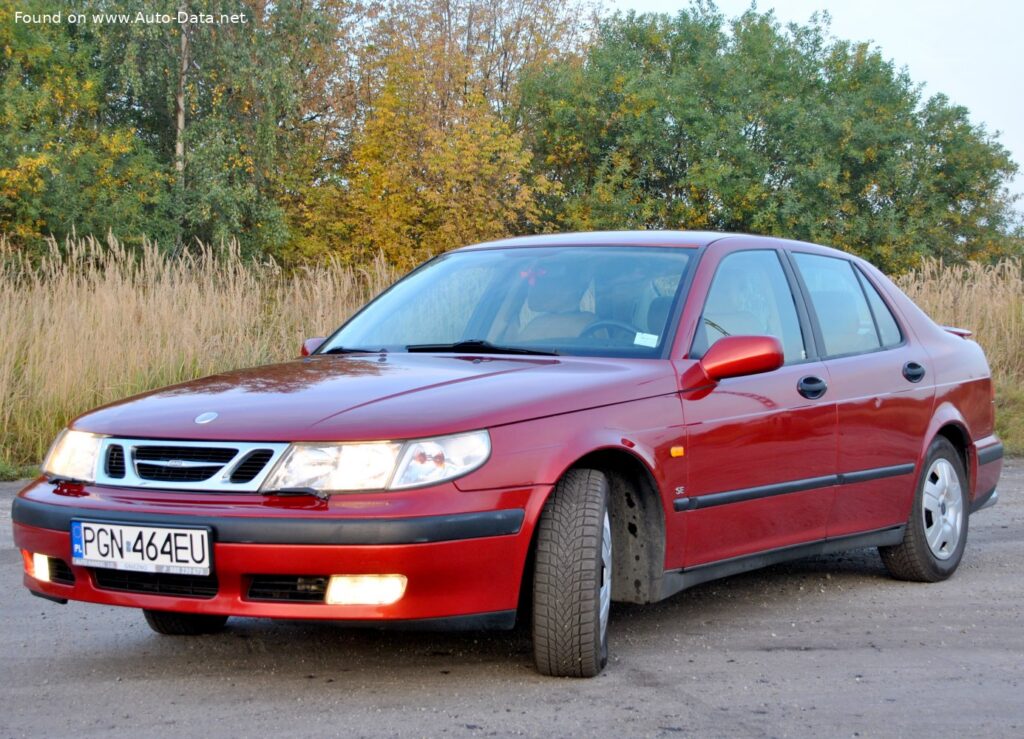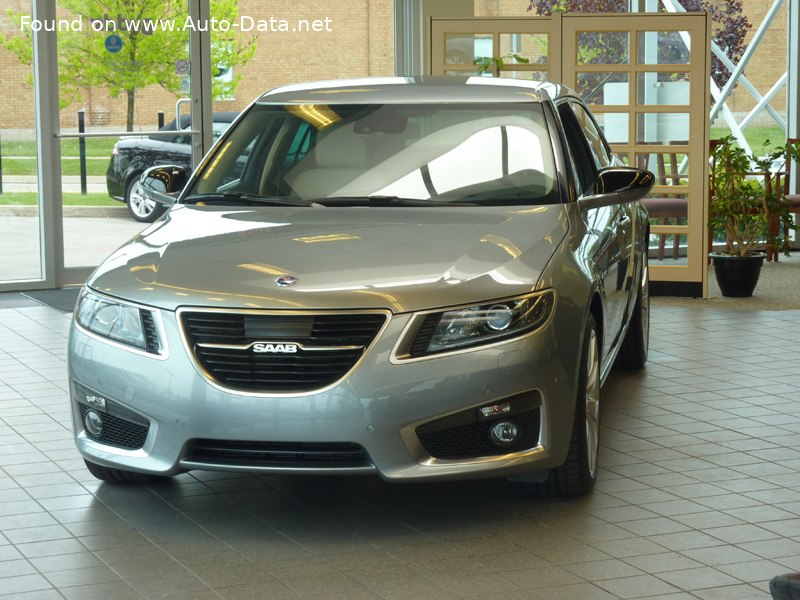
The Saab 9-5 II 2.0i (220 Hp) Automatic represents a pivotal, albeit tragically short-lived, chapter in the history of the distinctive Swedish automaker. Launched in October 2009 as the second generation of Saab’s flagship executive sedan, the 9-5 II aimed to reassert the brand’s unique identity in a highly competitive premium segment dominated by German luxury vehicles. Bearing the internal designation 9-5 II, this model was a bold statement of design and engineering, showcasing a modern interpretation of Saab’s aviation heritage and commitment to safety and innovation. Produced for a mere two years until March 2011, its production run was cut short by the financial difficulties that ultimately led to Saab’s demise. Despite its brief market presence, the 9-5 II, particularly in its 2.0i (220 Hp) Automatic variant, encapsulated Saab’s vision for a technically advanced, driver-focused sedan, offering a compelling blend of performance, comfort, and unconventional style to its discerning clientele in Europe and other select markets.
Engine and Performance: The Saab 9-5 II 2.0i (220 Hp) Automatic Powertrain
At the heart of the Saab 9-5 II 2.0i (220 Hp) Automatic lies a sophisticated 2.0-liter (121.93 cu. in.) inline-four gasoline engine, internally designated A20NHT. This powertrain was engineered to deliver a balance of robust performance and relative efficiency, a hallmark of Saab’s approach to automotive engineering. The engine’s core specifications reveal a modern design, featuring a 1998 cm³ displacement with a square bore and stroke of 86 mm (3.39 in.) each, indicative of an engine designed for responsive power delivery across the rev range. With a compression ratio of 9.5:1 and four valves per cylinder, the engine benefits from optimized combustion efficiency.
A key enabler of the 2.0i’s impressive output is its advanced forced induction system. Employing a twin-scroll turbocharger paired with an intercooler, the engine efficiently compresses intake air, significantly boosting power without the notorious turbo lag of earlier designs. The twin-scroll configuration helps to separate exhaust pulses, improving turbine efficiency and responsiveness. Fuel delivery is handled by a direct injection system, which precisely atomizes fuel directly into the combustion chambers, further enhancing power, fuel economy, and emissions control. This combination allows the engine to produce a substantial 220 horsepower at 5300 rpm, translating to a specific output of 110.1 Hp per liter, a commendable figure for its era.
Torque output is equally impressive, with 258.15 lb.-ft. (350 Nm) available at a relatively low 2500 rpm. This broad torque band is crucial for real-world drivability, providing strong acceleration from low speeds and effortless highway cruising. The engine’s power is managed by a 6-speed automatic transmission, designed for smooth and precise gear changes, which channels power exclusively to the front wheels. This front-wheel-drive (FWD) architecture, common in many premium sedans, contributes to predictable handling characteristics and efficient packaging. The vehicle’s weight-to-power ratio stands at 8.6 kg/Hp (116.7 Hp/tonne), while the weight-to-torque ratio is 5.4 kg/Nm (185.7 Nm/tonne), suggesting a car with respectable acceleration and responsiveness for its class and curb weight range of 4155.71 to 4354.13 lbs (1885-1975 kg). The engine’s oil capacity is 6.02 US quarts (5.7 liters), underscoring the importance of proper lubrication for its turbocharged operation.
Design, Engineering, and Key Features of the Saab 9-5 II
The design of the Saab 9-5 II 2.0i (220 Hp) Automatic was a radical departure from its predecessor, yet it retained the quintessential Saab ethos of individuality and functionality. As a four-door sedan with seating for five, the 9-5 II positioned itself in the executive segment, offering a spacious and comfortable cabin. Its exterior styling was perhaps its most striking feature, characterized by a sleek, elongated profile and distinctive “ice block” lighting elements, drawing clear inspiration from Saab’s aeronautical heritage. The vehicle’s dimensions are substantial, measuring 197.2 inches (5009 mm) in length, 83.19 inches (2113 mm) in width, and 57.72 inches (1466 mm) in height. This generous footprint, coupled with a long wheelbase of 111.69 inches (2837 mm), contributed to an imposing road presence and exceptional interior room.
Aerodynamic efficiency was a core consideration, evident in its remarkably low drag coefficient (Cd) of 0.28. This not only enhanced the car’s visual fluidity but also contributed to improved fuel economy and reduced wind noise at speed. The interior continued the theme of driver-centric design, with controls logically arranged and materials chosen for their quality and tactile appeal. Saab’s traditional emphasis on ergonomics and intuitive interfaces was evident throughout the cabin. Practicality was also a strong suit, with a substantial trunk capacity of 18.12 cubic feet (513 liters), making it well-suited for long journeys or family use. A fuel tank capacity of 17.96 US gallons (68 liters) further extended its touring range.
Underneath its distinctive skin, the 9-5 II featured a sophisticated chassis designed for a blend of comfort and dynamic handling. The front suspension utilized an independent McPherson strut setup, known for its compact design and effective wheel control. At the rear, an independent multi-link suspension system provided superior ride quality and precise handling, particularly when cornering. Braking performance was ensured by ventilated discs at the front and solid discs at the rear, complemented by an Anti-lock Braking System (ABS) for enhanced stopping power and stability in emergency situations. The steering system employed a rack and pinion setup with electric power steering, offering precise feedback and variable assistance tailored to driving conditions. The vehicle rode on either 225/55 R17 97H or 245/45 R18 100H tires, mounted on 17-inch or 18-inch wheel rims, respectively, providing ample grip and contributing to the car’s composed demeanor. With a maximum permitted trailer load with brakes of 4409.25 lbs (2000 kg), the 9-5 II also showcased practical utility beyond its luxury sedan status.
Technical Specifications: Saab 9-5 II 2.0i (220 Hp) Automatic
| Brand | Saab |
| Model | 9-5 |
| Generation | 9-5 II |
| Type (Engine) | 2.0i (220 Hp) Automatic |
| Start of production | October, 2009 year |
| End of production | March, 2011 year |
| Powertrain Architecture | Internal Combustion engine |
| Body type | Sedan |
| Seats | 5 |
| Doors | 4 |
| Fuel Type | Petrol (Gasoline) |
| Weight-to-power ratio | 8.6 kg/Hp, 116.7 Hp/tonne |
| Weight-to-torque ratio | 5.4 kg/Nm, 185.7 Nm/tonne |
| Power | 220 Hp @ 5300 rpm. |
| Power per liter | 110.1 Hp/l |
| Torque | 350 Nm @ 2500 rpm (258.15 lb.-ft. @ 2500 rpm) |
| Engine layout | Front, Transverse |
| Engine Model/Code | A20NHT |
| Engine displacement | 1998 cm³ (121.93 cu. in.) |
| Number of cylinders | 4 |
| Engine configuration | Inline |
| Cylinder Bore | 86 mm (3.39 in.) |
| Piston Stroke | 86 mm (3.39 in.) |
| Compression ratio | 9.5:1 |
| Number of valves per cylinder | 4 |
| Fuel injection system | Direct injection |
| Engine aspiration | Twin-scroll turbo, Intercooler |
| Engine oil capacity | 5.7 l (6.02 US qt) |
| Kerb Weight | 1885-1975 kg (4155.71 – 4354.13 lbs.) |
| Max. weight | 2430 kg (5357.23 lbs.) |
| Max load | 455-545 kg (1003.1 – 1201.52 lbs.) |
| Trunk (boot) space – minimum | 513 l (18.12 cu. ft.) |
| Fuel tank capacity | 68 l (17.96 US gal) |
| Permitted trailer load with brakes (12%) | 2000 kg (4409.25 lbs.) |
| Length | 5009 mm (197.2 in.) |
| Width | 2113 mm (83.19 in.) |
| Height | 1466 mm (57.72 in.) |
| Wheelbase | 2837 mm (111.69 in.) |
| Drag coefficient (Cd) | 0.28 |
| Drivetrain Architecture | The Internal combustion engine (ICE) drives the front wheels of the vehicle. |
| Drive wheel | Front wheel drive |
| Number of gears and type of gearbox | 6 gears, automatic transmission |
| Front suspension | Independent type McPherson |
| Rear suspension | Independent multi-link suspension |
| Front brakes | Ventilated discs |
| Rear brakes | Disc |
| Assisting systems | ABS (Anti-lock braking system) |
| Steering type | Steering rack and pinion |
| Power steering | Electric Steering |
| Tires size | 225/55 R17 97H; 245/45 R18 100H |
| Wheel rims size | 17; 18 |