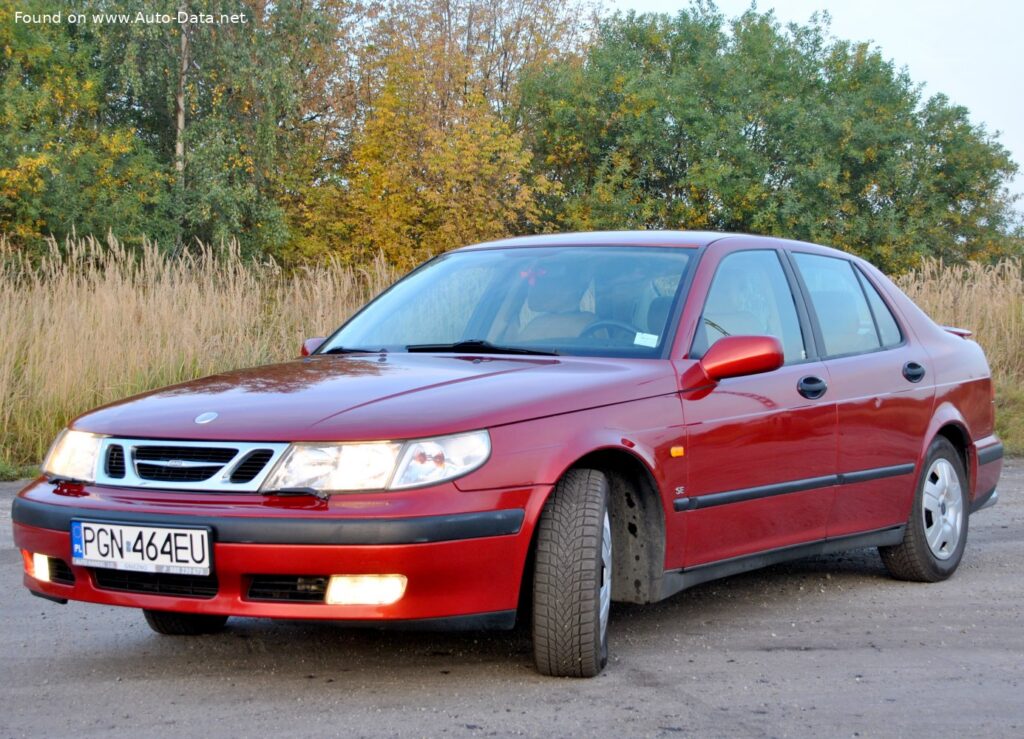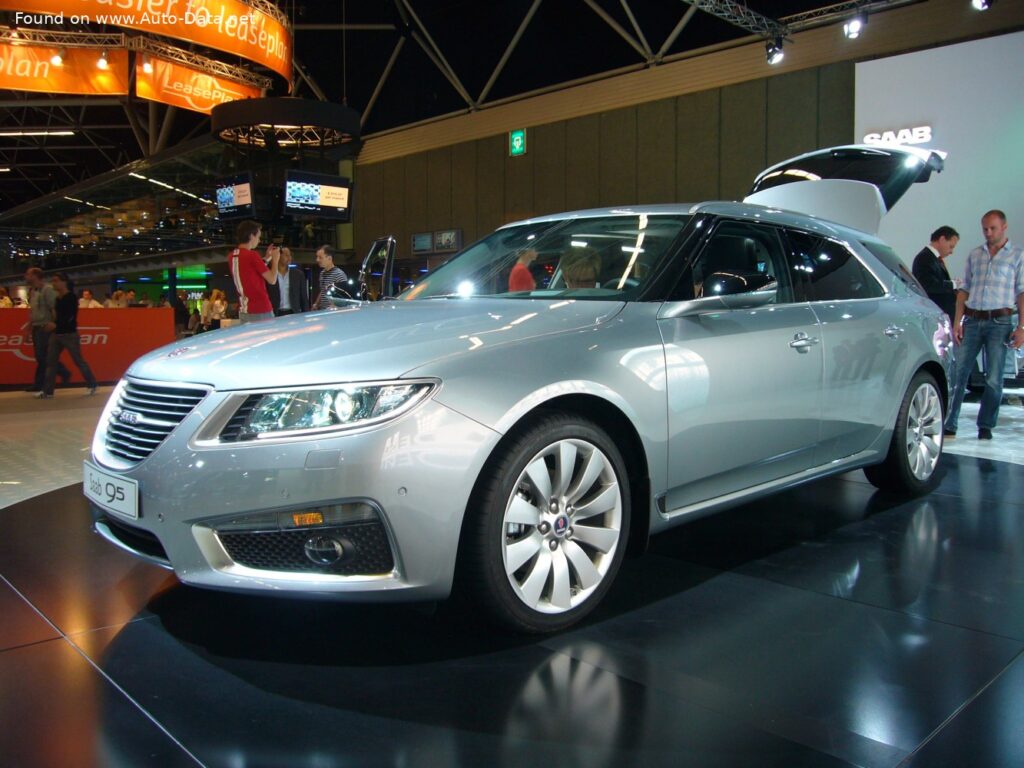
The Saab 9-5 II Sport Combi 2.0i (220 Hp) XWD Automatic represents a poignant chapter in the history of the revered Swedish automotive marque, a testament to its enduring design philosophy and engineering prowess even amidst turbulent times. Launched in October 2009, this second-generation 9-5 Sport Combi, or station wagon as it’s known in the U.S., was a sophisticated and stylish entry into the executive segment, aiming to blend Saab’s traditional quirkiness with contemporary luxury and performance. Despite its relatively short production run, concluding in March 2011, the 9-5 II Sport Combi stood out with its distinctive styling, robust powertrain, and advanced all-wheel-drive system, offering a compelling alternative to its German and Japanese rivals in its primary European markets. It embodied Saab’s commitment to safety, practicality, and a unique driving experience, making it a highly regarded, albeit rare, modern classic for enthusiasts.
The {original_focus_keyword}: Engineering and Market Positioning
The second-generation Saab 9-5 Sport Combi arrived with high expectations, inheriting a legacy of innovative design and engineering. Positioned as a premium station wagon, it sought to capture a segment of the market that valued both practicality and a distinct, upscale image. The 2.0i (220 Hp) XWD Automatic variant, in particular, was designed to deliver a dynamic driving experience, combining a potent turbocharged engine with Saab’s advanced Cross-Wheel Drive (XWD) system. This combination made it a formidable competitor, especially in regions where all-weather capability and refined performance were highly prized. Its brief tenure in the market does not diminish its technical significance, showcasing Saab’s vision for a modern, driver-centric luxury vehicle. The car’s architecture, developed during General Motors’ ownership of Saab, utilized GM’s Epsilon II platform, shared with vehicles like the Opel Insignia and Buick LaCrosse, but Saab engineers meticulously re-tuned and re-engineered critical components to maintain the brand’s unique driving dynamics and safety standards.
Engine and Performance
At the heart of the Saab 9-5 II Sport Combi 2.0i (220 Hp) XWD Automatic lies a sophisticated powertrain engineered for both spirited performance and efficiency. This model is equipped with a 2.0-liter (1998 cm³ or 121.93 cu. in.) inline four-cylinder engine, designated A20NHT. This modern engine features direct fuel injection and a twin-scroll turbocharger with an intercooler, a configuration that significantly enhances throttle response and reduces turbo lag compared to conventional single-scroll designs. The result is a robust output of 220 horsepower, achieved at 5300 revolutions per minute (rpm), providing ample power for both daily commuting and spirited highway driving. The power-per-liter ratio stands impressively at 110.1 Hp/l, indicating a highly efficient and potent powerplant for its displacement.
Equally impressive is the engine’s torque delivery. It produces a substantial 350 Newton-meters (Nm) or 258.15 lb.-ft. of torque, available at a relatively low 2500 rpm. This broad torque band ensures strong acceleration from a standstill and flexible in-gear performance, minimizing the need for frequent downshifts. The engine’s layout is front, transverse, contributing to efficient packaging and weight distribution. With a compression ratio of 9.5:1 and four valves per cylinder, the engine is optimized for gasoline fuel, balancing performance with fuel economy. The engine oil capacity is 5.7 liters (6.02 US qt), crucial for maintaining optimal lubrication and engine longevity. The entire powertrain is mated to a 6-speed automatic transmission, providing smooth and precise gear changes that complement the engine’s power delivery. This transmission also contributes to the car’s overall refinement and ease of driving, especially in urban environments.
A cornerstone of the 9-5 II Sport Combi’s performance credentials is its XWD (Cross-Wheel Drive) system. This advanced all-wheel-drive system, developed in partnership with Haldex, continuously distributes power between the front and rear axles, and optionally between the rear wheels, to maximize traction and stability under varying road conditions. This not only enhances performance on slippery surfaces but also improves handling dynamics during spirited driving, giving the driver greater confidence and control. The vehicle’s weight-to-power ratio of 8.6 kg/Hp (116.7 Hp/tonne) and weight-to-torque ratio of 5.4 kg/Nm (185.7 Nm/tonne) further underscore its capable performance profile, demonstrating a well-balanced power-to-weight relationship for its class.
Design and Features
The Saab 9-5 II Sport Combi’s design is a striking blend of classic Saab aesthetics and contemporary luxury. As a five-door station wagon (or estate), it offers a blend of style, space, and versatility. The exterior is characterized by its long, sleek profile, measuring 5008 mm (197.17 in.) in length, 1862 mm (73.31 in.) in width, and 1484 mm (58.43 in.) in height. The elongated wheelbase of 2837 mm (111.69 in.) contributes to both a spacious interior and a stable ride. Saab’s signature “wraparound” windshield and “ice block” lighting elements give the car a distinctive, aircraft-inspired look, setting it apart from its competitors. The aerodynamic efficiency is commendable, with a low drag coefficient (Cd) of 0.28, which contributes to better fuel economy and reduced wind noise at higher speeds.
Inside, the 9-5 Sport Combi offers a premium and driver-focused cabin. With seating for five occupants, the interior emphasizes ergonomic design and high-quality materials. A significant highlight is the vehicle’s practicality, evident in its generous trunk (boot) space, which provides a minimum of 527 liters (18.61 cu. ft.) of cargo volume. This capacity makes it highly suitable for families, long trips, or carrying substantial loads. The maximum load capacity ranges from 455-545 kg (1003.1 – 1201.52 lbs.), further emphasizing its utility.
Safety and driving dynamics were paramount in the 9-5’s design. The vehicle is equipped with a robust braking system, featuring ventilated discs measuring 337 mm at the front and 315 mm at the rear, ensuring powerful and consistent stopping performance. An Anti-lock Braking System (ABS) is standard, providing enhanced control during emergency braking maneuvers. The suspension setup, consisting of independent coil springs at both the front and rear, delivers a comfortable yet composed ride, characteristic of European executive cars. Steering is handled by an electric power steering rack and pinion system, offering precise feedback and ease of maneuverability, especially with a minimum turning circle of 11.3 meters (37.07 ft.). The vehicle rides on substantial 245/40 R19 tires mounted on 19-inch wheel rims, which not only contribute to its athletic stance but also provide excellent grip and handling capabilities. The fuel tank capacity of 70 liters (18.49 US gallons) ensures a good cruising range, while the permitted trailer load with brakes (12%) of 2000 kg (4409.25 lbs.) adds to its versatility.
Technical Specifications: Saab 9-5 II Sport Combi 2.0i (220 Hp) XWD Automatic
| Brand | Saab |
| Model | 9-5 |
| Generation | 9-5 II Sport Combi |
| Type (Engine) | 2.0i (220 Hp) XWD Automatic |
| Start of production | October, 2009 year |
| End of production | March, 2011 year |
| Powertrain Architecture | Internal Combustion engine |
| Body type | Station wagon (estate) |
| Seats | 5 |
| Doors | 5 |
| Fuel Type | Petrol (Gasoline) |
| Weight-to-power ratio | 8.6 kg/Hp, 116.7 Hp/tonne |
| Weight-to-torque ratio | 5.4 kg/Nm, 185.7 Nm/tonne |
| Power | 220 Hp @ 5300 rpm. |
| Power per liter | 110.1 Hp/l |
| Torque | 350 Nm @ 2500 rpm. (258.15 lb.-ft. @ 2500 rpm.) |
| Engine layout | Front, Transverse |
| Engine Model/Code | A20NHT |
| Engine displacement | 1998 cm³ (2.0 l / 121.93 cu. in.) |
| Number of cylinders | 4 |
| Engine configuration | Inline |
| Cylinder Bore | 86 mm (3.39 in.) |
| Piston Stroke | 86 mm (3.39 in.) |
| Compression ratio | 9.5:1 |
| Number of valves per cylinder | 4 |
| Fuel injection system | Direct injection |
| Engine aspiration | Twin-scroll turbo, Intercooler |
| Engine oil capacity | 5.7 l (6.02 US qt | 5.02 UK qt) |
| Kerb Weight | 1885-1975 kg (4155.71 – 4354.13 lbs.) |
| Max. weight | 2430 kg (5357.23 lbs.) |
| Max load | 455-545 kg (1003.1 – 1201.52 lbs.) |
| Trunk (boot) space – minimum | 527 l (18.61 cu. ft.) |
| Fuel tank capacity | 70 l (18.49 US gal | 15.4 UK gal) |
| Permitted trailer load with brakes (12%) | 2000 kg (4409.25 lbs.) |
| Length | 5008 mm (197.17 in.) |
| Width | 1862 mm (73.31 in.) |
| Height | 1484 mm (58.43 in.) |
| Wheelbase | 2837 mm (111.69 in.) |
| Drag coefficient (Cd) | 0.28 |
| Minimum turning circle (turning diameter) | 11.3 m (37.07 ft.) |
| Drive wheel | All wheel drive (4×4) |
| Number of gears and type of gearbox | 6 gears, automatic transmission |
| Front suspension | Independent coil spring |
| Rear suspension | Independent coil spring |
| Front brakes | Ventilated discs, 337 mm |
| Rear brakes | Ventilated discs, 315 mm |
| Assisting systems | ABS (Anti-lock braking system) |
| Steering type | Steering rack and pinion |
| Power steering | Electric Steering |
| Tires size | 245/40 R19 |
| Wheel rims size | 19 |