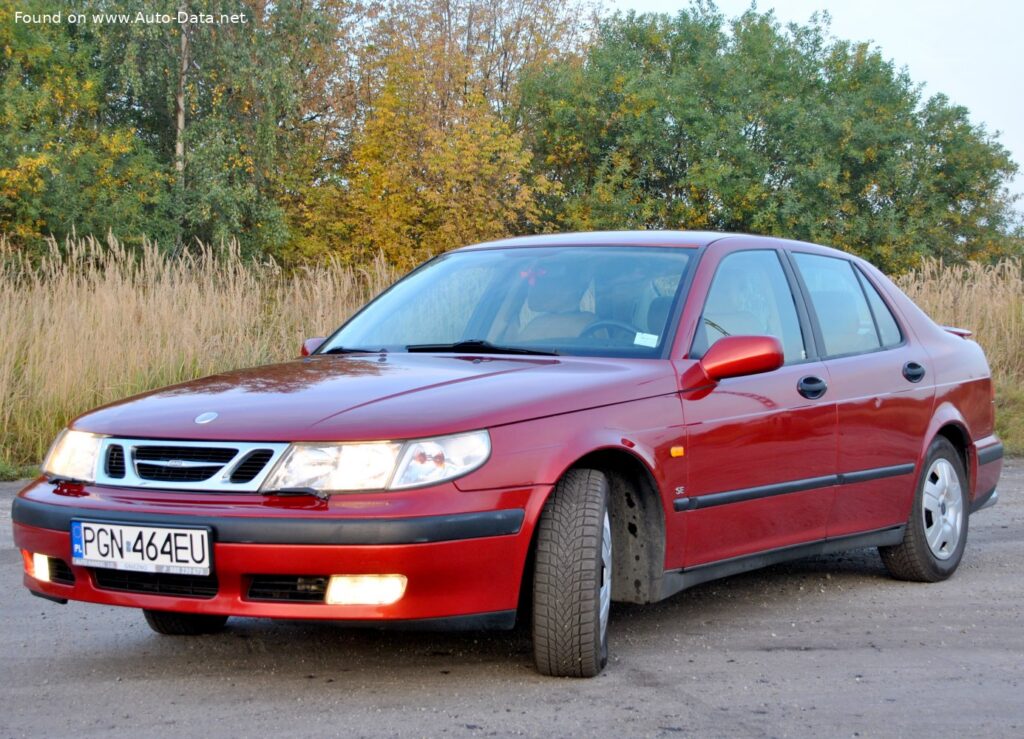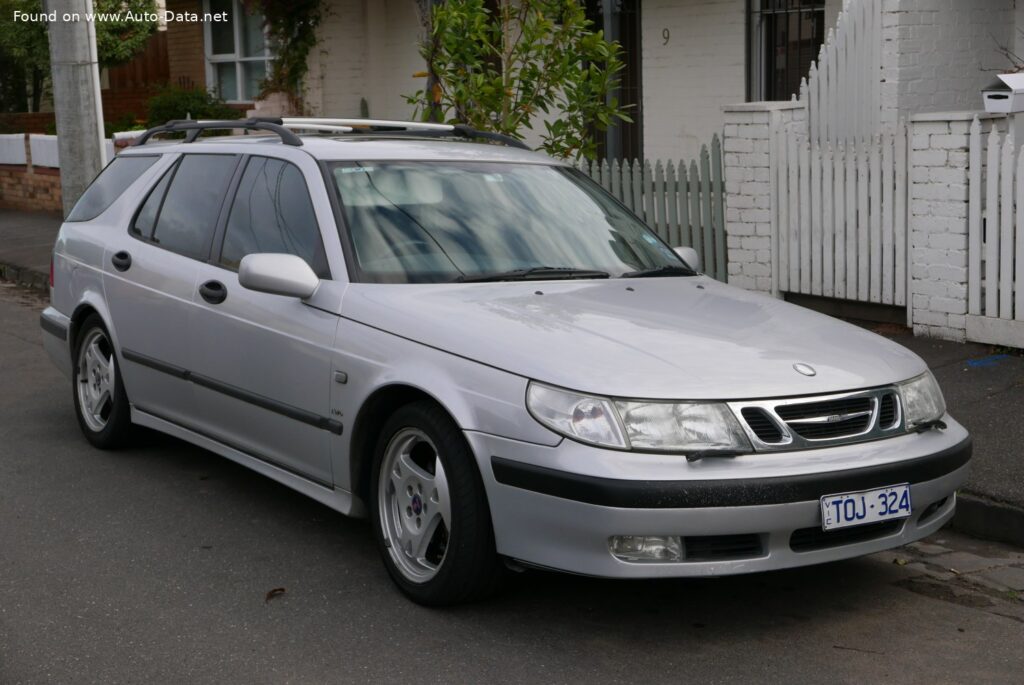
The Saab 9-5 Sport Combi, particularly the 2.3 T (170 Hp) Automatic variant from its initial generation (1998-2001), represented a distinctively Swedish approach to the executive station wagon segment. Launched as the successor to the venerable Saab 9000, the 9-5 aimed to blend traditional Saab values of safety, innovation, and practical design with a more contemporary aesthetic and improved refinement. In its primary markets, which included North America and Europe, the {original_title} carved out a niche for buyers seeking an alternative to the more conventional German luxury offerings. This specific model, with its turbocharged four-cylinder engine and automatic transmission, embodied Saab’s philosophy of delivering robust performance with an emphasis on real-world drivability and passenger comfort, all wrapped in a practical yet stylish wagon body.
The Saab 9-5 Sport Combi: A Legacy of Innovation and Practicality
Introduced in 1998, the Saab 9-5 Sport Combi was more than just a wagon version of the 9-5 sedan; it was a testament to Saab’s commitment to utility without sacrificing driving enjoyment or unique Scandinavian design principles. The Sport Combi, known as an estate in many European markets, quickly became a cornerstone of the Saab lineup, appealing to families and individuals who appreciated its generous cargo capacity, distinctive styling, and advanced safety features. This first generation of the 9-5 Sport Combi, produced until 2001 before receiving a significant facelift, maintained Saab’s reputation for building cars that were both idiosyncratic and highly functional. The 2.3 T (170 Hp) Automatic model was a popular choice, striking a balance between adequate power for highway cruising and everyday practicality.
Engine and Performance
At the heart of the 1998-2001 Saab 9-5 Sport Combi 2.3 T (170 Hp) Automatic was Saab’s renowned B235E engine, a 2.3-liter (2290 cm3 or 139.74 cu. in.) inline-four cylinder unit, transversely mounted and driving the front wheels. This engine featured a DOHC (Double Overhead Camshaft) valvetrain with 4 valves per cylinder and a multi-port manifold injection system, all optimized for its defining characteristic: turbocharging. Producing a healthy 170 horsepower at 5500 rpm, the engine truly shone with its torque delivery, generating 206.52 lb.-ft. (280 Nm) at a remarkably low 1800 rpm. This low-end torque was a hallmark of Saab’s “Light Pressure Turbo” philosophy, ensuring strong, accessible power from nearly idle, making for effortless acceleration and confident passing maneuvers without needing to rev the engine excessively.
Paired with a 4-speed automatic transmission, the powertrain provided a smooth and refined driving experience. While not a performance car in the traditional sense, the 9-5 Sport Combi 2.3 T was capable, accelerating from 0 to 60 mph in a respectable 10 seconds (0-100 km/h in 10.5 seconds) and reaching a maximum speed of 133.59 mph (215 km/h). Fuel economy, given its era and turbocharged nature, was reasonable, with an extra-urban rating of 28 US mpg (8.4 l/100 km) and an urban rating of 15.3 US mpg (15.4 l/100 km). The engine’s compression ratio of 9.3:1 and a bore and stroke of 90 mm (3.54 in.) each contributed to its balanced performance characteristics. With a weight-to-power ratio of 9 kg/Hp (110.7 Hp/tonne) and a weight-to-torque ratio of 5.5 kg/Nm (182.4 Nm/tonne), the vehicle offered a commendable balance between its mass and motive force.
Design, Features, and Ergonomics
The Saab 9-5 Sport Combi’s design was unmistakably Saab, characterized by smooth, aerodynamic lines and a strong emphasis on functionality. As a 5-door station wagon, it offered exceptional practicality. The vehicle measured 189.29 inches (4808 mm) in length, 70.55 inches (1792 mm) in width, and 58.94 inches (1497 mm) in height, with a generous wheelbase of 106.42 inches (2703 mm). These dimensions contributed to a spacious cabin for five occupants and a highly versatile cargo area. The trunk space ranged from 14.66 cu. ft. (415 liters) with all seats in place, expanding to a cavernous 52.62 cu. ft. (1490 liters) when the rear seats were folded down, making it ideal for hauling luggage, sports equipment, or larger items.
Inside, the 9-5 Sport Combi continued Saab’s tradition of driver-focused ergonomics and thoughtful features. The cockpit-like dashboard, with its intuitive layout, included Saab’s unique “Black Panel” (or Night Panel) function, allowing drivers to dim all non-essential instrument lighting at night to reduce distraction. Safety was paramount for Saab, and the 9-5 came equipped with a robust body structure, comprehensive airbag systems, and standard ABS (Anti-lock Braking System). The suspension system, featuring spring struts at both the front and rear, was tuned for a comfortable ride, absorbing road imperfections effectively while maintaining stable handling. Braking was handled by ventilated discs at the front and solid discs at the rear, providing confident stopping power. The vehicle rode on 205/65 R15 tires mounted on 6.5J x 15 wheel rims, a practical setup balancing ride comfort and grip.
Driving Dynamics and Safety
The driving dynamics of the Saab 9-5 Sport Combi 2.3 T (170 Hp) Automatic were engineered for comfort, stability, and predictability, aligning with its role as a premium executive cruiser. The front-wheel-drive architecture, combined with a well-calibrated spring strut suspension system on both axles, provided a composed ride quality that adeptly handled varied road conditions. This setup minimized body roll during cornering and soaked up bumps with a reassuring solidity, making long journeys particularly pleasant. Steering was managed by a hydraulic rack and pinion system, offering direct feedback and appropriate weighting that contributed to a connected driving feel, a characteristic often praised in Saabs for its blend of precision and ease of use.
Saab’s unwavering commitment to safety was a defining aspect of the 9-5 Sport Combi. Beyond the standard Anti-lock Braking System (ABS), which significantly enhanced control during emergency braking, the car featured an advanced body structure designed to dissipate crash forces effectively. The inclusion of multiple airbags and active head restraints further underscored Saab’s pioneering efforts in occupant protection. With a kerb weight of 3384.1 lbs (1535 kg) and a maximum permissible weight of 4739.94 lbs (2150 kg), allowing for a maximum load of 1355.84 lbs (615 kg), the 9-5 was a substantial vehicle built to withstand impacts and provide a secure environment for its occupants. Its design and engineering focused on creating a vehicle that was not only practical and enjoyable to drive but also offered a high degree of passive and active safety, reinforcing Saab’s reputation as a leader in automotive safety technology during its production years.
Technical Specifications of the Saab 9-5 Sport Combi 2.3 T (170 Hp) Automatic
| Brand | Saab |
| Model | 9-5 |
| Generation | 9-5 Sport Combi |
| Type (Engine) | 2.3 T (170 Hp) Automatic |
| Start of production | 1998 year |
| End of production | 2001 year |
| Powertrain Architecture | Internal Combustion engine |
| Body type | Station wagon (estate) |
| Seats | 5 |
| Doors | 5 |
| Fuel consumption (economy) – urban | 15.4 l/100 km (15.3 US mpg) |
| Fuel consumption (economy) – extra urban | 8.4 l/100 km (28 US mpg) |
| Fuel Type | Petrol (Gasoline) |
| Acceleration 0 – 60 mph | 10 sec |
| Acceleration 0 – 100 km/h | 10.5 sec |
| Maximum speed | 215 km/h (133.59 mph) |
| Weight-to-power ratio | 9 kg/Hp, 110.7 Hp/tonne |
| Weight-to-torque ratio | 5.5 kg/Nm, 182.4 Nm/tonne |
| Power | 170 Hp @ 5500 rpm. |
| Power per litre | 74.2 Hp/l |
| Torque | 280 Nm @ 1800 rpm. (206.52 lb.-ft. @ 1800 rpm.) |
| Engine layout | Front, Transverse |
| Engine Model/Code | B235E |
| Engine displacement | 2290 cm3 (139.74 cu. in.) |
| Number of cylinders | 4 |
| Engine configuration | Inline |
| Cylinder Bore | 90 mm (3.54 in.) |
| Piston Stroke | 90 mm (3.54 in.) |
| Compression ratio | 9.3:1 |
| Number of valves per cylinder | 4 |
| Fuel injection system | Multi-port manifold injection |
| Engine aspiration | Turbocharger |
| Valvetrain | DOHC |
| Engine oil capacity | 4 l (4.23 US qt) |
| Coolant | 7.4 l (7.82 US qt) |
| Kerb Weight | 1535 kg (3384.1 lbs.) |
| Max. weight | 2150 kg (4739.94 lbs.) |
| Max load | 615 kg (1355.84 lbs.) |
| Trunk (boot) space – minimum | 415 l (14.66 cu. ft.) |
| Trunk (boot) space – maximum | 1490 l (52.62 cu. ft.) |
| Fuel tank capacity | 70 l (18.49 US gal) |
| Length | 4808 mm (189.29 in.) |
| Width | 1792 mm (70.55 in.) |
| Height | 1497 mm (58.94 in.) |
| Wheelbase | 2703 mm (106.42 in.) |
| Front track | 1522 mm (59.92 in.) |
| Rear (Back) track | 1522 mm (59.92 in.) |
| Drivetrain Architecture | The Internal combustion engine (ICE) drives the front wheels of the vehicle. |
| Drive wheel | Front wheel drive |
| Number of gears and type of gearbox | 4 gears, automatic transmission |
| Front suspension | Spring Strut |
| Rear suspension | Spring Strut |
| Front brakes | Ventilated discs |
| Rear brakes | Disc |
| Assisting systems | ABS (Anti-lock braking system) |
| Steering type | Steering rack and pinion |
| Power steering | Hydraulic Steering |
| Tires size | 205/65 R15 |
| Wheel rims size | 6.5J x 15 |